Let It Shine/Let Us Dream by Alyssa Cole
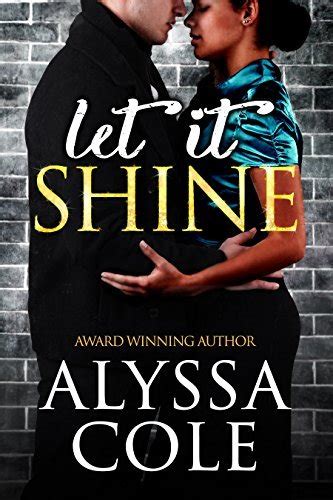
Sofronia Wallis knows that proper Black women don’t court trouble by upending the status quo, but it’s 1961 and the Civil Rights movement is in full swing.
Sofie’s spent half her life being prim, proper, and reserved—as if that could bring her mother back—but the nonviolent protests happening across the South bring out her inner agitator. Ivan Friedman has devoted his life to boxing, loving the finesse of a well-delivered punch and the penance of receiving one. His family escaped from Europe before the horrors of WWII, and Ivan decides to help fight injustice in their new country, even if it goes against all his instincts as a fighter.
When Ivan and Sofie meet, they realize that their pasts are intertwined and—with the sparks that fly between them—perhaps their futures will be too. With everything in their society lined up against them, will Sofie and Ivan be able to beat the odds? Or will their chance at love be destroyed by the tumultuous times they live in?
A semi good girl/bad boy romance with childhood crushes trope, Cole manages to fit in two full circle arcs and a romance in less than a hundred pages with a steamy ringside scene to boot.
Sofie’s growth from prim, proper girl to budding activist was compelling as she finally unleashes the anger she’s swallowed for years and fear associated with being a bad girl. In owning her anger and directing it to the Freedom Rides, and counter sit-ins, she proves not only to everyone around her that she doesn’t need to be coddled, but she doesn’t need their validation or approval. That knowing when to fight and when to sit in silence, can be freeing.
In comparison, Ivan knows how to fight, but in giving in to his feelings is much scarier than taking a blow. His arc feels more predictable, but I like how Cole ties in Ivan’s own past with antisemites and how it informs his need to be an ally in the Civil Rights movement and call out his father’s racist tendencies in that just because some of the African-Americans insult him to his face, it doesn’t mean he has to do the same. They have similar struggles as marginalized groups and should be allies.
Plus I loved the push-pull between the fear of what society might do or say, combined with their defiances that they don’t want to hemmed in by society’s accepable rules. It’s the 60s, baby, times are changing and they aren’t going to “go along to get along” just to get scraps of decency.

After spending half her life pretending to be something she’s not, performance is second nature for cabaret owner Bertha Hines. With the election drawing near and women’s voting rights on the ballot, Bertha decides to use her persuasive skills to push the men of New York City in the right direction.
Chef Amir Chowdhury jumped ship in New York to get a taste of the American Dream, only to discover he’s an unwanted ingredient. When ornery Amir reluctantly takes a job at The Cashmere, he thinks he’s hit the bottom of the barrel; however, working at the club reignites his dream of being a force for change. His boss, Bertha, ignites something else in him.
Bertha and Amir clash from the start, but her knowledge of politics and his knowledge of dance force them into a detente that fans the flames of latent desire. But Bertha has the vice squad on her tail, and news from home may end Amir’s dream before it comes to fruition. With their pasts and futures stacked against them, can Amir and Bertha hold on to their growing love?
A sweet story that features two stubborn butting heads who find that in their clashes, it’s not that its from disrespect but finding they are the first to treat like the other as an equal, not a inferior human because of their skin or legal status. I enjoyed the steady consistancy of their connection to each other through dancing and civic lessons, leading to a feeling of comfort in each other’s presence. Bertha definitely has the more dominant storyline of the two, struggling to keep her business afloat of the corrupt hypocrisies of the authorities targeting her. Even her attempts at helping the suffrage movement are stifled, not only by white women (she doesn’t even bother meeting them), but by her fellow people who look down on her for her occupation.
Cole brings up salient points about the intersectionality of using the vote not only to uplift women, but include lower-class and working women in the fight on their own merits instead of excluding them from the suffrage meetings. Amir’s arc is more subtle as he finds himself no longer longing for his homeland, but wishing to stay in America with a certain club owner, but fears it would put too much pressure on her, and that he can’t give her much since he has no rights or votes in a country barring Asiatic immigrants.
While I thought the denounment was a bit rushed, I did enjoy the overall romance and like Let It Shine, the message that even though America is a flawed place, they can all fight to make it better.
Appetites and Vices/Dalliances and Devotion by Felicia Grossman

He’s her ticket into high society…
Banking heiress Ursula Nunes has lived her life on the fringes of Philadelphia’s upper class. Her Jewish heritage means she’s never quite been welcomed by society’s elite…and her quick temper has never helped, either.
A faux engagement to the scion of the mid-Atlantic’s most storied family might work to repair her rumpled reputation and gain her entrée to the life she thinks she wants…if she can ignore the way her “betrothed” makes her feel warm all over and stay focused on her goal.
She’s his ticket out…
Former libertine John Thaddeus “Jay” Truitt is hardly the man to teach innocent women about propriety. Luckily, high society has little to do with being proper and everything to do with identifying your foe’s temptation—an art form Jay mastered long ago. A broken engagement will give him the perfect excuse to run off to Europe and a life of indulgence.
But when the game turns too personal, all bets are off…
Sometimes one gets bored with the regency setting, so Felicia’s mid-19th century romance in Delaware/Philadelphia was the perfect antidote, and with such a unique heroine too. Ursula Nunes isn’t quirky, she’s genuinely odd with her lack of social apptitude, her snorting laugh, her blunt manner, and brilliant mind. But she’s also kind, and again, logically brilliant. If this was a different time, she might have been on the spectrum, as it is, she’s mocked for her non-grace and at tears, wishing someone would explain these invisible societal rules that everyone knows but her.
And while Jay helps Ursula with their faux-marriage and gives her helpful tips of navigating her peers, he loves her as she is. It’s so typical yet so sweet! It helps that Jay has a fai amount of depth too as Grossman details the pain of addiction. Through Grossman’s characters, she admits that simple love can’t break opium addiction. He’ll long for it the rest of his life, but it doesn’t have to define him, and he’s not weak because of the fraility of his control. Appetites and Vices is an apt title as the protagonists debate the line between appetite and indulgence, vice and desire. Which yes, leads to some great scenes of the other desire.
I also enjoyed how she depicted the weary line Ursula had to tread because of her religion. Even though her dowry was dessirable (and resented by many families), her religion made her unworthy and it showed how her paternal family does its best to conceal their differences in order to assimilate. Which pays off for the next generation.
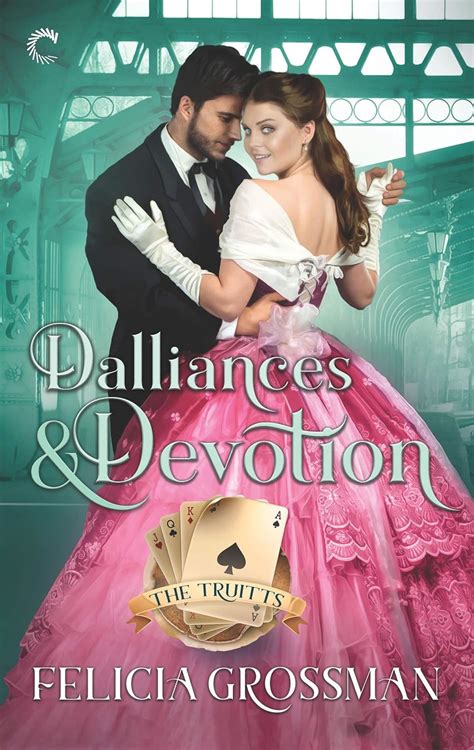
After two disastrous marriages, beauty columnist Amalia Truitt’s life is finally her own—well, it will be if she can get herself back to Delaware and demand access to her share of the Truitt family fortune. After all, the charity she’s organized for women who can’t afford their own divorces won’t fund itself.
However, not everyone wants her to reach her destination. When her family learns she’s been receiving anonymous death threats, a solo journey is out of the question.
Enter David Zisskind, the ragtag-peddler-turned-soldier whose heart Amalia broke years ago. He’s a Pinkerton now, and the promotion he craves depends on protecting his long-lost love on the unexpectedly treacherous journey across Pennsylvania.
That their physical connection has endured the test of time (and then some) is problematic, to say the least. In very close quarters, with danger lurking around every curve, with each kiss and illicit touch, the wrongs of the past are righted. But David can’t weather another rejection, especially with his career in jeopardy. And Amalia can’t possibly take a lover, never mind another husband…not with so much depending on her repaired reputation. Not when she’s hurt David—her David—so badly before.
Admittedly, I liked the sequel following the youngest Truitt to be my favorite as Amalia’s spoild sweet nature hides deep insecurities of being a waste of space, being considered frivelous by everyone, and that she has to conform to their visions of her in order to get seed money for her charitable endevours. It doesn’t help that the one she wants has similar insecurities as a non-English speaking, Jewish immigrant with Marxist ideals and communication issues.
While A&V operates as traditional romance, this one puts you right into the romantic suspense when the couple meet again. Amalia is in danger, and David is the smoldering bodyguard. It works so well as they navigate the hurts they inflicted on each other before the war, and the same hurts they continue to accidentally inflict on each other. Learning from the mistakes of the past and looking past your misconceptions of events is a big theme of the books as David realizes that Amalia is not the same girl he thought she was, and Amalia sees David is more than the cocksure intellectual socialist he tries to portray himself as.
There is also a great treatise about grief and the way it affects one’s decisions. In the aftermath of the Civil War, many people were bereft. Amalia in losing her favorite brother, and going through with a marriage with a man she barely knew because she wanted normalcy when the world felt like it would never be normal again. David went the opposite route, throwing himself into a new life and career because he was one of the lucky ones when his friend was not.
Grossman also touches on little-known organizations after the Civil War, and the charitable endevours of Hillel for immigrants, and Grant’s apology tour across the country in helping to reconstruct it. Like Cole, Grossman highlights that while it’s important to support one’s causes, one shouldn’t turn away from helping others because it might affect your own privilege (something Amalia and the Truitts work on throughout most of the book). They had been complicit in the ignoring the slavery issue and immigrant issues because they didn’t want the Jews (at least the assimilated, wealthy ones) to lose their place, but America is better when all are uplifted.
The ending felt a bit rushed as the reveal of Amalia’s attacker was disappointingly off-page, and the resolution to David’s adolescent trauma was too pat (it’s one of those, “Actually you weren’t betrayed, it was all a miscocmmunciation!” deus ex machinas).
Still, Amalia, and David were amazingly layered characters that aren’t the usual protagonists of a historical romance. A two-time divorcee, and the immigrant peddler turned Pinkerton detective, and I love how it made for thrilling freedoms in the way both interacted with one another, wiser for their experiences, and not as constrained by regency rules. It kept me at the edge of my seat.
The Infamous Miss Rodriguez/A Summer for Scandal by Lydia San Andres

Graciela Rodriguez is determined to break her engagement to Ciudad Real’s most eligible bachelor—even if it means ruining her reputation.
Vicente Aguirre has been hired by Graciela’s aunt to keep her wayward niece from damaging the family name along with her future. When her charms prove irresistible, will he fall for the infamous Miss Rodriguez?
A sweet if predictable enemies to lover, marriage of convenience novella. What helps San Andres’ novel is the time period, not many historical romances takes on the beginning of the 20th century. Nor do they address the burgeoning suffrage movement that was happening in Latin America at the same time. Technically, Real Ciudad island is fictional, but the latina suffragettes calling for a voice was a thing back then and I liked San Andres’ focusing on it. Especially in utilizing the culture’s tendency for women to downplay their role in family businesses in order to make the men happy. Graciela had a solid arc where readers could empathesize with her desire to break free from the arranged marriage and her realization that she also needs to take charge of her family business.
Vincente was nice enough betweehn his chivalrous bodyguard schtick and his brooding past as a thief from Chile, it kept the class differences conflict strong. I also liked how Graciela didn’t get mad when his past was revealed, but understood why he felt that it would be a deal-breaker, and assuring him that his current actions prove his love than his past trying to survive on the street. I just felt his arc wasn’t as strong as Graciela’s.

When Emilia Cruz agreed to accompany her sister to a boating party, she had no idea that the darling of the literary world would be in assistance—or that he would take such pleasure in disparaging the deliciously sinful serial she writes under a pseudonym. No one save her sister knows she’s the author and to be found out would mean certain scandal.
Stuck on his long-awaited second book, Ruben Torres has begun to edit in secret a gossip paper whose literary reviews are as cruel as they are clever. The more he writes about the mysterious author of a popular serial, the more papers he sells…and the more he is determined to find out her identity before anyone else can.
With a full length novel, San Andres really gets to fleshed out her characters and I loved them. Emilia was wonderful, demonstrating the burgeoning independence movement for women in the 1911 (well, for wealthy women who had the money to do that), supporting the cause of suffrage while flexing her sexuality with her nom de plume. Then using those earnings to fund her causes more. Got to love the hustle. Readers will especially appreciate her stance for the very derided romance genre and the double standards that Ruben gets to be praised as a literary hero because he writes “real” books. Even so, he needs to earn more money so he takes on secret work for a gossip column to sniff out the author of the rsique romances-who’s Emilia!
Yes, it’s a bit similar to Leigh’s Temptations of a Wallflower, but both MCs are more secure in themselves and what they stand for, leading to a lot more charged banter. I just wish there had been more internal conflict on Ruben’s side as it seemed he went from lust to true love and supportive partner pretty quick. He’s a bit Mr. Darcy-ish without as much introspection, so that felt like a let-down.
However, San Andres takes full advantage of the setting in the Carribean with its festival traditions, lush locations, mouth-watering food descriptions and playful, leisurely approach to courtship and romance.


Leave a comment