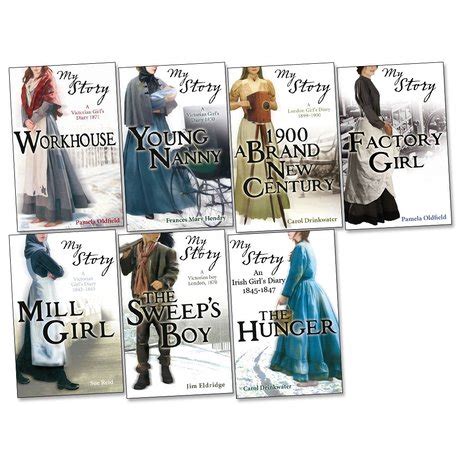
In my attempt to read through the Scholastic historical line, I had to get to the British counterpart-My Story or My UK Story in order to differentiate it from the Australian/New Zealander lines. The British one is also split between boy series and girls series has over sixty books alltogether. But since it includes books from the Dear America/Royal Diaries line with a new title/cover, one could cut it down in half. Still, it’s an extensive series covering the 14th century to WW2.
I didn’t read all 50+ books, but chose ones that seemed particularly interesting such as Vince Cross’ Zulu War and Pratima Mitchell’s Indian Mutiny. Taking place in the British colonies, both novels focus on uprising from the native people against the British oppressors.
I particularly admire Cross’ Zulu War for bringing readers right into Jabulani’s world. He doesn’t stop to explain Zulu words or customs to the reader because in Jabulani’s world it is completely normal. Makes it a bit confusing to read, but makes sense for the writer’s perspective. His story highlights the beginning of British colonialism and slave trade in the area and how the warriors severely underestimated them. It also doesn’t portray them as all good or bad. Obviously the Zulus didn’t deserve to become enslaved, and have their own complex systems of living and hierarchy in the kingdom, but they aren’t all good either with their patriarchial division of sexes and double standards when it comes to adultery.
The Indian Mutiny seem to try to portray the British as not callous monsters as Mitchell includes the requisite good British soldier horrified by what his countrymen have done and the protagonist has friends who are part of the Christian missionaries. I’m sure those situations are true, but it feels like an editorial decision to assure readers that the British aren’t entirely bad. Still, I found it cool for the book to focus on the inner workings of the first indian mutiny and rebellion from the estare of badass queen, Rani of Jhansi.
The other books I chose were primarly war stories illustrating how much it sucks. Bryan Perrett’s Crimea somewhat explained the confusing factors that led the British into Russia although I primarily got that from the historical note. Michael Pope, the protagonist, is from a working-class family and doesn’t have much idea of why the war is going on but illustrates the much, disease and apathy for life generals had for their foot soldiers.
The Trenches by Jim Eldridge didn’t provide anything unique that I haven’t read about WW1 stories other than the amusing differences in protocal between Aussie and British soldiers to their superiors. However, he evokes great emotion when it comes to Billy’s reaction to the Christmas truce and to the fate of his friend when they believed he tried to desert.
I, much preferred his WW2 story, Desert Danger that gave me insight to the Afrcan campaign against Rommel and was heart-pounding in depicting the danger of being a mine detector on the front lines. Priestly’s The Battle of Britain was more interesting when he focused on the homefront like Harry’s newfound sense of isolation in relating to citizens on the homefront and that not all Brits were happy to fight for the Axis but supported Hitler’s policies.
From the girl’s series, I read two Irish-centered story. The 45′ Rising by Francis Mary Hendry and The Hunger by Carol Drinkwater. Fans of Outlander may be familiar with the 45′ Rising as the rebellion that Jaimie and Claire were part of. However, Euphemia is a high-class debutante torn between her aunt and uncle’s social climbing in British circles that would keep her safe, and her homeland and love for her boyfriend, a soldier who believes in Prince Charlie’s claim. Full of soapy drama that made it a compelling read.
The other story was just depressing. Which is expected when it comes to the great potatoe famine. While the US/Canada diary on this time in history starts on emmigration for better opportunity, Drinkwater’s novel compounds the events that necessitated the immigration like the cruelty of the landowners, the discrimination against the Irish, and the attempts at uprising that are further crushed by politicians upset that the people are pointing out their apathy/incompetence.
Drinkwater’s other novels (she’s very prolific in this series) include Twentieth-Century Girl and Suffragette. This duo is unique as the protagonists are connected to each other. Twentieth-Century Girl focuses on Flora Bonningten, an upper class girl agitating to make her way in this exciting new decade. Specifically, she wants to invest in the newfangled moving pictures. Maybe even get a job which horrifies her father. After all rich women shouldn’t work or be fulfilled, they’ll drop dead like her mother. However, Flora has her suffragette grandmother on her side, broadening her horizons beyond the luxury bubble. It is very similar to Kathryn Lasky’s A Time for Courage, combining family drama with a primer of suffrage. Which is funny because her next book makes it even more plot relevant by featuring Dollie Baxter, a minor character in Flora’s diary. Now it’s ten years later, and Flora has taken on the suffrage committee and makes Dollie her protage.
Dollie is a working-class girl who isn’t very invested in suffrage because she has to survive. Suffrage seems to be a rich woman’s hobby, but as the diary unfolds, she comes to better the importance of how suffrage can help everyone. I just wish that it was more of an equal relationship between Dollie and Flora as I think Dollie could have showed Flora and a lot of the other rich woman how the problems of working women differed from theirs and how they could change their strategy to appeal to them.
Like the AUS/NZ lines, there are no epilogues to the diaries, and the the boy’s series are not day by day entries but more like entries that cover the span of a week. Which I suppose it makes sense because soldiers can’t write every day. But the historical notes were more substantial and they had pictures too, which I enjoy.
My UK Story has also gone through a number of reprints in order to appeal to new generations (or trick unsuspecting readers into buying a book they already have but looks new), the latest having more of a grpahic novel feel that references the I Survived graphic novel series-
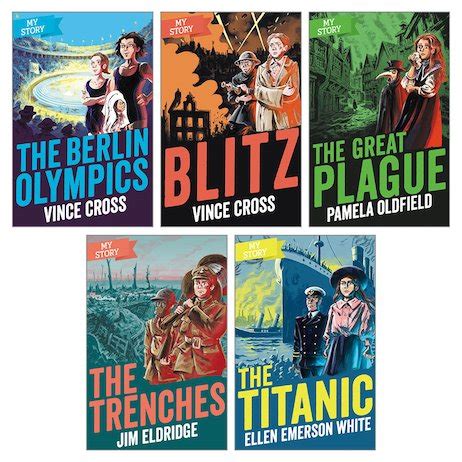
But I prefer the historical picture covers. They better convey the vibe and tone of the series in my opinion.


Leave a Reply