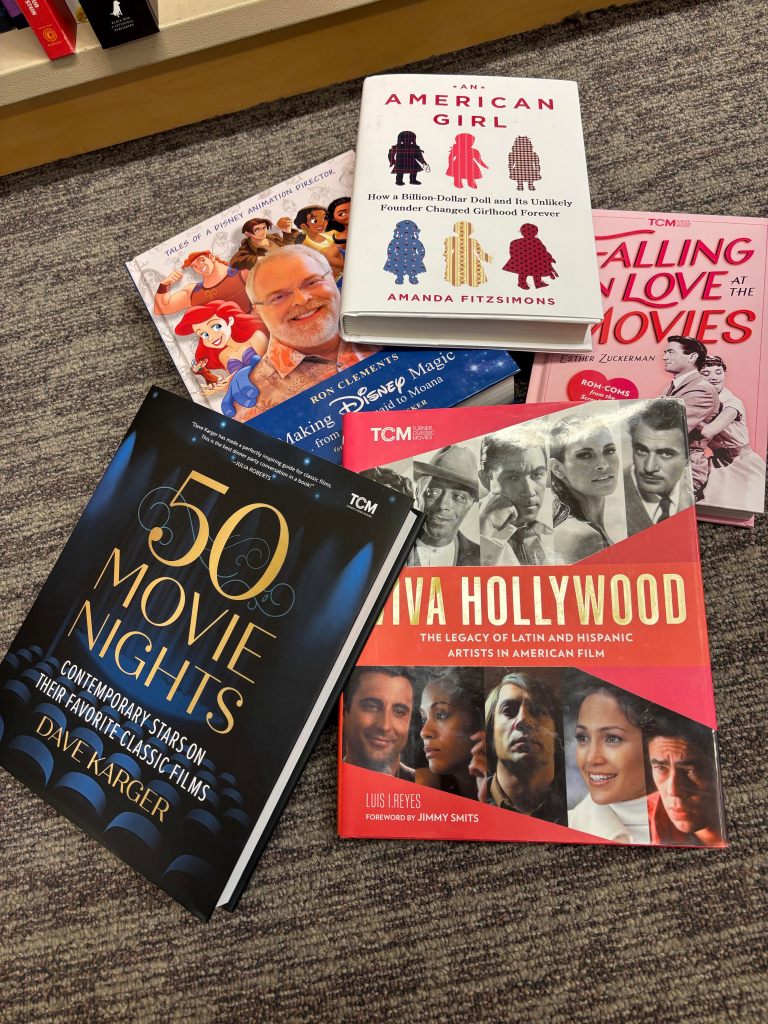
50 Movie Nights: Contemporary Stars on Their Favorite Classic Films by Dave Karger
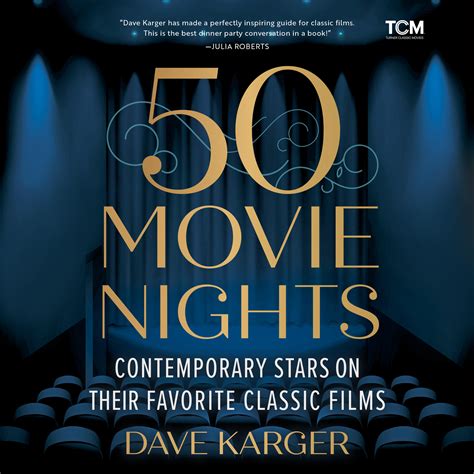
In 50 Movie Nights, fifty notables in the entertainment world get into insightful, funny, and heartfelt discussions with the author on their favorite films of the twentieth century. Some of their choices might be movies you’ve seen before, like Carol Burnett’s pick, Singin’ in the Rain, or Bryan Cranston’s, High Noon. Others might be discoveries for you, like Viggo Mortensen’s selection, Lonely Are the Brave, or Paul Rudd’s, Withnail & I. The interviews illuminate not only why they love their choice and why they want you to see it, but also reveal a lot about themselves—how the film influenced their career or even changed their life.
A bunch of essays by famous actors. It’s a fun way to spend the afternoon because these essays are very thougthful as Anne Kendrick discusses why The Woman has stayed with her for so many years or Carol Burnett’s love for musicals with Singing in the Rain. They often tie these movie inspirations to their own work and how it informed their process for creating characters in their films, making it a cinematic full circle.
Viva Hollywood: The Legacy of Latin and Hispanic Artists in American Film by Luis Reyes
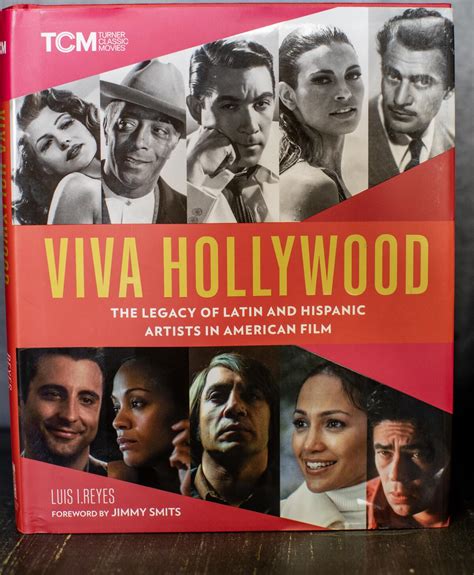
Overcoming obstacles of prejudice, ignorance, and stereotyping, this group has given the world some of its most beloved stars and told some of its most indelible stories. Viva Hollywood examines the stars in front of the screen as well as the people behind-the-scenes who have created a rich legacy across more than 100 years.
A commpedium of latin representation from the beginning of film history, Reyes shows the subtle ways Latinos tried to fight against the stereotypes assigned to them. How some have been overlooked for their contributions behind the scenes or how some actors like Raquel Welch downplayed their heritage, and how Latina pride has bursted onto the big screen in the recent decades. Very informative, but in Reyes’ zeal to include every Latino who ever worked in the industry, it feels overstuffed. Especially as someone only get a page, feeling like filler. Still a worthy addition to any cinephile’s library.
Falling in Love at the Movies by Esther Zuckerman
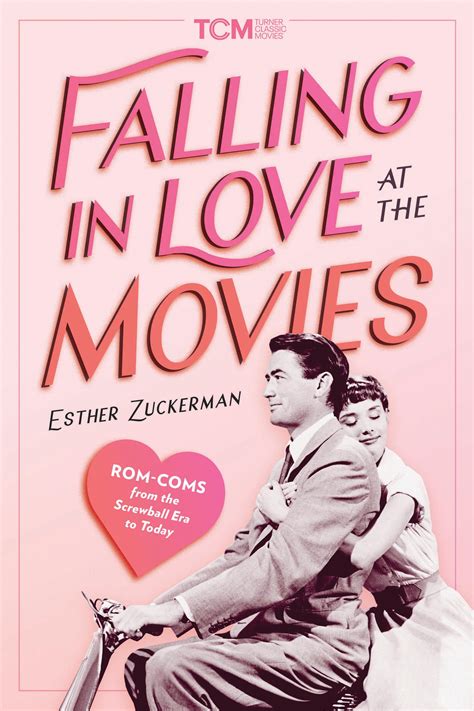
Romantic comedies have had an incredible influence on popular culture, shaping everything from how we think of relationships to fashion. Often swept aside in film history, these movies are thought of as pure comfort viewing. Although they certainly provide those fuzzy feelings, they have also had a significant artistic influence and cultural impact. Spanning decades of romantic comedies—from movies of the 1930s such as It Happened One Night and the rom com craze of the 80s and 90s including When Harry Met Sally…all the way to contemporary hits like Crazy Rich Asians, and everything in between—Falling in Love at the Movies will make you fall in love (all over again) with romantic comedies.
Film historian, Esther Zuckerman dissects why rom-coms remain favorites across generationns. Separating chapters into rom-com heroes, heroines, why they work together, the red herrings, and the formulas (small town romance, business rivals, special note on foreign films and those focusing on queer romance) and how it has shifted with each generation. She also dicusses whether the rom-com is dead, and why this conversation pops up every few years. It’s never dead, rather it’s evolved, showcasing why movie-goers are still attracted to stories of love and connection and what it says about how we view the pursuit of love.
TCM Underground: 50 Must-See Films From the World of Classic Cult and Late-Night Cinema by Millie De Chircho and Quatoyiah Murry
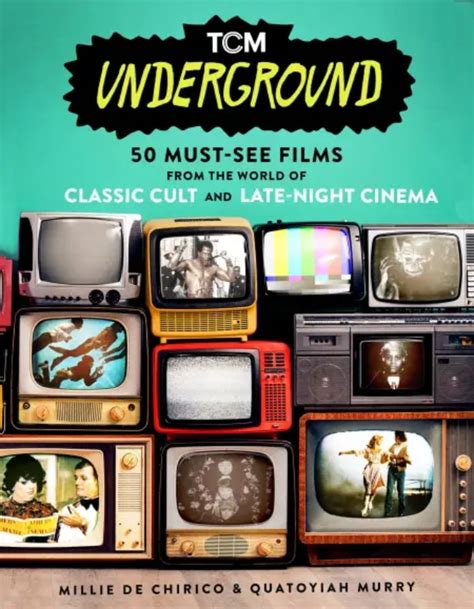
In the pages of this book, you’ll explore this unique order of films—primarily from the 1960s, ’70s, and ’80s—with insightful reviews, behind-the-scenes stories, subgenre sidebars, and full-color and black-and-white photography throughout. Go along for the ride with new takes on crime films, including The Honeymoon Killers and The Harder They Come. Witness one-of-a-kind horror in Bill Gunn’s landmark vampire film Ganja and Hess and Nobuhiko Obayashi’s infamous and indescribable Hausu. Absorb the boundary-pushing documentary-style trilogy The Decline of Western Civilization, which throws you into indelible moments in the punk and metal music scenes. And marvel at pure ’80s oddities like Mac and Me and The Garbage Pail Kids.
This book delves into 50 classic cult films. Split into different sections like horror, youth rebellion, and psychadelic trips, readers can feel the authors enthusiasm for each film as they provided trivia facts, six degrees of connection games, and more. The biggest compliment I can give this book is that some of the film descriptions were so interesting that I added them to be to-be-watched pile.
An American Girl: How a Billion Dollar Brand and It’s Unlikely Founder Changed Girlhood Forever by Amanda FitzSimons
For four decades and counting, American Girl has been a defining force in the lives of young girls, shaping their understanding of history, identity, and selfhood. But the story of its creation—and the visionary woman behind it—has never been fully told…until now. An American Girl is the fascinating tale of Pleasant Rowland, the trailblazing founder who disrupted the toy industry with her line of dolls defined by their high-quality craftsmanship and rich, educational backstories—and how this iconic brand from America’s heartland ended up shaping girlhood for generations.
Author Amanda FitzSimons takes readers inside Rowland’s meticulous creative process and the far-reaching, almost incalculable legacy of her creation. This book explores how American Girl became a cultural touchstone, navigating the crosscurrents of third-wave feminism, the rise of consumer culture, and contentious debates over historical accuracy and representation. It dissects the brand’s complicated relationship with race, class, and diversity, from the groundbreaking introduction of Addy Walker—the line’s first nonwhite doll—to the critiques of its aspirational price point.
An American Girl is a compelling, eminently readable love letter to the entrepreneurial genius of a brand that has maintained its grasp on public consciousness for nearly half a century. It is an essential read for anyone who has ever loved a doll and recognized the powerful ways in which they can transform our understanding of ourselves—as well as the world around us.
This compelling book gives an in-depth look into Pleasant Company, and the founder herself, Pleasant Rowland and why her unlikely idea has become a cultural staple, despite everyone’s beliefs to the contrary. Part biography, Fitzsimmons introduces readers to the reserved founder, dissecting her youth include the reality and the parts she smudged in order to make a “pleasant” company story. The personality of Pleasant seems to follow those of geniuses-controlling, exacting, single-minded yet her company followers love her because she believed in her company’s guidelines to give girls a quality, semi-educational toy.
She also follows the notes of hypocrisy in how the American Girl price reflects the quality, and the subsequent American Girl magazine, and catalogue encouraged parents to drain their wallets in the craze of status anxiety. She also discusses how American Girl’s historical premise shapes and influences young girl’s perceptions of history including those of other races like Rowland’s beleted introduction of Addy, Josefina and Kaya to the line, and the subsequent Mattel takeover and dismantaling of the brand’s quality, and what it means for American Girl today.
I loved it as it made me appreciate more what went on to making the iconic dolls as well as made me think critically of how their influence manages to stay four decades later.
Making Disney Magic: From the Little Mermaid to Moana by Ron Clements
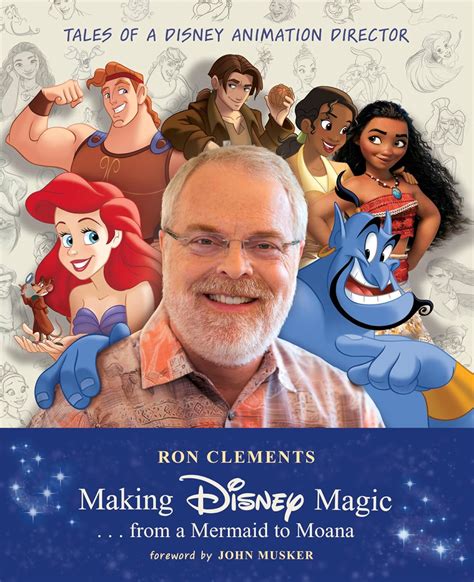
Ron Clements is a key filmmaker (along with co-writer and co-director John Musker) responsible for some of the most beloved animated Disney movies, including The Fox and the Hound, The Little Mermaid, Aladdin, and The Princess and the Frog, among others.Now he shares behind-the-scenes stories, animation Easter eggs, and fun facts from his 45 years at Walt Disney Animation Studios, including:
- People who directly worked on & influenced the films
- Research trips & selection of artists, voice cast & songwriters in preparation for the films
- Screenwriting, character development & world-building processes
- From storyboards, technical innovations, voice recording & animation to final frames
- Early screenings (reaction to feedback & resulting changes)
- Press tours, debuts, receptions, awards seasons & growing the Disney legacy
The corners of this coffee table book also serve as an animation flip-book, celebrating Disney characters from the 1970s-2010s. Making Disney Magic . . . from a Mermaid to Moana is a fun and magical art-packed memoir sure to delight every Disney fan!
Part memoir, part history of Disney Animation from the 60s till now, this was a great look into the company. Clements’ story would fit into one of the films he worked on. As a kid armed with a pencil and a dream, it seemed unlikely he’d be able to work for his dream company but through perserverance and a little bit of luck he gets there. That’s when the fun really begins. I laughed at some of the office pranks that went on, and some of the more stupid executive requests. There was also intriguing drama of the infamous Don Bluth vs Nine Old Men split during The Fox and the Hound that led to Bluth creating a rival studio as well as Clement recounting the worries by the studio after the Rennisance, more fights between creatives and studio limitations and seemingly impossible deadlines.
Animation and film fans will love getting a preview into the audition process as a animator for the company, the invention of new techniques, and how Clements and his partner, Musker, worked and reworked their films from concepts to screens. You can really feel the passion he has for the films he worked on, especially in getting the cultural details of Moana and The Princess and the Frog correct. Also the friendships he sustained with Alan Menken, Howard Ashman and others are clear too.
Maybe it’s a bit of rosy picture, Clements never discusses Lasseter or Eger’s less popular choices as CEOs but I figured he doesn’t want to bash anyone too bad. He doesn’t want to get sued. Plus after getting fired in 2005, he knows the importance of keeping doors open. Even if he doesn’t get into the bad of interfering execs, I think he made a case for how the creatives are the true backbone of the company.
Avatar Aang: The Last Airbender. The Art of the Movie by Ramin Zahed
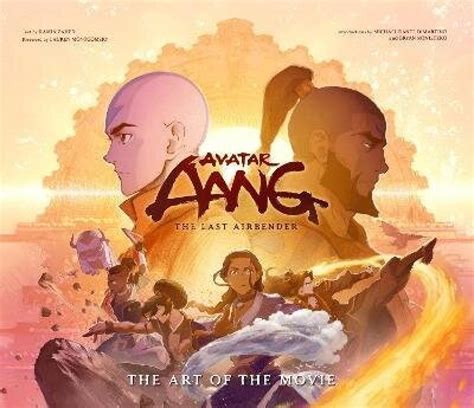
This official behind-the-scenes companion to the feature film Avatar Aang: The Last Airbender: The Art of the Movie brings fans back to the beloved and massively successful universe of Avatar: The Last Airbender with an exclusive look at the film, revealing the creative process behind bringing Aang, Katara, Sokka, Toph, and Zuko back into action.
Featuring never-before-seen concept art, character designs, and new locations, the book delves into the evolution of the characters, with new threats and new hybrid creatures.
With insights from co-creators Michael Dante DiMartino and Bryan Konietzko, director Lauren Montgomery and the extended animation team, Avatar Aang: The Last Airbender: The Art of the Movie celebrates the film’s humor, spirit, and innovative techniques—especially its stunning blend of 2D and CG animation styles never before seen from a Western studio, making it the quintessential companion for fans eager to experience the next chapter in the Avatar saga.
This coffee table book is a boon to anyone who wants more time to admire some of the beautiful stills from the Avatar Aang movie. Collecting interviews from the movie director, creators and animators, makes one admire how much work went into the film including the new techniques they utilized to seamlessly blend the 2D and 3D elements.
However, some may know about the AI controversy related to the art book and I got a hint of that defensiveness in the forward that the movie was created without the use of AI, but all human decisions. The book. . . I can’t definitively say it has been written with AI, but there are some glaring mistakes like the first page starts in mid-paragraph. Or maybe the opening sentences were cut off by the picture above it. Other sentences were not grammatically correct. Maybe it just needed another go at editing.
However, I do feel like it was missing something. The other art books were written with the creators, Bryan, Mike and series director, Joaquim. Here it is an unaffliated person, so it loses a lot of bts background, reasoning for design choices, jokes and the like. It did not make me want to watch the film again with new eyes like I did with Alex Hirsch’s Art of Gravity Falls or Kenneth Plume’s Art of Ducktales.


Leave a Reply