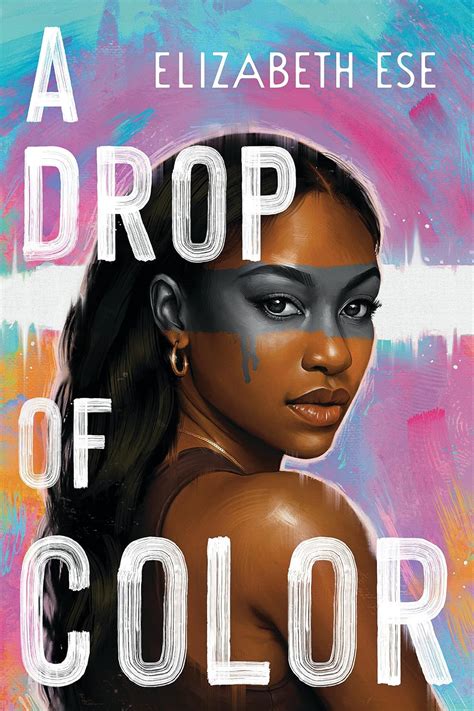
For as long as she can remember, seventeen-year-old Gabrielle’s existence has been a balancing act. At her prestigious and predominantly white prep school, she’s learned how to be palatable, agreeable, and silent. Between begrudgingly accepting her role as her predominantly white school’s Token Black Girl, and performing the role of the dutiful Nigerian daughter at home, she’s not left with much time to simply exist as Gabby. But as far as she’s concerned, survival is her main priority – even if it means perpetually walking on eggshells in both spaces.
With her senior year in full swing, Gabrielle can finally see the light at the end of the tunnel. But when a racist incident erupts within her social circle, Gabrielle can no longer justify letting it slide and breaks the Oakmont Academy’s unspoken code: no snitching. Suddenly, Gabrielle is thrust from social butterfly to social pariah. Cut off from her friends and reputation, Gabrielle is left searching for answers and determined to uncover who betrayed her and why.
Armed with a bucket list and a plan for reinvention, Gabrielle sets out to salvage her senior year. But navigating life on the margins comes with complications, especially after sparks ignite with two very different boys: the football player she never thought she’d trust and her childhood crush, newly returned from Nigeria, who reawakens feelings she’s long avoided. As secrets surface, loyalties fracture, and first love collides with hard truths, Gabrielle must decide whether to fight her way back to the version of “normal” she worked so hard to maintain, or finally embrace the parts of herself she was taught to shrink: her Blackness, her Nigerian-ness, and the space where they meet.
For fans of Angie Thomas’ The Hate U Give, Ese’s Gabrielle is also a girl trying to navigate a white-dominated private school. While Starr is aware of her tone-switching, Gabrielle is comfortable with her place in the social heirarchy. Her Nigerian parents want, no expect her to thrive as to make their sacrifices worth it.
It’s this combination of assimilation and immigrant’s child expectation that makes Gabrielle’s story relatable.
She’s normally a shy girl. A rule-follower, and studious, but she has a clear sense of right, so when she speaks up for her teacher, she is unused to to the negative backlash in her social life. While Thomas’ story interrogates the injustices of the justice system and the impacts of society on urban black neighborhoods and its correlation to crime rate, Ese focuses on how assimilation has become implicitly tied to success.
Gabrielle’s story shows how those expecations create a bubble of pressure that leads to Gabrielle feeling lost as to who she is without her friends. So focused on fitting in, she lacked boundaries of what made a good friend and what wasn’t. Also she turned a blind eye to constant microaggressions in order to be agreeable.
Ese’s side characters are well-developed. Particularly Gabrielle’s parents. One can empathesize with the clustraphobia Gabrielle feels and the fear she won’t be enough. It can be frustrating, but you can also see where their desire for Gabrielle to succeed comes from. In their worldview, assimilation will lead to a less-likely chance of her daughter getting hurt by an unjust society. There’s a lot of nuance in the situation and Ese does well when she’s plumbing them.
Gabrielle’s new friend, Imani also shines when she helps her embrace her black heritage. It’s full of joy and diversity unlike what mainstream media promotes. She becomes more aware of how to use her voice to speak up against the double standards. I also enjoyed how Ese showcases that not all of old friends need to be discarded. Like Maro, who listens to what Gabrielle has to say about the situation and returns, trying to be better. He is a greta example of how to be a good ally, and sharpens Gabby’s story to realizing who does and doesn’t deserve her loyalty. Her relationship with Mr. Norwood, the memed teacher, is also such a sweet mentor-mentee one.
A sharp, deep, coming of age normal that readers will enjoy for its three-dimensional characters and rootable heroine.
4 stars


Leave a Reply