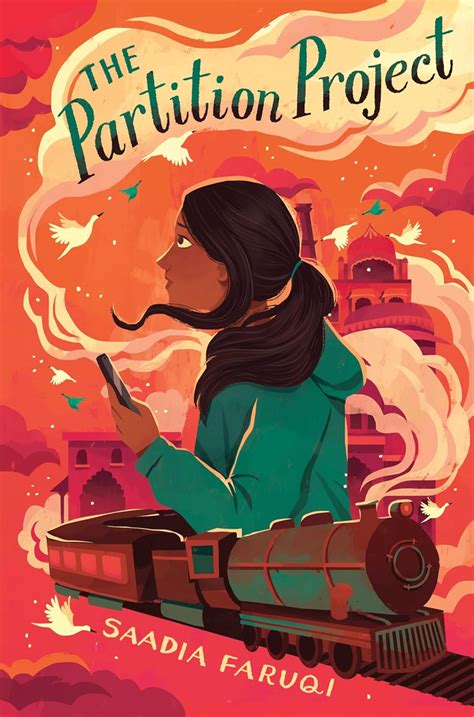
When her grandmother comes off the airplane in Houston from Pakistan, Mahnoor knows that having Dadi move in is going to disrupt everything about her life. She doesn’t have time to be Dadi’s unofficial babysitter—her journalism teacher has announced that their big assignment will be to film a documentary, which feels more like storytelling than what Maha would call “journalism.”
As Dadi starts to settle into life in Houston and Maha scrambles for a subject for her documentary, the two of them start talking. About Dadi’s childhood in northern India—and about the Partition that forced her to leave her home and relocate to the newly created Pakistan.
As details of Dadi’s life are revealed, Dadi’s personal story feels a lot more like the breaking news that Maha loves so much. And before she knows it, she has the subject of her documentary.
A great novecl for middle schoolers and middle school teachers who want to introduce this underexplored subject in Western education. Mahnoor is a typical kid, very focused on her dreams and in the here and now. It’s why she wants to be a journalist. But she’s twelve so she’s kinda narrow-minded on what it means like how she’s completely against focusing on history because history isn’t the now.
Faruqi’s story details why and how history informs the now and ourselves. It is in that realization, Maha becomes obsessed with Dadi’s story, leading to friendship and school troubles.
Dadi’s flashbooks are moving, and while the gore is sanitized, it doesn’t shy away from the inhumane acts and suffering the Partition caused for Pakistanis and Indians. Readers will relate to Maha’s horror that humans can be so cruel to each other over made-up boundaries and her desire to stand up and preserve Dadi’s story so people will remember.
Faruqi is skillful in combining this weighty historic event and making it accessible to kids with more middle-school concerns like Maha learning to be less stubborn about what news does and doesn’t entail, being a good fried and showing up for her fried, Kim, and dealing with having an older relative in the house and bonding with Dadi.
On the Indian side, Hiranandani’s historical fiction shows the journey across borders through young Nisha’s eyes. Even more fun, Faruqi namechecks this book as Maha checks our references and source materials about the Partition.
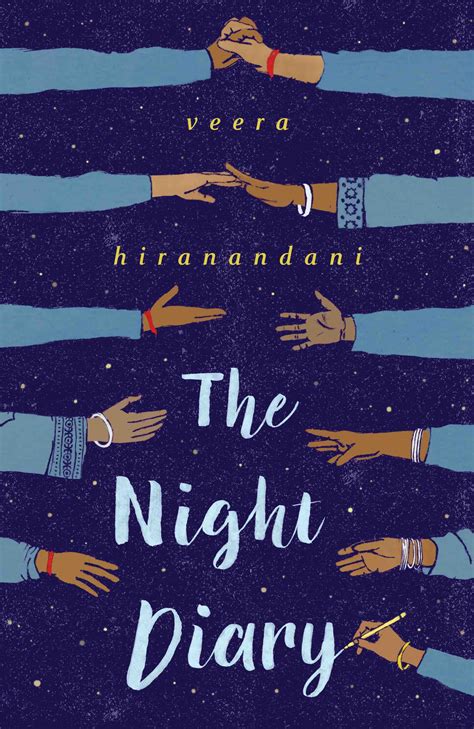
It’s 1947, and India, newly independent of British rule, has been separated into two countries: Pakistan and India. The divide has created much tension between Hindus and Muslims, and hundreds of thousands are killed crossing borders.
Half-Muslim, half-Hindu twelve-year-old Nisha doesn’t know where she belongs, or what her country is anymore. When Papa decides it’s too dangerous to stay in what is now Pakistan, Nisha and her family become refugees and embark first by train but later on foot to reach her new home. The journey is long, difficult, and dangerous, and after losing her mother as a baby, Nisha can’t imagine losing her homeland, too. But even if her country has been ripped apart, Nisha still believes in the possibility of putting herself back together.
Much like Faruqi’s novel, there is a major theme of man-created boundaries suck for everyone. Focusing on religious differences when people once got along creates hostilities that rarely have anything to do with the person themselves. It’s all so senseless.
Nisha is particularly confused because of her mother and father’s interfaith marriage. Her mother is no longer around, hence the night diary, so she has the added pressure of navigating girlhood without her mother and being the buffer between her twin brother’s estrangement with their still grieving father.
The family dynamics are well-done. It’s clearly a family still struggling with the absence of the mother and with how Amil and Nisha’s father wishes to protect them from the news of the Partition and what it means, the twins still feel the tensions although they don’t understand the reasons.
The biggest theme is family, survival and trying to make sense of a scary, unjust adult world. The adults can feel cruel for no reason and Nisha, Amil and their father hurt each other because they don’t know how to communicate. Although it doesn’t seem like it will improve, it adds to the realism of what it must have been like.
The story also emphasizes the innocence of children too as Nisha reaches out to a Muslim girl for friendship during this fraught time because children don’t care about those constructs like that. They like the person until their parents tell the not to.
Both middle grade novels show that no matter what side of the Partition one ends up on, it’s a terrible time. I just wonder why there weren’t much show on how faith got the characters through this time. I understand they want to show religion shouldn’t be so important, but since it was such a big issue, I thought the families would be praying to their respective faiths in order to get through it. There was a bit of that with how Maha takes on her first Ramadan after spending so much time emphasizing her Americaness instead of Pakistani-Americanness.
Moreover, I’m surprised I could only find middle-grade novels focusing on this topic. I thought YA would be a great fit with coming of age themes, teens starting to realize how politics affects their lives, and familial heritage. Who knows maybe one will come someday. I’d also like to know more about the separation of Bhangladesh from Pakistan. It was briefly mentioned in The Partition Project which I had to agree with Maha’s assessment that having Pakistan be two land masses to the right and left of India sounds like a nightmare.


Leave a Reply