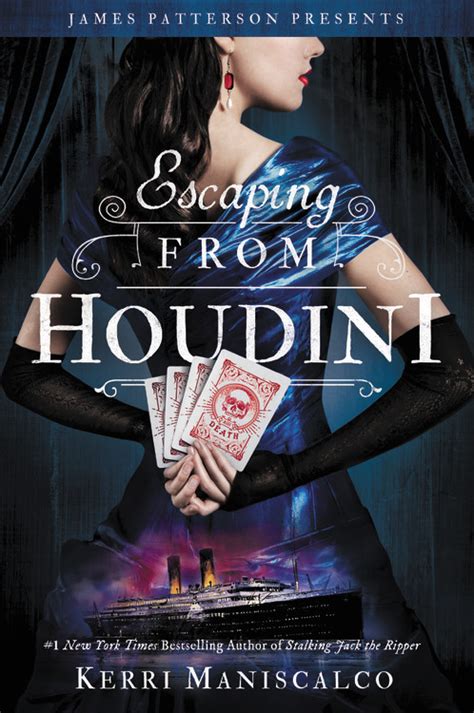
Audrey Rose Wadsworth and her partner-in-crime-investigation, Thomas Cresswell, are en route to New York to help solve another blood-soaked mystery. Embarking on a week-long voyage across the Atlantic on the opulent RMS Etruria, they’re delighted to discover a traveling troupe of circus performers, fortune tellers, and a certain charismatic young escape artist entertaining the first-class passengers nightly.
But then, privileged young women begin to go missing without explanation, and a series of brutal slayings shocks the entire ship. The disturbing influence of the Moonlight Carnival pervades the decks as the murders grow ever more freakish, with nowhere to escape except the unforgiving sea.
It’s up to Audrey Rose and Thomas to piece together the gruesome investigation as even more passengers die before reaching their destination. But with clues to the next victim pointing to someone she loves, can Audrey Rose unravel the mystery before the killer’s horrifying finale?
Have you ever wanted the Murder on the Orient Express to have a change of setting? Perhaps on a ship where there is literally no place to go when a murderer strikes because the ship is a two-week journey across the Atlantic Ocean? Do you want the variety of nationalities in the suspects to have more alluring backstories and skills that come from circus performers? Do you want the murders to be much more gory and creative?
This was an absolute treat!
The murder, and the murderer’s motive were shrouded in misdirection and chaos befitting the book’s Moonlight Carnival, making it very difficult for Audrey Rose, and I, as a reader, to figure out who it was. The primary suspect, Mephistopheles was just too obvious yet his arrogance and penchant for mayhem made it hard to take him off the list.
Character-wise, this was a tumultuous time for Audrey Rose. Newly-engaged and heading to a new mystery, the boat trip was supposed to be a relaxing fare but Mephistopheles throws everything into more confusion than the potential murderer. He represents a different side to science, one used for entertainment than innovation which Audrey Rose dismisses yet as the book continues she grows more intrigued. No longer having to be on constant guard against misogynists. A little less death. A group of outcasts with amazing skills and techniques, she doesn’t feel like a freak herself.
Mephistopheles and his illusions represent an intoxicating freedom that Audrey Rose never thought she wanted. That’s why everyone enjoys the circus he muses, and she is not the only female to follow the allure. She, her cousin Liza, and several other rich debutantes get swept up with these degenerate performers highlighting the double standards of class and decorum. Their polite society restricts females a lot, yet they can’t quite allow themselves to dismiss their prejudices and disgust with those who have the freedom they want. It’s jealousy. But Audrey Rose tries to convince herself that her growing attraction to the circus-life Mephistopheles represents is just her going undercover.
While readers will likely guess that Thomas and Audrey Rose are end-game, Maniscalco throws a plausible wrench in the romance in regards to the limits of trust (of which Thomas showed amazing amount with endearing vulnerability at the end) and Audrey Rose evaluating if this attraction is part of cold feet or a real seed that she isn’t ready for commitment as she thought. After all, Thomas is the only one who treats her as an equal but he is also her first and only relationship. Maybe she had dismissed other possibilities for other men to understand her like he does.
Mephistopheles fits the devilish archetype he named himself after. Too charming to be trusted all the time yet you can’t resist. Plus he was able to bond with Audrey Rose in an unexpected way as a racially-mixed nobility. How much of it is true is a different question.
However, in being drawn to Mephistopheles readers may be disappointed that a lot of other plot threads are thrown to the wayside. Thomas is more scarce due to the deal Audrey Rose made with Mephistopheles. The plot thread of her cousin Liza running away with Houdini is important yet Houdini himself isn’t as present as much one would expect considering the title. Perhaps Maniscalco didn’t want to put too much historical revisionism in that sense. The compassion for the victims is more notably absent and the investigative elements are pushed back until the third half, focusing more on Audrey Rose’s undercover work and Mephistopheles.
I’m sorry, he really stole the show. Or the book as the case may be.
However, I’m still giving it three stars because I did enjoy him, and how he/the book challenged Audrey Rose emotionally and mentally and reaffirmed her reasons for choosing Thomas. Again, the factors similar to Murder on the Orient Express were well-done and love the creative blend of macabre murder with circus chimeras.
4 stars


Leave a comment