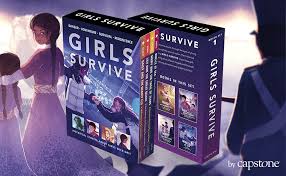
I finished! I finished the series, and thus finished my historical read-through of the year. Wahoo! This was an excellent series for historical fiction lovers, getting into the underrated parts of history as well as several well-known events. Even more groundbreaking were not only the diverse set of protagonists, but that they went beyond the 60s.
The last 11 books here are ones I was saving for last as they featured events I had vague knowledge or never heard of. So let’s get to it.
This batch of Girls Survive books focus on historical events I already know, and have been covered by Lauren Tarish’s I Survived series.
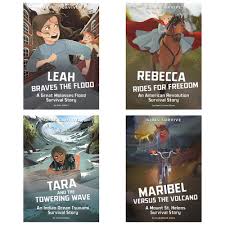
As I mentioned before, it is why I initially thought it was a rip-off riding on the coattails of the former’s popularity. It’s not entirely, but Leah Braves the Flood by Julia Gilbert bears several similarities to I Braved the Great Molasses Flood by Tarish. Both feature Italian immigrants reeling from the loss of their mother, and desire for home while remaining with their living relative who wishes to stick it out. Both want to pursue schooling and life beyond what’s expected of her. Both end up trapped in the flood and struggle in a small space to get out without suffocating themselves or their friend.
Still an enjoyable book, and the endings differ, but if you read them concurrently, the parallels are distracting.
Gilbert’s other book covering the Schoolchildren’s Blizzard, Maddy and the Monstrous Storm, was better in delivering a rootable story about the city girl transplant learning that she does have the hardiness and courage to survive the prairie.
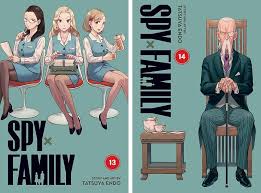
The latest chapters in the Spy x Family saga are as thrilling, and funny as usual. I didn’t expect for there to be a spotlight on Mr. Henderson and Martha, much less have a tragic romance during the war, but I loved it! It reminded me a bit of Fullmetal Alchemist. While there is a lot of attention paid to the child protagonists, Anya, Becky, Damian, etc. We get flashbacks to the war that deepen and add insight to the adult characters and the world at large.
The Desmonds continue to be the freakiest family. I mean, from how Mrs. Desmond acted at the fair to her own son, there is something majorly off about her. But her friendship with Yor is surprisingly sweet?
Can’t wait for more, especially since I already saw spoilers about what’s coming next and I want to see the context for it.
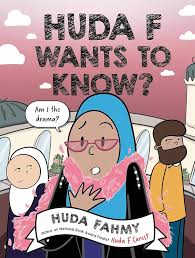
Huda F. Wants to Know? by Huda Fahmy
Huda Fahmy is ready for junior year. She’s got a plan to join all the clubs, volunteer everywhere, ace the ACTs, write the most awe-inspiring essay for her scholarship applications. Easy.
But then Mama and Baba announce the most unthinkable news: they’re getting a divorce.
Huda is devastated. She worries about what this will mean for her family, their place in the Muslim community, and her future. Her grades start tanking, she has a big fight with her best friend, and everything feels out of control. Will her life ever feel normal again? Huda F wants to know.
The final book in the Huda F. memoir is just as irreverent and relatable as the others. Tackling a controversial topic in the Muslim world, Huda not only has to deal with the splinter in her family, but ensuing panic attacks and isolation.
Huda is understandably angry and upset about the change in her life. It affects all aspects of her relationships and her schoolwork. This fuels her angst that her junior year is not happening the way she planned, and she pushes people even further.
Honestly, Huda was a bit difficult to root for this time around. Which is the point as several of her sisters call her out on her selfish behavior, and hysterics. This dovetails with how mental health, and panic attacks aren’t addressed much in their community, and Huda’s journey to learning to acknowledge and process her feelings.
However, the mental health aspects feel glossed over, focusing more on Huda’s interiority rather than see her practice those lessons in scene. Telling rather than showing, and the short page time makes the end feel rushed.
A nice work that could have benefitted more pages.
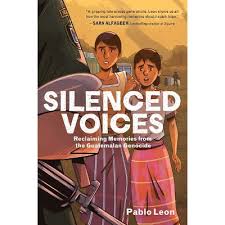
Silenced Voices: Reclaiming Memories of the Guatemalan Genocide by Pablo Leon
1950s Hollywood: Every actress wants to play Salome, the star-making role in a big-budget movie about the legendary woman whose story has inspired artists since ancient times.
So when the film’s mercurial director casts Vera Larios, an unknown Mexican ingenue, in the lead role, she quickly becomes the talk of the town. Vera also becomes an object of envy for Nancy Hartley, a bit player whose career has stalled and who will do anything to win the fame she believes she richly deserves.
Two actresses, both determined to make it to the top in Golden Age Hollywood—a city overflowing with gossip, scandal, and intrigue—make for a sizzling combination.
But this is the tale of three women, for it is also the story of the princess Salome herself, consumed with desire for the fiery prophet who foretells the doom of her stepfather, Herod: a woman torn between the decree of duty and the yearning of her heart.
Before the curtain comes down, there will be tears and tragedy aplenty in this sexy Technicolor saga.
While this has gotten a lot of stars and attention from celebrity book clubs, I was disappointed.
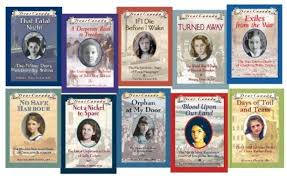
Much like it’s US counterpart, Dear Canada features the fictional diaries of pre-teens, and some teens during important moments in Canadian history. Since we have no education about events happening north of our borders, this was an educational primer for me. It was super interesting what events were the same, and what were unique to Canada.
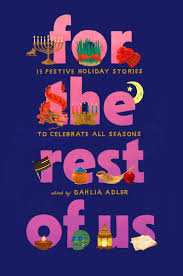
From Lunar New Year to Solstice, Día de Los Muertos to Juneteenth, and all the incredible days in between, it’s clear that Americans don’t just have one holiday. Edited by the esteemed Dahlia Adler and authored by creators who have lived these festive experiences firsthand, this joyful collection of stories shows that there isn’t one way to experience a holiday.
Is there anything better than getting to join your friends or loved ones in a holiday celebration? These authors bring you into their homes for their beloved traditions, sharing the warmth, trials and peace these celebrations bring.
Ah, but I did mention trials. Whenever family comes together, sometimes spats and hurt feelings are an unavoidable conflict. Especially when you’re trying to be yourself. Kelly Loy Gilbert deals with the generational divide and homophobia in “This is How It’s Always Been.” Olivia wants to bring her new girlfriend to Lunar New Year because she wants to share it with Laurel, and because part of her wants to know whether or not her family will accept her. But it becomes more than that as she realizes their non-acceptance isn’t going to taint her happiness or her self-esteem.
“A New Day” by Abdi Nazemian covers similar beats to Olivia’s story as his protagonist hides his boyfriend from his disapproving Maman to keep family peace on Nowruz (Persian New Year). An aim even more complicated by the dawn of COVID restrictions. While it has the same premise, the voice was funnier. I enjoyed both.
Another one I enjoyed was Aditi Khorana’s “The Return” where Lakshmi is obligated to educate her elitist classmates about Diwali, and finds the courage to call them out on their privilege and ignorance.
A really moving story I enjoyed was “Honor the Dead to Honor the Living” by Sonora Reyes. A girl with schizoaffective disorder tries to get her family to celebrate Dia de Los Muertos instead of burying the memories of family members who’ve died too soon. This was poignant one in discussing grief and her own fears about being forgotten as a shameful secret.
Another story I enjoyed was “Habari Gani” by Kosoko Jackson. It also deals with grief through eight emotive letters from son to his dead mother, sharing his feelings about Kwanzaa and how the memory of her life upheld the eight tenants.
“Merry Chrismukkah, Loser” by Katherine Locke was a lovely way to end the collection in classic rom-com standard as Noa and Jordan grapple with their unresolved feelings through numerous funny debates.
Those were my favorite stories, but there were other entries that readers will enjoy as the anathology covers a wide spectrum over the twelve months. For example, Valentine’s Day. Technically not an underrated holiday, but Laura Pohl puts a unique twist to it in “P.S. I (Don’t) Love You.”
Elis, a Brazilian exchange student, engages in a rom-com mishap of sorts when he sets out to get his best friend together with his crush so he’d can alleviate his jealousy over how focused his friend is over a crush and not their dwindling time together, and what it means for their friendship.
“Holi Hail!” by Preeti Chhibbier also deals with romance. Vritika has a multi dimension imagination trip that helps her to find the joy of Holi and letting go of grudges when her ex dumps her and moves on way too quickly.
“Eid Without a Plan” by Karuna Riazi, and “Hill Country Heartbeat’” by Candace Buford are more introspective.
The former deals with anxiety and procrastination as the protagonist faces as she tries to figure out what she wants during her gap year and planning Eid harvest festival in place of her grandmother. The latter features a girl’s homecoming to Texas and grappling with how things changed and blatant bigotry.
The two Jewish stories, “Elijah’s Coming to Dinner” by Natasha Diaz, and “Making Up is Hard to Do” by Dahlia Adler forgo romance to focus on friendship. Diaz’ story is similar to the Holi entry where a family prank war has Aviva realizing the love of her cousins and that she’s truly wanted in the family. Meanwhile, Adler’s Jewish year long story has two BFFs coming to forgive each other after a year of abandonment and estrangement, reflecting the holiday’s focus on forgiveness.
The only story I didn’t enjoy was ‘‘Tis the Damn Season by A.R. Capetta and Cory McCarthy. It focuses on the winter solstice, and with sprites like Puck, and Birch it’s bound to be more fantastical. But I was just confused.
4 stars. A nice anthology that brings more holidays to the forefront for all to enjoy.
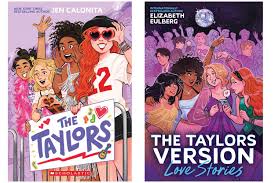
This is going to be a unique as The Taylors are two novels, one middle-grade, one YA by two different authors focusing on the same group of friends as they navigate love and friendship through their namesake, Taylor Swift. So let’s start with Calonita’s.
Taylor (aka Teffy to her family) is terrified to start middle school.
She wishes she could fade into the background, unnoticed. But on the first day of school, she finds herself in the spotlight when it’s revealed that her homeroom class has four girls all named Taylor! There’s a couple of things they can agree on: Taylor Swift is the greatest singer-songwriter of all time…and they are definitely going to need nicknames.
Soon, Teffy’s outside her comfort zone, going out for cheerleading and starting a friendship bracelet-making business. And when the Eras tour comes to town, the four friends will do whatever it takes to get tickets.
But then, a surprise betrayal changes everything. Teffy’s learning to speak up for herself, but it’s hard. Can she say what’s on her mind and keep her new friends for good?
Sad to say that although I’m a fan of a lot of Calonita’s works, this one was an average title.
Part of the limitation is that it the story is only viewed from Teffy’s lens, and her journey as a shy wallflower learning to become confident, and trusting that her friends won’t automatically leave her for the popular girl.
Not only was it not the most original coming of age story with another predictable plot of kids plotting to raise money so they could buy tickets for something they want, but it felt more like it was trying to set itself up for the next book. You know, establish each Taylor’s personality, and some of the supporting cast.
But I suppose any Swiftie would appreciate how the chapter titles are her songs, and relate to the love the girls have for their favorite singer and how it unites their friendship.
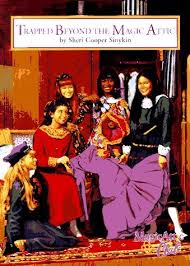
Perfect since there are five girls in the Magic Attic Club. What is it, you may ask? Released in the mid-90s, the Magic Attic Club was a brand of dolls with accompanying books and accessories encouraging kids to embrace their imagination and friendship. Apparently they were very popular back then because I found a wiki and everything.
Here’s the summary from the fan-made wiki: The line focuses on a group of ten-year-old girls–Alison McCann, Keisha Vance, Heather Hardin, and Megan Ryder, and later joined by Rose Hopkins–who are given a magic key bestowed by an enigmatic woman, Ellie Goodwin, which gives the girls access to her attic. In the attic is a trunk and wardrobe filled with costumes, and a magic mirror. When the characters dress up and look at themselves, they are transported into many different worlds both past, present, and fantasy. The adventures provide life lessons on how to deal with situations in the girls’ personal lives. After their first adventure, the girls form the Magic Attic Club that they share as a secret, and they make a promise to share all of their adventures with one another.
It’s a bit of magic, a bit of history, and thanks to Internet Archive (go donate!), I was able to read all thirty books and its four super specials. Here are my five favorites. One for each girl who get five books each.
Heather Takes the Reins: This was a fun story where the real world plot has Heather facing pressure from her quiz bowl team to carry them to victory. Thanks to her drassage-riding adventure, she learns the importance of finding everyone’s (and every horse’s) personal strengths and learning to communicate that a team can’t rely on one person, it’s called teamwork for a reason.
Megan’s Masquerade: Contrary to what the cover looks like, Megan goes back to the Revolutionary War. Not only was it fitting with my general historical fiction theme this year, but has an awesome message about history is not only about war and important figures, but also about the ordinary citizens that affect change even though their names aren’t in history books.
Keisha Discovers Harlem: Not only is it a good primer about the Harlem Renaissance, communicating the excitement and creativity of the era, but highlights that African-American history isn’t confined to the Civil War, and the Civil Rights (important as they are) and suffering, but they had joy and prosperity in their community as well.
Alison Rides the Rapids: I think this was the most relatable of the books as no matter who you are, chances is that you’ve dealt with anxiety over a test or project. This had a good message about learning to keep a cool head under pressure, and tackling things one section at a time.
Rose Faces the Music: Another nice message about learning to deal with consequences of one’s actions, and how things can get quickly misconstrued and exaggerated in the world of DC politics.
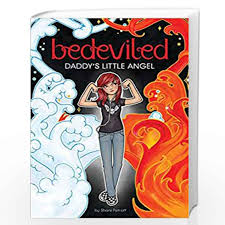
“Mom always said my dad is the devil. I never knew she meant it literally!”
All Angel’s father (a.k.a. the Devil) wants is to be a part of her life. And in return he has the power to give her anything she wants—including popularity and a date with her long-time crush, Cole Daniels. But Angel will only accept him on her terms: get out of the devil business and leave his special powers out of the equation. Is Angel condemning herself to an eternity of lunch at the losers’ table? Or can she and Daddy Dearest strike some kind of deal?
Ah yes, I found the second book of this series about thirteen years ago at the library book sale. Perhaps more. My mom asked if I wanted to buy it, and I passed, but it stuck in the grey folds of my mind, and I’ve finally read the series.
Thanks to the wonder of Hoopla (available to anyone who has a library card so hop on it), I’ve been given the chance to finish the rest of the Girls Survive series so let’s get to it.
This batch of books are historical events I already know of thanks to class/Dear America so I didn’t get any new insights to it, but they would be intense primers for kids just learning about history.
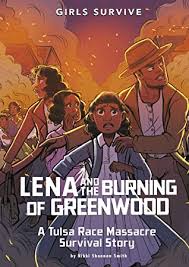
The two most impactful were Lena and the Burning of Greenwood by Nikki Shannon Smith, and Lucy Fights the Flames by Julie Gilbert.
The former may be more familiar to people as the Tulsa Race Massacre. Greenwood was the name of the black part of the town, the Black Wall Street of America at the time and as one can imagine, earned the ire of the whites by existing and successful. Smith did a good job of not only highlighting the sheer horror of the situation (it was literally a massacre, there is no downplaying that with Lena in fear of her family and entire neighborhood being killed by the whites looting their town or the bombs being dropped on them).
But it is not only tragedy, she puts emphasis on how they will rebuild, and the dignity of their community seeing them through. Nothing will make them cower or diminish their accomplishments, that would be letting the bigots win.
Lucy Fights the Flame gets a first-person POV of the Triangle Factory Fire. The Dear America book, Hear My Sorrow, on this subject only views the fire from the outside, witnessing helplessly as girls jump or burn to death. Lucy, an young garment worker is actually in the factory when the fires starts and Gilbert makes it a heart-pounding immersive experience, highlighting all the ways the unsafe factory conditions led to their deaths.
The other two books by Nikki Shannon Smith trails similar themes in her other books, Sarah’s Journey West, and Ann Fights for Freedom ie. the importance of family, a young girl learning about the bigotry of the real world and finding the courage she never knew she had in the face of danger. Sarah’s Journey West highlights the often forgotten black pioneers heading west for a new life during the Gold Rush which is admirable. But dragged a bit compared to her other stories. Can’t really blame her as it does sound like walking on the prairie trail was tedious in certain stretches. She also wrote a lot in the Author’s Note about how she wanted to emphasize how the Gold Rush and subsequent manifest destiny led to the displacement of Native Americans, but they were only present in one chapter, so if she wanted to emphasize it I wished she had put them in more.
Ann’s Fight for Freedom was a nice story, perfect for American Girl fans who wanted more action from Abby in her journey on the Underground Railroad as Ann takes charge of her family when her Dad gets captured mid-escape. I also enjoyed how Ann was distinct from her other protagonist in the series, being “an old soul” in a young body.
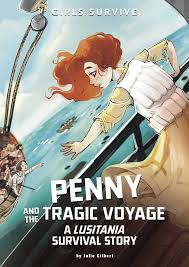
The two other Gilbert books I read focused on sea voyages: Constance and the Dangerous Crossing, and Penny and the Tragic Voyage. The former, Gilbert takes a more thoughtful tone befitting a young girl in the 1600s on the Mayflower. More concerned with religion and practicality of finding life in the New World although Constance gets to be the hero of the story, solving major problems in the historical narrative like when the mast was broken, suggesting a new Mayflower Compact and so on. Honestly, I’m not a fan of when the original character becomes the originator of historical events nor I’m a big fan of the 1600s so this book was meh for me.
Penny’s book was more interesting as it is probably the only lower grade historical novel focusing on the sinking of the Lusitania. It was just as tragic as the Titanic even though it featured less people because it was yet another example of how mitigating factors came to spell ruin. Set as WW1 was heating up, the passenger ship gets hit by German torpedoes and is widely believed to be the reason the US joins the war. False as the US joins two years later, but it did prompt widespread anti-German sentiment so people were more sympathetic to joining the war. I also learned that the British government had the opportunity to send help, but didn’t because they hadn’t wanted the Germans to know they decoded their messages. Horrible but such was the nature of war.
Next are books of more historical events I know, but specifically comparing it to their I Survived counterparts.
 #anathology, #ashesoftheacademy, #avatarthelastairbender, #emilybowencohen, #faitherinhicks, #graphicnovels, #guatemalangenocide, #history, #hudaf.wantstoknow?, #hudafahmy, #indigenousmcs, #jenxu, #kikihughes, #krhodes, #legendofkorra, #manga, #memoir, #michaeldantedimartino, #mysteryonpenquanisland, #pabloleon, #patternsoftime, #rachelreads&reviews, #silencedvoices, #spyxfamily, #tatsuyaendo, #twotribes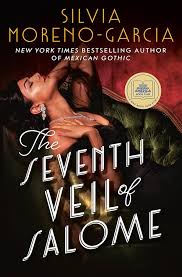
 Rachel Reads & Reviews
Leave a comment