-
Whatever After
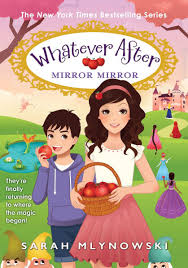
As I may have mentioned, besides being a year of historical fiction, I’ve also decided to dive into some nostalgia. Whatever After came out back in 2012, and I only got through the first seven books before dropping it. So it was interesting to see how the story evolved since I last picked it up.
The plot of the first book is: Once upon a time, my brother and I were normal kids. The next minute? The mirror in our basement slurped us up and magically transported us inside Snow White’s fairy tale.
I know it sounds crazy, but it’s true.
But hey — we’re heroes! We stopped Snow White from eating the poisoned apple. Hooray! Or not. If Snow White doesn’t die, she won’t get to meet her prince. And then she won’t get her happy ending. Oops.
Now it’s up to us to: Avoid getting poisoned
Sneak into a castle
Fix Snow White’s story
And cross our fingers that we make our way back home. . .
The rest of the series predictably follows the siblings as they venture into each fairytale, sometimes accidentally messing it up, sometimes intentionally and the new happily ever afters they prompt.
That’s the gist of what I remembered, but I should have kept going after book 7 because Mlynowski introduces an overarching mission for Abby and Jonah to rescue Maryrose (the fairy that sends them through all these fairytales) from her cursed mirror. Little by little, the cause of Maryrose’s curse, her greater family, and the reason why she sends Abby and Jonah to fairytales is revealed culminating in one big finale.
(more…) -
Kelly Yang Interview
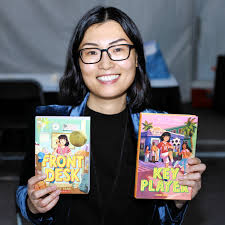
Kelly Yang is the award-winning author for kids and young adults with popular titles such as the Front Desk series, Parachutes, Little Bird Laila, and more. She graciously took the time to answer my questions about her work, and share what’s coming next. Enjoy!
1. When did you feel ready to start pitching your own book, and how did your first publication come about?
I wrote my first book FRONT DESK originally for my son, to get him to read and to tell him about my childhood. At the time, I didn’t think it would be a book, but he enjoyed the experience of me writing and reading a chapter a day to him so much that he encouraged me to do something with it.
So it was really because of my son that I felt ready to start sharing it. I sent it to an agent in New York and from there, we submitted it to publishers.
In total, FRONT DESK was sent to 20 publishers, and 19 rejected it. But one woman, Cheryl Klein, at Scholastic, decided to take a chance on it!
(more…) -
Seeing Stars Review
*I received this free ARC from the author in exchange for an honest review.*
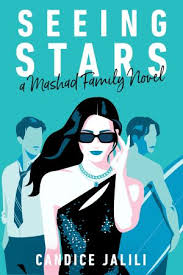
Mona Mashad grew up on camera, with millions of fans around the world tuning in to see her every move. Nothing was off-limits: not her first pimple, her first crush, and definitely not the death of her father, Mashad family patriarch and the best dad ever, Ali.
After more than a decade on screen, Mona has discovered the key to being the most famous teenager on the planet: never let your guard down and never give your heart away (because if it breaks, the whole world will know).
But she didn’t expect to meet Lucas Sterling, notorious heartthrob and only son of Jordana Sterling, the beloved President of the United States. Lucas sweeps Mona off her feet—he literally saves her when she falls down the stairs at the Met Gala—and for just one second Mona wants to let her walls come down. So, it hurts a lot when he betrays her, and even more when their moms demand they pretend to keep dating to appease their respective fan bases.
Normally, a fake relationship would be manageable for Mona. After all, she’s used to playing a part for the camera. But pretending to fall in love with Lucas when she’s still furious with him is no easy feat. And things get extra complicated when she meets Kai. A (hot) surfer and all-around normal guy. For the first time in her life, she can forget the cameras and just be…Mona. Could he be the escape from this fake reality that Mona needs? Or will fake dating America’s most eligible bachelor lead to real feelings?
For Jalili’s sophomore novel she got to show off her versatility by taking us through the Mashad’s latest reality show all about Mona, and her now infamous fake romance.
I’ve noticed some authors tend to have reoccurring trends with their characters with certain traits popping up in different protagonist, but Mona, and the structure of her novel is drastically different from Josie’s narrative in Finding Famous. While Josie has a tendency to overthink, spiral and overshare, Mona epitomizes confidence and has an instinct for thinking about how her actions would look for the Mashad brand, for viral moments, and for tv. FF was your typical normal girl thrust into Hollywood while this is a third person omniscient with talking head confessionals from the reality show.
As such, Mona feels a bit distant to the reader. While we are let into her head as she aspires for this reality show to be no-holds barred in telling the truth, one always gets the feeling that there’s a barrier between. It’s never a feeling that Mona is an unreliable narrative, but that she’s distant enough from the events that she’s able to retell the story and rehearse it into perfect soundbites.
But hey, that’s entertainment, and with the reality show angle, it sells the entertainment value. It was like a soap opera between the semi-self destructive/impulsive tendencies of Mona, the fake-dating angle, and the love triangle she gets entangled in despite her efforts to protect her heart.
Now, love triangles can be tired, but in Jalili’s hands, it works. You’re not quite sure who will be endgame as both are strong contenders.
Sterling matches Mona in having a similar life-style, similar player dating style, and similar hardship in losing a father while dealing with a workaholic mom who tends to monetize private moments for their careers. She can relate with him.
Kai is the normal boy who doesn’t care about pop culture whatsoever, allowing Mona to have a chance to have a friend who doesn’t know anything about her/have expectations of who she is with all the benefits and baggage that come with being a Mashad. She can relax with him.
In fact, I thought Kai and Sterling were both so good for Mona I was thinking “Maybe a throple could work?” or “Maybe she ends up with one, gets amicably divorced in the future/he dies, and gets a second chance romance with the other.” Yeah, I was equally rooting for them both.
And while the love triangle is a big part of the story, I’d be remiss if I didn’t mention the impact of family. While Josie was learning about her half-family, Jalili can dispense with the “getting to know you” and immediately show the fierce bond the Mashads have for each other. Within one scene, we see exactly how importance the sisterly relationship is between Mona, Meesha, and Melody. Readers can appreciate other sides to their personalities that they wouldn’t have been able to from Josie’s POV because Josie doesn’t have that history, Mona does.
We also see how that bond can hurt as well with Mona feeling lost having to hide her fake relationship from her sisters, and just feeling left behind with Melody and Meesha happily coupled while she’s dealing with a shitshow.
There is the fact that Mona has been defined as the wild Mashad. It’s a role she’s grown up with, and leans into it, knowing that it’s her brand and her shield when she needs to defend someone she loves. However, it also pigeon-holes her that people tend to only see her mishaps. It was particularly piercing during a fight with Meesha when she basically implies Mona was an idiot with no self-respect. You could feel her pain. It doubly hurts that Mona does know her worth most of the time.
She knows she’s pretty even though she’s “fat” (you know, Hollywood fat) compared to her sisters. She knows she’s smart, getting into Harvard on her own merits. She’s confident in she thinks that as long as she knows her good qualities, she’s fine. But one can tell she needs more. She needs that shoulder.
The shoulder that was her father’s. Ali always believed that she was a star in of itself. Another star for Jalili is that a reader can palpably feel Mona’s love and loss for her father whenever he’s mentioned on the page. Their bond was real, and the blurred lines between public consumption of Ali’s reputation and familial remembrance makes it feel cheap. It’s poignant as it dovetails nicely with Mona’s own confusion about who the real Mona is as the brand Mona, and personal life Mona are enmeshed with the fake dating scam.
Mary also gets a chance for nuance. She’s such an interesting character with her dual sides. On one hand, she’s single-minded, manipulative manager of the Mashad empire where even coercing her daughter to fake date a guy she hates without compunction feels so icky. She’s not warm, talk about your feelings mother. Yet she carries so much feeling for her family, arguably the same intensity of emotion that Mona has, only she’s learned to control it. You can see a lot of similarities in the two which is probably why they butt heads just as much. The reveal of how she and Ali really met was so sweet. Honestly, I’d love to read a prequel with her.
The other characters get their chance to shine too. While Josie is involved (and we get some insight to how her inclusion in the show has been received in-universe), and has some pretty funny moments, Jalili wisely keeps her as a tertiary character, breaking the norm where characters make their former protagonists big parts in the sequel. It allows the reader to be more immersed with Mona’s POV and her world which is drastically different from Josie’s.
We get answers to how Meesha’s breakup with Bunny went (although I still wish to know how the public outside of Bunny’s fandom reacted to the news, I understand Meesha dealing with biphobia would probably require a different book to go in-depth), Josie and Timmy’s continued relationship and Axel and Melody’s marriage. Axel kinda annoyed in the first book, but he was funny here. Maybe it was colored by how Mona is happy because he makes Melody happy even though his new age woo-woo is ridiculous.
New characters like Sterling, and Kai are well-done, and his little bro, Rudy, is absolutely adorable. Def fav character in here. Plus Jalili’s worldbuilding is top-notch, creating a parallel Hollywood world with its own brands, celebrities (namedropped alongside well-known ones or thinly veiled expys), more tolerant world with a feminist president (we can only dream!).
Spoilers below about the end of the love triangle
(more…) -
Family Tree
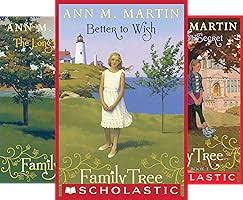
It’s no surprise that Ann M. Martin writes well. Who else could write a pop culture phenomena as the BSC? But while the BSC may be the most popular of her works, I want to highlight this series, combining warm, small town insight and historical fiction.
Main Street is my favorite out of Martin’s works, and this quartet follows in that vein with its setting switching from Lewisport, Maine to NYC to Princeton, NJ, allowing readers to see the patchwork community of each town and how it has changed over generations.
It has the added bonus of historical evolution where milliners, and knick-knack stores give way to coffee shops and franchises. One floor schools become big institutions, and female students wear jeans everyday instead of dresses.
Through each protagonist Martin charts a realistic change in perception as each girl grows older, questioning the adults around them including their secrets and prejudices and how it shapes them when they become adults and parents.
Martin treads over familiar themes through each book, special needs kids and the discrimination against them, blended families, and secrets. It might seem repetitive but is actually a fitting motif that ties the four generations of women together. It demonstrates how even though they grew up in different time periods, some things continue to touch on them and how each generation improves upon the next.
The overarching theme of secrets adds suspense and conflict between the mothers and daughters, a course that doesn’t always run smooth but you can feel the love at the end when all is aired out in the finale.
The quartet is more thoughtful than her other series, the women sometimes seem wise beyond their years, but I feel it adds to the sense of nostalgia with each reflecting on childhood and the passage of time, and the uncertainty of the future.
-
Debbie Dadey Interview
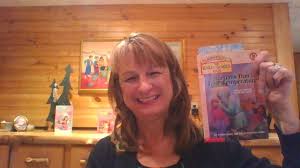
Debbie Dadey is the prolific author of Mermaid Tales, and co-author of the Bailey School Kids series whose series has been reprinted and rebooted several times since its inception in the 90s. She graciously took the time to answer my questions about her long-time collaboration with Marcia Jones, inspiration behind the series and more.
1. When did you begin writing, and how did you break into the industry?
My first book came out in 1990 and I had been writing about a year and a half before I sold that. It was Vampires Don’t Wear Polka Dots, co-authored with Marcia T. Jones. I actually sold a greeting card (co-authored) before that It was my first official sale and I have it hanging in my office.
2. What were some of your biggest influences?
As a school librarian, I noticed so many kids didn’t want to read a baby book (their term for picture books), but novels were just too hard. I wanted to create something that would be just right for those kids.
(more…) -
Dear America authors
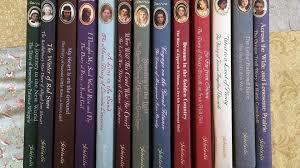
Well, I did it. Finished the 43 book series, and didn’t give myself eye strain this time. Yay! Anyway, I’ve already written my top five books so now I want to discuss the authors. Much like in Animal Farm, some authors are better than others.
My favorites tend to fall to Kristina Gregory or Patricia McKissack. Gregory is behind such titles as the Winter of Red Snow (arguably the face of the book series as they commissioned a sequel to it when they tried to revive it in 2012) which was made into an HBO movie, Across the Wide and Lonesome Prairie, The Great Railroad Race, and Seeds of Hope. They nicely balance the historical struggles the protagonists would have faced at the time with distinct characterization and family dynamics. They felt like real girls, not only mouth pieces to impart historical facts.
McKissack’s work is much in the same vein, writing a majority of the African-American focused books like Color Me Dark, Look to the Hills, and A Picture of Freedom. Obviously, hers are a bit more dark because the treatment of African Americans in history is cruel and ugly. She manages to convey the seriousness and heinousness of the time without venturing too dark for the kids, and maintain strength and dignity for the characters.
I think the strength of their work is easily followed by Kathryn Lasky. Lasky wrote gems like Journey to the New World, Dreams in the Golden Country, A Time for Courage, and Christmas After All. Hers I would put third in strength because she tends to be keep things lighter. Her protagonists suffer death and sometimes prejudice, but there are usually happy endings for them. The strongest would have to be A Time for Courage about the beginning of WW1 and the suffragists. She really makes one inspired by the determination of those early suffragists and why it was vital for women to stand up and show they have the same rights and qualities as men while proving how utterly inane it was to hold back those rights.
(more…)#andreadavispinkney, #barrydenenberg, #dearamerica, #deborahhopkins, #ellenemersonwhite, #historicalfiction, #jimmurphy, #katelanjanke, #kathrynlasky, #kirbylarson, #kristinagregory, #lisarowefraustino, #marypopeosbourne, #middlegrade, #patriciamckissack, #rachelreads&reviews, #scholastic, #sherrygarland, #susancampbellbartoletti -
Book Highlight: First Things First
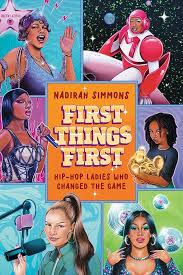
FIRST THINGS FIRST, hip-hop is not just the music, and women have played a big role in shaping the way it looks today. FIRST THINGS FIRST takes readers on a journey through some notable firsts by women in hip-hop history and their importance. Factual firsts like Queen Latifah becoming the first rapper to get a star on the Hollywood Walk of Fame, Lauryn Hill making history as the first rapper to win the coveted Album of the Year Award at the GRAMMYs, April Walker being the first woman to dominate in the hip-hop fashion game, and Da Brat being the first solo woman rapper to have an album go platinum, and metaphorical firsts like Missy Elliott being the first woman rapper to go to the future. (Trust me, she really did.)
There are chapters on music legends like Nicki Minaj, Lil’ Kim and Mary J. Blige, tv and radio hosts like Big Lez and Angie Martinez, and so many more ladies I would name but I don’t want to spoil the book! There are games, charts and some fire images, too.
Altogether, FIRST THINGS FIRST is a celebration of the achievements of women in hip-hop who broke down barriers and broke the mold. So the next time someone doesn’t have their facts straight on the ladies in hip-hop, you can hit them with “first things first” . . .For those who want to get to know more about their favorite hip-hop artist, be inspired by the black women who helped shape the music scene from the beginning or like me, want to learn something new, this is a fun primer.
Set in the same conversational tone as her blog, The Gumbo, Simmons gives readers brief biographies of over thirty women who broke through the male-dominated genre of hip-hop with huge firsts such as first one to bring “Yo” to the mainstream, first to perform a rap in the Grammys, and more. She doesn’t confine herself to only performers as she tells readers that hip-hop has a whole entourage behind it, building the culture. She covers the fashionistas, the choreographers, the actresses in hip hop movies, the music journalists, the radio hosts.
They all had a hand in putting hip hop to the mainstream as well as putting females in the space, proving they can cuss, rap and sing about hard-hitting topics just like the men.
Plus she keeps it fun with a chapter discussing Lil Kim’s impact as the blueprint for modern women in hip hop, a crossword puzzle on Big Lez to highlight the sheer volume of things accomplished in her life to why Queen Latifah needs a star in every category on the Walk of Fame, and an interview with the executive editors of the first female hip hop magazine, Honey. This allows her to break up the monotony of straight biography prose, and gives her a chance to add mention more women that she wasn’t able to devote full chapters to. I especially enjoyed chapters where she discusses favorite songs or lyrics, what they meant to her, and what they meant in the wider context of women in hip-hop.
It’s a book steeped in the hip-hop genre, and it’s clear that Simmons has the knowledge and passion that she knows/loves what she’s talking about. But if you have absolutely no idea about hip-hop, you might feel confused at the start.
You jump in, and she’s discussing terms like you’re already supposed to know about it. She explained some of the lesser known subgenres like crunk, and horrorcore rap, and terms like Afrofuturism, but I wanted a simple one like are hip-hop and rap interchangeable? Like is all rap hip-hop, but not all hip-hop is rap? I already knew a b-girl was short for female break-dancer, but someone else might have no idea what that means. And all these other rap groups and individuals, I’m sure if I had any idea who they were, I’d understand why it was a big deal that this woman or that rapped against them, but I was simply confused. The only one I knew was Jay-Z, Kanye, and P. Diddy which is kinda funny considering the scandals they are in now.
However, I did learn how instrumental P. Diddy was in lifting up these women, and other groups with his record company, and how he was considered the limit of rap. It’s a shame that he’s an awful person considering how visionary he was in changing the hip-hop landscape.
But she offers a lot of song suggestions, so if you want to get into listening, Simmons will clue you to the greatest hits of each woman.
So if you want to learn a bit more about major players like Queen Latifah, Mary J. Bilge, Missy Elliot, Megan Thee Stallion, Cardi B, Nicki Minaj and other rappers that shouldn’t be forgotten, check this book out.
-
Book of the Month: Magpie Murders
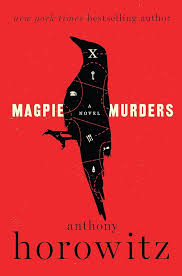
When editor Susan Ryeland is given the manuscript of Alan Conway’s latest novel, she has no reason to think it will be much different from any of his others. After working with the bestselling crime writer for years, she’s intimately familiar with his detective, Atticus Pünd, who solves mysteries disturbing sleepy English villages. An homage to queens of classic British crime such as Agatha Christie and Dorothy Sayers, Alan’s traditional formula has proved hugely successful. So successful that Susan must continue to put up with his troubling behavior if she wants to keep her job.
Conway’s latest tale has Atticus Pünd investigating a murder at Pye Hall, a local manor house. Yes, there are dead bodies and a host of intriguing suspects, but the more Susan reads, the more she’s convinced that there is another story hidden in the pages of the manuscript: one of real-life jealousy, greed, ruthless ambition, and murder.
First off, I’m very impressed by this novel because it’s basically two novels in one. A frame story that actually includes the frame and the outer story. The frame story is the titular Magpie Murders by the fictional Alan Conway featuring Poirot rip-off Atticus Pünd. It is classic Christie set in a quaint English village with its close-knit suspicious inhabitants. It follows the formula so my friend, and I sort of turned off our brains rather than solve the mystery. The whodunnit was well-done and made sense like any good whodunnit.
The more interesting part is how it intersects with the “real world” murder of its author which closely mimics the book’s events. Spooky especially since only two people have read the final draft of the Magpie Murders and he dies before they finished. So who is the mysterious third person who read it? Who wanted Conway to die?
Horowitz did a great job in making Conway so detestable that you can understand why the various people in his life would want to kill him. He’s a crank, super pretentious, and doesn’t even like murder mysteries. He thinks he’s meant to write better things and the Atticus Pünd novels are holding him back. He’s that guy, ugh. Plus he puts mean caricatures of everyone he knows in the books. Due to that last point, it makes the Magpie Murders eerie because you can draw parallels between the characters and their real-life counterparts, blurring the line of whether their motive to kill Alan is in kind or if he was adding a menacing fictionalization.
Susan, our intrepid narrator, and Alan’s editor is on the case because after a decade of reading mysteries, she has to find out the truth about Alan’s death. I enjoyed how she was able to comment on the tropes and suss out who may be the killer and who is the red herring. But as the novel points out, this is real-life so she doesn’t quite get it right away and when she does, she’s put in real danger. No accolades for saving the day here.
This was a fun novel, albeit confusing which was the main consensus between us. You’re engaged, but unless you’re writing everything done, you probably aren’t going to solve it because it’s the little casual remarks that are the big clues. Like we completely missed the real killer because how s/he was eliminated early on and never thought to believe they were lying.
Anyway, it was a good book which you’d expect from one of the head writers of the Midsomer Murders. I can imagine he felt very clever plugging in his show several times, and the BBC network.
-
Café con Lychee Review
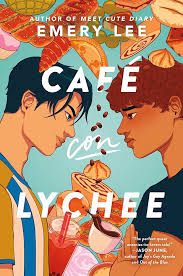
Sometimes bitter rivalries can brew something sweet.
Theo Mori wants to escape. Leaving Vermont for college means getting away from working at his parents’ Asian American café and dealing with their archrivals’ hopeless son Gabi who’s lost the soccer team more games than Theo can count.
Gabi Moreno is miserably stuck in the closet. Forced to play soccer to hide his love for dance and iced out by Theo, the only openly gay guy at school, Gabi’s only reprieve is his parents’ Puerto Rican bakery and his plans to take over after graduation.
But the town’s new fusion café changes everything. Between the Mori’s struggling shop and the Moreno’s plan to sell their bakery in the face of the competition, both boys find their dreams in jeopardy. Then Theo has an idea—sell photo-worthy food covertly at school to offset their losses. When he sprains his wrist and Gabi gets roped in to help, they realize they need to work together to save their parents’ shops but will the new feelings rising between them be enough to send their future plans up in smoke?
(more…) -
Bold, Brilliant, and Latine & Leyendas
Bold, Brilliant, and Latine by Alyssa Reynoso-Morris and illustrated by Sol Cotti
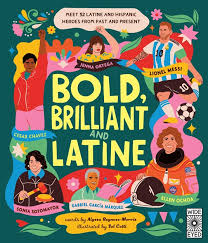
For the lower school set as it gives one page biographies of each Latino with emphasis on how they were a role model, and that kids can be like them too.
It has several well-known figures like Lin Manuel Miranda, Rita Moreno, Gabriel Mistral, Jenna Ortega, Frida Khalo, the Mirabal Sisters, Oscar De La Renta, Carolina Herrera, Marco Molina, Roberto Clemente, Rigoberta Menchúand so on.
But also introduced some new figures I haven’t heard of too. For example, Francisco Morazán, a politician from Honduras. In fact, in the mid 1800s, Nicaragua, Honduras, Costa Rica, El Salvador, Guatemala, Belize and Chiapas of Mexico was united in the Federal Republic of Central America, and he was president. He limited the power of the church, authorized divorces, legalized homosexuality and other reforms before they were rescinded when each became its own states.
Matilda Hidalgo was the first woman in Ecuador to vote. Scratch that, first woman in all of South America to vote, ushering female suffrage in Ecuador, and made many other firsts as first female doctor, first female Council member and so on.
Mario Vargas Llosa, Peruvian Nobel prize winner in literature for his magical realism novels, The Green House and The Time of the Hero.
Óscar Arias Sánchez, humanitarian and president of Costa Rica who kept peace in the region, diversifying its economy and winning the Nobel Peace Prize for ending foreign interference in the Cold War.
Evelyn Cisneros, first Latina prima ballerina in the San Francisco Ballet.
Francia Márquez, an Afro-Columbian activist who became VP of the country.
It covers a lot of people that if you’re a little versed in Latin American role models, you’ll already know, but it’s good for kids who are just learning. The art reflects that with a vibrant palette. But I still don’t get why Cotti made Rita Moreno blonde. She was never blonde in any of her roles.
Leyendas by Mónica Mancillas and illustrated by Isadora Zeferino
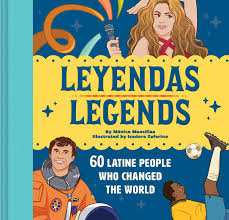
Since it has sixty rather than fifty two people, there is bound to be some overlap, but it did not stick to the usual historical figures. Rather it nicely balanced historical and contemporary, and was more in depth for the middle school crowd. Plus I like Zeferino’s art style more with its full colored lines.
While it has the usual suspects like Luis von Ahn, Celia Cruz, Mario Molina, Eva Peron, it has some fascinating underrated role models too.
Berta Cáceras, an Honduran indigenous activist who fought against the DESNA mining corporation, and was murdered for it. But for once, justice was served as her death led to the dissolution of the illegal dam/mine and the seven executives being convicted of her murder.
Máxima Acuña de Chuepe, another activist for Peruvian farmers against illegal mining whose case set precedent against corporate greed.
Jharrel Jerome, the first Dominican to win an Emmy for When They See Us, right after his star-making debut in the Oscar-winning Moonlight.
Maria Bueno, the Swallow of Sao Paulo who was basically the Serena Williams of the
Jean-Michael Basquiat was a Puerto Rican-Haitian artist who was basically the Andy Warhol of his day. Actually he was praised by Andy Warhol who admired his edgy, anti-establishment artistry.
Wilfredo Lam, a Chinese-Afro Cuban artist that brought African influences into his art, and into the Western world.
Walter Mercado, a Puerto Rican television personality who was the first person to have a show devoted to astrology, running for over 15 years.
Florentine López de Jesús, artisan of the Amzugo weaving style who revitalized and popularized her tribe’s art as part of Mexico’s cultural heritage.
Ruben Vives, the journalist that broke the Bell city corruption scandal and won the Pulitzer Prize for Public Service.
Both books have role models from almost every country in South America. Except poor Nicaragua and Uruguay. Surely, there must be some notable Nicaraguans and Uruguayans. Both books also have at least one Haitian role model which was surprising to me since I didn’t think Haitians were considered Latine since it was conquered by France and have lots of French roots as a result. Sure, it’s next to the Dominican Republic so perhaps there’s some crossover but I didn’t know it was a thing.
Nonetheless, both books will be a nice addition to any classroom.
-
Subscribe
Subscribed
Already have a WordPress.com account? Log in now.
 Rachel Reads & Reviews
Leave a comment