-
The Cuffing Game Review
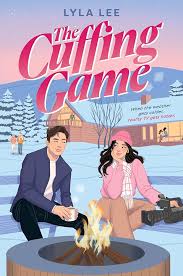
It is a truth universally acknowledged that when there is a hot person, there is also someone with a crush on them.
Mia Yoon has a plan for everything. Get a full ride to her dream film school in Los Angeles, behind her mom’s back, and escape her middle-of-nowhere hometown—check. Produce her own dating show starring other people and their crushes—check. But everything goes off the rails when she has to enlist the help of her own secret crush, Noah Jang, a boy she’d rather hate.
Despite being a campus celebrity voted “most eligible student bachelor,” Noah can’t remember the last time he was in a relationship. And he’s perfectly content with that, thank you very much, especially since just the word feelings makes him uncomfortable. But he can’t stop staring at Mia, who keeps glaring at him in class. And when she asks him to be on her dating show—as one of the contestants—he can’t say no.
As Noah goes on more and more romantic dates on The Cuffing Game and Mia watches from behind the camera, something feels off. With the showrunner and contestant slowly falling for one another, can the show still go on?
Lyla Lee can always be counted on for a feel-good rom-com that will make me smile. This one was no different.
(more…) -
Asgardians: Loki Review
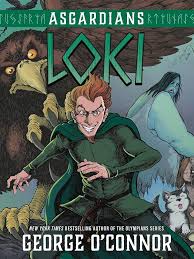
As night falls on Asgard there is one who does not dream. Loki, a trickster of epic proportions, has much to think on. He hearkens back to his challenge to the wolf Fenrir to break the strongest Dwarf-made chains. He remembers Thjazi, the jotunn in monstrous eagle form, and his pursuit of the apples of youth. And he worries he has fallen out of favor with his blood brother, Odin. Can he use his cunning and wiles to worm his way back in? Or, feeling spurned, will Loki choose to burn it all down?
Ah, Loki always steals the show as O’Connor notes in his Author’s Note. As the trickster archetype, it’s hard not to be entertained by his pranks, and when he receives his comeuppance for said jokes.
One can’t deny he always causes trouble, but the Asgardians tolerate them because they need him, and it’s that convenience that breeds resentment. As a jotun, Loki is always on the outside, and being used whenever the gods want starts to grind under his skin.
O’Connor does a great job in highlighting Loki’s isolation and the way the Asgardians create their own villain with how they use, and then disparage him. However, it doesn’t completely praise him as poor, misunderstood trickster god. He crosses a line that is hard to defend as he utilizes two innocent people rather than face the real gods he’s angry with because at heart, Loki is a coward.
Also, it is not stated within the text, but in the Author’s Note, I liked O’Connor’s insight into how both Odin and Loki are trickster gods, but because Odin is the head god, he is always within the status quo. His tricks save the day, and benefit him. Loki is the opposite in that his tricks cause the problem, and save the day (but probably causes another problem down the line) and often humiliate him in some way. He’s the bad side to tricks, and he has no where to go but further down the road of darkness. A self-fulfilling prophecy if you will.
Which brings me to the surprise secondary protagonist of the book, Frigg. She whose prognostication is greater than her husband’s, yet she tells no prophecies. Frigg knows all, but she is wise enough not to interfere because it is all pre-destined. It creates a compelling yet tragic arc, and I’m amazed how O’Connor adds depth to one of the hidden female figures of the Norse pantheon. Odin always overshadows her even though she’s more powerful, and it’s cool to see her get recognized.
I knew a few of the myths like Loki stealing Idunn’s golden apples, but the one involving Skadi’s marriage to Njord was hilarious. Initially, they seem disconnected, but they do build a sense of ominousness leading to Loki’s point of no return, and more importantly the end we were building toward-Ragnorak!
Honesty, that might be the one flaw to this book, and that it feels like too light, trying to fit in these last few myths before it comes to the big finale which is what O’Connor really wants to get to.
But now that he’s set the seeds I’m eager to see how it ends, and hope Ragnorak will be released soon instead of the three year wait between Olympians 11 and 12.
3 stars
-
Sunrise on the Reaping Review
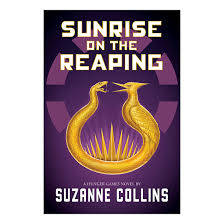
As the day dawns on the fiftieth annual Hunger Games, fear grips the districts of Panem. This year, in honor of the Quarter Quell, twice as many tributes will be taken from their homes.
Back in District 12, Haymitch Abernathy is trying not to think too hard about his chances. All he cares about is making it through the day and being with the girl he loves.
When Haymitch’s name is called, he can feel all his dreams break. He’s torn from his family and his love, shuttled to the Capitol with the three other District 12 tributes: a young friend who’s nearly a sister to him, a compulsive oddsmaker, and the most stuck-up girl in town. As the Games begin, Haymitch understands he’s been set up to fail. But there’s something in him that wants to fight . . . and have that fight reverberate far beyond the deadly arena.
(more…) -
Whatever Happened to Lori Lovely Review
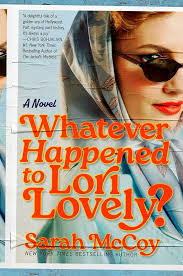
In 1969 twenty-three-year-old starlet Lori Lovely, the apple of Hollywood’s eye, shocks the world by ditching a promising film career to take vows of poverty, chastity, and obedience as a Benedictine nun. Gossip columnists and scandal sheets can’t get enough of the story. Why would a successful starlet take the veil? Was she hiding from someone? Did it have anything to do with the tragic death of her costar, heartthrob singer Lucas Wesley?
In 1990 Lu Tibbott is under the gun to complete her senior thesis in modern American history. Instead of spending weeks in dusty archives, Lu decides to dig into a true twentieth-century mystery and write about her aunt Lori, now the Mother Abbess at a cloistered convent in rural New England. Biographers, bloggers, and media types have long speculated about her aunt’s sudden departure from Hollywood. Mother Lori, however, has refused all requests for interviews—until Lu arrives at the abbey with a tape recorder in hand. To her delight, Mother Lori announces she’s finally ready to talk…but only if Lu is truly ready to listen.
Based on a composite of real Hollywood actresses like Ava Gardner, Olivia Hussey, and Dolores Hart, the latter being the most important as an actress who later takes the veil of God.
Starting with the frame story, this novel follows in the footsteps of The Seven Husbands of Evelyn Hugo, and Did You Hear About Kitty Carr, although McCoy makes the interviewer a little more personal by having Lou be Lori’s niece trying to write her thesis. She still bumps up against the ethical wall of how much of Lori’s personal life to reveal, and how history is mutable, written by the selective memory of the people involved.
Unfortunately this frame story, like almost all the other frame is less interesting than Lori’s past and reading through Lou’s musings on her own restlessness does not provide much insight or foil to Lori’s life. As for the twist in the end related to Lori and Lou, I saw it from the second page, so the reveal wasn’t emotional as expected.
Lori’s story was interesting especially as McCoy does a great job in describing the Italian setting, the swinging London scene, and Lori’s transformation from small town girl yearning for something more, her period of being gaslighted, and the spiritual healing she finds with the nuns. The spirituality infused throughout the novel, showing how it was present for Lori since the beginning helped set this book apart, and made it a more thoughtful, slow-paced read.
However, the narrative is hampered by the distance in Lori’s retelling. You never get the full depth of Lori’s emotions which Lou attributes to her hiding or skipping over parts of her story which makes sense character-wise, but isn’t fulfilling while one reads. Due to that distance, the characters didn’t grip me as much. Even narrative points like Lori’s stalker-manager, her friendship with Ginny, and her time with nuns have so much potential, but their impact is dulled because it’s told than shown.
The only thing that kept me reading was wanting to see if my guess on the twist was right.
Unfortunate as it has such an interesting premise, and Lori’s thoughts on religion, and spirituality are strong, but they’re not touched in detail, leaving what could have been a powerful book about how to achieve true balance, and peace after a life of excess feel like it’s just skimming the surface.
3 stars.
-
Ranking Cinderella Cleaners

13 year old Diana didn’t expect her new after-school job at her family’s dry cleaners to end up providing so much adventure. After all, it was forced on her by her harsh step-mom, and she can no longer participate in her beloved drama club. But slipping into the garments of the customers, Diana goes from Broadway to Homecoming. As long as she doesn’t get caught.
It’s a simple premise, but Gold integrates compelling relationships with Diana’s friends in school, her crush on Will, and her friends/enemies within the dry cleaners, not to mention the friction between her step-mom, her dad and her at home. It is because of these relationships that allow for there to be stakes when Diane bends the rules in order to help a friend or be a dumb teenager. The fact that she gets away with it most of the time makes it the ideal wish fulfillment for readers.
- Change of Dress: The first book of the series has a nice balance between introducing everyone, depicting close and realistic dynamics between Diane and her cleaner friends in a short span of time, and such a magical night on Broadway. Gold perfectly blends escapism and realism with shades of the Cinderella story that’s in the title.
- Mask Appeal: Great stakes with good suspense as Diane goes through a full Cinderella moment. Not to mention, realizing why Will is her Prince Charming. This is one of the times that Diane succeeds in her manipulations without consequences and you root for her because of how detestable het step-mom is. Her step-mom reaches big bad levels here though, and I seriously wonder what Mr. Donoto can see in her with the double standards she treats his own daughter.
- Swan Fake: This is a rare occurrence for the last book to come so high up, but I enjoyed the full circle moment here. It’s not quite so obvious, but all this time we assume Diane gets into this scenarios because the temptation is there, and who’d pass up the chance to go to a Broadway premiere/rock star video/etc. But Gold provides an interesting psychological explanation for Diane. Plus it’s nice to see her reach a period of relative peace with her little sisters, and accepting Will and her are officially in a relationship.
- Prep Cool: Great insight into Diane’s school life with a fun undercover mission for Diane to go through. I just thought the mean girl plot was a bit too predictable.
- Scheme Spirit: I liked the lesson where Diane learns not to fit everyone in their clique boxes, and that cheerleaders, contrary to popular culture aren’t all stuck-up mean girls, Gold spent too much time setting up the plot and Thanksgiving that the switcheroo took only a small part of it.
- Rock and Role: This one comes dead last because the whole premise of the series (Diane borrowing an outfit and getting into all sorts of hijinks) feels tacked on to a Disney sitcom plot about auditioning for a pop star.
-
Top 5 Zodiac Girls
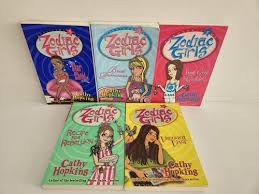
Continuing my nostalgia trip, the Zodiac Girls are a series of stand-alone novels featuring a girl at a crossroads in her life. For one month (not necessarily their birthday month), they are chosen to be Zodiac Girls and the planets come down to Earth in human form to guide them through their life lessons. There’s only eight books in the series which is kinda annoying because I wanted to know the last four girls in the Zodiac and get to see more of Pluto, and Neptune who are sorely underexplored.
Nonetheless, here are my top 5.
- Brat Princess: Leos are known to be dramatic and spoiled, and Leonora really takes the cake. She is the most resistant to learning any life lesson. She was so unlikable it was impressive how Hopkins manages to pull back the layers of her grief, and give her a moving epiphany to change herself. Even if it relied a bit too much on the Christmas Carol.
- Bridesmaids Club: Chloe adores weddings and when her favorite sister gets engaged she is eager to finally put their dream wedding into fruition. But the groom has other plans. I really enjoyed this story for how Chloe learns to see her weakness as a strength, find her path in life and also the romance of it all. Plus the various theme weddings, Bridezilla, bungee jumping, etc. were fun to see.
- Double Trouble: While the identical twins who are actually opposites can be an overdone trope, I liked the storyline for how it showed Eve’s more sensitive, “go along to get along” nature and her learning to express her opinions and fight her fears. Plus I learned more about rising signs and how that affects the zodiac.
- From Geek to Goddess: If you like “She’s All That,” I think you’d be a fan of this storyline as Gemma learns to embrace her inner goddess without the help of a boy, but through true friends and Venus to realize what she thought she wanted isn’t what she truly needed after all.
- Star Child: The book used to be my favorites, but rereading it, it is the most predictable. Makes sense as Virgos like routine and predictability. I could see Thebe’s problem with taking too much/not relaxing a mile away. However, it still gets a spot on the list simply for the drunken planets chapter. That always gets a smile out of me.
-
Dame Jacinda Ardern Interview
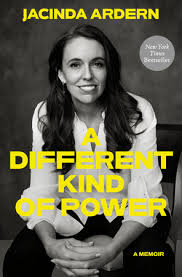
Jacinda Ardern is the former Prime Minister of New Zealand, whom you might remember for her decisive handling of the Christchurch shooting, and subsequent gun reform, and COVID-19. She graciously took the time to answer some of my questions about her new memoir, and picture book.
1. It’s been two years since you stepped down from office. What made you decide you had enough distance write a memoir?
To be honest I’m not sure (on some issues) you can ever have enough distance. One period I really struggled to write about for instance, was the decision to leave the church I belonged to, and that was more than twenty years ago. I think it’s just a matter of giving yourself enough time to write, think, and revise!
2. You covered a lot of ground from childhood to end of 2023, who helped you in recollecting and working on your drafts?
I couldn’t have gone into some of the early details without my mum. She kept journals which really helped, and I had a few journals of my own too. I also have a pretty solid memory of my younger years, which I always thought was pretty normal, but perhaps not.
As for writing generally, you might have seen in the acknowledgements that I talked about the writing coach I had. While writing, I needed to transition from being a speech writer, to a long form writer. That took some work!
3. I always thought writing a memoir as a politician must be hard because there must be an urge to highlight the good of your administration which can ring false. But admitting mistakes could be ammunition for others even though you’re no longer in office.
Did your experience in debate help you in writing the good you’ve done and what could have been better?
I never really thought about how a background in debating might help with that! I think the biggest influence in the way you look back on your time in office, is just how self critical you are.
4. A reoccurring theme is how you never envisioned yourself as a leader, but the very qualities you thought disqualified you became your asset. How do you think this message still applies to the polarizing climate today?
I suspect it applies to politics generally – people self exclude sometimes I think, because of how they see the environment and what they think might be required to succeed. I wanted to challenge that.
5. Did you reflecting on the lessons that shaped your life and leadership bring any new revelations about yourself?
I think the biggest journey for me, was starting to look at issues like imposter syndrome differently.
6. You also just released a picture book inspired by your conversation with your daughter of being a busy working mom. Was the process writing that different than the memoir?
Oh very much so. It was so much quicker! I wrote the first draft one night when I was procrastinating writing a speech.
7. Did you get to collaborate with your illustrator?
I wanted to leave the job to Ruby – she’s such a great artist and so I never thought I would have much to offer on the creative front.
8. While writing these books, you’ve also been a fellow at Harvard and now have moved to the UK, what are you focusing on next?
I’m still doing work on violent extremism online, climate change, and leadership. I’ll keep doing all of that, while also just trying to live a full life with my family!
You can find Jacinda Ardern on social media, and on her website.
-
Ranking Go for the Gold Gymnasts
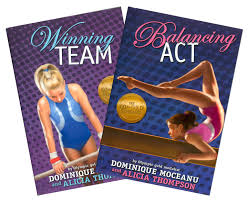
Written by Olympic medalist, Dominique Moceanu and author, Alicia Thompson, this quartet dives into the grit and determination of competitive gymnastics combined with the coming of age and friendship of the Texas Twisters teammates.
- Balancing Act: I suspect that this one was the most personal for Moceanu, sharing Noelle’s Romanian heritage and being the wunderkind of the team. It is personal in detailing the frustration that comes with being working class, knowing that she could potentially win, but might lose out the opportunity because of money. It ties into her fears of making her family sacrifice so much for her dreams, and the pressure that comes with that. Very well-done.
- Unexpected Twist: Cristina has the most opportunity. She’s rich. Her mother is devoted to her gymnastics career, possibly too overbearing about it. But when she strains her tendon, it throws her for a loop. The break forces her to reckon with her feelings for gymnastics and that she doesn’t have the drive to be an Olympian like her friends. But if she doesn’t go for the Olympics, what is the point? With so much focus on winning, this book brings things back to the heart of the sport (any sport really), and why it draws people to it, gold or no gold.
- Winning Team: Britt is the spunkiest member, and so her book has the most distinct voice. It does a nice job of introducing the characters and laying the seed for the Noelle, Cristina, and Jessie’s stories, but Britt’s self-centered oblivious can be hard to take so it’s down to third place.
- Reaching High: Jessie’s story of trying to find a balance between the team, and having a social life is a worthy one. But one could see that the cheerleaders were false friends from the start, so this one felt cliche and slow without the energy of the gym.
-
Ranking Lights, Camera, Cassidy
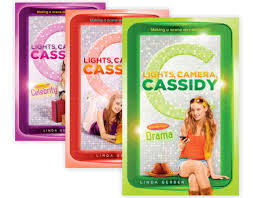
With a tagline of “Making a Scene on Reality TV,” you know this little quartet is going to have some cool adventures. But it’s not the reality tv, you’re thinking of. Cassidy’s parents are hosts of a popular travel show, and she’s been travelling the world since she was a five year old. A little mistake on her vlog ends up propelling her into the spotlight, and for a girl who’s used to being behind the scenes, she has a lot to learn when it comes to paparazzi, on-camera behavior, and PR dynamics.
Admittedly, Cassidy can be hard to take. Most of the problems she faces are the fault of her own impulsive, unthinking actions, but she’s a teenager. Also the girl literally has never been to a normal school or had friends her own age. Plus her parents are busy on their show, so they haven’t had time to teach her the ropes of behavior leading to consequences until the aftermath comes. Her big heart makes up for it, I think, and her awkwardness around her crush, Logan. Get the girl a normal world friend to show her the way, she needs help.
Plus the series has lots of travel and insight to different countries so that’s another bonus to me.
1. Drama: Fitting for the last novel to show Cassidy’s character growth full circle. I really enjoyed seeing not only a different side to Logan, but see Cassidy truly confront the jealousy and insecurity that had been plaguing her most of the series, and make some smart decision instead of always taking the worst possible option. Also it’s just so fun imagining the Australian accent on the side characters.
2. Paparazzi: This one was admittedly my favorite when I was young because I love Greece, and the romance Cassidy sets up between Nikos and Zoe was adorable. It’s still my favorite all these years later as I can now appreciate how meaningful it is for Cassidy to make a real friend, and faces real challenges and maturity in being on her own with a new tv crew, and new surroundings.
3. Hacked: The Logan and Cassidy romance isn’t the strongest point of the series as Logan can be an oblivious, aloof boy and Cassidy is so self-conscious and flailing about her feelings, but this book was the best display of their friendship and how well they work together to catch the saboteur. Plus we really get to see why Cassidy loves travelling.
4. Celebrity: As is usual in these ranking, the pilot so to speak gets last place as it has to do the heavy lifting in introducing everyone and previewing Cassidy pre-character growth so her unthinking impulsiveness is in its worst display.
-
Book of the Month: The Lost Bookshop
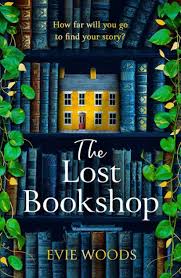
On a quiet street in Dublin, a lost bookshop is waiting to be found…
For too long, Opaline, Martha and Henry have been the side characters in their own lives.
But when a vanishing bookshop casts its spell, these three unsuspecting strangers will discover that their own stories are every bit as extraordinary as the ones found in the pages of their beloved books. And by unlocking the secrets of the shelves, they find themselves transported to a world of wonder… where nothing is as it seems.
Usually I’m meh about magical realism, but this was a nice book. I think it worked because the magical realism stemmed from the magic of books, and as every book reader knows book magic can take all types of forms, and you just go with it because of the nostalgia, imagination, the journey, what have you.
My friend and I felt that Opaline, and Martha’s POVs were the most interesting. Opaline because of the twists and turns in her journey, and Martha in learning to love herself and her connection to the book shop. Henry’s POV was kinda there. He’s the catalyst for Martha to get into reading, and then to the bookshop, but his own personal arc was less interesting. He’s was primarily there to be the love interest.
The big twist between Opaline and her brother was one we didn’t see coming, but there are a few questions we have that the narration left ambiguous. Like who/what is Mrs. Bowden? Why did Lyndon say the something to Opaline as Armand did, did he orchestrate Opaline and Armand’s whole romance?
Overall, nice book. Not groundbreaking, but certainly a nice beach read with a tight plot and interesting female characters.
-
Subscribe
Subscribed
Already have a WordPress.com account? Log in now.
 Rachel Reads & Reviews
Leave a comment