-
Karito Kids
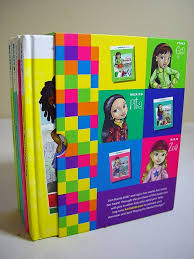
Karito Kids was a line of 21″ dolls representing girls from different countries around the world. The world “karito” means “charity” and “love of one’s neighbor” in Esperanto.
3% (or $3) of the purchase price of the 21″ dolls went to Plan USA, a charity that helps children around the world. The purchaser could choose to specifically donate the money to “Food,” “Health”, “Home” or “School” related projects via the Karito Kids website.
Like almost every doll company, the dolls come with little books showcasing their families, home, and adventures. This collection had a more educational bent as the creators seem to sincerely want to encourage kids to be curious about the world and learn to appreciate cultural differences and see where they’re all the same. It’s so wholesome and earnest.
Anyway, most of the books are written by W.A. Sorrell except the last one, Sydney Scandal which was done by Judy Katschke. I can’t say they have much that differentiates them from other girl adventures besides the organic way they showcase different countries. Except for Sydney Scandal, the way the author dropped in Aussie slang and famous landmarks felt shoved in rather as part of the story. Also it took half the story to get to the actual mystery.
I do appreciate in Nairobi Nightmare, the narrative brings up a child-friendly lesson of the reality that rich people tend to get away with stuff because they’re rich, and poverty and inequality are a huge problem. Lulu feeling helpless at the scope of the issue, and her own privilege tugs at the heartstrings.
Shanghai Secret was also interesting as it featured Ling struggling to fit into her new life in the city, and the class differences between city and country kids as well as touching on discrimination against the poor.
Florence Fiasco and Manhattan Menace felt the most typical of these adventures with the protagonists going on a hunt for stolen treasure through crumbling buildings.
A cute series with heart, but it is rare, so good luck finding it on ebay or your local library.
-
Thundercats: Knights Review
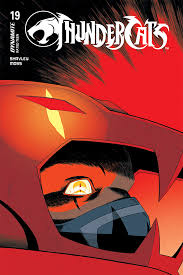
Technically, the fourth volume hasn’t come out yet so it doesn’t have a proper title, but I thought Knights was a good stand-in until it vol 4 (#16-20) gets released. That’s because Shelvey returns to top form by increasing the action and the character-growth that had been missing in the previous volume.
Lion-O is still gone, and Panthro recovering from the wounds inflicted on him by Mumm-Ra, leaving Cheetara in charge. With the discovery of a new element, Tygra has helped devise new armor that has made the cats stronger, faster, and more durable than before, so Cheetara wages an aggressive campaign against the Mu’tants instead of being reactive.
While Cheetara makes some mistakes in her urge to be proactive, she is a strong leader. Decisive, doesn’t tolerate nonsense in the ranks, and able to see different sides of strategy before making her next move. Compared to Lion-O’s hot-headed and insecure approach, I think she should stay leader and hope Lion-O’s journey makes him realize his role is somewhere else.
I doubt it since there’s a whole prophecy that the Thundercats need to be led by Lord Lion-O, but still. He hasn’t proven his leadership mettle as Cheetara has, and his solo jaunt through the Third Earth seems to imply that he likes being alone without the burdens of responsibility and decision-making.
While most of the volume is focused on their aggressive campaign against external threats, and how that backfires on them (hint, hitting the bad guys first sometimes makes them even more angry and willing to ally with other bad guys), there are several great twists.
First off, another Thundercat arrives on Third Earth-Bengal! He had been sent years early to see if the Thundarians can establish a new home there, and had been lost ever since. He’s also Cheetara’s ex-fiance. Such drama! Even moreso, with all the time that has passed and Bengal’s caginess about the mission he was sent on, Shelvey sows seeds of potential double-agent. That’s what Calica suspects too, it takes one to know one.
Then there’s Apex, Lion-O’s future self whose aggression and belief in destroying all enemies, makes him a difficult enemy. The Cats see him as the Lion-O they knew, but soon realize this one is willing to turn on them as easily as any Mu’tant. It fuels the urge to find the real Lion-O wherever he may be.
You can see the theme of division mounting with each issue, and the bad guys quickly take control of it. The new ally, the Vulture men drawn to feathery menace by Moss, takes a more strategic approach of divide and conquer. It’s nice to have a competent bad guy as the Reptilians bash and destroy method obviously wasn’t working. Plus it allows for some dynamic fight scenes between the cats, the vultures and the reptiles, very aerodynamic and expressive.
The other cats had stand-out moments as well like Panthro’s vulnerability, retreating into his armor after his debilitating attack as well as his doubt in judgement for losing Lion-O. The Kits also get a moment when confronting Silthe’s son, and choosing whether or not to give him grace in escaping or letting him die. Jaga’s solo issue delving into his decisions, good and bad, and contrasting with Mumm-Ra’s inner rot when their friendship turned sour felt like a Greek tragedy, it was moving.
All in all, a great volume with a compelling cliffhanger that leaves plenty of analogies between Lion-O and Odysseus. I only hope he has learned some restraint during his time apart and maybe some newfound wisdom.
5 stars.
-
Book of the Month: Murder at an Irish Chipper
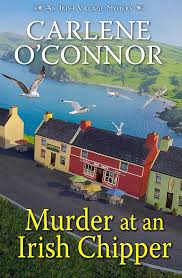
Siobhán’s brother Eoin’s new family restaurant, The O’Sullivan Six, is so close to opening—but waiting on the necessary permits plus the heat of July in the village of Kilbane in County Cork is driving everyone a bit mad. Macdara Flannery comes to the rescue with a plan—take a holiday by the sea and stuff themselves with fish and chips to support the struggling business of the aptly named Mrs. Chipper.
But when they arrive, a crowd is gathered in front of the closed shop: a local fisherman with a fresh cod delivery, a food critic, Mrs. Chipper’s ex-husband who’s opening a competing fish and chips shop directly across the street, and a repairman to fix the vent for the deep fryer. With Siobhán and Macdara as witnesses, a local handyman gets the locked door open, only to find the proprietor lying dead and covered in flour at the base of a ladder, its rungs coated in slippery fat. Clearly this was not an accidental tragedy . . .
Even as the local garda take over the murder investigation, Siobhán and Macdara can’t help themselves from placing their long-delayed honeymoon on hold—at least until they can help apprehend an elusive killer.Just when I gave up of ever correctly guessing a murderer in a murder mystery, I did it! And on the 7th chapter too, it was surprising. I don’t know if that means the mystery was lackluster if I guessed it that easily, but it was still cute nonetheless. Also it did not involve a wood chipper like I had initially thought. Apparently Irish chippers refer to fish and chips. Also police are called garda.
This is the 11th in a series, but you don’t really need to know the background of Siobhán and her family to enjoy it. Although, I must admit I first thought Siobhán’s siblings were her kids for like half of the book before I realized she was the parentified older sister. Like any good mystery, the small town is filled with quirky potential suspects. Even though I guessed it quickly, there was a mid-climax twist that threw everything we thought we knew about the murderer and his motives into doubt.
There were a few things that were left hanging, but nothing egregious, and it was a cute, cozy mystery. Just made me wonder if the rest of the series goes to different villages like Dublin, Galway and so on.
Yay, we finished our last book club read of the year! We plan to be a lot more proactive next year, but we’ll see. I do know we’re going to start on an adorable note with The History of the World in 50 Dogs by Mackenzi Lee. See you next year.
-
Thundercats Vol 3: Apex Review
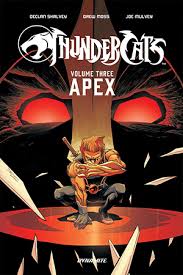
INTO THE DEVIL’S LAIR! Following the discovery of Mumm-Ra’s Black Pyramid, Lion-O makes the fateful decision to confront the Devil-Priest of Third Earth one-on-one in his place of power. If the ThunderCats’ brash young leader can defeat his nemesis in single combat, the last survivors of Thundera’s claim to their new home will be secured. But in the aftermath of their epic clash, both Lion-O and the ThunderCats find themselves fighting for their lives in two separate battles – on two different worlds!
It’s been awhile since I read the new Thundercats by Dynamite Comics so I quickly refreshed myself with the previous volume, and jumped right in. We were left with Calica’s betrayal, Lion-O feeling undermined and lost goes on a long walk while his companions pick up the pieces.
And this volume feels like filler. There is some battle, giving Moss’ vibrant and expressive combat scenes plenty of time to shine. Same with issue #13 that gives the splotlight to Snarf who only speaks one word, so we are gifted with a colorful, somehwat adorable and disturbing world through Snarf’s eyes.
Character-wise, there wasn’t much happening. Tygra and Cheetara were in their love bubbles, the Kits were pushed to the side, and Lion-O gets captured before he really does anything.
The only one who gets real depth is Calica as we learn the reasons for her betrayal, but even that is given just a few pages. Her return to the Thundercats with new allies is glossed over in a montage. Too bad Lion-O wasn’t there because it could have infused actual drama and maybe some time waiting to see if they can trust her again. Even the discovery of a new element for the Thundarians to use is explored off-the-page. Anything interesting was off-the-page and it was so frustrating. Issue #15 ended with a potentially interesting time-wimey Terminator idea, but we’ll see how it pans out.
Perhaps Shelvey was trying to give us the calm before the storm, but it left a dud of a volume.
2 stars.
-
Book Highlight: Girls to the Front
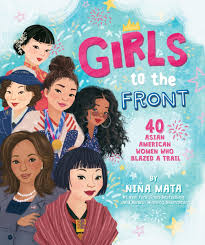
From the big stage to the US Navy, from laboratories to the boardroom, from the Olympics to the pages in books, these girls and women lead every line. Bold, bright, and empowering profiles by Geisel Honor–winning and #1 New York Times bestselling artist Niña Mata place these incredible changemakers at the very front and inspire readers to tap into their own greatness.
A delightful book giving a glimpse into important figures in US History that helped to bring greater representation to the Asian American community, improved their lives, and/or changed everyone’s lives through their skills and policies. Mata’s illustrations are vibrant and colorful which will draw young readers in, and her succinct descriptions of the main points of their lives and accomplishments will give kids inspiration that they can succeed too.
There were several famous names I already knew like Vera Wang, Kamala Harris, Merritt Moore, and so on, but there were a lot more that were new to me. Such as: Mary Tape of Tape vs Hurley in 1885. She fought against public school segregation in California that separated Chinese students from the others, and won! This would become a precedent for Brown v Board.
Zarina Rashid Hashim was an artistic pioneer in the minimalist movement with her geometric and abstract shapes.
I knew Amy Tan wrote Joy Luck Club, but did you know she also wrote Sagwa the Chinese Siamese Cat?

Gyo Fujikawa was an illustrator for Walt Disney during the 1940s, saving her from Japanese Internment, and would go to illustrate for Robert Louis Stevenson’s Children’s Poems, and over fifty other children’s books.
Helen Zia, a journalist and activist who covered the hate crime killings of Vincent Chen, igniting the Asian American movement in 80s.
Geena Rocero, transgender model and activist.
Tye Leung Schulze, mentored and aided by famous activist, Donaldina Cameron in helping women escape the yellow slave trade in 1800s. She would go on to become an interpreter for Angel Island Detention Center, giving comfort and translation to Asian immigrants, and would become the first Asian women to vote in the US when California gave women suffrage.
Dr. Kazue Togasaki was successful obstetrician in the Japanese internment camps, and would g on to rebuild her practice when released and deliver thousands more for her community.
Ruby Ibarra, songwriter and rapper for hit songs, Someday, Lost Without You and more.
-
Love Craves Cardamom Review
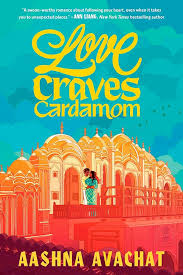
Archana Dhawan wants a boy-free zone this semester abroad. Fresh off a breakup, she’s headed to Rajasthan, India—her parents’ homeland—determined to find herself and thrive at her dream art museum internship. No drama. No distractions.
(more…)
Alas, the universe is trying to tempt her. On day one, she meets the hottest boy on the train. Soon after, she runs into him again at work. Not only is the museum tied to a palace, but the cute guy, Shiv, is a royal gardener!
As he takes her to the most gorgeous local spots, their undeniable chemistry grows. Then Archi gets shocking news: Shiv is not who he seems. Now she’s left wondering—was this brush with love the beginning of something warm and complex or just another bittersweet end? -
Book Highlight: Ayesha Dean Mysteries
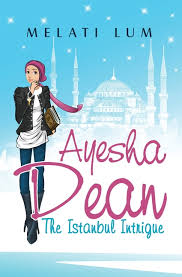
It took me awhile to get my hands on this Australian series, but I’m very glad I did. Ayesha Dean is vibrant new heroine in the teen sleuth genre, following in the vein of Nancy Drew. That is if Nancy Drew knew taekwondo and found mysteries at every vacation spot.
Obviously, she’s not an exact copy, but the similarities were prominent at first as she’s joined by two best friends, the stylish Sara, and the sporty Jess, and is raised by her semi-wealthy lawyer uncle who takes her along his international trips. But like I said, Ayesha is more proactive when she stumbles on a mystery using deduction and lock-picking skills to find clues. Not to mention kind as her desire to help strangers that get injured at museums help to lead her to her next suspect.
The first two mysteries, The Istanbul Intrigue and The Sevilla Secret are almost formulaic as both feature Ayesha teaming up with her friends, and the mystery involving ancient, leather-bound books relating to the Muslim history of the region. She also gets potential love interest at each stop even though it never goes beyond flirty jokes because the long-distance relationships never work out.
Side-note, Lum’s descriptions of the food, architecture and history are nicely woven into the story as well, giving readers a chance to experience each culture in their mind’s eye.
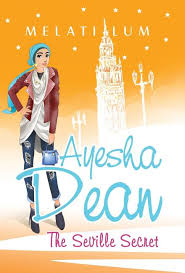
However, her third (and potentially final?) mystery in The Lisbon Lawbreaker breaks away from the formula as she’s on her own in Portugal for an internship and ends up on the other side of the law thanks to a bad case of amnesia. The danger racks up in each book, but this one was the most suspenseful one yet as Ayesha attempts to use her framed status to infiltrate the trafficking ring.
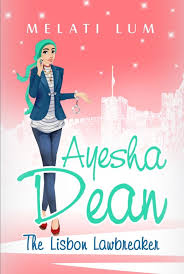
In case it wasn’t obvious from the covers, Ayesha is Muslim and Lum does an excellent job in casually expanding the representation of Muslim women with Ayesha’s portrayal as a kick-butt, fashionable detective whose daily prayers help clear her mind and center herself to solve the mystery. Seriously, look at these covers, she’s so chic!
I heartily recommend US and European readers to try and pick up this series if they can. You’ll get your mystery fix.
-
Book of the Month: Outlander

The year is 1945. Claire Randall, a former combat nurse, is just back from the war and reunited with her husband on a second honeymoon when she walks through a standing stone in one of the ancient circles that dot the British Isles. Suddenly she is a Sassenach—an “outlander”—in a Scotland torn by war and raiding border clans in the year of Our Lord…1743.
Hurled back in time by forces she cannot understand, Claire is catapulted into the intrigues of lairds and spies that may threaten her life, and shatter her heart. For here James Fraser, a gallant young Scots warrior, shows her a love so absolute that Claire becomes a woman torn between fidelity and desire—and between two vastly different men in two irreconcilable lives.
(more…) -
Girls Survive: Graphic Novels
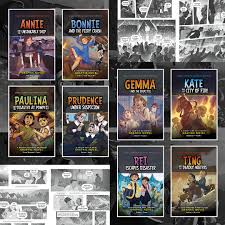
I’m sure everyone thought I was done with this series. I was too until a little search brought up that the series has graphic novels. Not graphic novel retellings of the series, but all new stories and historical disasters. The completionist in me had to read them all.
(more…)#ailynncollins, #amyrubinate, #annieandtheunsinkableship, #baileyandtheblaze, #barbaraperezmarquez, #bonnieandthefierycrash, #capstonepublishing, #capstoneyoungreaders, #doloresandral, #emmacarlsonberne, #gemmaandthegreatflu, #girlssurvive, #graphicnovels, #gretaandthenightfire, #historicalfiction, #juliagilbert, #kateandthecityoffire, #lowergrade, #paulinaandtheburningofpompeii, #prudenceundersuspicion, #rachelreads&reviews, #reiescapesdisaster, #rosieandtheraceforfreedom, #susangriner, #tingandthedeadlywaters, #zoeandthethunderingsnow -
Salvación Review
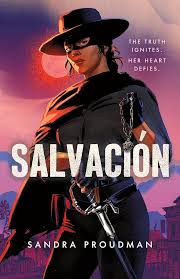
Lola de La Peña yearns to be free from the societal expectations of a young Mexican lady of her station. She spends her days pretending to be delicate and proper while watching her mamá cure the sick and injured with sal negra (black salt), a recently discovered magic that heals even the most mortal sicknesses and wounds. But secretly, she is Salvación, the free-spirited lady vigilante protecting her town of Coloma from those who threaten its peace and safety.
But one night, a woman rides into Coloma, barely alive, to tell the horrifying tale of how her town was obliterated by sal roja (red salt), a potent, deadly magic capable of obliterating anything it comes into contact with, and Señor Hernández, the man who wields it. When Hernández arrives the next day with a party of fifty strong men and promises to return Alta California to México, Lola knows it’s only a matter of time before he brings the region under his rule. All Hernández needs is the next full moon and the stolen ancient amulet he carries to mine enough sal roja to conquer the land.
Determined to protect everything she loves, Lola—as Salvación—races against time to stop his plans. What she didn’t count on was the distracting and infuriating Alejandro, who travels with Hernández but doesn’t seem to share his ambitions. With the stakes higher than ever and Hernández getting closer to his goals, Lola will do anything to foil his plans—even teaming up with Alejandro, whom she doesn’t fully trust but can’t help falling in love with.
(more…)
-
Subscribe
Subscribed
Already have a WordPress.com account? Log in now.
 Rachel Reads & Reviews
Leave a comment