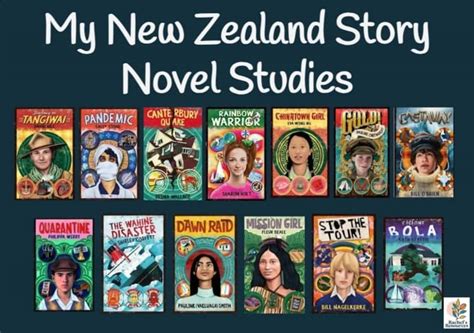
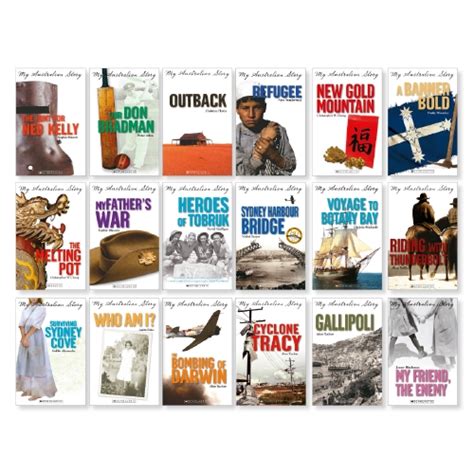
Last year I went on a historical fiction binge, completing my reads of the Dear America series for the fourth time, and reading the Dear Canada series in its entirety. Then I go to wikipedia, and I found out Scholastic has Australian/New Zealand equivalents. What’s more, they are still publishing books. They didn’t stop their series after 1965, they have diaries going all the way to 2011. 2011!
A whole new side of history I never heard of? I had to read it.
Unfortunately, after a fruitless afternoon talking to very helpful Scholastic customer service, I learned that the My AUS/NZ Story only sells down under. No there is no way to buy it unless I want to pay an extra $50 for shipping.
I despaired that I would only get to learn about such historical events like the bombing of Darwin or the Rainbow sabotage through wikipedia articles. Available but not as entertaining as historical fiction.
Luckily, Thriftbooks/Ebay/Internet Archive came to my rescue and I got my hands on a few cheaper copies.
I’ll start with the My NZ Story. I got Dawn Raid by Paulina Vaeluaga Smith first (see my interview with her in link below).
Taking place in 1975, Dawn Raid focuses on the titular dawn raids. In the 70s, the government and the people were getting pissed off by immigrants from the nearby islands (Samoa, Tongo, Singapore, etc.) “taking their jobs,”/being lazy/mooching off the government. So they responded by having immigration enforcement bursting into homes at dawn to take people to deportation centers. Even if these immigrants have valid citizenship/papers/lived there for an entire generation and have family/work ties. Sofia’s uncles and father are the targets of such raids, and she bristles at the unfair depiction of islanders like her family on television. She learns about the Polynesian Panther movement (inspired by the US’ Black Panters) and other indigenous rights protests rising up at the time period.
Look, I know pretty much every country has its own forms of racism and oppression, but I was fascinated by how the tactics/reasons were the same to how the US depicts Latinos and the current ICE raids. Furthermore, a sequel is coming out this year co-written by Smith and her grandson.
Sabotage!, reprinted as Rainbow Warrior by Sharon Holt takes place 10 years later in 1985 focusing on an act of French terrorism where the French bomb a Greenpeace ship because the islanders were protesting French nuclear testing on their water.
The latest book I read was Canterbury Quake by Desna Wallace. The most recent novel in chronology, it takes place in 2011. I was totally unaware of these earthquakes happening down there, but they sound horrifying. Worst than the California one as NZ experienced over a thousand aftershocks, decimating the town and killing over 150 people. Although it was sorta surreal to realize 2011 was over a decade ago and such events like Prince William and Kate’s wedding is considered a historic event like Queen Victoria’s Golden Jubilee in 1900.
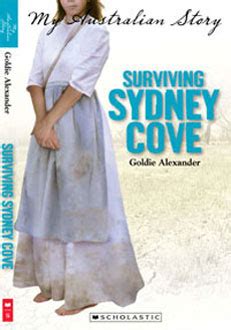
As for My Australian Story, one should start with Transported/Surviving Sydney Cove by Goldie Alexander that details Australia’s convict beginnings through the story of Elizabeth who is unjustly sent to the penal colony, and suffers sickness and starvation when supplies run low. Bit disappointing that one didn’t get to see Elizabeth’s journey across the ocean instead of jumping straight to living in Australia.
Who Am I by Anita Heiss is criminally short in my opinion as it deals with such an interesting topic. The Forgotten Generation. Set in 1937, the story follows Mary from the orphanage where she is told her parents are dead, repeatedly taught that her aboriginal beginnings are wrong and that being white is better, and is soon adopted by a white family. They don’t abuse her, but they make it clear that see her as someone to be controlled and watched to ensure her aboriginal ways don’t pop up. Of course, at school Mary is often first accused of stealing, teased, etc. She’s only 7, so the writing is simplistic at times and frustrating as it is only in the end she starts to learn about aboriginals like she and begin to chafe at always being considered bad.
A Different Sort of Real/The Deadly Flu/Contagion by Kerry Greenwood features the spanish flu pandemic of 1918 with underlying story of Charlotte learning about her father’s shellshock and the family adjusting to a new normal.
A Tale of Two Families by Jenny Pausacker (see my interview linked below) takes place in 1974 featuring the protagonist’s struggle with understanding the new female liberation movement and where she fits into it plus equally sympathetic sides of the draft dodgers and Vietnam veterans and her questions why the adults can’t understand each other’s point of view.
The boy’s stories don’t strictly follow the diary format. They are more like a regular novel with chapters although it’s in first person and they state they’re writing it like a diary. The Bombing of Darwin by Alan Tucker takes place in 1941 and is just as one expects with a title like that. It focuses on the bombing which I had no idea about. It’s basically Australia’s Pearl Harbor where Japan bombed the town, sinking most of their navyyard, killing their soldiers, the whole thing. However, the Australian government didn’t send their Asian population to detention camps like the US did.
Or maybe they did, the historical notes aren’t that thorough which I’ll discuss below. Still, it’s interesting to see how the anti-Asian sentiment seemed less widespread during the war. But that might be because Tucker has his protagonist befriend a Chinese-Australian boy so he has nicer feelings towards them. Also of note is how whenever the Australians reference blacks, they are talking about aboriginals, not African-Australians. Little cultural differences that remind you that even with the similar histories, some parts of still unique to the country.
The Heroes of Tobruk by David Mulligan also takes place in WW2. Unlike the North American counterpart who’s diaries focuses on the western front, this one is in Egypt against Rommel’s forces. Our history classes tend to skim over that area. At least mine did, so it was interesting to learn a new aspect of the war. This one was most unlike the other books as it was strictly middle-grade novel with multiple third-person POVs alongside the protagonist’s first-person. It felt like it belonged as its own thing but Scholastic got the rights to it and decided to slap the My Story brand ontop and force a framing device.
How they compare to the North American series? I applaud that they go beyond the 60s. I can’t say how in-depth they are to history compared to textbooks and such, but I feel that I learned. Some books moreso than others, but the writers were committed to the diary bit as it does feel like the protagonist is writing off the top of their head, the mundane stuff and the important ones, still learning about the events as they go along.
But the historical notes are lacking. Exempting Transported and A Different Sort of Real, they’re usually three pages and very narrow in scope and detail. For example, Dear America/Canada has a diary focused on a specific historical event like the Great San Francisco Earthquake or the Halifax Explosion, the historical note will talk about that as well as provide broader context to the politics and culture of the era surrounding the events and how they may have contributed.
The Bombing of Darwin focused solely on the bombing and the memorials afterwards. Nothing about how the Australians fared during the war, Darwin’s contribution to it as a city, nothing. Same with Rainbow Warrior which detailed the bombing and the cover-up but nothing at all about the polorized feelings surrounding nuclear testing and disarment, the enviromental impact, why Greenpeace was founded, the rise of MTV in the 80s, etc. Disappointing.
Additionally, some of the reprints after 2011 will feature pictures, older ones don’t which was disappointing. The pictures are my favorites, just to see how different everything was.
Furthermore, none of the books have epilogues for their characters which leaves the novels on an abrupt note. At least to me who is used to having epilogues after all the Dear America/Canada books.
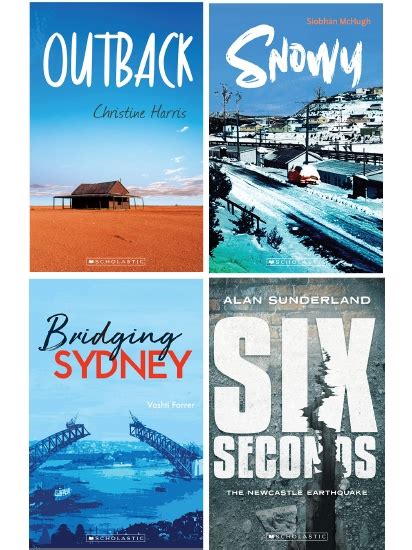
None of the books appear to be in hardcover which makes it lose its diary aesthetic in my opinion. But the Scholastic Down Under is committed to reviving the series as wikipedia shows they’ve gone through three reprints with different covers each time. Personally, I prefer the first edition covers of My Australian Story that has a sepia image of a person from the era with writing overlay.
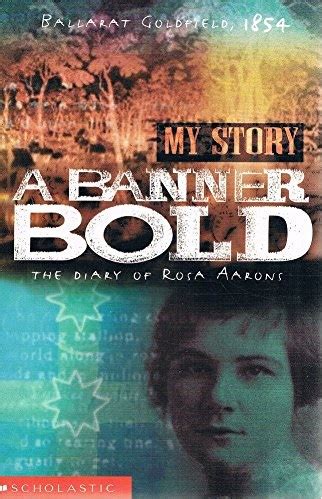
The 2nd reprint and 3rd reprints try something different but the former just looks like a rushed photoshop job and the latter doesn’t make it clear that this is a dairy series.
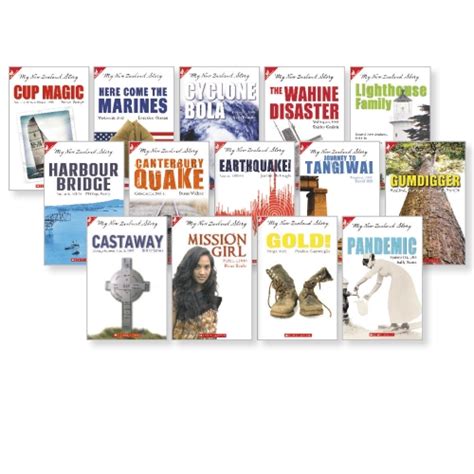
My NZ Story’s first issues are the same as the My AUS Story.
The second relauch covers have the rushed photoshop I’m not a fan of.
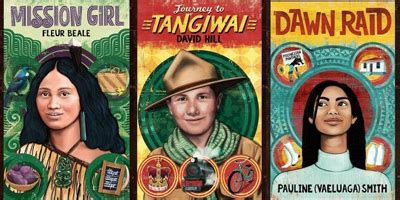
Not a fan of the second reprints but the latest relauch are cool. More uniform too, so you know it’s the same series.
It’s too bad that it’s not widely available. I understand from marketing sense why. Children from that country are more likely to be familiar/interested in their countries’ history. Plus less cost if you only have to ship to one country and not deal with international shipping, international rights, etc. But wouldn’t it encourage kids to be a lot less US-centric (or in their case, Pacific-centric) if they learned the history of other countries. Or at least have the option too. Scholastic could have another demographic to get money from and start a whole campaign of have famous Australians narrate the audiobooks for kids or something.
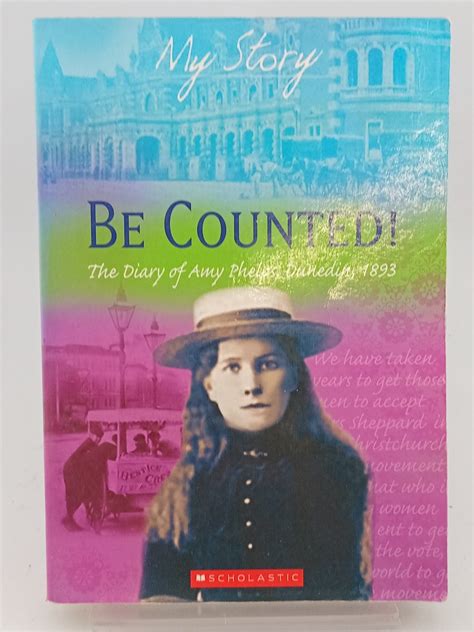
Now, if there are any Aussie/NZ readers of this blog. If you have some My Story books you want to donate, (I’ll pay for the shipping) I’m interested in Finding Father/Gold by Pauline Cartwright, Fire in the Sky by Shirley Corlett, The Mine’s Afire by Susan Battye and Thelma Earkin, Poor Man’s Gold by Kath Beattie, Below the Mountains by Jean Bennett, Here Comes the Marines/Long Way from Home by Lorraine Ormen, Pandemic by Sally Stone, Chinatown Girl by Eva Wong Ng, Journey from Tangiwei by David Hill, Aquarius My Ohu Year by Jill Brasell, Bastion Point by Tania Roxborogh, No Survivors by Sharon Holt, Stop the Tour/Sitting on the Fence by Bill Nagelkerke and Be Counted by Janine McVeagh.
Plagues and Federation by Vashti Ferrer, A Marathon of Her Own by Irini Savvides, Atomic Testing, Kokoda, Gallipolli, and Rebellion at Eureka by Alan Tucker, Our Race for Reconcilliation by Anita Heiss, Battle for Victoria Street by Gabiann Marin, Six Seconds by Alan Sunderland, Vietnam by Deborah Challinor, Snowy by Siobhan McHugh, New Gold Mountain, and Melting Pot by Christopher Cheng, Black Sunday by Evan McHugh, Outback by Christine Harris, Our Enemy My Friend by Jenny Blackman, Escape from Cockatoo Island by Yvette Poshoglian, The Hunt for Ned Kelly, and My Father’s War by Sophie Masson.


Leave a Reply