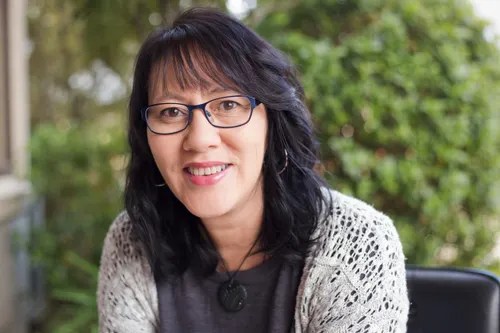
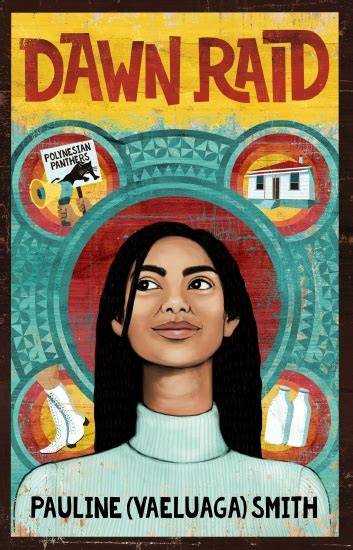
Pauline is an author and educator, director of Mīharo, an organization supporting Maori and Pasifika heritage, and author of the award-winning, Dawn Raid. She graciously took the time to talk about her journey to writing, the Polynesian Panthers, and what readers can look forward to in her sequel, The Apology. Enjoy!
1. What drew you to writing? Do you remember what your first story was?
Writing has always held high interest for me. I kept a diary as a child and loved when the teacher would read out my work to class, especially if the other kids laughed in the right places. My first published work by Scholastic NZ is My New Zealand Story Dawn Raid (2018). It was picked up and published by Levine Querido in 2021 and that was pretty exciting too.
2. How did you get your start in publishing?
New Zealand is a small place, so relationships are key to most things here. My librarian friend attended a conference where Scholastic NZ talked about needing Pacific stories for their My New Zealand Story series. Having recently learnt about the Dawn Raids and the Polynesian Panther movement I felt inspired to inform others and that’s how it all started.
3. What compels you to the historic fiction genre?
One of the guiding ideals for the Polynesian Panthers is Educate to Liberate. Being an educator myself this resonates so strongly with me. There is power to transform when we are truly informed.
4. For the non-New Zealand audience, who were the Polynesian Panthers and the of the 70s?
Established on 16 June 1971 in New Zealand the Polynesian Panthers were a group of young (16-19 year old) mainly Pacifica youth. They were standing against injustice and racism endured by their parents and grandparents through things like the Dawn Raids and random street checks profiling people with brown skin in the mid 1970’s. The Polynesian Panthers looked to the work of the Black Panthers who were supporting their communities with things like homework clubs and educating about their rights and they adopted these programmes as part of their work in New Zealand.
5. Did Scholastic approach you with the topic or did you pitch it to multiple publishing houses and My NZ Story got it?
Having read most of the other titles in the My New Zealand series I found them to be an excellent tool for educating about important events in NZ history and for giving readers a taste of what life was like at certain periods in history. I pitched the topic of the Dawn Raids as I felt like this series was a good home, and a brilliant format for telling the story.
6. Is there a lot of your experience imbued into Sofia?
Growing up as a teenager in the 1970’s did give me excellent first hand experiences to draw from for the book. I think this helped with the real feel of the book and characters. Hopefully not a spoiler, but I did own a pair of white go-go boots back then.
7. Was it hard to get back into Sofia’s head after 9 years?
It was a joy getting back into Sofia’s head. I think she had been quietly ticking away in there the whole time and there just needed to be some space to put everything together.
8. What can readers expect from the sequel? Why did you feel Sofia’s story had more to explore in The Apology?
The sequel to Dawn Raid, The Apology has many parallels to my real experience of seeking a formal apology from the government for the Dawn Raids.
It follows Sofia 50 years later and takes us into her life as a grandparent experiencing lockdown with her family in a small town at the bottom of NZ. Readers can expect a warm and humorous family story that explores themes of friendship, living through lockdown and learn about the process of what it took to gain an apology from the government.
9. What has the experience been like working with your grandson?
Because this book is told through the eyes of a 14-year-old boy I felt it needed the authenticity of that and approached Brooklyn to help. He embraced the experience wholeheartedly. We co-constructed plot lines and characters together and he hand drew the emoji and other images in the book. His friends were very generous, letting me eavesdrop on their conversations to get a real sense of how they communicated with each other.
It really has been the most joyful experience creating and publishing a book with my grandson.
10. If you can share, any more upcoming news from you?
Just doing lots of thinking and daydreaming about what’s next.


Leave a comment