Queens of Crime by Marie Benedict
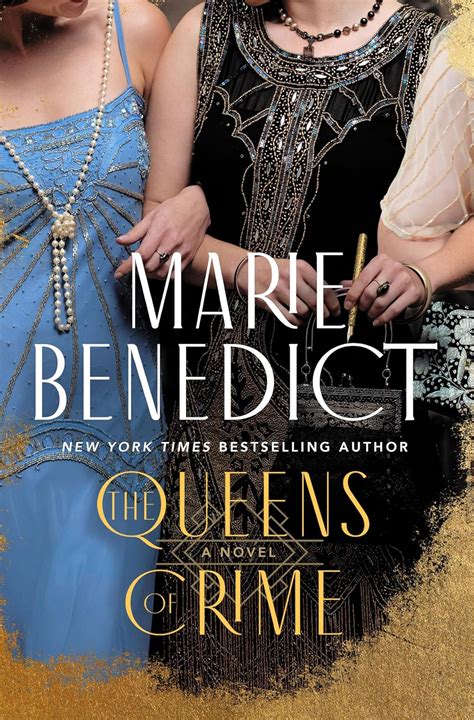
London, 1930. The five greatest women crime writers have banded together to form a secret society with a single goal: to show they are no longer willing to be treated as second class citizens by their male counterparts in the legendary Detection Club. Led by the formidable Dorothy L. Sayers, the group includes Agatha Christie, Ngaio Marsh, Margery Allingham and Baroness Emma Orczy. They call themselves the Queens of Crime. Their plan? Solve an actual murder, that of a young woman found strangled in a park in France who may have connections leading to the highest levels of the British establishment.
May Daniels, a young English nurse on an excursion to France with her friend, seemed to vanish into thin air as they prepared to board a ferry home. Months later, her body is found in the nearby woods. The murder has all the hallmarks of a locked room mystery for which these authors are famous: how did her killer manage to sneak her body out of a crowded train station without anyone noticing? If, as the police believe, the cause of death is manual strangulation, why is there is an extraordinary amount of blood at the crime scene? What is the meaning of a heartbreaking secret letter seeming to implicate an unnamed paramour? Determined to solve the highly publicized murder, the Queens of Crime embark on their own investigation, discovering they’re stronger together. But soon the killer targets Dorothy Sayers herself, threatening to expose a dark secret in her past that she would do anything to keep hidden.
I had already read two by Marie Benedict (The Other Einstein, and Her Hidden Genius) and while I enjoyed the first, I thought the latter was retreading the same plotline with the same archetype. Luckily, this one was totally different, and combined one of my favorite genres with historical fiction. While I knew about Agatha Christie and Baroness Emma, the other authors were unknown to me. Even cooler, they were all actually friends and contemporaries in real life. It was fun to see the dynamic personalities banter and push up against each other with their different investigative styles. Unfortunately, Margery felt lost in the mix and I often forgot she was there.
The mystery was engaging, although it was overtaken in the middle with Sayers relating to May Daniels too much, and bringing up ghosts from her past.
Benedict’s prose is engaging, but I found some of the themes to be didatic. The characters would literally state them out-loud and while the themes of disposable/forgotten women/personal autonomy will always remain relevant, it felt like the way it was conveyed, it was through 21st century language that took me out of the book. Same with Baroness Emma’s agitation with Ngaoio calling her old-fashioned and reminding her that the rights Ngaoio has now are thanks to women like her who had lived with narrow options. A relatable arguement of two different generations, but the execution felt too modern.
The Lions of Fifth Avenue, The Stolen Queen, and The Dollhouse by Fiona Davis
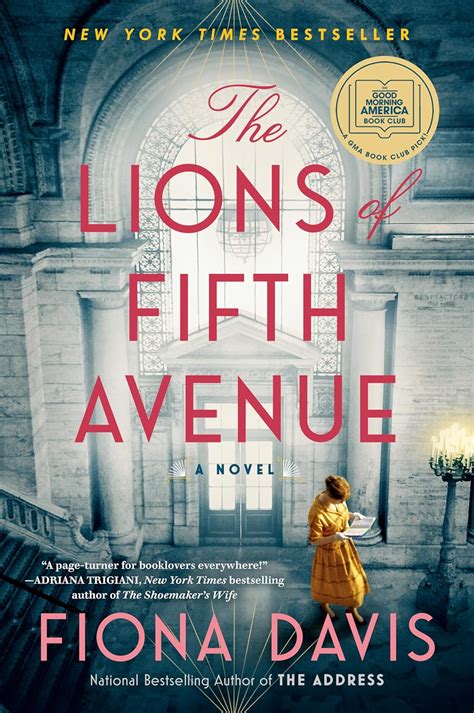
Almost all of Fiona Davis’ works contain dual narratives between the past and present that tie together in the end. Unfortunately, the past narratives are almost always more interesting than the present ones as the modern girls who want to solve the historical mystery fall into a similar pattern of wishing to prove themselves/trying to find independence as a working girl with a side of romantic troubles.
They provide a second person for the historical protagonist (now much older in the modern day storyline) someone to bump against, reflect on their past some more, and serve as a catalyst to find more information, it does make me wonder what would have happened if it remained a single protagonist in a dual timeline. Would their be more interiority and psychological fallout as the older woman confronts her memories of the past may not be the whole picture? Truly deal with her mistakes and regrets by herself?
Alas, I cannot answer that. I will comment that as they are written, The Lions of Fifth Avenue is a riveting look into the history of the US biggest public library, extolling its impact as well as the importance of its collection to the public. Intertwined with a narrative of duty vs self-discovery when Laura joins a new feminist group and purpose in her work.
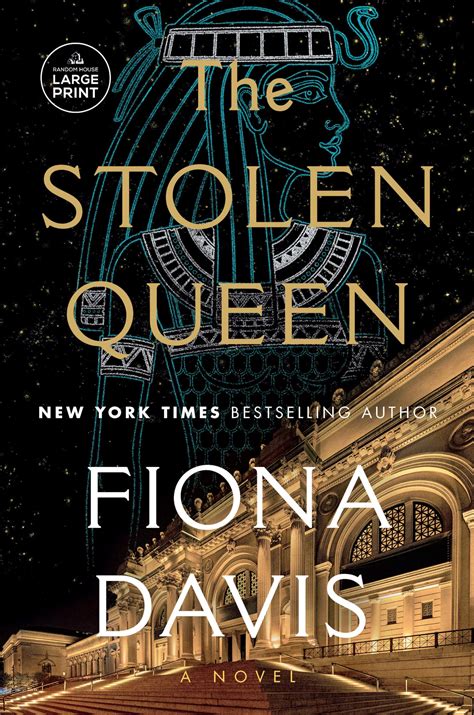
The Stolen Queen is an intriguing mystery for Egyptian fanatics. Similarly, it depicts the importance of public institutions like museums and sharing cultural artifacts, but also steps further into the negatives such as artifact smuggling and the displacement of cultural treasures by colonizers, and who deserves the possession of these items. Plus there was great background work on archeology and Egypt in the 1930s-50s.
The Dollhouse, based on the famous (semi-forgotten?) Babizon Hotel had the best melding of two narratives with Rose being the only modern day heroine who was tolerable. I was intrigued how her desire to investigate into what truly happened between Darby and Esme may have been a deep-seated distraction from her current romantic woes and flaws. Plus I enjoyed the depiction of the 50s New York from Darby’s day-time work as model and secretary, and her time in the seedy underbellys of clubs.
The Magnificent Lives of Marjorie Post, Finding Margaret Fuller, It Girl, and The Traitor’s Wife by Allison Pataki
This fictionalized biographies of famous and forgotten women are detailed reads that immerse the reader into her world, her failures and triumphs. I, for one never heard of Marjorie Post. She was the heiress and first female president of Kellogs, and its subsidaries, changing breakfest foods and grocery stores as we know. Not only did she inform America’s breakfasts, she was on casually terms with six presidents (and many other famous people and royalty), a philanthropist, art collector, ambassador to Russian, and serial cereal marriage girl with four husbands. No wonder Pataki entitled it the Magnificent Lives, plural. However, in trying to compress and convey everything Post had done, the narrative sometimes felt singularly focused on her marriages rather than what she did in the board room. Or listing people she knew and stuff she owned, which became gratituous and boasting.
The Traitor’s Wife takes on a woman that most people know tangentially. Benedict Arnold’s wife, Peggy Shippen, a known traitor who probably influenced his decision to betray the US. I liked the premise, however the story felt like it did a disservice to Benedict Arnold. While I’m sure Peggy used her feminine wiles and skills as an actress to get her husband to her way of thinking, he seemed so whimpish and her so overtly Lady Macbeth that it was too much for me to suspend my disbelief. John Andre was still cool though.
It Girl takes another forgotten figures, Evelyn Nesbit who was the figure originally coined an it girl (Not Clara Bow, who knew?), and did lots of interesting things on her own, and presents a highly fictionalized account of her world through Evelyn Talbot.
Presenting a #Metoo storyline in a bygone era, this might be Pataki’s darkest novel of grooming, assault, rape, objectification, and virgin/Madonna complex. It’s not pleasant to read as all of Evelyn’s success are weighed down with the depressing cost of being derided by her stage mother (later, a disapproving mother-in-law) who is ignorant of how her manager/step-father/boyfriend/it gets blurry is using her, abuse, and never true control of her finances or life. It’s realistic, but not pleasant, and as the particulars of Evelyn’s early life are murky, it feels like Pataki could have made this an original novel with light homage to the inspiration. Especially since she took the intiative to change Talbot’s ending to something more optimistic which probably didn’t happen to the real Nesbit.
Most interesting was to me was Finding Margaret Fuller. Another woman who was totally unknown to me. She was close friends with Ralph Waldo Emerson, Henry David Thoreau, Bronson Alcott and later his daughter, Louisa May Alcott and came to be known as the Mother and muse of the Transcendalist movement. But that’s not all, she became a journalist, writing about Frederick Douglass, joining feminist circles with Elizabeth Station and then she married an Italian duke and survived the Italian civil war.
Like Marjorie Post, she led many lives, but Pataki infuses this Fuller with a more introspective journey of finding who she is. She doesn’t solely want to be a muse for the men or get caught up in a doomed love affair with Emerson that will only hurt everyone. She truly believes in the Transcendatalist movement and its values, and her choices reflect that as she searches for mediums to share her philosphy. Her character is more thoughtful and introspective, and while the pacing can be slow, felt like a mature woman steadily counting her options and making her decision rather than relying on a broad stereotype (rich heiress, manipulative wife, abused starlet) and plumbing depths from them.
Allison Pataki’s writing is always engaging, but my milage varied depending on the woman.


Leave a Reply