-
Twisted Tales: Adventure is Out There! Review
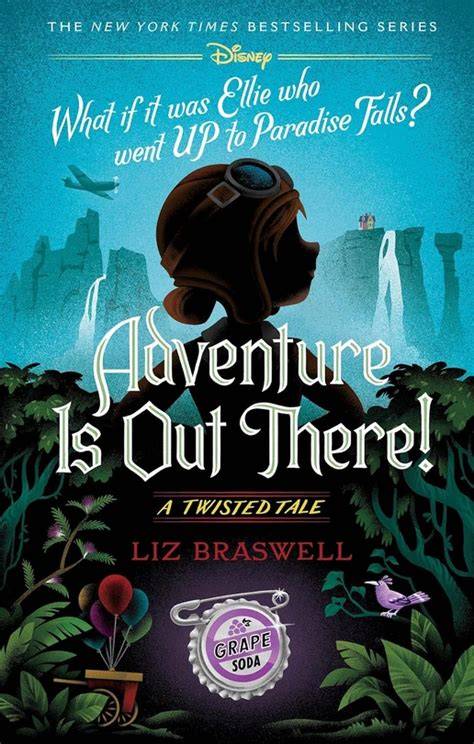
What if it was Ellie who went UP to Paradise Falls?
Sixteen-year-old Ellie McGill is fed up. Sure, for some, life in small town Americana is idyllic. Nothing but picket fences and USO dances and holiday parades. But Ellie has long dreamed of towering mountains, tangled jungles, and most of all…traveling to the incredible South American landmark, Paradise Falls.
Ellie thought these dreams made her strange, until she met her sweet best friend Carl (when he promptly broke his leg in her clubhouse). Carl is Ellie’s closest confidante. He’s also the only one able to talk her off a ledge. But things between them seem weird lately as Ellie grows increasingly frustrated with his quiet way of doing things. And is it just her, or are there new feelings bubbling up between them?
Then Ellie begins her dream internship at the local zoo, where the flashy millionaire owner organizes an expedition to Paradise Falls to collect new specimens. But the star newcomer, a bird given to him by Charles Muntz himself, doesn’t adjust well to his new home and Ellie is put in charge of its seemingly hopeless recovery. Carl advises Ellie to lay low, to not make waves. But that’s not something Ellie has ever been good at. And when an opportunity comes for a last minute, emergency rescue mission, she decides to take it.
Will Ellie’s impulsiveness finally get the better of her? Or will she get the adventure she always wanted . . . and at what cost?
This was a delightful novel exploring who Ellie (and Carl) were like as teenagers and future adventurers. While we get a good idea of who Ellie was in the movie before her tragic death, kind, adventurous, Carl’s more bold true love, we don’t get to know much beyond that.
Here we get great insight to Ellie’s flaws and foibles, dissecting her love for adventure.
Firstly, Braswell has always been good at immersing readers into the broader description of her worlds as well as the minutia of the landscape. You can see the small-town USA of Bloomington with its one road, generations of factory workers, and 40s era gender roles and patriotism. It made it feel like the most realistic of the Twisted Tales novels. More historical fiction than a Disney AU as Braswell touches on the time period’s politics with women having to leave the workforce when the men come back from war, and Ellie reckoning with how unfair it is, and what that might mean for her future.
Which brings us to Ellie. She’s very much living in the present. She doesn’t think things through when she gets ideas in her head, and that makes it hard for her to picture her future. Much less plan it. She always seen the future as something that just as happens, but the events of the book demonstrate that adventure and her future is a choice. Not a series of circumstances and conditions out of her control.
This nicely ties into Ellie’s primary journey about choices. She’s a nice girl, trying to do the right thing by others, but doesn’t always choose the wisest course of action. As her zoo mentor, Margaret Kline teaches her, there are multiple solutions to a problem. She needs to think them through and find the best one.
However, it takes awhile for this wise advice to sink in, thus necessitating the two-parter this book is.
First part is entitled Grounded, featuring the primarily historical fiction atmosphere I was talking about. It’s not slow-paced, but readers will certainly feel like they are bystander in the small-town, watching the happenings and being part of the changing America. You understand their references are limited to black and white newsreels and comics at the malt shop. Feel the excitement of the soldiers coming home, and Ellie’s passion for working at the zoo. Since Braswell mentions in her author’s note that her son is a zookeeper, she imparts lots of real life education into the novel about conservation, the scientific method of caring for rare creatures in unfamiliar habitats, preservation and animal health.
We also get to see the unfolding of Carl and Ellie’s romance, and it is so, so wholesome. They are best friends, fellow explorers and Charles Muntz fans, these new feelings leave them uncertain. Especially for Ellie as this pushes her to start thinking about what she wants in the future, can she have a career and a husband instead of being a homemaker like her mother with 8 kids? Carl will likely support her, but how can she know if he likes her as more than a best friend if he never speaks his mind?!
Frustrating yet relatable and highlights their almost opposites attract. . . . no, opposites complement relationship. She is bold, while he is cautious. She inspires her to be more, he inspires her to think beyond the next moment. Plus Carl is just so endearingly sweet with his love for ham radios, and balloons and his steady confidence without having to be all macho. I love them together.
Ellie’s family doesn’t get much to do, honestly they are part of why she wants to adventure out of her small town. I mean, the clustraphobia of ten people in one house, no wonder she wants wide-open spaces. But it is the catalyst for her to start working at the zoo, for money and for the time for herself to do what she loves. She meets the inspiring figure of Margaret Kline who represents the 40s working woman, at once incredibly aspirational yet Braswell peels back the layers to expose all the hard work it takes to get there and the sexism that she’s have to overcome.
The setting also introduces Leroy the 3rd, Bloomington’s rich boy whose parents gifted him the zoo so he’d have a job and ugh, he’s the worst. He’s a rich privileged man of the 40s who was stationed on the Alps, so he never fought Nazis, but pretends he was a big soldier. While it’s obvious that the zoo veterans don’t like how he’s running the zoo like a spectacle (to garner more patrons he says. More like to boost his personal reputation), but Ellie only sees the flash at first. She’s not so much envious, but wishes she could be like him as she recognizes his family wealth is what allows him to have planes, and cars, and funds to go on adventures like she wants to.
Truthfully, Ellie is more into the spectacle of adventuring and is initially bored by the dreary work of studying new fauna, map-making and scientific research that fuels knowledge rather than glory. However Part 2, UP changes all that.
Some spoilers below
(more…) -
Carole Marsh Interview
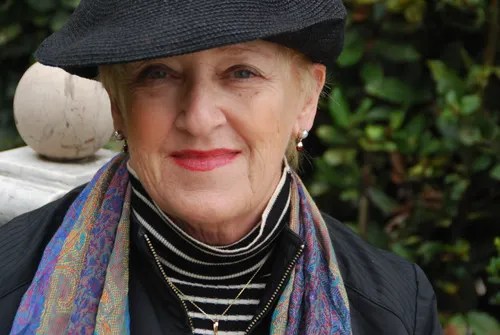
Carole Marsh is the amazingly prolific author of the Carole Marsh Mysteries, with over 100 books to her credit. She’s also the founder of Gallopede International, am education curriculum organization. She graciously took the time out of her busy schedule to answer my questions about her career and what she’s up to next. Enjoy!
1. When did you begin writing?
I started writing before I was a born! Read my NINE MONTHS IN MY MOMMY: AUTOBIOGRAPHY OF AN UNBORN BABY
I wrote before I could read, won a jingle writing contest when I was very young, wrote all my life; told God if I could be a writer, I would not worry about money or fame, I just wanted to make my living as a writer; I did!
2. What drew you to children’s literature in particular?
I wanted to write for kids because books meant so much to me as a child. I did not read my first book, I ate it! Really; I just loved the look and feel of a book and chewed an entire corner off and ate it. Books saved my life.
In the turmoil of home and the stress of having awful eyesight, my only focal length was from my eye to the page of a book. When I was young I thought every book I loved had been written just for me. And that’s how I approach my writing. I’m writing for that one reader.
I know what a difference a book can make in an hour, a day, a time of fear, boredom, loneliness, etc. Books saved my life and I believe that I save kids’ lives by writing books to give them hope, joy, belief, understanding, relief, and more. It’s not just a career, it’s a lifetime passion; I am 80 and still writing!
(more…) -
An Expanse of Blue Review
(more…)
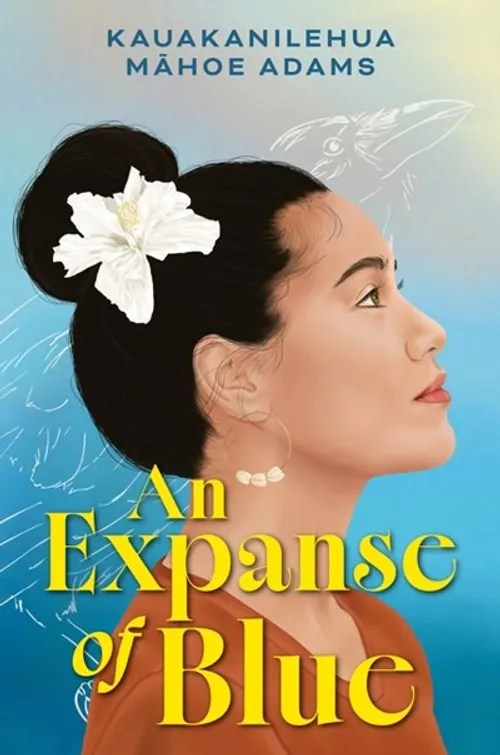
Aouli Elizabeth Smith is adrift: unheard at home and an unbeliever at church, fighting her sister and losing her best friend. Overflowing with feeling, she pours her secrets and herself into her song journal when the world threatens to sweep her away. The one place she feels tied down to earth is at her Aunty Ehu’s house. Those joyous Saturdays with her extended Native Hawaiian community living in Western Washington are precious to her. Under the maple trees, the fragments of her life fit together, if only for an afternoon.
Then, an unspeakable truth about her father shatters this one perfect corner of her life.
As Aouli’s world constricts around what others wish she could be, language fails her. But when a new boy, Nalu, turns up with eyes that seem to pierce right into her soul, maybe it’s love that can give her the words to set herself free. -
The League of Dangerous Young Ladies Review
It’s 1909 and Rose Moriarty—teenage daughter of Sherlock Holmes’ greatest enemy—has made a name for herself fighting monsters and solving crimes. But that was before Rose met the one mystery she couldn’t solve: the disappearance of her headmistress. Now, her school has shut down, her classmates have scattered, and Rose is on her own.
On the very day Rose receives word that an old friend is dying, the shadowy Count Christoph and his ward Clara show up at her door. Rose has already figured out why they’re here (to hire her) and what’s in their bag (an ancient orb with incredible powers), but questions remain:Can Rose convince these strangers to help save her friend’s life? What are the grotesque, bug-shaped stalkers that plague their every step?
And how can Rose pursue this adventure while avoiding a particular boy from her childhood? The only thing certain is that Rose is no longer alone, because danger forges strange alliances . . .
. . . and Professor Moriarty wasn’t the only famous villain to have a daughter.Morgenstern plops you right into the story which has its pros and cons that are noticeable throughout the novel. While putting readers into the action allows for the plot to move quickly and to introduce the major players, I felt like I was playing catch-up right until the third act.
As I read, I was trying to figure out the relationships the characters had with each other, their ages and their backstory. Although this can be part of the drip-information technique, allowing readers to slowly piece the backstories themselves, Morgenstern glosses over some of these plot points in order to get to the next.
That and the fact the story switches POVs at random moments made the story even more confusing to me.
(more…) -
Book of the Month: Project Hail Mary
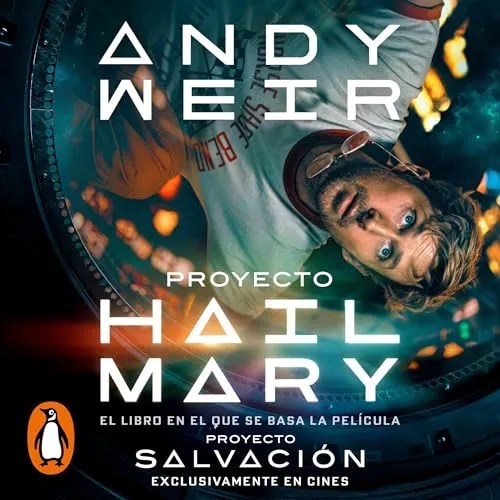
Ryland Grace is the sole survivor on a desperate, last-chance mission—and if he fails, humanity and the earth itself will perish. Except that right now, he doesn’t know that. He can’t even remember his own name, let alone the nature of his assignment or how to complete it.
All he knows is that he’s been asleep for a very, very long time. And he’s just been awakened to find himself millions of miles from home, with nothing but two corpses for company.
His crewmates dead, his memories fuzzily returning, Ryland realizes that an impossible task now confronts him. Hurtling through space on this tiny ship, it’s up to him to puzzle out an impossible scientific mystery—and conquer an extinction-level threat to our species. And with the clock ticking down and the nearest human being light-years away, he’s got to do it all alone.
Or does he?
Yes, the super popular blockbuster that I’ve never seen. My friend has and that’s why she chose this book. Admittedly, I’m not a big fan of sci-fi, so I went in with low expectations and ended up enjoying it. It helps that Weir imbues Dr. Grace with a fun sense of humor that kept me engaged through the science jargon.
It helps that Weir tries to keep it to how a regular person would try to explain science instead of how a scientist explains science, droning on. It just felt like Dr. Grace was a regular guy who happened to know a lot about science rather than someone trying to push four years of education into my uncomprehending brain. Due to that relatability, I also became invested in his and Rocky’s friendship. So yes, I found it enjoyable.
My friend thought it was as good as the movie. She said they were similar enough with minor changes between the screen and the movie (like not having Ryan Reynolds floating around in gravity all the time because that would cost too much money, and having the computer speak for Rocky) and that it made more sense than the movie because the flashbacks were a clear author’s conceit. In the movie she was confused whether it was a glimpse of the future or otherwise until she figured it out.
Next up is the book I’ve been waiting for-Death on the Lanai!! The second Golden Girls mystery, yay!
-
From Little Tokyo, With Love Review
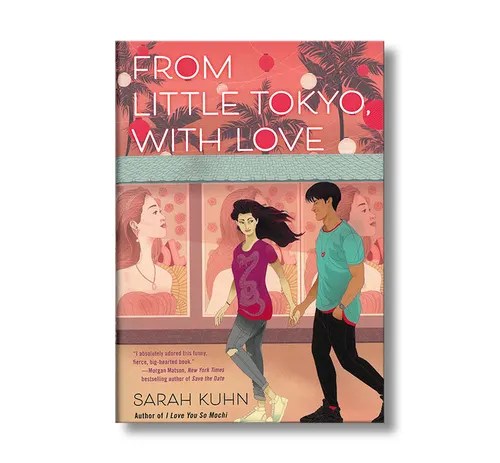
If Rika’s life seems like the beginning of a familiar fairy tale—being an orphan with two bossy cousins and working away in her aunts’ business—she would be the first to reject that foolish notion. After all, she loves her family (even if her cousins were named after Disney characters), and with her biracial background, amazing judo skills and red-hot temper, she doesn’t quite fit the princess mold.
All that changes the instant she locks eyes with Grace Kimura, America’s reigning rom-com sweetheart, during the Nikkei Week Festival. From there, Rika embarks on a madcap adventure of hope and happiness—searching for clues that Grace is her long-lost mother, exploring Little Tokyo’s hidden treasures with cute actor Hank Chen, and maybe . . . finally finding a sense of belonging.
But fairy tales are fiction and the real world isn’t so kind. Rika knows she’s setting herself up for disappointment, because happy endings don’t happen to girls like her. Should she walk away before she gets in even deeper, or let herself be swept away?
This hit all my favorite tropes. Tough girl who thinks she’s impervious to all the shitty things people say about her only to find love, and crack those walls down. The love being a wholesome, unapologetically good guy who works on healthy communication. Love even more!
(more…) -
Priyanka Taslim Interview
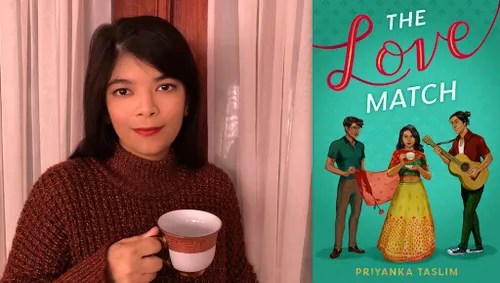
Priyanka Taslim is the author of rom-coms, The Love Match and Always Be My Bibi, featuring swoony Bengali Muslim characters. She graciously took the time to answer my questions about arranged marriages, Bengali representation, and her upcoming adult romance. Enjoy!
1. You got your start writing with fan fiction, what were the fandoms that started it all?
I wrote a lot of obscure anime and Final Fantasy fanfiction when I first started out. These weren’t huge fandoms, which was probably for the best, since I was about twelve and sharing my writing with others for the first time. Eventually, I wrote a bit in the Supernatural fandom as well. I don’t know if anyone suspected my age, but most people were very kind and encouraging and that experience definitely motivated me to hone my craft!
2. What are some of your favorite tropes to write? Or hope to write?
For romances, of course I love many tropes like fake dating and rivals/enemies to lovers, but I’m also partial to forced proximity. One of my favorite things to do while plotting a romcom is coming up with reasons why these two characters must be in the same vicinity, especially if they butt heads at first, especially if they have to collaborate in some way for a shared goal. That sort of situational comedy always amuses me.
Not so much a trope, but I love magic, fantasy, and fairy tales. I’d love to work on something more in that vein one day.
3. When you wrote The Love Match, when did you know it was the one to field queries with?
I actually didn’t get an agent with The Love Match, but I think it felt ready for submission to editors when the characters felt wholly realized, when Zahra’s antics made me laugh and her struggles pulled at my heartstrings. The Love Match was my pandemic novel, and I felt at the time that people needed fun, fluffy romances as an escape from hopelessness.
At the same time, I think it had hidden depth, because settings like Paterson and heroines like Zahra don’t often take center stage. I wanted to write the book for teenagers like the one I was, but especially for the ones who live lives like her even now. Paterson is a working class, predominantly BIPOC city where many teens work to help their families while juggling school, have to decide between furthering their education and earning money faster after high school, and play a part in looking after younger siblings. I believe those readers also deserve to be at the center of love stories, of happily ever afters.
(more…) -
Eighteen Roses Review
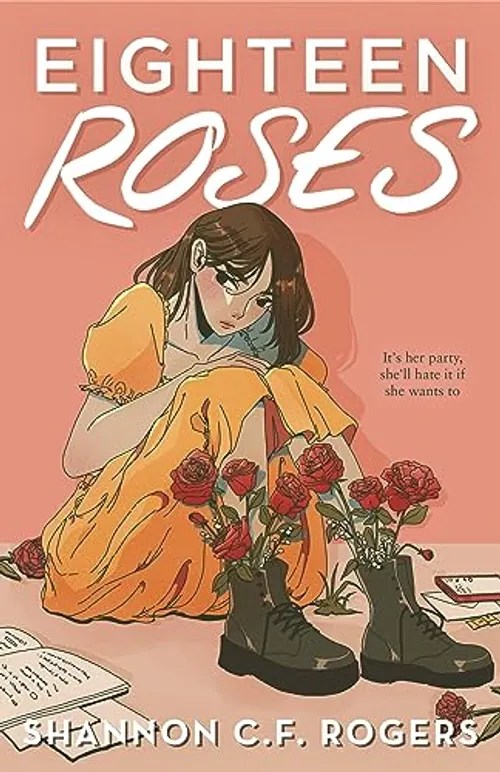
Lucia Cruz may be turning eighteen this year, but she is not the debutante type. Everything about a traditional Filipino debut feels all wrong for her. Besides, custom dictates that eighteen friends attend her for a special ceremony on her birthday, and Lucia only has one friend– Esmé Mares. They’ve stuck to each other’s side all throughout high school, content to be friends with only each other. At least, Lucia thought they were content.
(more…)
As it turns out, Esmé wants something different out of her senior year. And, on top of that, Lucia’s mom has planned a debutante ball for her birthday behind her back. She’ll be forced to cobble together a court of eighteen “friends” before her beloved lola arrives from the Philippines for this blessed occasion.
How far will Lucia stray from her comfort zone in order to play the role of dutiful daughter and granddaughter? Will she do the unthinkable– participating in a school sponsored activity? Will she discover that her sense of humor can be a way to connect with people, not just push them away? -
Julia DeVillers Interview
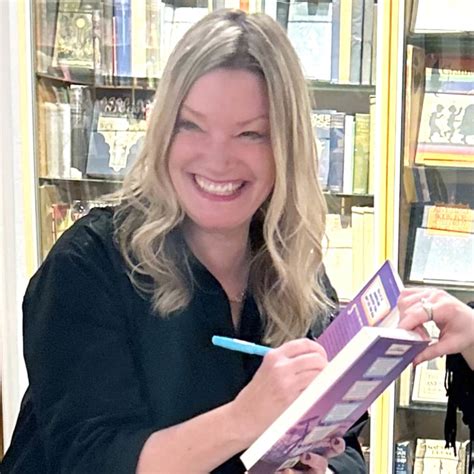
Julia DeVillers is the author of several tween/teen books like Trading Faces (with her own twin sister), Liberty Porter, First Daughter, How My Personal Private Journal Became a Bestseller, Meet Me at Wonderland, and more. She graciously took the time to answer my questions about her beginnings in the industry, turning her first novel into DCOM, Read It and Weep, writing through tough times, and more. Enjoy!
1. When did you begin writing?
In first grade, I used to write stories in class and my teacher, Mrs. Guest, would make copies and pass them around to read. I won a local newspaper writing contest when I was seven for my short story, Tommy the Turtle and Sally the Snake, and won a pack of markers. I was proud but furious, because the article called Sally “Sammy.” I was not happy with the Sally erasure. It was then I also learned to appreciate a good editor.
2. When did you know you were ready to get an agent/published etc?
After I got a master’s in journalism, I worked in educational publishing and picked up a freelance job going through the slush pile for a literary agent who had moved to town. (By picked up, I mean I begged him to let me do anything. There weren’t many trade publishing opportunities in Ohio.) I learned, I networked.
When an editor asked me if I had any ideas of my own, I pitched her a nonfiction concept that would become my first book, Girlwise: How to Be Confident, Capable, Cool, and In Control. So it was a little backwards, becauseI got the deal first and then I reached out to an agent I admired and said “I have a deal, will you represent me?”
The takeaway, I believe, is to learn at least a little about the business part along with honing your craft and to connect.
3. Pretty exciting that your first novel became a movie-were you part of the process? We’re there any parts that were changed that you liked better or that you missed?
Thanks! I was at dinner with some girlfriends and my agent called and said “Are you sitting down? Disney Channel wants to make your book into a movie and by the way, they’re ready to greenlight and moving fast.” I almost fell off my chair.
The “Read it and Weep” team really was fantastic and yes, I got to be part of the process. I read the early script, and then somehow finagled an invite to the set in Salt Lake City. I was surprised with a tiny cameo in the movie, a role I call “woman in the pizza place looking like she’s going to vomit.”
A part that was changed from the book, was the main character’s older sister was turned into a brother, who was a musician, and the actor sang the big musical number at the end. An earworm that still runs through my head.
(more…) -
Shards of Silence Review
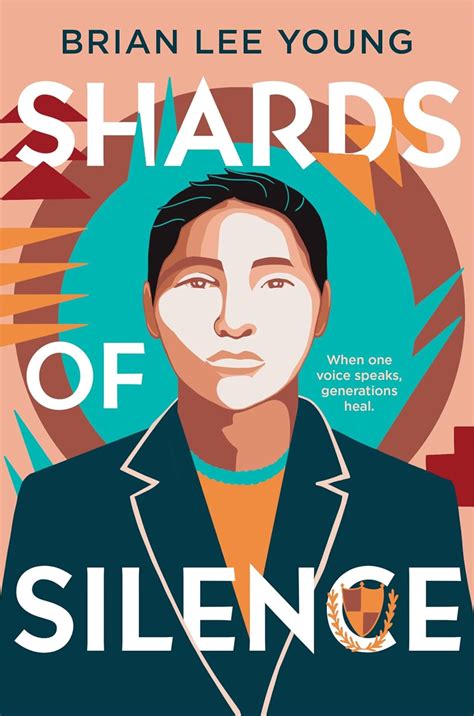
Even if it hurts to leave behind his friends and family in Navajo, New Mexico—especially his great-grandmother, Mildred—Derrick knows his scholarship to an elite East Coast boarding school is a once-in-a-lifetime opportunity.
Sagefield Academy is totally different from life on the His new classmates vacation in Europe and take study drugs. Derrick wants to stick to caffeine, but handling sports, school, and a twenty-page term paper, all while dodging comments about his hair and heritage, feels straight-up impossible.
Back home, Másání Mildred’s health is fading quickly. On the phone, she begs Derrick to leave Sagefield. When he realizes her fear comes from her time in federal Native boarding schools, he knows he’s finally found the term paper theme he believes carrying her voice into the future.
Derrick will need to shatter a steadfast generational silence to untangle his great-grandmother’s memories—though her story might change him, and his family, forever.
A very apt and evocative title that fits with Young’s exploration of the historical trauma of boarding schools on the indigenous population.
(more…)
-
Subscribe
Subscribed
Have a WordPress.com account? Log in now.


Leave a Reply