-
In Every Generation Review
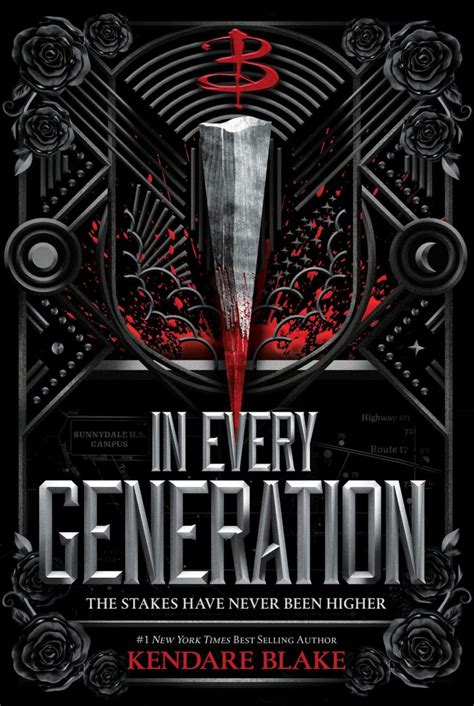
Frankie Rosenberg wasn’t yet alive when her mom, Willow, her aunt Buffy, and the original Scooby Gang destroyed the Hellmouth and saved the world from the First Evil. These days, life in New Sunnydale is blissfully quiet. Frankie is just trying to survive her sophomore year at the rebuilt high school and use her budding magical powers to make the world a better place.
But that world is suddenly plunged into danger when the slayer community is the target of a deadly attack, leaving the future of the line uncertain. Then Frankie discovers she’s sort of freakishly strong. Oh, and there’s something Willow never told her about her true identity.
Cue the opening credits.
Quicker than she can carve a stake, Frankie discovers there’s more to saving the world than witty one-liners and stupid hot demons. now everyone looks to her for answers, but speaking up has never been her strong suit. And it’s hard to be taken seriously when your mom is such a powerful witch she almost ended the world once, while your greatest magic trick is recycling.
Despite the many challenges standing in her way, Frankie must assemble her own bumbling Scooby Gang, get dressed up in Buffy’s (vintage ’90s) clothes, and become a new slayer for a new generation—before whatever came for the rest of the slayers comes for her next.
Following the next generation of a beloved series is always a difficult balancing act as you don’t want to rely too much on nostalgia yet you don’t want to make the next generation copies of their parents because then what’s the point?
Blake manages to do just that, creating compelling new characters that are reminiscent of the original Scooby gang while maintaining their own personalities and difficulties.
First, let’s get to the characters.
(more…) -
Xena: Warrior Princess Double Review
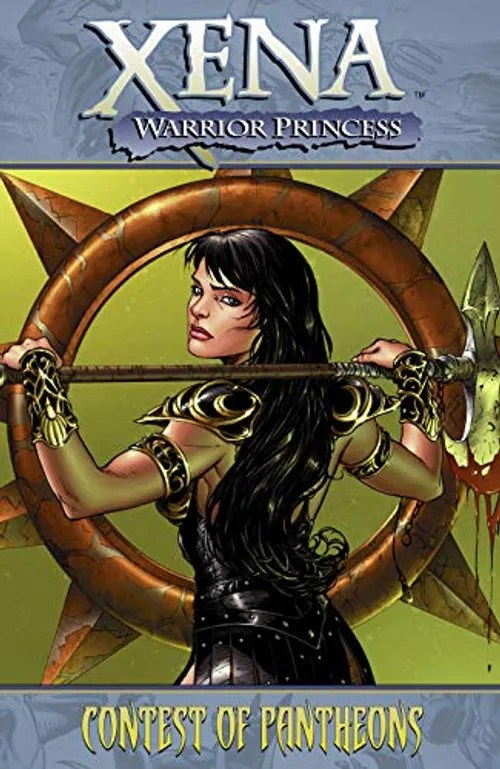
Popular question in the 90s, are you Buffy or Xena? And while one show may have made more of a lasting cultural impact (cough cough Buffy because it was thematically epic), I like them both. Xena is just so aspirational because you could never hope to do kung fu in the air in leather chainmail but it’s so cool to watch.
Xena, The Warrior Princess and Gabrielle are back in a series of all-new adventures ― collected here for the very first time! Xena and her well-loved cast of friends and villains find themselves in-between a feud that reaches all the way up to the heavens as they fight in the “Contest of Pantheons”!
Anyway, Contest of Pantheons is a fun story of Greeks vs Egyptians and Layman does a great job in making it feel like a long-lost episode of the show. Xena and Gabrielle get dropped into the chess-match between pantheons and because of an accidental impalement, Gabrielle is chosen to be the champion of the Greeks where she’d be undoubtedly crushed by the giant blue Egyptian guy.
Autolycus and Joxer end up joining the fun too as well as a surprise double-cross with Callisto. Everyone is in-character, and Layman expertly mixes the high-stakes action sequences with the goofy sequences like Joxer fainting or the guys dressing as belly-dancers to trick some ice-giants. Plus Fabiano Neves’ photo-realistic art makes each character look like their actor’s without being too uncanny.
3 stars
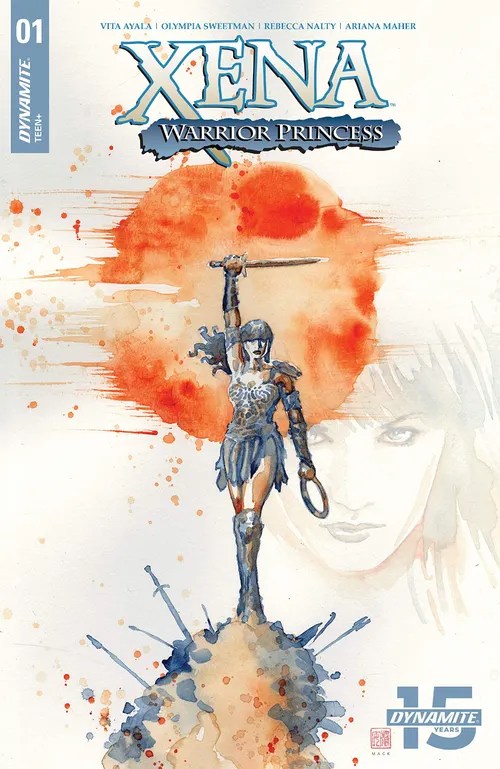
In a time of ancient gods, warlords and kings…a land in turmoil called out for a hero! She was XENA, a mighty princess forged in the heat of battle! In this all-new series, writer VITA AYALA (Black Panther, Shuri, Wonder Woman, The Wilds) and artists OLYMPIA SWEETMAN, VASCO GEORGIEV, JORDI PEREZ, AND ERICA D’URSO throw Xena and her companion Gabrielle headfirst into a mysterious adventure. Can Xena discover the secrets of a village full of super-strong children, before jealous and petty GODS get involved?
If Contest of Pantheons was like a long-lost Xena episode, Road Warrior would be the reboot, declining the camp to bring about a mature treatise about not letting a previous generation’s mistakes affect the future, and a surprising redemption arc for Discord of all gods. Shocking, I know. This could be almost put into a three-parter if it was a tv show. The first part is primarily Xena helping the village and connecting with the magistrate in trying to atone for past deeds, giving it a sort pathos.
The second part is what I’d call the world tour as Zeus banishes Discord to mere mortalness at the ends of the Earth. The ends of the Earth being early Meso-American. From there to Russia to the Carpathian Mountains, Ayala pays tribute to the original series’ penchant for meeting figures of world myths, and Xena/Gabrielle being the origin of some of them in modern day like Baba Yaga.
While Ayala doesn’t do the goofy humor of the original show, there is some primarily in the form of Discord’s disgruntled-ness of her new mortal status and repression of anything resembling friendship or gratitude. Yet Ayala manages to pace it that her semi-redemption works and that it’s believable by the end that she’d willingly slay Dracula to help Xena and Gabrielle.
I do have some nitpicks in that the return to Greece felt rushed, Aphrodite felt out of character (more lovey gentle, not Valley Girl) and the action sequence in the labyrinth felt compulsory. The art by Jordi Perez in #3-4 were more cartoony (such big foreheads on everyone!) than the sleek look of the artists on the rest of the issues.
Otherwise, it was a fun, new look on what Xena could be for a new generation. Plus fans would be happy to note that she and Gabrielle are an official couple here.
4 stars
-
Book of the Month: Six of Crows
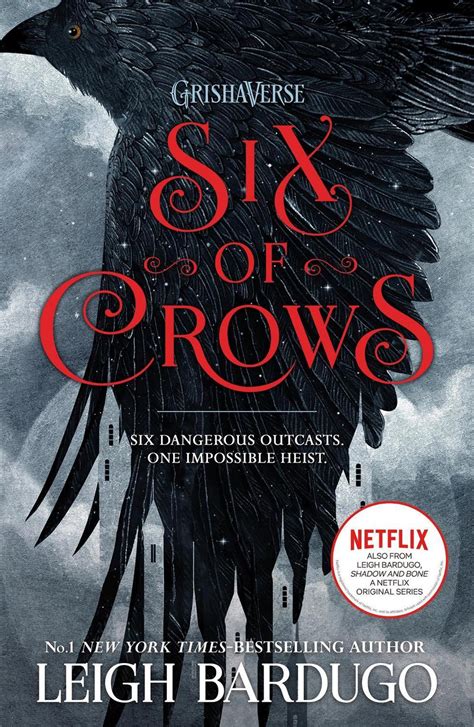
Ketterdam: a bustling hub of international trade where anything can be had for the right price—and no one knows that better than criminal prodigy Kaz Brekker. Kaz is offered a chance at a deadly heist that could make him rich beyond his wildest dreams. But he can’t pull it off alone…
A convict with a thirst for revenge
A sharpshooter who can’t walk away from a wager
A runaway with a privileged past
A spy known as the Wraith
A Heartrender using her magic to survive the slums
A thief with a gift for unlikely escapes
Six dangerous outcasts. One impossible heist. Kaz’s crew is the only thing that might stand between the world and destruction—if they don’t kill each other first.
Arguably the best book out of the Grishaverse, it was fun to get back into the Crows’ world, knowing everything in hindsight. It made the interactions between Jesper and Wylan sweeter, Mattias and Nina more bittersweet, and just rooting for Kaz and Inej to hold on. It probably also made it less confusing for me because my friend who was reading it for the first time had some trouble with the universe’s new rules and words but she got caught up.
Actually she got addicted to reading it into 1 in the morning because, as she said “It was on a literally cliffhanger! Inej was hanging onto a cliff, I had to find out what happened.” Yep, I got her addicted which brought us to conversing about netflix’s unfortunate decision to cancel it before they got the ice heist. It would have been so cool!
Nothing more illuminating there for book club. It was a fun, suspenseful adventure paired with Now You See Me for a magical heist marathon. Next up is another classic Where the Crawdads Sing. Both of us have read it so it should be interesting to see if it brings us a new perspective.
-
Capturing the Devil Review
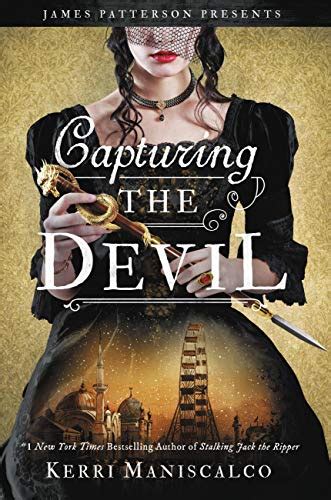
Audrey Rose Wadsworth and Thomas Cresswell have landed in America, a bold, brash land unlike the genteel streets of London they knew. But like London, the city of Chicago hides its dark secrets well. When the two attend the spectacular World’s Fair, they find the once-in-a-lifetime event tainted with reports of missing people and unsolved murders.
Determined to help, Audrey Rose and Thomas begin their investigations, only to find themselves facing a serial killer unlike any they’ve heard of before. Identifying him is one thing, but capturing him—and getting dangerously lost in the infamous Murder Hotel he constructed as a terrifying torture device—is another.
Will Audrey Rose and Thomas see their last mystery to the end—together and in love—or will their fortunes finally run out when their most depraved adversary makes one final, devastating kill?
This was definitely a thrilling way to end the series, although the summary is a bit misleading. Split into two parts, a majority of the novel takes place in New York where Audrey Rose and Thomas are more preoccupied with fulfilling their wedding ceremony in less than a fortnight. It is simply easier for them to travel as a married couple, but of course, more romantic reasons are involved too. After everything they’d been through, they are completely confident in wanting to be with each other.
(more…) -
Escaping from Houdini Review
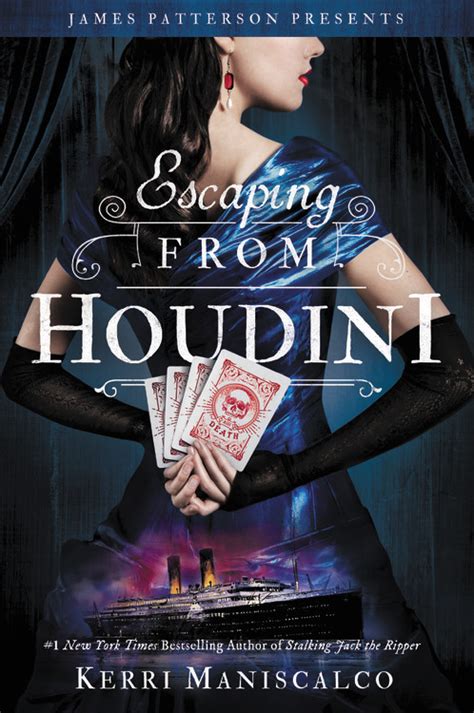
Audrey Rose Wadsworth and her partner-in-crime-investigation, Thomas Cresswell, are en route to New York to help solve another blood-soaked mystery. Embarking on a week-long voyage across the Atlantic on the opulent RMS Etruria, they’re delighted to discover a traveling troupe of circus performers, fortune tellers, and a certain charismatic young escape artist entertaining the first-class passengers nightly.
But then, privileged young women begin to go missing without explanation, and a series of brutal slayings shocks the entire ship. The disturbing influence of the Moonlight Carnival pervades the decks as the murders grow ever more freakish, with nowhere to escape except the unforgiving sea.
It’s up to Audrey Rose and Thomas to piece together the gruesome investigation as even more passengers die before reaching their destination. But with clues to the next victim pointing to someone she loves, can Audrey Rose unravel the mystery before the killer’s horrifying finale?
Have you ever wanted the Murder on the Orient Express to have a change of setting? Perhaps on a ship where there is literally no place to go when a murderer strikes because the ship is a two-week journey across the Atlantic Ocean? Do you want the variety of nationalities in the suspects to have more alluring backstories and skills that come from circus performers? Do you want the murders to be much more gory and creative?
This was an absolute treat!
(more…)#escapingfromhoudini, #forensicmystery, #hachettebookgroup, #jamespattersonbooks, #jamespattersonpresents, #jimmypattersonimprint, #kerrimaniscalco, #littlebrownandcompany, #mystery, #rachelreads&reviews, #stalkingjacktheripper, #suspense, #thriller, #victorianfiction, #victorianmystery, #victorianromance, #YA -
Hunting Prince Dracula Review
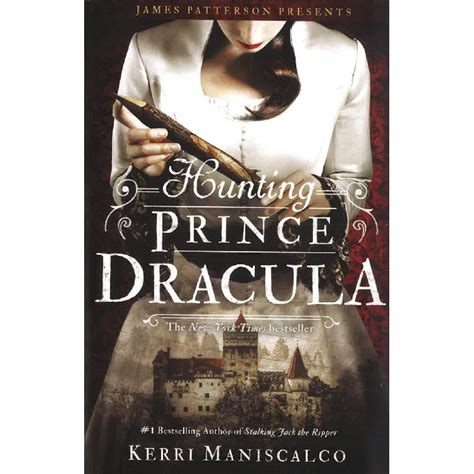
Following the grief and horror of her discovery of Jack the Ripper’s true identity, Audrey Rose Wadsworth has no choice but to flee London and its memories. Together with the arrogant yet charming Thomas Cresswell, she journeys to the dark heart of Romania, home to one of Europe’s best schools of forensic medicine… and to another notorious killer, Vlad the Impaler, whose thirst for blood became legend.
But her life’s dream is soon tainted by blood-soaked discoveries in the halls of the school’s forbidding castle, and Audrey Rose is compelled to investigate the strangely familiar murders. What she finds brings all her terrifying fears to life once again.
First we dealt with the horror of a real life of Dr. Frankenstein, now Audrey Rose and Thomas venture into Dracula’s castle to learn criminal forensics from the foremost teacher in the business.
(more…) -
Stalking Jack the Ripper Review
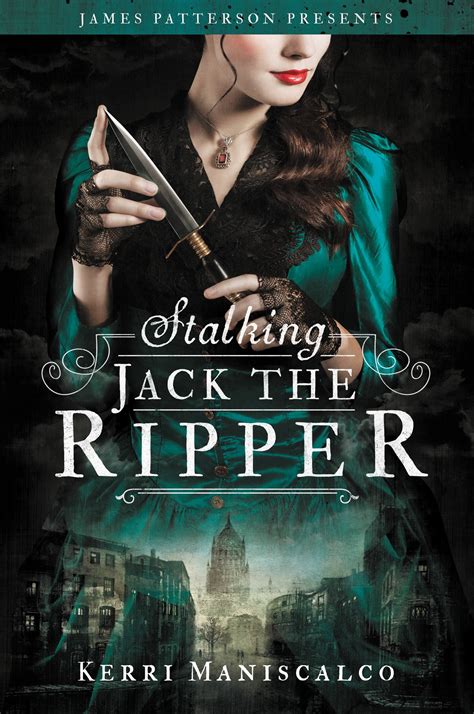
Seventeen-year-old Audrey Rose Wadsworth was born a lord’s daughter, with a life of wealth and privilege stretched out before her. But between the social teas and silk dress fittings, she leads a forbidden secret life.
Against her stern father’s wishes and society’s expectations, Audrey often slips away to her uncle’s laboratory to study the gruesome practice of forensic medicine. When her work on a string of savagely killed corpses drags Audrey into the investigation of a serial murderer, her search for answers brings her close to her own sheltered world.
Perfect to get into this on the 10 year anniversary. A creeping suspense look into the beginning of forensic science and investigation. No, I’m serious. This was the era that first introduced dissections, criminal profiling and psychology, toxicology, photo ID, fingerprinting and comparison microscopes. Combining Victorian mystery with the procedural looks into anatomy dissection kept me at the edge of my seat.
(more…)#forensicmystery, #hachettebookgroup, #jamespattersonbooks, #jamespattersonpresents, #jimmypattersonimprint, #kerrimaniscalco, #littlebrownandcompany, #mystery, #proceduralmystery, #rachelreads&reviews, #stalkingjacktheripper, #suspense, #thriller, #victorianfiction, #victoriangothic, #victorianromance, #YA -
Heiress, Apparently Review
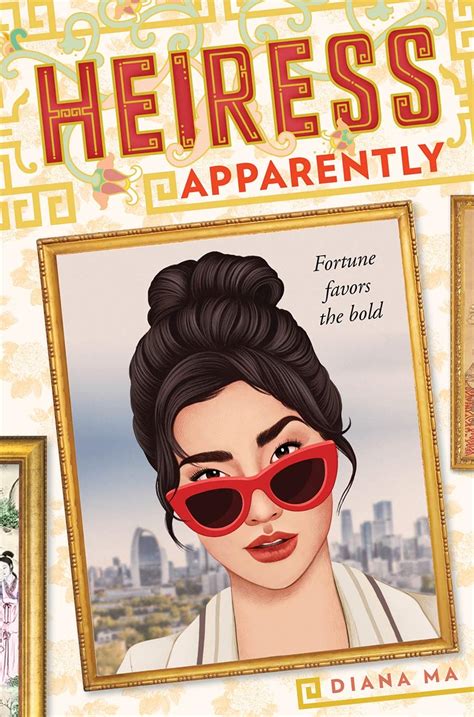
Gemma Huang is living the dream: she’s a rising starlet in Hollywood, navigating auditions and red carpets. The only problem? Her “dream” life is completely fake. She’s not the glamorous, wealthy heiress her social media suggests. She’s actually broke, crashing on couches, and one terrible audition away from giving up.
When a deep-rooted family secret surfaces, Gemma is whisked away to Hong Kong to meet the powerful, traditional family she never knew she had―a family descended from the last imperial dynasty of China. Instantly, she’s thrust into a world of incomprehensible wealth, ancient expectations, and competitive, diamond-encrusted cousins. She is the Heiress Apparently, and everything is suddenly real.
As Gemma tries to find her footing in this demanding new dynasty, she must contend with a ruthless, politically-charged social scene and the charming, yet totally off-limits, boy who seems to be the only person seeing the real her. But the deeper she delves into her royal lineage, the more she realizes that her family’s wealth comes with serious dangers.
To claim her place and understand her history, Gemma must untangle the truth about her past while facing the threat that her new life―and her family’s legacy―might crumble around her.
For fans of Tokyo Ever After, and Crazy Rich Asians, Ma brings the glitz of modern day Beijing as Gemma makes her movie debut with the intrigue and dark past of China’s communist history.
Firstly, I enjoyed Gemma as a protagonist. She’d kind, bold yet insecure and nervous about her first role and when she should pick her battles, and when she should push for more. Out of the movie and out of the new family she apparently has.
(more…) -
Pauline (Vaeluaga) Smith Interview

Pauline is an author and educator, director of Mīharo, an organization supporting Maori and Pasifika heritage, and author of the award-winning, Dawn Raid. She graciously took the time to talk about her journey to writing, the Polynesian Panthers, and what readers can look forward to in her sequel, The Apology. Enjoy!
1. What drew you to writing? Do you remember what your first story was?
Writing has always held high interest for me. I kept a diary as a child and loved when the teacher would read out my work to class, especially if the other kids laughed in the right places. My first published work by Scholastic NZ is My New Zealand Story Dawn Raid (2018). It was picked up and published by Levine Querido in 2021 and that was pretty exciting too.
2. How did you get your start in publishing?
New Zealand is a small place, so relationships are key to most things here. My librarian friend attended a conference where Scholastic NZ talked about needing Pacific stories for their My New Zealand Story series. Having recently learnt about the Dawn Raids and the Polynesian Panther movement I felt inspired to inform others and that’s how it all started.
3. What compels you to the historic fiction genre?
One of the guiding ideals for the Polynesian Panthers is Educate to Liberate. Being an educator myself this resonates so strongly with me. There is power to transform when we are truly informed.
4. For the non-New Zealand audience, who were the Polynesian Panthers and the of the 70s?
Established on 16 June 1971 in New Zealand the Polynesian Panthers were a group of young (16-19 year old) mainly Pacifica youth. They were standing against injustice and racism endured by their parents and grandparents through things like the Dawn Raids and random street checks profiling people with brown skin in the mid 1970’s. The Polynesian Panthers looked to the work of the Black Panthers who were supporting their communities with things like homework clubs and educating about their rights and they adopted these programmes as part of their work in New Zealand.
(more…) -
Book of the Month: Death on the Lanai
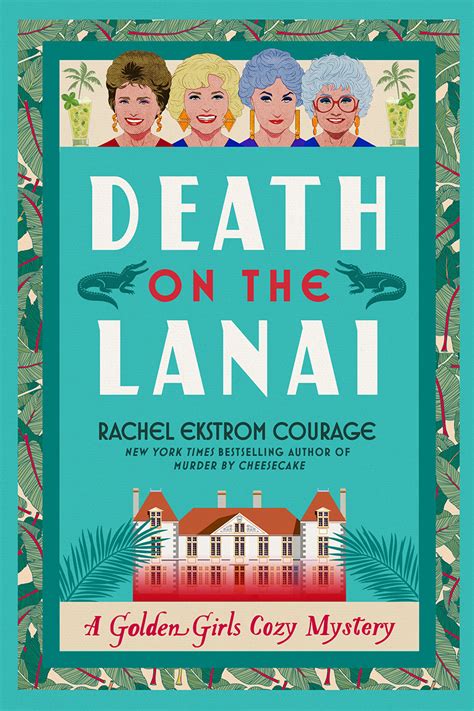
The invite delivered to 6151 Richmond Street was short on details, only promising to celebrate “the greatest artist of the century” and accompanied by a jewel-encrusted brooch—the whole package a brand of mysterious opulence that another Saturday night of gin rummy just can’t match.
Blanche Devereaux’s passionate dalliances are as plentiful as hot Southern nights, and surely one can’t be expected to remember all of one’s suitors. But when the Girls disembark the party’s ferry at a small Biscayne Bay island and meet their secretive host, the memories come flooding back: she a Radio City Rockette in her twenties, he the poor artist who could offer her nothing but his love. Fate drove them apart, but Declan, now a famous artist El Toro, professes that Blanche has always been his muse.
Featured prominently in his artworks and central to El Toro’s return to the apex of the art world, Blanche is thrilled to have been such an inspiring figure to this man. But looking around at a party filled with those who have made their livings off the artist’s fame—his assistant, his art dealer, his greatest critic, and more—Dorothy isn’t so sure they’re welcome on the island after all.
When a tropical storm knocks power out across the island, an optimistic Blanche proclaims that everyone looks better by candlelight anyway. But when Declan is found dead the next morning, all eyes are on her, his supposed muse of thirty-plus years. Trapped at the estate with the other guests—suspects all—the Girls must band together to find the true killer and get back to pleasant evenings of card games and cheesecake.Another delightful mystery. This one was possibly filled with even more references and inside jokes to the show, even including mention of Coco. Yes, Coco! Super-super fans know who I’m talking about.
The mystery described above has Then There Were None vibes that Courage delicately balances with the light-hearted humor of the Golden Girls franchise. The supporting character aka the suspects are distinct with interesting potential to be the murderer although my friend and I quickly figured it out.
The other secrets the guests were hiding were less easy to guess which keeps the novel compelling along with the humor. Courage was excellent in depicting the girls’ original personalities with Rose’s goofy St. Olaf stories, Sophie’s sass and Dorothy’s analytical mind piecing together the mystery. Blanche got the real spotlight in the novel as Courage demonstrates Blanche’s lusty asides with the emotional weight of Blanche’s fragility when faced with tough situations like death and mortality.
My friend and I initially thought Sophie was going to be the co-lead as Dorothy and Rose were the protagonists of Murder by Cheesecake, and it seemed to lean to that in the first second, but Dorothy took up the second POV. We believe this is because Dorothy is just a natural narrator for a mystery as she’s always been the serious, smart one who would notice the small things that others wouldn’t. Makes sense but hopefully a third one will come out, and Sophia can take the lead.
-
Subscribe
Subscribed
Have a WordPress.com account? Log in now.


Leave a Reply