-
Summer Historical Fiction
Queens of Crime by Marie Benedict
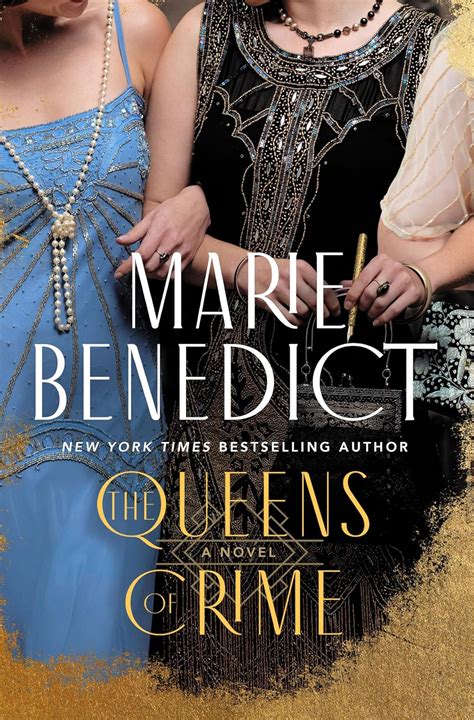
London, 1930. The five greatest women crime writers have banded together to form a secret society with a single goal: to show they are no longer willing to be treated as second class citizens by their male counterparts in the legendary Detection Club. Led by the formidable Dorothy L. Sayers, the group includes Agatha Christie, Ngaio Marsh, Margery Allingham and Baroness Emma Orczy. They call themselves the Queens of Crime. Their plan? Solve an actual murder, that of a young woman found strangled in a park in France who may have connections leading to the highest levels of the British establishment.
May Daniels, a young English nurse on an excursion to France with her friend, seemed to vanish into thin air as they prepared to board a ferry home. Months later, her body is found in the nearby woods. The murder has all the hallmarks of a locked room mystery for which these authors are famous: how did her killer manage to sneak her body out of a crowded train station without anyone noticing? If, as the police believe, the cause of death is manual strangulation, why is there is an extraordinary amount of blood at the crime scene? What is the meaning of a heartbreaking secret letter seeming to implicate an unnamed paramour? Determined to solve the highly publicized murder, the Queens of Crime embark on their own investigation, discovering they’re stronger together. But soon the killer targets Dorothy Sayers herself, threatening to expose a dark secret in her past that she would do anything to keep hidden.
I had already read two by Marie Benedict (The Other Einstein, and Her Hidden Genius) and while I enjoyed the first, I thought the latter was retreading the same plotline with the same archetype. Luckily, this one was totally different, and combined one of my favorite genres with historical fiction. While I knew about Agatha Christie and Baroness Emma, the other authors were unknown to me. Even cooler, they were all actually friends and contemporaries in real life. It was fun to see the dynamic personalities banter and push up against each other with their different investigative styles. Unfortunately, Margery felt lost in the mix and I often forgot she was there.
The mystery was engaging, although it was overtaken in the middle with Sayers relating to May Daniels too much, and bringing up ghosts from her past.
Benedict’s prose is engaging, but I found some of the themes to be didatic. The characters would literally state them out-loud and while the themes of disposable/forgotten women/personal autonomy will always remain relevant, it felt like the way it was conveyed, it was through 21st century language that took me out of the book. Same with Baroness Emma’s agitation with Ngaoio calling her old-fashioned and reminding her that the rights Ngaoio has now are thanks to women like her who had lived with narrow options. A relatable arguement of two different generations, but the execution felt too modern.
(more…) -
Great or Nothing Review
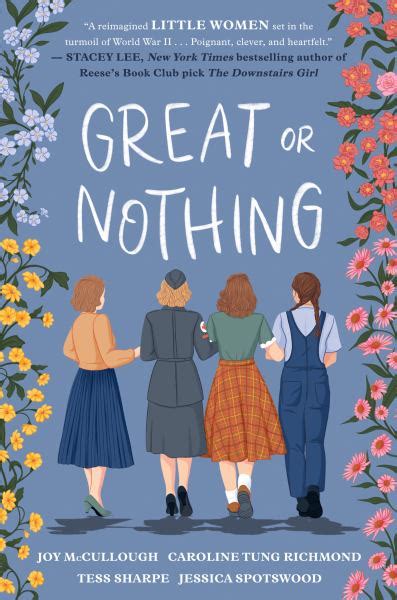
In the fall of 1942, the United States is still reeling from the attack on Pearl Harbor. While the US starts sending troops to the front, the March family of Concord, Massachusetts, grieves their own enormous loss- the death of daughter Beth.
Under the strain of their grief, Beth’s remaining sisters’ fracture, each going their own way, with Jo nursing her wounds and building planes in Connecticut, Meg holding down the home front with Marmee, and Amy living a secret life as a Red Cross volunteer in London-the same city where one Mr. Theodore Laurence is stationed as an army pilot.
Each March sister’s point of view is written by a separate author, three in prose and Beth’s in verse, still holding the family together from beyond the grave. Woven together, these threads tell a story of finding one’s way in a world undergoing catastrophic change.
(more…) -
Midnight in Austenland Review

When Charlotte Kinder treats herself to a vacation at Austenland, she happily leaves behind her ex-husband and his new wife, her children, and the rest of her recently upended life in America. It’s been a long time since Charlotte has felt hopeful, let alone loved. Maybe doing something as outrageous as donning a bonnet and staying at an English manor house can help re-start her damaged heart.
Yet once the parlor games begin at Pembrook Park, Charlotte finds herself more uncertain than ever. Can she trust the feelings she has for a certain actor, or is his roleplaying that quality? Is the world-famous starlet concealing more than her real name? Has the respite of the country given her too much time to question her life choices? And when Charlotte suspects murder among them, she can’t help but wonder how much of their true selves everyone may be hiding. . .
Although Charlotte states P&P is her favorite novel on her Pembrook Park application, she is getting the Northanger Abbey experience. Hale’s sophmore novel in the series was delightful as she melds the personal journey of Charlotte wreastling with her anxiety and self-doubt with the locked-door murder mystery.
(more…) -
Austenland Review
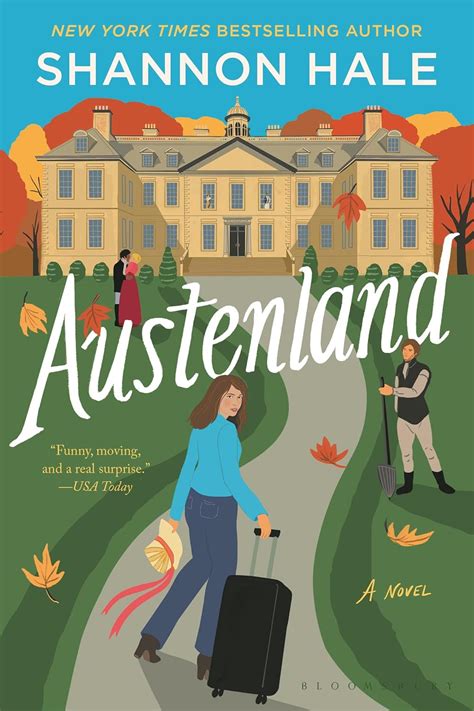
Jane Hayes is what some might call a hopeless romantic. Normal life (and men) continuously disappoint her. Why can’t she find anyone remotely like literary heartthrob, Mr. Darcy? Why can’t real life feel like a novel?
When a wealthy relative bequeaths Jane a trip to an English resort for Austen superfans, Jane’s fantasies become realer than she ever could have dreamed. Dressed in empire waist gowns and torn between a charming gardener and an actor playing the brooding Mr. Darcy role, Jane attempts to master the Regency-era etiquette and the flirtatious games. But when it’s time to bid Austenland farewell, will she be able to leave her sincerest fantasies–and the men who helped bring them to life–behind for good?
I had originally decided to read Austenland, and other Austen-inspired novels when I finished my big ol Austen novel, and was going to read this in May. However, when I found out about the new delux editions I held myself back to read the new ones and then compare them side by side.
(more…) -
Summer Anthologies
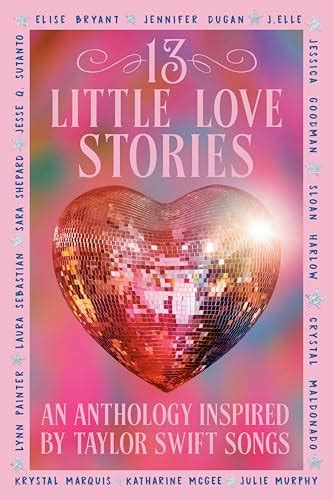
If you could live inside one Taylor Swift song for a day, which would you pick? In this shimmering anthology, thirteen best-selling and acclaimed authors do just that, reimagining some of Taylor’s most iconic songs as love stories.
Whether you’re in an era of fairy lights and folktales or diss tracks and dance floors, here’s a playlist that features all the The soaring high note of first love. The minor key of heartbreak. And the steady rhythm of true friendship and self-discovery.
As clever and unforgettable as the songs that inspired them, these stories are sure to play on repeat in your head and your heart.
Fans of Taylor Swift will enjoy these short stories filled with Easter Eggs and vibes of their favorite songs. Some of which I prefer more than the others.
(more…)#annm.martin, #baby-sittersummer, #babysitter'sclub, #beckyalbertalli, #coebooth, #crystalmaldonando, #elisabryant, #emmastraub, #j.elle, #jahnnan.malcolm, #jenniferdugan, #jesseqsutanto, #juliemurphy, #katherinemcphee, #krystalmarquis, #laurasebastian, #lynnpainter, #middlegrade, #peterlerangis, #rachelreads&reviews, #sarahkuhn, #sarashepard, #scholastic, #sloanharlow, #thebaby-sittersclubfanedition, #thebabysittersclub, #YA -
Jenny Pausacker Interview
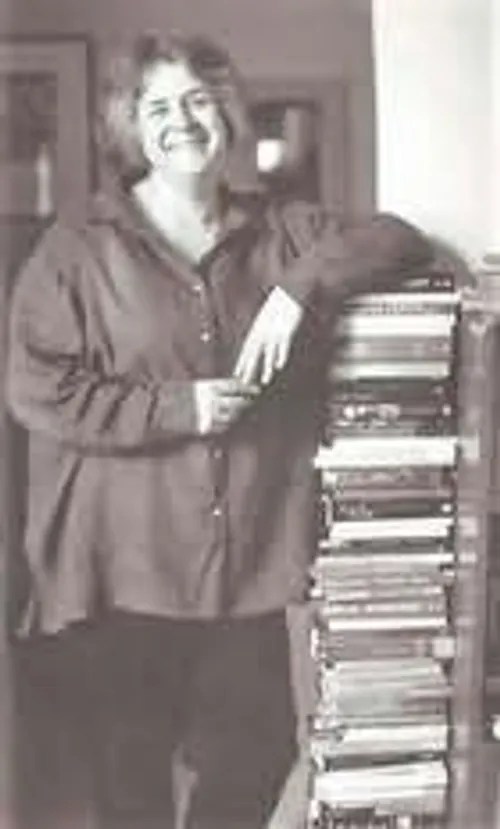
Jenny Pausacker is one of Australia’s most prolific children’s authors, academic and essayist. From 1975 to 2007, she wrote 72 books in almost every genre. She graciously took the time to answer my question about her boundary-breaking books, queer literature and what she’s currently doing in her retirement. Enjoy!
- You really developed a passion for writing after your father’s death-how did the grief channel your creativity?
I’d been telling stories from early childhood and sometimes even writing them down. I still have a copy of one of my first stories, which goes, “Once there was a dog and a cat and a pig. And they went. And they lived happily ever after. The end.” Then my father died and I felt no one understood what it was like for me … until I read J.R.R. Tolkien’s account of Gandalf’s death in The Fellowship of the Ring.
After that, I knew there was a community of writers and readers out there somewhere and I wanted to be part of it. (And I wasn’t surprised to find out later on that Tolkien’s father died when Tolkien was very young.)
- You’ve been noted for your books breaking stereotypes (Role Your Own: A Book About Women’s Liberation for Fourth Form Students; Hands On: Trade and Technical Careers for Girls and Women), did that come about organically or partly influenced by your time in the counter culture movement?
I was volunteering at the Women’s Centre in Melbourne and one day I noticed an ad for a feminist children’s book group, so I went to a meeting, to see what it was like, and ended up writing two picture books with them. 1975 was International Women’s Year, so the Children’s Book Group applied for some government funding and I wrote Role Your Own and a countersexist booklist.
After that I had some other educational projects commissioned and eventually I was able to declare myself a fulltime freelance writer. But my first experience of being published was as part of a collective and I still really value my time in the counterculture.
- Most of your works were written in response to a gap in the market (What Are Ya? about sexual identity, Mr. Enigmatic about a boy writing teen romance, Getting Somewhere against the greed is good mentality); In writing books that challenged the norm, did thy also challenges your own perceptions?
Yes! It’s easy to think, “There should be books that challenge the stereotypes,” but much harder to come up with an alternative.
At the time when I wrote What Are Ya? lesbian characters in novels tended to end up being tragically killed, often in a car crash. It wasn’t until I was editing What Are Ya? that I realised that although my lesbian main character survives, she actually witnesses a car crash in the course of the novel. So I hadn’t got as far away from the stereotype as I thought.
(more…)#ataleoftwofamilies, #australianliterature, #counterculture, #countersexist, #genderconstruction, #gettingsomewhere, #goingoverboard, #historicalfiction, #jennypausacker, #kidsliterature, #middlegrade, #mr.enigmatic, #queerliterature, #rachelreads&reviews, #roleyourown, #scholastic, #scholasticaustralia, #sisterhoodandsecrets, #whatareya?, #YA -
Summer Books
New Crush by Cassandra Calin
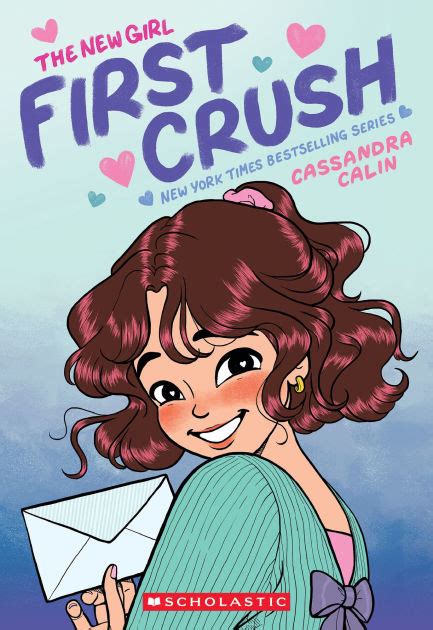
Lia is finally feeling settled into her new life. Her friends are amazing, her French is improving, and her periods… ugh, those are still terrible. But Lia’s crush, Julien, is noticing her. Lia thinks he likes her, but she can’t tell for sure. And while she’s obsessing over him, Lia’s not noticing another person’s growing crush on HER. With so many big feelings and even bigger changes, could things get any worse?
The latest graphic novel by Cassandra Calin might be better than the last as it deals with the messiness of middle school emotions. Particularly that of Lia’s short-sightedness in bigger picture situations, her selfishness when it comes to friendship problems like when she lets out her friend’s secret and after the silent treatment, apologizes to alleviate her own guilt rather than respecting her wishes for space.
All of this is because of a guy as the title implies. Ah, middle school hormones are the worse, but Calin details it in a self-aware manner. While Lia is self-pitying readers will recognize that her insecurity is ruining the relationship more than the other person. I particularly appreciated Julian pointing out the double standards of Lia’s insecurity where her distrust of the mean girl trying to steal him also implies doesn’t trust him not to be stolen.
Calin’s animesque drawings and vibrant color palette make for a pleasing readers and aspiring drawers will enjoy mimicking her style.
(more…)#alexandramonir, #alonewithme, #amparoortiz, #autobiography, #avoicelikemine, #blackcanary, #braveandbold, #breakingsilence, #cassandracalin, #cindypham, #comics, #dccomics, #dcicons, #debhaaland, #don’tbeadrag, #dragkings, #dragqueens, #dystopian, #earthakitt, #encanto, #fairytale, #fantasy, #freakshow, #gayclub!, #gitadesaiisnotheretoshutup, #graphicnovel, #kingsqueensandinbetweens, #kylecaseychu, #lgtbq, #macmillain, #memoir, #newcrush, #papercutz, #penguinrandomhouse, #pridemonth, #queerfiction, #queerromance, #rachelreads&reviews, #retelling, #sammaggs, #saraquinlan, #simonjamesgreen, #sleepingbeauty, #speculativefiction, #tanyaboteju, #thenewadventuresofencanto, #thequeenbeesoftybeecounty, #thesecretworldofbriarrose, #tw:sexualassault, #YA -
Action Presidents
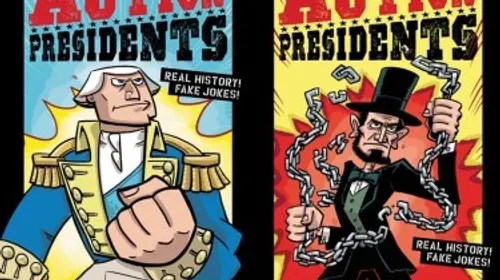
Author, Fred Van Lente and illustrator, Ryan Dunlavey’s Action Presidents are condensed illustrated biographies of four major presidents. Informative, with some very bad humor (bad quality, not crass), Van Lente shows the triumphs and failures of Washington, Lincoln, Teddy Roosevelt and JFK, and to an extent the American experiment. Van Lente connects how each president helped to shape the myth of American democracy. In fact, Van Lente get so detailed in transcribing the presidents’ lives with accompanying historical context, it can be confusing as its clear the author was trying to fit as much as he could in 120 pages. Dunlavey’s accompanying cartoony illustrations will keep readers’ attention engaged. Curiously, only TR and JFK’s books are colorized while Lincoln and Washington are in black and white.
Perfect for the Fourth of July if parents want kids to learn and reflect on the ideals of fairness, honesty, hard work and protecting the most vulnerable searching for freedom.
For the more mature graphic novel reader, try Nathan Hale’s Hazardous Tales. I’ve expounded on this series before. Hale is able to condense complex moments, and underrated tales from history into understandable action-adventure tales. More gory, more detailed, and always entertaining.

-
Against the Darkness Review
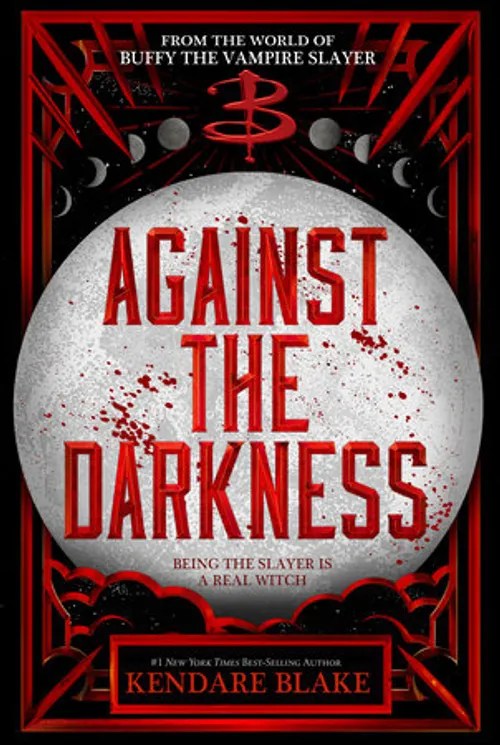
For generations, the Slayer was supposed to be the chosen, the one girl in all the world with the power to stand against the vampires, demons, and forces of darkness. When Willow used the scythe to call up all the potential slayers at once, it changed everything. For years, the slayers have been working and fighting together as a team.
Then the Darkness came, killing many slayers and trapping the rest in an alternate dimension. And Frankie Rosenberg, the world’s first Slayer-Witch, found herself fighting evil alone. Sort of.
After their latest confrontation with the Darkness, the Scooby gang is more fragmented than ever. Jake is having a werewolf identity crisis, and the return of his troublemaker brother Jordy is only making things worse. Hailey is off pretending to be one of the rogue slayers. Sigmund is burying his broken heart in books. And Frankie’s mom, Willow, and Watcher, Spike, only seem to care about bringing Buffy back.
Now, Frankie must forge her own path, save the slayers, reunite her friends, and lead the charge to defeat the Darkness once and for all.
Picking up quickly since their deceptive double-cross, Blake details how the Scoobies reunion was just a band-aid over the doubts fracturing the group apart.
(more…) -
One Girl in All the World Review
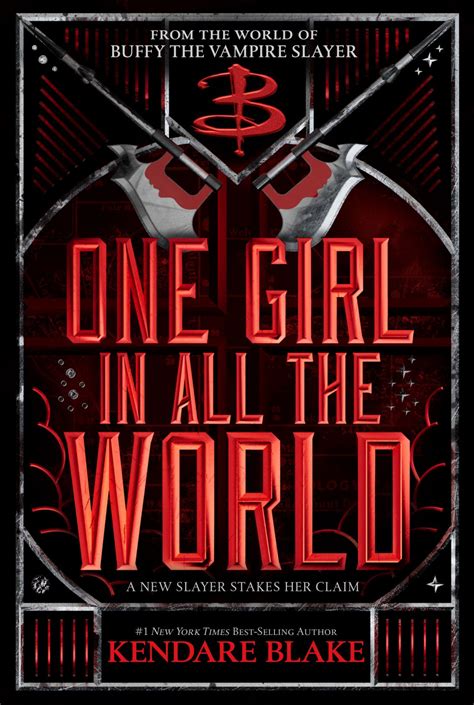
Into every generation, a slayer is born. One girl in all the world . . . sort of.
Frankie Rosenberg is the world’s first slayer-witch, but she doesn’t have that slay-life balance figured out just yet. She’s still reeling from the deadly explosion at the anual slayer retreat—and new evidence that some slayers may have survived. And while she’s defeated her first Big Bad, Frankie soon realizes it was just a warm-up act. Bigger, badder forces of evil are just getting started.
The Hellmouth has been reawakened and its calling old friends home. Portals are opening between Sunnydale and other dimensions. And the Scooby Gang has too many demons to contend with—real, metaphorical, and sometimes absurdly hot.
Then an oracle warns of a new foe on its way: the Darkness. Could this be what attacked the slayers? And is it coming for Frankie?Set a few months since Vi’s mysterious reappearance and disappearing act, Frankie and her Scooby Gang have gotten into a routine with the Slayer business. So routine that there’s almost no demons to fight leaving Frankie to ironically ask for more baddies to tackle.
Careful what you wish for because that’s exactly what happens.
(more…)
-
Subscribe
Subscribed
Have a WordPress.com account? Log in now.


Leave a Reply