“For years, rumors of the ‘Marsh Girl’ have haunted Barkley Cove, a quiet town on the North Carolina coast. She’s barefoot and wild, unfit for polite society. So in late 1969, when handsome Chase Andrews is found dead, the locals immediately suspect Kya Clark. But Kya is not what they say. Abandoned at age ten, she has survived on her own in the marsh that she calls home. A born naturalist with just one day of school, she takes life lessons from the land, learning from the false signals of fireflies the real way of this world. But while she could have lived in solitude forever, the time comes when she yearns to be touched and loved”
This was intresting as we had both read it before, although it’s been long enoiugh we forgot the pertinent points of it. Like I knew the ending (and I hope everyone else does by now since the book/movie has been out for years. Hence spoilers under cut)
In Heiress Apparently, Gemma Huang’s big acting break led her to Beijing, where she uncovered an incredible family secret. This second novel in the Daughters of the Dynasty series delves further into Gemma’s complex and storied legacy, moving back one generation to tell the story of Gemma’s mother, Lei, as she finds love against the backdrop of 1980s China and the Tiananmen Square protests and makes a difficult decision that forever alters the course of her life.
Technically a sequel, but it’s actually a prequel as Ma dives into the events mentioned in the first novel. The fascinating backstory of Gemma’s mother, Lei, and the courage it took for her to change her life at great sacrifice.
For those who want writers to be romanced as well as duchesses and wallflowers, this one’s for you.
Temptations of a Wallflower: This was my top book because I related to Lady Sarah so much as a writer. Shy, dreamy, always concocting exciting scenarios in my head, but unable to put them into action. Also always thinking of how to put something from life into the story. Yeah, I got Lady Sarah and I’m sure many romance readers related to her too as she dives into her erotic psyudenom as the Lady of Dubious Quality. Her excerpts were top-notch. Yet even though she was an erotic novelist, her relationship with the vicar, Jeremy, was very wholesome. They got to learn to enjoy sex together. She sees how combining it with someone you love makes missionary even more exciting than doing it outdoors or whatever scenario she could come up with (don’t worry, there are still creative scenarios like when they tried old-timey role play). Plus I couldn’t help, but smile too when she realizes Jeremy had been reading her novels to get sex tips. Jeremy begins to question his morality-minded father’s creeds on degeneracy when he sees how erotic novels help to normalize sex as a place of pleasure for a couple. The way he stands up for her and her writing was just so sweet. Same when she stood up to her father for marrying Jeremy even though he was only the third son. Just the best book out of the bunch.
Forever Your Earl: A fun romp through the pleasure dens of London, I enjoyed seeing the dissolute side combined with the pathos and urgency in Daniel’s mission to find his friend. It lightly tackles the topic of PTSD and how horrible people handled it back then, causing tremendous guilt in Daniel for missing the signs. Eleanor’s pride in her gossip column was well-done too, and I liked how she stood up to his snobbery that she could be doing something better with her talent. This is what she likes and has complete control of her newspaper, and she should be proud of it. Oh, and the slowburn romance worked too.
Scandal Takes the Stage: While this was a very interesting book that tackles writer’s block and the anxiety of making a good sequel (with a whole theater of performers depending on you or else you’re all out of a job), I felt the romance between Maggie and Cameron was more by the numbers. Starting from instalove on Cameron’s part to the disdain Maggie has towards all aristos because of her former lover is a common enough backstory. The invitation Cameron issues of having her stay at his house to get writing inspiration for her rakes was like a rehash of Eleanor’s story. I didn’t feel the extra spark that made them distinct or unique. Although the fencing foreplay was very good.
Eva Leigh can always be counted on to showcase unique heroines, and in The London Underground trilogy, these women have some brooding secrets.
1. Couting on a Countess: Surprise, surprise, Leigh delivers on morally ambiguous heroines with Tamsyn, a smuggler on the Cornish coast who needs a rich, distant husband in order to keep feeding the village she provides for. Kit needs a wife in order to access his inheritance. This classic marriage of convenience manages to deliver a moving account on two individuals who have suffered their share of neglect and hardship to find relief in each other.
I, especially like Leigh’s use of twists in putting Tamsyn in charge of the finances as part of the will’s stipulation and Kit’s reaction to that (petulent and a bit manipulative which leads to the third act break-up we all are expecting). I also enjoyed how Kit’s motivations in gaining the money for his pleasure garden stem from deep need after his experiences in the war, and the way it is glossed over by most of society and he has no way to process the pain besides spendthrifting.
There is a big flaw in that Tamsyn’s lie is considerably more hurtful compared to Kit’s, and she doesn’t do enough groveling in my opinion. Also Kit’s about-face was pretty quick for such a law and order guy, but the magnetism between the couple won me over. Plus readers will enjoy the reappearence of Cameron and Maggie Marwood from her previous trilogy.
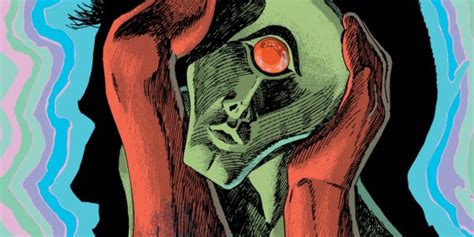
FBI Agent John Jones has a problem. His brain has been infected by an alien consciousness calling itself “the Martian,” and its perception of reality is utterly incomprehensible to the human psyche. Now he must navigate this new status quo, all while balancing the deeply grounded and important duties of his day job! Deniz Camp and Javier Rodriguez take the Martian Manhunter into the Absolute Universe on a mind-bending, psychedelic trip!
A mind-melding new interpretation of the Martian Manhunter mythos, the art is what I got to talk about first. Rodriguez’ psychadelic layout takes readers right into the double-occupied mind of John Jones. It feels like classic sci-fi horror with the posession of John’s mind by an alien, screwing everything he sees and thinks. I also like how the color serves to visualize his telepathic abilities instead of only using thought bubbles.
Narrative-wise, Camp builds tension with John trying to regain control and come to a compromise with the martian inside him, and with the unstable psyche, raders have to question the crime scenes John is investigating. Camp also brings emotional pathos as John’s martian abilities can serve as a metaphor for mental illness or insert other abnormality and how much he wants to be normal again, and pushes away his wife/child, and learning to embrace her unconditional love and that he’s still himself. Readers may be disconcerted with the unlinear narrative and schizophrenic hallucinations, but I found the experimental style befittng for the telepath’s space horror genre.
Wally West’s world has been turned upside down. Now quite literally on the run from the people he once trusted, he must navigate an impossible world full of dangers he never knew existed – and he must do so without the help and guidance of his former mentor. The Flash joins the Absolute Universe in a bold new take on the DC Universe’s Scarlet Speedster, written by award-winning author Jeff Lemire (Sweet Tooth), and illustrated by Nick Robles.
While the Rogues have fresh takes in design, motivations, and how their powers work, Wally’s story feels like a slightly modified reboot of the flash origins. You know, wannabe scientist, gets mentor only Barry is more morally grey and evil. Oh, and Zoom is here wrecking chaos as usual. I’m sure Flash aficianados might have more to admire in regards to the complexities of being trapped in the Speed Force and the ethics of using unstable science stuff to get a person out of it, but I was invested beyond Wally and the rogues briefly teaming up. At least Robles’ art was vibrant with the Silver-Age color palette with the realism of modern character design.
The Devil of Downtown: This was a very tough ranking as the couples below have more memorable, distinct arcs, but I just really, really like the multi-lingual, smooth talking, good with his hands Jack Mulligan. The romance was strong, however I found the sisterly relationship to be lackluster as Florence and Mamie have already been through their romances with a man below their station and go out into the dangerous streets yet continually underestimate Justine. It felt strange like they were different characters.
The Prince of Broadway: If I was being honest I’d switch the titles since Madden is more of a rogue than Frank Tripp, the MMC below but I digress. Prince and Rogue have equal flaws, but what gave this the edge over Rogue is that I loved how equal Florence and Madden were in their headstrong, headbutting personalities. Plus the steamy scenes were hold your chest, panting hot. Very memorable. The big flaw is that Madden stated from the beginning that he was out to destroy Florence’s father and she knew that. That his plans would affect her own should have been a given, but she ignored. It made her seem very naive, especially since he had repeatedly stated his goals and was generally honest for an old-timey mob boss.
The Rogue of Fifth Avenue: Mamie and Frank have such older siblings take on the world mentality, I loved seeing them find trust and comfort in each other. You’d be surprised since it’s ranked on the bottom, but I found Frank’s character arc the most compelling out of the MMCs. And I enjoyed the courtroom scenes and Mamie’s interest in helping the immigrants in the corrupt justice system. It comes last simple because they’re the most vanilla out of the books, focusing on typical tropes of Mamie fighting against her arranged marriage and Frank hiding his true background. Definitly fits with the HBO Gilded Age show though.
It’s been awhile since I’ve read a good ol’ historical romance so why not start with one of the greatest romance writers in the good ol’ west.
Tempest: From Reagan accidentally shooting her intended to Ben learning to stand up for the women in his life against his father, and dealing with his own discomfort and attraction to headstong woman, I loved this story. Reagan’s connection with Ben’s daughter didn’t feel precocious or forced, and I enjoyed her friendship with Ben’s sister, Spring (from previously reviewed Wild Spring!), creating a women’s aid group and being able to get some closure about her neglected childhood by helping another little girl in the same situation.
Forbidden: This ends square in the middle because there was divine tension and historical relevency with Rhine being able to pass throughout much of the book, the privileges it gives him as well as the risk and disconnection from the rest of society. Thus it was especially menaingful that Eddy’s reaction came from one of understanding but firmness that she won’t be a dirty secret to hide or risk his safety/finances if he has to reveal himself. Obviously, he realizes love is worth the danger, but it was delicious reading up to it. Plus I got to learn a lot about the free black towns in the West and the animosities of new settlers and pioneers after the Civil War.
Breathless: As much as I love a couple that get each other, and forgo the miscommunication trope, the lack of internal or external conflict after Portia and Kent got together made it feel like it should have ended 70 pages earlier. Unfortunate as Jenkins does bring up Apache displacement and retaliation, and as one with some indigenous heritage Kent could have felt that he should learn more or get involved. Same with Portia and the black women’s movement and rights, but those events were just added as information rather than connecting to Portia and Kent’s characterization.
I know I haven’t posted my writing in a while, but since I didn’t get much engagement when I did my previous excerpts. Now that I have this nice new format and more user-friendly site, I hope there will be more comments. If you want to see more excerpts and bts of my work in progress, please say so. Or subscribe.
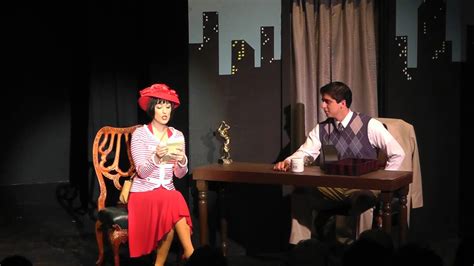
Previously I gave sneak peeks primarily concerning the main character, Kitty and her potential romance with James. Now here’s the other contender, Frederick Tilney, and what could be better to encourage intimacy than a private singing lesson.
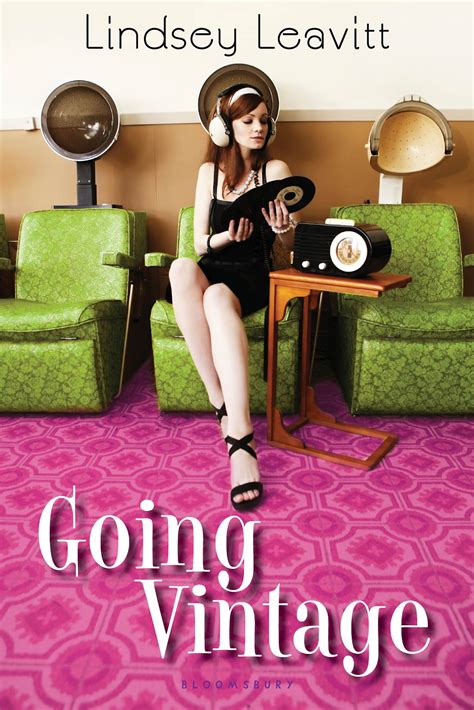
When Mallory’s boyfriend, Jeremy, cheats on her with an online girlfriend, Mallory decides the best way to de-Jeremy her life is to de-modernize things too. Inspired by a list of goals her grandmother made in 1962, Mallory swears off technology and returns to a simpler time (when boyfriends couldn’t cheat with computer avatars). The List: 1. Run for pep club secretary 2. Host a fancy dinner party/soiree 3. Sew a dress for Homecoming 4. Find a steady 5. Do something dangerous But simple proves to be crazy-complicated, and the details of the past begin to change Mallory’s present. Add in a too-busy grandmother, a sassy sister, and the cute pep-club president–who just happens to be her ex’s cousin–and soon Mallory begins to wonder if going vintage is going too far.
Most girls when they get dumped, eat ice cream and maybe block the ex from their accounts. Mallory’s techno ban was crazy yet impressive even though I found it hard to understand her deep aversion. But that was the point as even she realizes her tech ban may be an extreme reaction to being tech-cheated on and is too embarassed to explain it to others.
Readers may be initially confused by the catalyst for the break-up. Not the cybercheating, but that it is all due to a sims-inspired game, and the ensuing drama and public shaming in the Myspace comments. I know Myspace was a thing when I was a child, but it went bankrupt or disappared by the time I was 9, so I was pretty confused what it was. From what I understand it was like Facebook for teens.
That aside, Mallory’s choice to go tech-free not only stems from cybercheating trauma but becomes part of a deeper prolem of Mallory idealizing her Grandmother’s past. She envisions being a teenager in the sixities as something quaint and trauma-free because there are no mean comments to read.
I enjoyed how Leavitt deconstructs this idealistic view by highlighting the pros (Mallory becomes more proactive of doing things outside the house, doesn’t get sucked into social media) and the cons (inconvience in communicating with family, homework, social scene updates).
Same with her romanticization of the sixities as Mallory’s younger sister pushes back on the lack of women’s rights, and opportunities, professionally and romantically. The reveal of her grandmother’s big secret is a wonderful example of Mallory’s short-sighted which she acknowledges. It’s a nice lesson about the elasticity of history that every generation had its own troubles because being a teenager is hard. Being a human is hard, and there’s never been a “simpler time” no matter how far back you go.
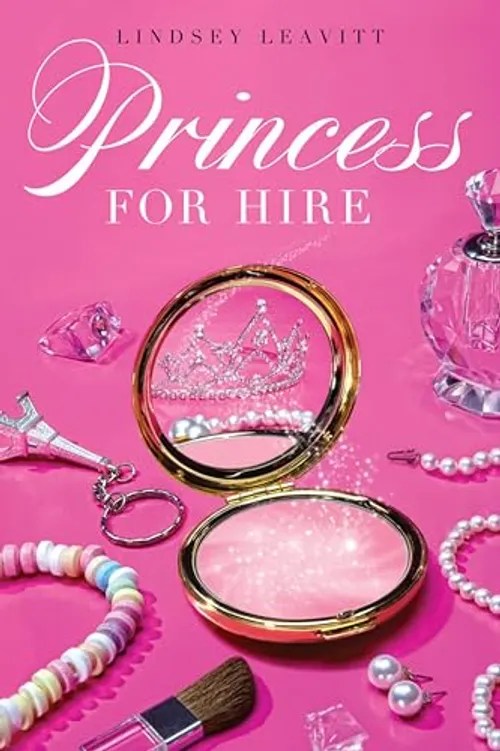
Princess for Hire is a delightful fantasy trilogy. For fans who can’t get enough of the idea of tiaras and enjoy socially-conscious protagonists like Mia from The Princess Diaries, try this. Desi is thrilled to find out that not only she has MP-magical potential, but it makes her eligable to work at the Facade Agency, and substitute for royalty. But Desi isn’t just obsessed with the glam, she wants to help the princesses on a more impactful level, and has greater ambitions for how the agency can use their magic for everyone, status unimportant. Which leads to a lot of trouble.
Farewell to Charms: Admittedly, I read the first two back in middle school, but never got to the finale for whatever reason. I’m glad I got the chance now. Farewell to Charms was a great finale. Not only does Leavitt up the stakes for Desi professionally, but personally and romantically. Leavitt elevates Desi’s empathy and charges her from speculating to taking action which was gratifying to see. Plus the denounment was not what one might expect yet satisfying on its own. It actually reminded me a bit of the ending for Rhonda Stapleton’s Stupid Cupid trilogy. Plus I enjoyed seeing Desi get up to Level Three, her assignment with Princess Vanna, and the endings for the side characters.
Princess for Hire: Leavitt had a interesting premise and made it memorable with her distinctive characters like Desi’s love for silk screening t-shirts, Meredith-her agent and anti-fairygodmother type and the magic of Facade. There’s a reason I still had fondness for the story a decade later and remember most of the hijinks Desi gets into with her first three clients. And now with hindsight, I see how Leavitt cleverly set the seeds for what is to come with Desi and her magic potential.
Royal Treatment: Unfortunately, this hits the sophmore slump. Now to get it the benefit of the doubt, I’m reading this as an adult, so the twist regarding Reed was obvious to me from a mile away. So Desi’s fretting about her feelings for Karl and her attraction to Reed was frustrating. Same with the reveal of Floressa Chase’s royal origins and Desi’s outrage about the magic potential being taken from potential substitutes felt manufactured considering Fake Mackenzie’s incompetence in the trial period. The third book rectified this in illustrating how bad Facade’s magic sucking is.









Leave a Reply