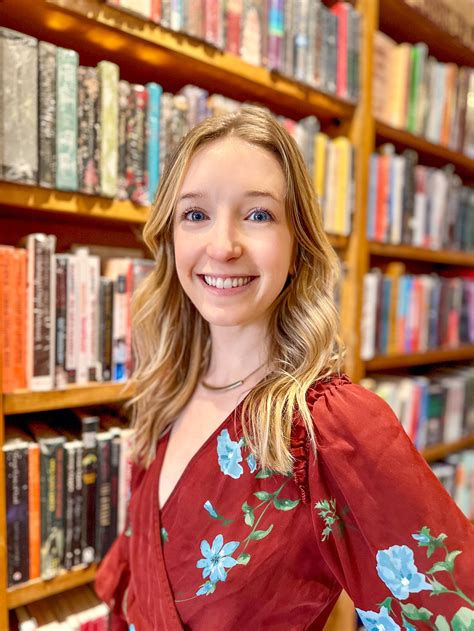
Kim Bussing is the author of the best-selling fractured fairytale Princess Swap series. She graciously took the time to discuss fractured fairytales, characterization and what’s coming next. Enjoy!
1. What are some of your literary inspirations?
I would need at least ten pages to do this justice! In terms of what’s guided me most in writing middle grade books? Definitely Philip Pullman (“His Dark Materials” is one of my favorite series), Jonathan Stroud, Libba Bray, Shannon Hale, Gail Carson Levine, Sara Pennypacker (“The Lions’ Run” is so incredible)…I’m sure I’m forgetting so many!
I think I’ve been influenced by almost every story I’ve encountered, whether that’s books, movies, video games, music, etc. As evidence…in second grade, I wrote “Totally Spies” x Neopets fanfiction, and in ninth grade, I wrote “Legend of Zelda” x “Phantom of the Opera” fanfiction with friends.
2. How did your alma mater help you in starting your career/first book?
In undergrad, I started freshman year convinced I was going to be an econ major, with my sights set on Wall Street. On one of my first days, I accidentally stumbled (late) into an upperclassmen-only creative writing class. Somehow, I convinced the professor to let me take it, and he ended up encouraging me to think about pursuing writing professionally.
I took him very seriously. I switched my major to English, started pursuing internships in publishing, entertainment, and journalism, and set up a lot of independent study courses for screenwriting and fiction writing. I also completed an Honors thesis, which was a great introduction to workshopping and conceptualizing a book-length project from beginning to end.
After a few years traveling and working, I enrolled in an MFA because I wanted to really develop my craft. It was an incredibly helpful period to challenge myself as a writer, dig much deeper into the art of storytelling, and be exposed to so many different artists and schools of thought. It also taught me how to think about creative work as a job, in terms of the discipline, constant learning, and community building.
3. You’ve mentioned in other interviews that it was there that you pivoted from writing realistic fiction to middle grade fantasy. What’s the story behind that?
Yes! When I started my MFA, I thought I was going to write very literary, realistic fiction, but the more effort I put into that, the more miserable I became. At the end of my first year, I thought I’d lost my love of writing and, with it, a huge part of my identity.
I spent part of that summer reading my favorite YA and MG novels — I have a vivid memory of being curled up on my mom’s sofa with “Six of Crows” — and falling in love with those stories all over again. I decided to start writing my own. It started out as YA, but evolved into middle grade.
I ended up TA’ing a fairy tale class that one of my MFA professors taught, and I became completely obsessed with them, especially understanding their historical, social, psychological, and cultural importance, and how these stories grapple with some of the biggest human truths and challenges. That really set the stage for The Princess Swap.
4. How do you choose which fairytales are the best matches for swaps?
I work closely with my editor to identify the best pairings! Most of them are based on shared themes. For example, Cinderella and Belle switch places in Princess Swap #1, and both of their stories are about being trapped. In Princess Swap #2, Snow White and Sleeping Beauty end up swapped, and, of course, both of their stories are about princesses trapped in a magical sleep.
I should have seen it coming, but writing a book where both main characters are meant to be napping for half the time was an unexpected challenge…
5. I loved how in Cinderella and the Beast, you not only gave her a glass slipper but a whole glass leg. With so many fairytale retellings, how did you make the characters your own?
A creative writing exercise I love is to give everyone the same prompt – no one will end up writing the same story.
When writing my own version of such familiar characters, I start by doing a lot of research into how they’ve appeared throughout history. What are the common themes in their stories? What are the differences? What are the objects we associate with these characters, and how have they evolved throughout retellings?
I use all of those as starting points, and then I start to investigate who that makes them as people. For example, with Ella in Princess Swap #1, she lost her dad and ended up with a pretty horrible stepfamily. That would make someone sad and angry, but most versions of Cinderella portray her as flawlessly kind and good. That didn’t seem realistic to me. So my version of Ella became a little tougher and a little pricklier, because that’s how she learned how to protect herself. All her kindness was buried a little deeper and needed the right person to help coax it out.
And, of course, all of our experiences shape us, so as I watch characters react to plot points, make decisions, and form relationships, I learn more and more about them as I draft, and they really become their own people.
6. You’ve expanded the world of Reverie throughout the series. Was the worldbuilding planned beforehand, or has it been evolving with each story?
The worldbuilding was planned to an extent – magic systems, major cities, history. I have maps of Reverie that I’ve drawn (which made me realize that drawing maps is actually really hard). I want to be an expert but not assume that I know everything.
I let myself discover more of the land with each book. Particularly because every book features new characters, and they explore parts of the world other characters might not even know about. I always want to make sure there’s space on the page for me to surprise myself and find new sources of magic (within the established rules).
7. I love how you delve deep into the order interpretations of the tales (like gifting the frog prince the name Iron for Wendy and the Frog or Belle dealing with spoiled (step)sisters like in some original tales) as well as modern iterations. What was something new or interesting you found?
I’m so glad you noticed those details! Yes, Iron is a nod to “Iron Henry,” which is another name for “The Frog Prince” tale. And one of Belle’s plot points in Princess Swap #1 is a nod to Ella Enchanted. I love getting to play in a space with such rich stories and reimaginings.
One thing we always talked about in the fairy tale class I TA’d is that there are no original fairy tales. There are countless retellings across centuries and cultures, which is a part of their magic. I really loved re-discovering the role of Baba Yaga in the Russian version of The Frog Princess. Baba Yaga is one of my favorite characters, so I loved having an excuse to bring references to her into Princess Swap #4.
8. You’ve said that the Peter Pan/Frog Princess swap came at a dark time for you. How did writing about Wendy/Vasilia’s perseverance through difficult circumstances help?
Writing is such an incredible way to better understand your own mind while also getting outside of it.
Drafting a book about strong female characters overcoming their fears, stepping into the unknown, building new relationships, learning how to love themselves in new ways…it was really healing. I kind of ended up writing the book I needed to read at the time.
9. What do you hope readers will take away from your latest Princess Swap?
With this one in particular, I really wanted to focus on the importance of trusting yourself, facing your fears, and recognizing your own strength. Wendy also has to go through a significant emotional journey around her relationship with her mom, and I hope that can help readers who may be going through periods where family or friends aren’t showing up the way we hope they will (but that doesn’t mean they love us any less).
With all of these books, I want readers to imagine their own versions of these fairy tales. If they were writing about Wendy encountering the Frog Prince, what would they have happen? If they don’t like part of my story, I want them to pick up a pen and write out how they think it should go! I hope they recognize their imagination and ability to create. That’s an incredibly powerful form of magic, and we all have it.
10. If you can share, what’s coming next?
I can indeed! The fifth “Princess Swap” book, featuring Little Red Riding Hood and the Swan Princess, comes out next year. I’m also working on some other ideas I can hopefully share soon!
You can learn more about Kim on her website, substack and all relevant social medias: https://www.kim-bussing.com/
 Rachel Reads & Reviews
Leave a comment