-
Valentine’s Day: Harlequin Romance Edition
It’s that time of year again, so in honor of the month of love, I finished my Harlequin romance reading. Plus a few others.
Silks, Swords and Surrender by Jeannie Lin (Tang Dynasty)
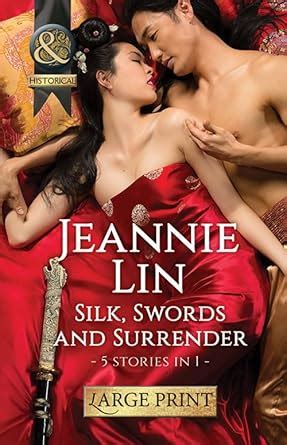
From USA TODAY bestselling author Jeannie Lin comes a tantalizing new five-story volume. Take a journey to Tang Dynasty China and join five unique heroines as they fight, seduce and steal their way into their heroes’ hearts.
Rediscover four reader-favorite stories and immerse yourself in The Touch of Moonlight, the brand-new sexy novella from this highly-acclaimed author!
I accidentally picked up a anthology of Lin’s novellas that relate to her Lotus Palace series, so I was a bit confused as to who the characters were, backstories, and all that. However, I was still able to enjoy several of them like “The Taming of Mei Lin” which had two warriors coming to put down their pride, and fight back to back for love and honoring their ancestors. Admittedly, I was envisioning Mulan and Shang the whole time since it gave me the same vibe.
“Capturing the Silken Thief” was a departure from the warrior-girls that dance through Lin’s novellas as it paid homage to ancient Chinese fable of a scholar and song-girl, providing a sensual, intellectual romance that made for a satisfying ending as they navigate a way to keep their chosen careers in court while falling in love.
I believe one of Lin’s greatest strengths is how she immerses the readers into this world with his complicated rules of honor and etiquette, its lush settings, and emotions stirring underneath the surface.
A Marquis to Protect the Governess by Parker J Cole (Versailles)
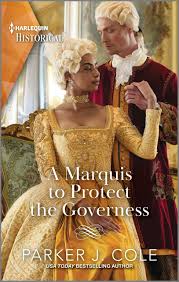
Reeling from the discovery that everything she knew about her life was a lie, Isadora is forced to take up a position as a governess in the brooding Marquis de Lyonnais’s household. As she helps the marquis bond with his orphaned nephew, Isadora can’t help but be drawn to the man behind the title. But can she trust him to protect her secret…one that’s so explosive it could rock the court of King Louis XV!
This was a fun blend of Harlequin romance with notes of Rhys’ Wide Sagrasso Sea. Maybe that’s because of Isadora’s Haiti connection, this one is not nearly as tragic as Rhys’ novel. Cole creates an exciting forbidden romance between the Marquis who has to pick up the pieces of his rakish younger brother’s life after he dies. Ie. take care of his ward and fall for the governess.
Isadora’s secret makes it a sort of Cinderella story, but this is Versailles, and while the French are more lax about people of color than England, her revealing her highborn origins might paint a target on her back by social climbers. I enjoyed seeing Isadora break down the Marquis’ more lighthearted side, and the Marquis’ succumbing to his desires to help Isadora receive her rightful inheritance and assure her that she deserves protection and happiness and love.
There is a third act break-up because Isadora jumps to conclusions which is so annoying, but I guess that’s part of the Harlequin formula. Still it was cool to see POC achieving romance in historical setting, this being more focused on courtly backstabbing than race. Perfect for fans of Bridgerton, I think.
(more…)#1830s, #1870s, #agovernesstoredeemhim, #alexishall, #amarquistoprotectthegoverness, #audreylanestirsthepot, #aviscountfortheegyptianprincess, #bronwynscott, #christianromance, #contemporaryromance, #harlequinromance, #hebahelmy, #hindiromance, #historicalromance, #jeannielin, #kristiannhunter, #lotterjames, #millsandboonromance, #muslimromance, #parkerjcole, #pickpocketcountess, #rachelreads&reviews, #regencyromance, #royalinesing, #silksswordsandsurrender, #tangdynasty, #versailles, #winnerbakesitall, #wlw -
Ranking Family Portrait Stories
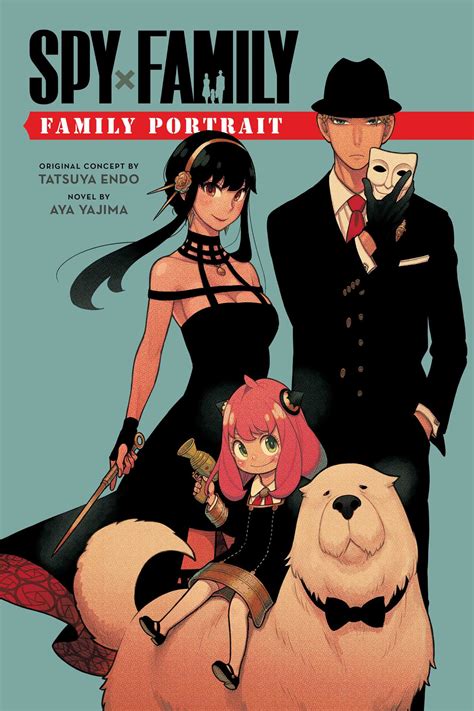
In this book of Spy x Family original prose stories, Anya attempts to make friends with her target Damian during an Eden Academy camping trip, Yuri spends his day off babysitting his niece, and Franky seeks Loid’s help in winning the heart of a blind opera singer. Then, when the family sits for a portrait painting, Yor is terrified that her secret identity will be blown. And in the final story, the family is scrutinized by a pair of unseen observers… There’s never been a family quite like this one!
Mission 3: In this story, Franky falls for a blind opera singer named Alessa. You know it’s going to end badly because this is an interquel, so this story can’t change the status quo and affect the main line that much. You know he’s going to get dumped because Franky has to remain the single, scruffy loser he is. However, it got the top spot because of its unexpected insight to Franky’s inner nobleness.
Mission 2: Yuri and Anya go for a day of fun. Admittedly, I didn’t think this mission was going to rank so high because Yajima commits to Endo’s style and that means we get inside look to Yuri’s creepy obsession with his sister. It’s very squicky to read. However, I was won over by the fun of Anya trying her best to be an interrogator and quickly being won over by Yuri’s intense “acting” when it’s his turn to take the interrogation stance. It was a surprisingly fun dynamic.
Mission 4: For the Forager family, a family portrait is potentially more dangerous to their secret identities than a double-crossing spy. This was a fun concept with a satisfactory surprise twist.
Mission 1: This was another story where Anya attempts to befriend Damian Desmond, only for it to go wrong yet there is still hope for those confused children to get together. This came near the bottom because there wasn’t any new insight we wouldn’t have gotten from the regular manga.
Short Story: Of course this story came last. It’s only three pages, but it was cute to see how complete strangers view the family, and their unintended effect on the marriage population of Ostania.
Spy x Family fans will delight in this novel full of extra family fluff and shenanigans. Even in prose, Yajima captures the characters and you can easily imagine the illustration panels in your head as you read on.
-
Book of the Month: When Cicadas Cry

A high-profile murder case— A white woman has been bludgeoned to death with an altar cross in a rural church on Cicada Road in Walterboro, South Carolina. Sam Jenkins, a Black man, is found covered in blood, kneeling over the body. In a state already roiling with racial tenson, this is not only a murder case, but a powder keg.
A haunting cold case— Two young women are murdered on quiet Edisto Beach, an hour southeast of Walterboro, and the killer disappears without a trace. Thirty-four years later the mystery remains unsolved. Could there be a connection to Stander’s case?
A killer who’s watching— Stander takes on Jenkins’s defense, but he’s up against a formidable solicitor with powerful allies. Worse, his client is hiding a bombshell secret. When Addie Stone reopens the cold case, she discovers more long-buried secrets in this small town. Would someone kill again to keep them?
This was a nice, small-town mystery. As usual I did not guess the murderer but at least I wasn’t fooled by the red herrings. Those were easy to predict, and guess the real motivations behind why Sam was withholding his alibi, and such. The reason I couldn’t guess the murderer. . . even that would be a spoiler.
The text was easy to read, and those familiar with the genre will find it fits easy into the formula with relatable working-class protagonists (down on his luck lawyer hoping for redemption, and his competent ex-police officer wife), colorful cast of red herrings and a coherent puzzle that makes a fulfilling second read after you find out who the killer is.
It also has some somewhat superficial, somewhat nuanced take on race relations in contemporary South Caroline. I say somewhat superficial nuanced because it does draw a middle ground about the importance of race as a factor in criminal trials and the persecution of the public politicizing the case for their own causes. But it becomes overshadowed when the case veers into a different direction and becomes clear it’s not a real factor whereas the killer is concerned. Plus it doesn’t go to trial so there’s no point in getting into it.
Next up is a classic short story of surreal horror-The Yellow Wallpaper by Charlotte Perkins.
-
The Dead Queens Club Review
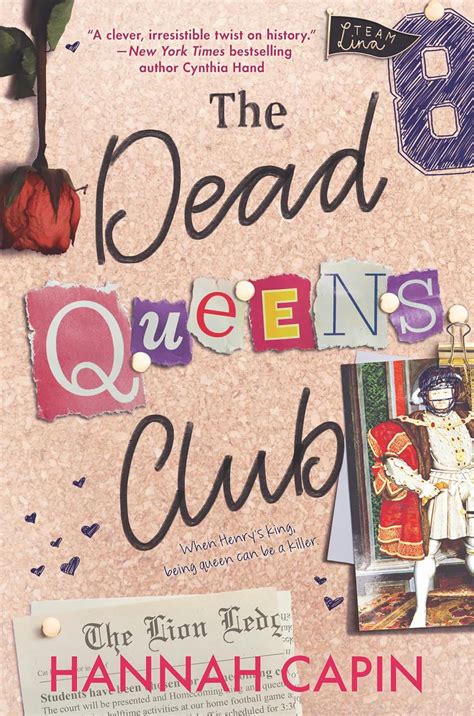
What do a future ambassador, an overly ambitious Francophile, a hospital-volunteering Girl Scout, the new girl from Cleveland, the junior cheer captain, and the vice president of the debate club have in common? It sounds like the ridiculously long lead-up to an astoundingly absurd punchline, right? Except it’s not. Well, unless my life is the joke, which is kind of starting to look like a possibility given how beyond soap opera it’s been since I moved to Lancaster. But anyway, here’s your answer: we’ve all had the questionable privilege of going out with Lancaster High School’s de facto king. Otherwise known as my best friend. Otherwise known as the reason I’ve already helped steal a car, a jet ski, and one hundred spray-painted water bottles when it’s not even Christmas break yet. Otherwise known as Henry. Jersey number 8.
Meet Cleves. Girlfriend number four and the narrator of The Dead Queens Club, a young adult retelling of Henry VIII and his six wives. Cleves is the only girlfriend to come out of her relationship with Henry unscathed—but most breakups are messy, right? And sometimes tragic accidents happen…twice…
The English court is really just a massive stakes, adult version of high school and Caplin proves it. It’s amazing how she stuffs so many historical tibits like Henry’s fake name is Rex ie. Latin for king, the convoluted family ties of Anne Bolyn, Katherine Howard and Parker Rochford (real name Jane but would get too confusing with the other Jane) being cousins, Catherine Parr dating Thomas Seymore, the cousin of Jane Seymore who also dated Henry, fellow students taking on the parts of other nobles who were active players in the Tudor Court. Yeah, she manages to keep all that intact in a high school setting.
(more…) -
Not So Pure and Simple Review

Del has had a crush on Kiera Westing since kindergarten. And now, during their junior year, she’s finally available. So when Kiera volunteers for an opportunity at their church, Del’s right behind her. Though he quickly realizes he’s inadvertently signed himself up for a Purity Pledge. His best friend, Qwan, doesn’t believe anyone is worth this long of a long game. But Del’s not about to lose his dream girl.
And that’s where fellow pledger Jameer comes in. He can put in the good word, but with other boys circling Kiera like sharks, Del needs to make his move now. However, with all his plotting and scheming, Del never really stops to What does Kiera want? No matter, though—once he gets the girl, he’s sure all will sort itself out. Right?
An insightful book tackling sexual education, and the tug between abstinence-only, religious education and the double standards afforded to men and women when societal values are crossed. It also examines toxic masculinity, particularly Del’s “nice guy” attitude regarding Kiera.
(more…) -
Update
Hi everyone, I just set up a new Contact form on my homepage so if anyone wants to send me a book suggestion, connect or share thoughts of anything I should add to this blog.
New book review coming tomorrow, until then happy reading.

-
Author Highlight: Helen Dickinson
Now we’re throwing it back to the. . . well, before the 20th century again. Dickinson has a fondness for three vastly different eras: The Georgian (named after King George, yes the King George from Hamilton and 1776, the one the US broke away from); the English Civil War, and Victorian. So let’s get to it.
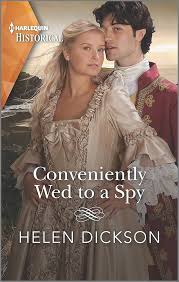
Imprisoned during the French Revolution, English spy Lord Laurence Beaumont is finally rescued—by the courageous, beautiful Delphine St. Clair. Back home in Cornwall, Laurence has no interest in the convenient marriage offered by a local landowner—until he discovers the bride is Delphine! With intense memories of their liaison dangereuse in Paris, Laurence knows theirs will be an unconventional union…but can he keep his promise never to be a spy again?
This was another historical romance that overlapped with romantic suspense. Delphine’s work as a smuggler is coming to an end as the revolution winds down, giving her some more time to finish the mission she really wants-finding out if her father is still alive. However, Laurence’s work as a spy is never truly complete, so it is at odds with Delphine’s wishes for one last adventure before settling down to a less heart-racing, more cozy lifestyle of hearth and home. She just wants to feel like her life’s not in danger 24/7, and who can blame her?
I admired Delphine’s resiliency and strategic mind as much as Laurence did, and although the third act break-up did feel predictable, I liked how it related to the very serious issue of how their life is going to move forward with Laurence’s spy career. One can understand why Laurence didn’t reveal his whole mission to Delphine even though it did affect her life, and her own mission. But one will also clap at seeing Delphine take the reins to remind Laurence that she knows how to execute espionage under pressure.
(more…) -
The Awakening of Roku Review
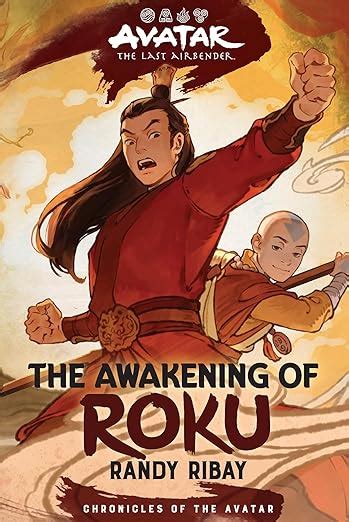
Three years after the mess on Lambak Island, Roku has finally mastered airbending and is on track to become the Avatar the world needs. But when he encounters a mysterious illness on his way to Agna Qel’a, he delays his journey and the next phase of his training to prevent the situation from worsening.
As Roku ventures deeper into the North and nearer to danger, he soon realizes there’s more to the malady than meets the eye. With the assistance of his good friend Gyatso, a gifted Waterbender named Makittuq, and others near and far―including from his past―Roku races to contain the crisis before the disease can ravage the North . . . and beyond.
It was nice to return to the Avatarverse, and this was interesting as Ribay picks up three years after The Reckoning of Roku. The other duologies picked up months later, so this was a vast amount of time to skip, and it shows in the characterizations.
Roku is far from the impulsive, and pardon the pun, hotheaded young man we first met. He is in a much more balanced space. However, his adherence to Fire Nation loyalty and his inability to let go of the past has been replaced by indecisiveness. The events on Lambak Island, and the death of Malay has him questioning his ability to read people. He sees the best in people, but with the illness striking animals and threatening the North Water Tribe’s resources, and greater trade, he can’t risk trusting the wrong person.
Sozin has also changed in the intervening years. He still has insecurities regarding his father’s faith in him as heir, but he also grown more into his darker inclinations, his shortsightedness and focus on showing might.
(more…) -
Author Highlight: Lauri Robinson
Harlequin, and the historical romance genre in general may be known for its Regency balls and Western shoot-outs, but Lauri Robinson may be the only introducing exciting new eras that make for interesting twists to classic historical romance tropes. From early America to the sock-hops, Lauri Robinson has something almost for every era.
Saving Marina
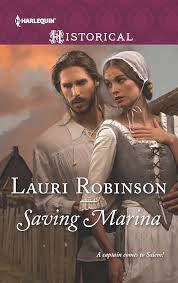
Seduced in Salem Sea captain Richard Tarr must claim his child after the death of his estranged wife. Arriving in Salem, he’s shocked to discover his daughter is in the care of Marina Lindqvist—a rumored witch! This beautiful, gentle woman awakens unfamiliar feelings in Richard. And as the threat from the Salem witch hunters grows, he knows he must protect misunderstood Marina at all costs. Little does he know that with Marina helping him bond with his little girl, she might just be saving him right back…
Like many Harlequin romances, this one has a simple premise of young bachelor travels a long way to pick up his orphaned niece now that his brother is dead and he’s the only family he has left. Then he falls for the woman who has been temporarily taking care of her.
This has one intriguing variation- the woman taking care of niece, Marina, is a suspected witch.
I don’t think I’ve ever read a romance set in colonial America, and the paranoia that has overtaken the town because of the Salem Witch Trials make this more like a historical suspense romance than regular historical romance. As an outsider, Richard, can see the town is devolving into crazed zealots led by a greedy leader, but because of that same outsider status they won’t believe him when he says the town leader they’re following is the one cheating them all.
Marina was interesting too with the ambiguity of whether she was a witch or not. She has prophetic dreams, and in such a superstitious/religious era, she does fear she may be a witch and what that means for her relationship with the rest of the town and other God-fearing people. It was nicely tied together how these two outsiders come to form a family of their own.
(more…)#50s, #adancewithherforbiddenofficer, #afamilyforthetitanicsurvivor, #americana, #colonial, #edwardian, #harlequinhistorical, #harlequinromance, #historicalromance, #laurirobinson, #marriageorruinfortheheiress, #rachelreads&reviews, #roaringtwenties, #salemwitchtrials, #savingmarina, #scandalatthespeakeasy, #thecaptain’schristmashomecoming, #thecowboywhocaughthereye, #thegreatdepression, #theheiressandthebabyboom, #titanic, #western, #ww1, #ww2 -
Book of the Month: History of the World in 50 Dogs

Most dog lovers know Fido and Laika, but how about Martha, Paul McCartney’s Old English Sheepdog? Or Peritas, Alexander the Great’s trusted canine companion? As long as there have been humans, those humans have had beloved companions—their dogs. From the ancient Egyptians mummifying their pups, to the Indian legend of the king who refused to enter the afterlife unless his dog was allowed there too, to the modern meme and popularity of terms like the corgi sploot, humans are undeniably obsessed with their dogs.
Told in short, illustrated essays that are interspersed with both historical and canine factoids, The History of the World in Fifty Dogs brings to life some of history’s most memorable moments through the stories of the dogs that saw them happen.For our first selection of Book Club 2026, we chose a short, happy nonfiction. It’s my seventh time reading it, I think, and it’s still a delight!
My friend was fascinated by the history that was erased in our classes. Not just those from marginalized POVs, but through our furry friends who have been with us forever.
Some had big impacts on human history like Sir Isaac Newton’s big pom, Diamond, who set the theory of gravity aflame, and Freud’s pet chow inspiring the use of therapeutic animals. Some had smaller impacts like Martha, the Beatles’ fifth member, or nonexistent impact like the Nazis attempt to make telepathic dog army (we theorize this was when Hitler was one of his mercury-induced ideas).
Set in her conversational tone, Lee’s style keeps you engaged and my friend especially loved her humorous chapter titles like My Bark Will Go On, We Want Brandy, and Game of Bones among others. Not that it’s all light, the anti-vivisection and animal experiment chapters were cruel and sad.
Yeah, there’s not much you can fault in a fun, informational book like this, setting history’s big events and their furry contexts. Or vice versa. My only quibble is that one or two chapters feel only dog-adjacent rather than dog-centered. Ie, the event could have happened with or without a dog’s presence, but that’s a minor nitpick when you have such underrated historical gems like Napoleon’s pug curse and the Order of the Pug.
-
Subscribe
Subscribed
Already have a WordPress.com account? Log in now.
 Rachel Reads & Reviews
Leave a comment