-
Book Highlight: Vanished!
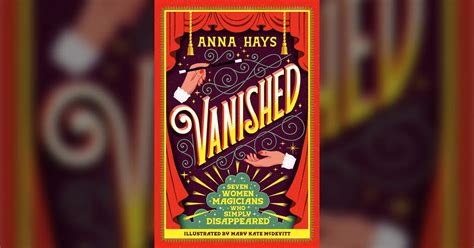
During the Golden Age of Magic from 1860 to 1930, seven women magicians in America defied Victorian conventions and created a unique place in history for themselves and future performers to come. There was Anna, the mindreader; Adelaide, who could float in midair; Talma, who could magically shower the stage with gold coins…and many more!
During a time when women were typically confined to the home, these trailblazers crossed oceans on steamships and traveled the globe bringing their imaginative brand of magic to audiences around the world. They followed their hearts and pursued their dreams of performing magic in the spotlight when women had neither a vote nor a voice in America.
They made history. Yet once their career ended, so did their legacy.
For decades their stories were hidden, or overshadowed by male counterparts, but now they’ve come to life in this vibrant and captivating book.
It’s women’s history month, so I must highlight this nonfiction middle-grade book that resurrects seven of the nineteenth and twentieth centuries most spectacular female magicians whose legacies are sorely unknown today. I knew about Harry Houdini, but many forget about his wife, Bess, who performed alongside him, helped him with his tricks and illusions and kept his finances on track. Plus their unending love for each other is so sweet.
I also heard of Adelaide Hermann as one of the few female magicians in the Hall of Fame, but I hadn’t known how amazing her feats were from jumping out of cannons to levitating and so much more. She was one of the first show-women of her kind.
Others were completely unknown to me like Dixie aka Annie Abbot whose act as the electricity strongwoman was exposed by the famous Nellie Bly (not that it kept her down, she just took her act overseas), or Ellen Armstrong, the first Black female magician who provided African-American audiences clean fun and wonder, entertainment that didn’t belittle them like minstrel shows all while educating them about major figures like Fredrick Douglass.
All seven of the women are fascinating in their own right from the tricks they performed (Minerva was the Queen of the Cuffs. Such an amazing escape artist that Houdini was jealous and possibly tried to sabotage her!) as well as their stamina and work ethic, constantly hustling and improving their acts, and fend off exposures and copycats. While Hays discusses how they forged their way as solo performers in a male-dominated industry, she doesn’t discount the fact that most got their start because of a husband, father or male mentor.
It’s how they made their way afterwards when the husband inevitably betrayed them, stole their money and met a newer younger woman to try to steal her act out of spite (poor Anna Eva Fay. Her son did the same with his new wife!). Honestly, there were only three happy magician marriages, the Houdinis, the Hermanns and Talma and her husband, Servais.
Each women are given a significant amount of page time, with a timeline highlighting major events, and descriptions of how they set up their biggest illusions.
I must also mention the illustrator, Mary Kate McDevitt, whose unique designs are an homage to 19th century posters. They were so vibrant, colorful and eye-catching. Perfect companion to Hays’ text.
A fun novel that whets your appetite for more magic and the underrated stars that brought them to life.
-
Book of the Month: Jane Austen’s unfinished works
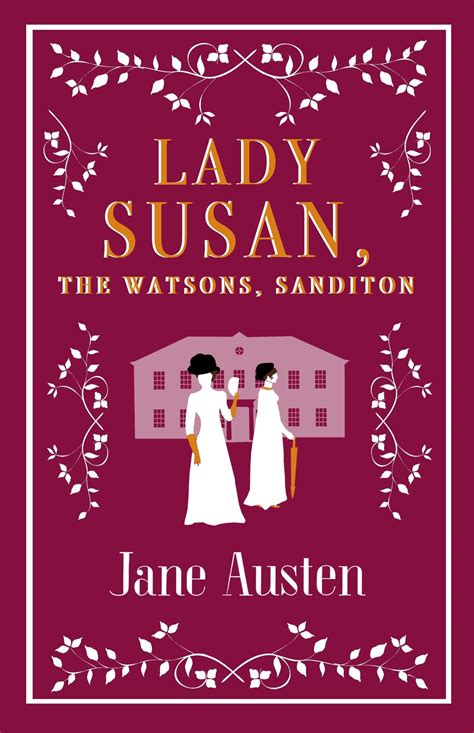
Technically, Lady Susan is complete.
LADY SUSAN THE WATSONS SANDITION Comprising one finished novel, Lady Susan, which was published posthumously, and two unfinished fragments, Sanditon and The Watsons, this collection – full of melodrama and burlesque, and exploring a range of literary styles and social classes – spans the entirety of Jane Austen’s writing life. The epistolary novel Lady Susan is the darkly humorous tale of the amatory schemes and machinations of an ambitious and unprincipled coquette. The Watsons is the tale of the refined and well-educated Emma Watson, forced by the second marriage of her aunt to return to the house of her impecunious father and face the marital plots and intrigues of her sisters. Begun in the last few months of Jane Austen’s life, Sanditon, set in a fast-growing former fishing village, swiftly becoming a fashionable resort, pokes fun at the inhabitants of the new coastal town, with all their hypochondria, witlessness and self-obsession.
I saw the movie first, so Lady Susan was an easy reading. I knew the characters, I knew the storyline. Unfortunately, my friend was very confused at first since Lady Susan Vernon is referred to Mrs. Vernon just like her sister-in-law. Also since it’s a epistolary, everyone already knows each other, throwing the reader in without much context. Also it’s older English which requires a bit more thinking since some of the words have different meanings like “intercourse.” That will always be slightly funny and surprising.
I thought it was fun because it was such a departure of Austen’s work with a villainous, narcissistic protagonist and quick letters flying between the characters. My friend didn’t enjoy it as much because of those reasons. She preferred The Watsons because it felt like a predecessor to Pride and Prejudice or Sense and Sensibility with the balls, marrying mamas and sisters vying for rich men. I felt confused by it since we are thrown right into the story and the characters and I had no idea what was happening. Also the main sisters are Elizabeth and Emma, and we constantly how to remind ourselves it’s not Elizabeth Bennet nor Emma Woodhouse.
Sanditon was a middle-ground. It was more comical with the suck-up Mr. Parker gushing over Sanditon instead of Lady Catherine De Bough. Sir Edwards is recognizable to contemporary men who talk so much, think he’s obliged to any woman, and uses fancy words to sound fancy. Even though it was a slow beginning, it started to pick up the pace with Charlotte driving to Sanditon and learning of the potential affair between Sir Edward and charming Clara.
But we’ll never know how they end because they’re incomplete. It was interesting to see the seeds of Austen’s style, themes and archetypes and how they build the foundation for her famous works.
Next up is The Hitwoman #6. Oh, and our movie will be Little Woman.
I should explain we decided to have a movie and book club as a way of sharing movies like we used to in college and finally force my friend to get to Little Women which she’d been meaning to watch for over a year. Our previous stuff was Instant Family (my pick-wholesome, funny, realistic and I say everyone should watch at least once), Murdaugh Murders: A Southern Scandal from Netflix (her pick-interesting and gave more context to the people involved), 4 episodes of Young Justice (my pick-s1 is still peak) and now Little Women (unsure which version. Depends which is free to watch on the computer).
-
Featuring Kitty Bennet
I mentioned previously that I finished writing my novel and might start posting excerpts, photo boards, and other stuff if readers wanted. I didn’t get any comments saying yes or no, but I’ve decided to go ahead anyway.
Featuring Kitty Bennet is set in modern day after contemporary events of P&P, featuring characters from various Austen properties.
Lizzy and Darcy have gotten together. Lydia ran off to LA with Wickham. Mary’s doing her own thing in Harvard, and Kitty is alone in community college. Determined to have a purpose in life than being Lydia&Kitty (especially with Lydia ignoring her calls), Kitty aspires to be the star of the school musical. However, the drama offstage is what’s keeping her on her toes.
Here’s a little excerpt from chapter one.
(more…) -
Book Highlight: A Time for Mercy
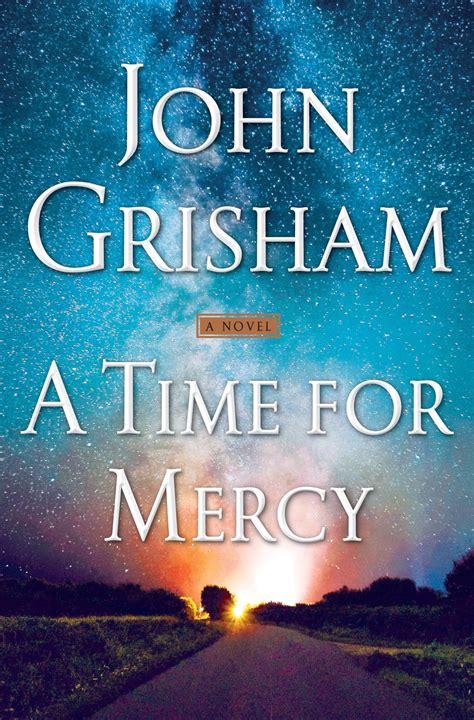
Clanton, Mississippi. 1990. Jake Brigance finds himself embroiled in a deeply divisive trial when the court appoints him attorney for Drew Gamble, a timid sixteen-year-old boy accused of murdering a local deputy. Many in Clanton want a swift trial and the death penalty, but Brigance digs in and discovers that there is more to the story than meets the eye. Jake’s fierce commitment to saving Drew from the gas chamber puts his career, his financial security, and the safety of his family on the line.
I know many people like John Grisham’s novels, and I did enjoy the main plot of it. I was eager to see how Brigance would get Drew acquitted in the court. However, I was less enthralled by Grisham’s world building showing the small-town happenings which felt like he was repeating things we already covered in the previous chapter while the characters are catching up on the gossip chain. It slowed the pacing. Nor was I interested in Jake’s other law case, it felt like unnecessary padding.
However, the content is not what makes this a memorable book for me. I had started reading this in the beginning of January for my grandfather who had been finding it hard to read without getting tired. Since reading aloud helps elders keep their cognitive faculties, I started reading it to him a chapter a day. It didn’t inspire character analysis or conversation like book club. But it was nice to spend the time with him. It was always a gift to spend time with him.
He died yesterday, Feb 25th at 6:29. I was lucky to be with him. Lucky to have him for 25 years, and share so many things together. Including this novel. Just like my grandmother, a teacher and reading specialist, who taught me to read and started this whole journey in the first place.
As much as books transport us to new places, people we love do the same.
Is there any special book or person that inspired your love of reading or you share a special literary memory? Comment below
-
Meet the Newmans Review
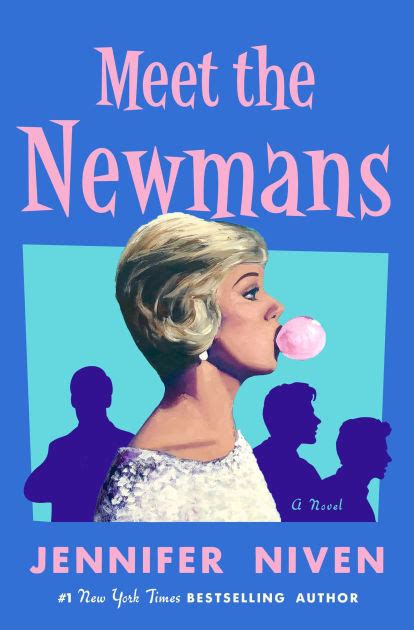
For two decades, Del and Dinah Newman and their sons, Guy and Shep, have ruled television as America’s Favorite Family. Millions of viewers tune in every week to watch them play flawless, black-and-white versions of themselves. But now it’s 1964, and the Newmans’ idealized apple-pie perfection suddenly feels woefully out of touch. Ratings are in free fall, as are the Newmans themselves. Del is keeping an explosive secret from his wife, and Dinah is slowly going numb—literally. Steady, stable Guy is hiding the truth about his love life, and the charmed luck of rock ‘n roll idol Shep may have finally run out.
When Del—the creative motor behind the show—is in a mysterious car accident, Dinah decides to take matters into her own hands. She hires Juliet Dunne, an outspoken, impassioned young reporter, to help her write the final episode. But Dinah and Juliet have wildly different perspectives about what it means to be a woman, and a family, in 1964. Can the Newmans hold it together to change television history? Or will they be canceled before they ever have the chance?
The blurbs said that fans of The Seven Husbands of Evelyn Hugo, and Lessons in Chemistry would enjoy this, and since I enjoyed both, I had was intrigued. Let’s start by saying the blurbs were right.
(more…) -
Lola At Last Review
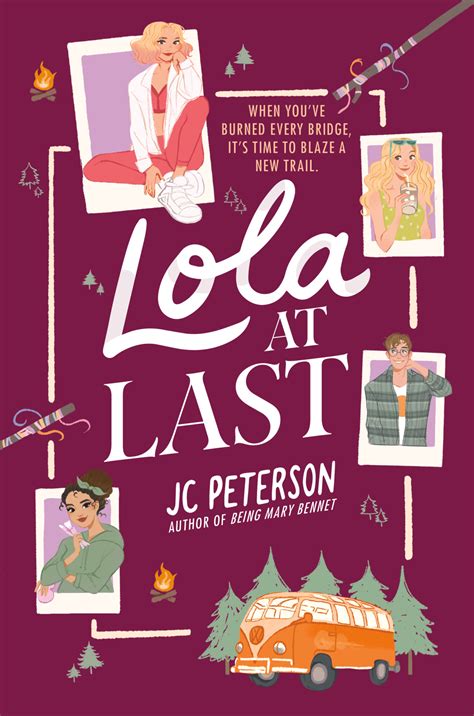
Lola Barnes’s summer is not off to the best start.
Fresh off a scandal that tanked her social status, Lola has somehow managed to also alienate her twin sister, lose the friends she thought she had, and put a . . . fiery end to the first party of the summer.
(The boat was barely on fire, for the record—and all the partygoers were just fine.)
Lola is given an ultimatum: jail time, or spend the summer with the nonprofit Hike Like a Girl.
Everyone seems to expect Lola to fail. But even as Lola encounters bugs, blisters, and bears (oh my!), she finds something greater that she’d been missing all along: unexpected friends, a sweet romance, strength she didn’t know she had—and herself, Lola, at last.
Peterson knocks it out of the park again with her companion novel, Lola At Last. As with Mary, the Austen fandom has softened up on Lydia Bennet slander because she was sheltered, un-parented teen girl who was shamed and stuck with Wickham at the end. She was attention-seeking, but she’s also sixteen, so her ending seems mega-harsh. Peterson agreed and in this contemporary retelling, she seeks to give Lydia or in this case, Lola, her happily ever after.
Which is a lot of work.
(more…) -
Being Mary Bennet Review
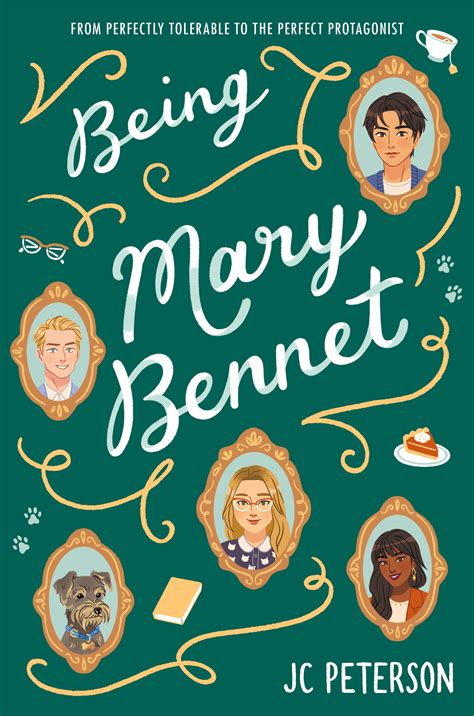
It is a truth universally acknowledged that every bookworm secretly wishes to be Lizzie Bennet.
A less acknowledged truth is that Mary Bennet might be a better fit.
For seventeen-year-old Marnie Barnes, who’s convinced she is the long-suffering protagonist of her life, this revelation comes at the end of a series of self-induced disasters that force her to confront a devastating truth: Marnie has more in common with Mary Bennet—the utterly forgettable middle sister—than the effervescent Lizzie.
Determined to reinvent herself, she enlists the help of her bubbly roommate and opens herself up to the world—leading lady style. And between new friends, a very cute boy, and a rescue pup named Sir Pat, Marnie realizes that being the main character doesn’t mean rewriting your life entirely. It’s about finding the right cast of characters, the love interest of your dreams, and, most important, embracing your story, flaws and all.
Pride and Prejudice is a classic as we all know with the various retellings, and while many have latched on to Lizzy and Darcy’s love story, there has been a resurgence of affection for the forgotten, bookish sister of the Bennet five, Mary. I have seen at least four books already highlighting the forgotten sister running from contemporary to regency as authors give the smart Bennet her time in the spotlight.
(more…) -
The Story of My Anger Review
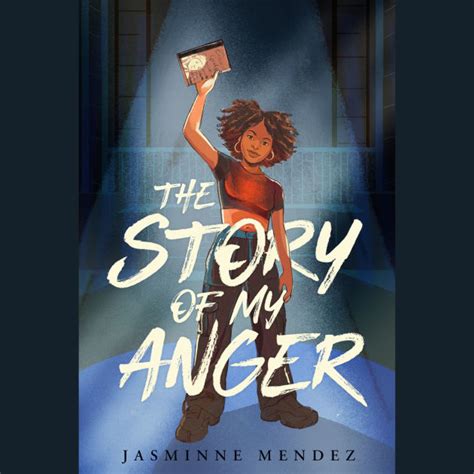
Yulieta Lopez is angry. Angry at her racist drama teacher who refuses to cast Black students in lead roles. Angry at the school board threatening her favorite teacher for teaching works of literature that they deem “controversial.” Angry that she has to keep quiet until she can head to college and leave Texas forever.
Yuli is accustomed to playing various roles: the diligent daughter, the honorable hija, the good girl who serves everyone else before serving herself. But as the fire of Yuli’s rage spreads and lights her up, she can no longer be silent. Determined to find a way to fight back, Yuli and her friends start a guerilla theatre club which stirs things up and gets people talking, and finally, Yuli steps into the role she was always meant to play.
Perfect for fans of Elizabeth Acevedo, the story focuses on how anger can be your ally, not your downfall.
We all know the stereotype of the angry black girl, and as Yuli doesn’t want to cause her mother more stress, nor does she want to put her dream of being the lead of the school play in jeopardy, she swallows it down. However, being quiet is not enough when her whole being runs counter to what the drama teacher envisions to be the all-American female lead.
Mendez does a great job illustrating the boiling anger within Yuli, the injustice of being the good girl while those who say racist things receive no consequences. How being good doesn’t seem to bring results. That anger is also explored in different ways from Yuli’s other brother and his college protests, and the stories of her mother’s time as an activist on the islands. Anger is seen as wrong, too much, too loud, but it can also be a fuel to fight for justice. It all comes down to how you channel your anger.
Plus I enjoyed the ending and how that anger that she thought would be her downfall ends up inspiring Yuli to find out she has newer, more important dreams than fitting into a theater that would never accept her. She can become unforgettable in a different way.
Honestly, it reminds me of this A:tla quote- “
I enjoyed the way the story flowed. Even though it was primarily in prose, and in script-font, Mendez wove in the importance of art, guerilla theater, microaggressions in theater, book bans and censorship into a cohesive piece. The prose amplified that because poetry is art itself, a way to express feelings and create empathy/let people see themselves.
However, because of the medium, it arouses big emotions, yet also feels surface level. But perhaps that’s because I’m bad at interpreting poetry and verse.
The only downside is that I wanted more of Yuli’s mom, she seemed so cool and I wanted to learn more of her story and how she learned to channel her passion and anger. Same with Yunior whose activism is a big part of the book, but he ends up taking a step back in order to protect his physical/metal health. I know it wasn’t his story, so it makes sense we wouldn’t be privvy to the drain on him, but maybe if Mendez had him confide a bit more to Yuli we could have gotten it.
3 stars.
-
Book of the Month: The Yellow Wall-Paper
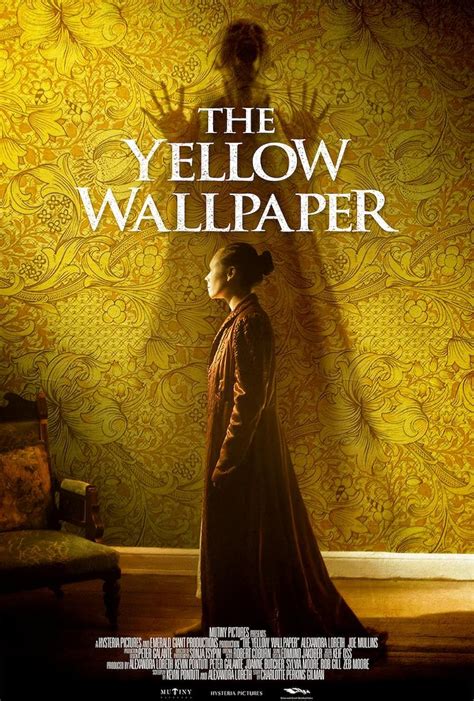
The story is written as a collection of journal entries narrated in the first person. The journal was written by a woman whose physician husband has rented an old mansion for the summer. Forgoing other rooms in the house, the husband confines the woman to an upstairs nursery. As a form of treatment, the husband forbids the journal writer from working or writing, and encourages her to eat well and get plenty of air so that she can recuperate from what he calls a “temporary nervous depression – a slight hysterical tendency”, a common diagnosis in women at the time. As the reader continues through the journal entries, they experience the writer’s gradual descent into madness with nothing better to do than observe the peeling yellow wallpaper in her room.
When they say short story, this is a short story, but it packs quite a punch in describing the unnamed protagonist’s descent into madness. Since I had a vague idea of what it was about, I had thought that the doctor husband had been trying to drive her mad on purpose for money or whatever. But no, he genuinely thought he was doing what was best for her which is more horrifying. The Victorian era’s idea of “medicine” is horrifying in general.
Especially when you read the author’s note and learn that Perkins had went through the isolation “cure” herself, and nearly went insane so after she got a second opinion from a doctor who told her to go back to work, and have friends, she wrote this as a warning to others. It even worked and saved some women from horrifying fate.
Anyway, my friend and I have differing opinions of whether she was insane or if the isolation made her insane. My friend cited that the protagonist said she had heard voices since she was little, I pointed out that could just mean she eavesdropped or there were thin walls, not schizophrenia. We both agreed that she probably had postpartum depression, and the isolation made it worse.
The ending was particularly shocking. Generally, it was a well-done story.
Next up is the short/unfinished stories of Jane Austen-Lady Susan, Sandition, and The Watsons.
I forgot to mention that along with our book club, we’ve decided to share movies. Some related to the books, some not. So far we watched Instant Family which is a funny, wholesome, realistic movie that I recommend everyone to watch at least once. Then we watched the first episode of the Murdaugh Murders: A Southern Scandal on Netflix which set the scene for all the drama that came after.
We’re obviously ahead with the books than the movies, but we’ll try to catch up before we start the next next book.
-
Lauri Robinson Interview

Lauri Robinson is a prolific author of historical romance from westerns such as Unwrapping the Rancher’s Secret to A Gilded Age Christmas to The Heiress and the Baby Boom, and many more eras in between. With over sixty books to her name, she graciously took the time to answer my questions about her writing journey, research and what is coming next from her pen.
1. When did you begin writing?
It all started when my husband said that I should write a book because I read so many, and I thought, fine, I will. It took five years, but then my first book was published by the Wild Rose Press in 2007, and I continued to have eighteen more books published by them. My dream was to write for Harlequin, and I got my first contract from them in 2010. Since then, I’ve written over sixty books in their historical line.
2. What romances inspired you?
Too many to count. Both of my grandmothers and my mother were avid readers. From a young age, I was one of those kids who read with a flashlight under the covers long after ‘lights out’. Years later, my go to became romance novels, and though I read many genres, that remains my favorite, and I’m still reading late into the night.
3. What drew you to the historical romance genre?
I was given a copy of The Flame and the Flower by Kathleen Woodiwiss and that’s all it took. I devoured every book written by her, and that embedded historical novels as my favorites, to read, and the genre I wanted to write.
4. Do you have any favorite tropes to write? Or ones you hope to try?
I can’t say that I have a favorite trope, they each have unique challenges and successes. When I’m brainstorming a new story, it’s the characters who come to me first, the positions they find themselves in, and it’s often not until I start writing that I fully understand why they are in those positions and what they need to move forward.
Romance novels are centered on the inner conflicts of the characters, and the trope of the story is often the outer conflicts that create obstacles the characters must face. I’ve written enemies to loves, friends to lovers, second chance, forced proximity, fake relationships, mail ordered brides, Cinderella stories, surprise babies, secret babies, etc. etc., and have found all of them enjoyable.
(more…)
-
Subscribe
Subscribed
Already have a WordPress.com account? Log in now.
 Rachel Reads & Reviews
Leave a comment