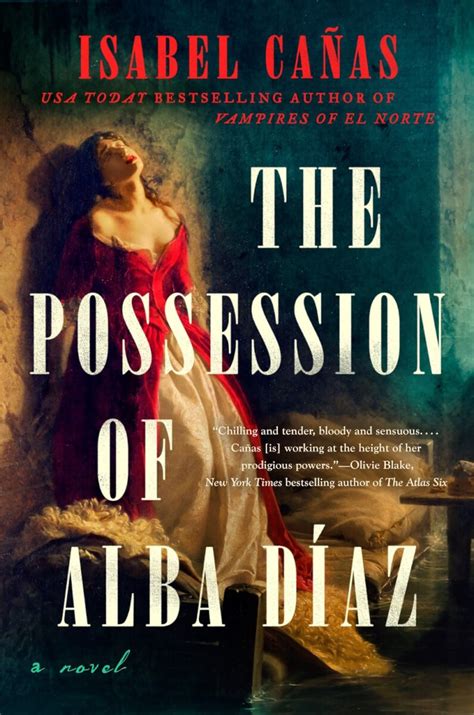
In 1765, plague sweeps through Zacatecas. Alba flees with her wealthy merchant parents and fiancé, Carlos, to his family’s isolated mine for refuge. But safety proves fleeting as other dangers soon bare their Alba begins suffering from strange hallucinations, sleepwalking, and violent convulsions. She senses something cold lurking beneath her skin. Something angry. Something wrong.
Elías, haunted by a troubled past, came to the New World to make his fortune and escape his family’s legacy of greed. Alba, as his cousin’s betrothed, is none of his business. Which is of course why he can’t help but notice the growing tension between them every time she enters the room…and why he notices her deteriorate when the demon’s thirst for blood gets stronger.
In the fight for her life, Alba and Elías become entangled with the occult, the Church, long-kept secrets, and each other… not knowing that one of these things will spell their doom.
Cañas writes a riveting Romeo and Juliet-esque tale set in a 1700s version of The Exorcist that will chill your blood while commenting on colonialism and patriarchial oppression via the Church.
Plus lots of gore.
Character-wise, Cañas created an engaging heroine through Alba who’s status as an adoptee has begun to make her question everything about her relationship with her family, and her upcoming wedding. While she knows she doesn’t love Carlos, she knows they could have a decent marriage. Yet the way it benefits her father who only sees her as another beautiful posession/pawn and her mother’s continued insistance on perfection makes her want to rebel. Especially when she knows part of their insistance is to keep her dreaded crillo side (of which she is white-passing and the reason why they adopted her in the first place) contained. When she meets Elías and realize there could be a life beyond the script set for her, she realizes all that she’s been told were lies. Shame to keep her in her place when freedom could make her. . . well, free.
Elías has the typical mysterious bad-boy past but Cañas’ prose makes it not annoying. He doesn’t brood about it, he doesn’t try to ruffle the feathers of his aristocractic family but they push and he fights back. Maybe the scene where he confronts a sleep-walking Alba and witnesses her demon-side that I connected to him because when he saw her souless, black pits for eyes, he was scared. He feels so human that other male protagonist don’t. Yet he also deeply cares for Alba, and for truth and justice while also being insecure that maybe the Padre is right and the reason that Alba’s demonness is drawn to him, it’s because there’s something dark in him too.
Their forbidden attraction is a slow-burn that occupies the first half, building a false sense of security for the reader as they get caught up in the romance. Yet the bloody aftermath of Alba’s blackouts get more obvious and the unbelievable evidence points to possession and things get real.
While the related family members of Alba and Elías are predictable and one-dimensional in their greed, I forgive because it’s realistic for the time period. They try to confine Alba to the feminine sphere and deride her crillo heritage and their indigenous workers as uncivilized savages while exploiting the riches they get from the land. Par for course when commentating on the Spanish conquest and colonialism. It’s not as overt as Kendall’s critique in That Which Feeds Us but readers will understand the connotations.
It’s where Cañas flips the script in regards to Padre Bartolome, and Alba’s fiance, Carlos that she surprised. In retrospect, the true nature of the Padre shouldn’t have been as Cañas’ is actively commentating on the harm the Church caused in promoting manifest destiny and forced conversion. But she played right into my expectations of the preist’s goodliness in the exorcist fight against the devil. Plus she created such a riveting past background of the many battles the Padre fought against Alba’s demon. I was rooting for him to succeed.
However, Carlos was a surprise as she gave him nuance beyond the greedy, spoiled fiance trope. His treatment of his cousin, Elías, was horrible, but there is a sense of true care for Alba, and a belief in justice that his father doesn’t share that made him a layered supporting player. I almost wish there had been a POV from him.
In regards to the descriptions and narration, Caña’s frame set the tone for a spooky atmosphere, an old legend warped by oral tradition around the fire that will make readers jumpy. The beautiful description of gilded dining rooms and red sunsets marred by gnarled trees, suffering workers, and the secret workshop filled with occult books and silver mercury. Moments of danger are heightened by the sudden snap of violence just as a demon contorts Alba’s face in unnatural whip-fast shapes. She never veers into gore, letting the psychological suspense carry much of the horror which soon drifts into biblical battles between the demon and padre, and demon vs Elías. She never lets up on the doom hanging over the characters, weaving a bittersweet sense of urgency to Alba and Elías’ romance that serve as a bright spot for readers to hold onto.
5 stars


Leave a Reply