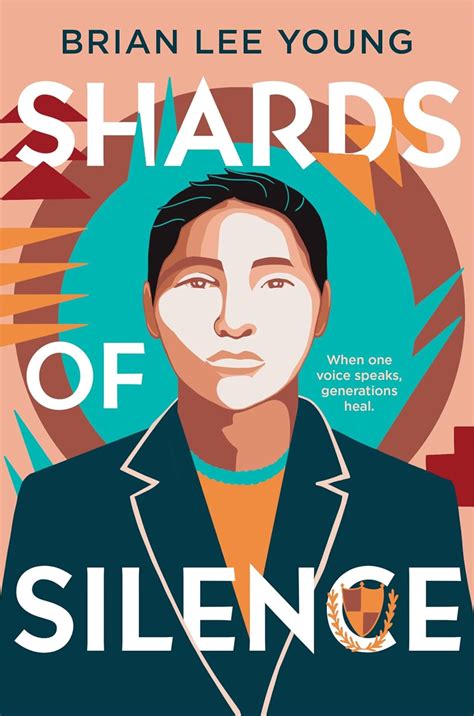
Even if it hurts to leave behind his friends and family in Navajo, New Mexico—especially his great-grandmother, Mildred—Derrick knows his scholarship to an elite East Coast boarding school is a once-in-a-lifetime opportunity.
Sagefield Academy is totally different from life on the His new classmates vacation in Europe and take study drugs. Derrick wants to stick to caffeine, but handling sports, school, and a twenty-page term paper, all while dodging comments about his hair and heritage, feels straight-up impossible.
Back home, Másání Mildred’s health is fading quickly. On the phone, she begs Derrick to leave Sagefield. When he realizes her fear comes from her time in federal Native boarding schools, he knows he’s finally found the term paper theme he believes carrying her voice into the future.
Derrick will need to shatter a steadfast generational silence to untangle his great-grandmother’s memories—though her story might change him, and his family, forever.
A very apt and evocative title that fits with Young’s exploration of the historical trauma of boarding schools on the indigenous population.
First off, Sagefield is different from the residential schools. First, being that it’s for education and not indoctrination/assimilation/workforce of kids ripped from their parents and culture. Derrick is going voluntarily, but the pressure and the microaggressions do greatly impact him. The depth of each subject brings a lot more work than he did at the rez, and he is continually operating on the pressure to do well to prove that he deserves to be there and he didn’t take the scholarship spot from another deserving candidate like his friend, Chris.
Then there are the microaggressions. “Why isn’t your hair long? Does he live in a teepee? Are you Latino? Are you Mongolian?” He doesn’t quite know how to deal with being the only Native student and trying to parse if it’s ignorant ignorance or ignorance with malice. If he should ignore the resentment which is dangerous because resentment breeds anger, and again, he’s the only representative of Natives most of his peers will meet. It’s an invisible pressure with the school pressure along with the inevitable homesickness, and fear of his friends drifting apart. Plus his great-grandmother is dying of heart failure.
It’s a lot and Young depicts the overlapping tensions well because it’s sandwiched by positives, as is life. Derrick makes new friends, is able to connect with a Navajo alumni and put his advice into practice in dealing with his classmates, depicting the difference between classmates who can become friends and classmates who continue to remain combative and ignorant. Plus he finds several supportive adults.
I particularly enjoyed Mrs. Thomas who becomes a second authority figure when his mother can’t Facetime, at times supportive with tough love that he’s familiar with.
Then there’s the history teacher, who Derrick is initially biting his anger at all times because of how colonial-focused class is, erasing the Natives that were there first, and helped form the Constitution (it was inspired by the Iroquis Confederacy, look it up). But soon learns how supportive his teacher can be when he introduces the native history he knows and encouraging him to go deeper.
Which brings us to the Shards of Silence and the history of trauma and silence from Elders who learned not to share their stories because it’s too painful. Obviously, one doesn’t want to bring up painful memories, especially Derrick with Másání Mildred’s heart issues. But as he comes to learn throughout the novel, silence doesn’t make naything better. It erases them from history, it accumulates the suffering inside the person, and it can be healing to share with loved ones.
Másání Mildred’s story is a difficult one, but important to know and sends Derrick on a journey to learn more about his great-grandmother and possibly bring her some peace. I’ll admit this part got me emotional as my grandfather also died of heart failure, so the pain of wanting more time to hear everything about their life while also anticipating the grief hit hard. Plot-wise, it made an intriguing mystery trying to clue whether Másání Mildred was confused because of the pills/age or if she had been lying about parts of her past.
Derrick was a nice protagonist to follow, well-adjusted, and mature yet relatable. Unfortunately, there was a small plot thread regarding cheating and using pills to work through his studying which could have gone deeper but gets dropped. Young really could have delved into the sticky issues regarding study pills and the systematic bias stacked against rich white teens who use them compared to the consequences Derrick could have faced if he had been caught.
Secondly, Derrick was operating the entire time with the belief that if his grades slipped just a bit that he’d be expelled. Not that he’d lose his scholarship, but expelled outright. Apparently, no one told him otherwise, but it was distracting to me as a reader, knowing how unlikely that possibility would be. Otherwise, his story of how his internal pressure was driving him to exhaustion was good.
4 stars


Leave a comment