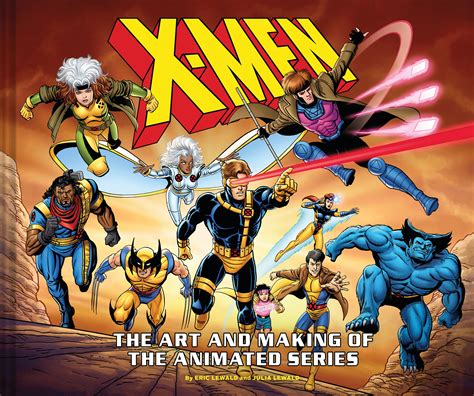
Art of X-Men the Animated Series by Eric and Julie Lewald/Art of X-Men ’97 by James Field
Showrunners Eric Lewald and Julia Lewald reveal the story behind the creation of one of the most celebrated, revolutionary animated series of all time.
The Art and Making of the Animated Series takes fans behind the scenes of the landmark cartoon that laid the groundwork for the dozens of Marvel Comics adaptations that followed. Interviews with series writers, artists, producers, and executives reveal the razor’s edge that Marvel and Fox navigated in order to bring the X-Men to television, and detail the tough decisions, compromises, and brilliant solutions that resulted in a series that has been lauded by critics and fans for nearly three decades.
Along the way, readers will encounter comics and entertainment luminaries Stan Lee, Margaret Loesch, Avi Arad, and Haim Saban, as well as exclusive production art and commentary from key TAS artists such as supervising producer/director Will Meugniot, producer/director Larry Houston, producer/director Frank Squillace, storyboard artist and model designer Rick Hoberg, model designer Frank Brunner, and character, prop, and model designer/cleanup artist Mark Lewis.
This book gives a firsthand account of what it’s like to develop, pitch, design, write, draw, direct, and produce a hit animated series, and is jam-packed with never-before-seen concept sketches, storyboards, character models, background layouts, cels, and production and promotional materials.
The Art X-Men ’97 takes fans behind the scenes of Marvel Animations’ Emmy-nominated revival to The Animated Series. Picking up where the original series left off when it aired its final episode in September 1997, this new series features returning cast members and a revamped but familiar art style.
Storyboards, character sketches, vehicle designs, new costumes, stills, animatic frames, cels, and so much more will show every step of the process that the talented team of animators, designers, and storytellers undertook to bring viewers the further adventures of Wolverine, Storm, Bishop, Beast, Jubilee, Cyclops, and the rest of Marvel’s most famous mutants.
Out of the two Art of X:TAS is longer and more in-depth which is a given since it covers the entire series and production history while ’97 only has 10 episodes so far. Therefore, if you’re looking for more art and insight to the character design/updates of the latest series, you’d like it.
But if you want to know everything about bringing the X-Men to the tiny screen and the love and interest put into the project, ‘s book is one you won’t want to put down. I was particularly amazed by how much work they had to do back then with the coloring of individual cells, on the fly fixes on a tiny budget, and how they synthesized a lot of comic book history into a five season show. You can tell they had passion for these characters and making it the best show it can be, and it made me appreciate the show more even (artistically, voice acting-wise, and story-telling-wise) though I personally can’t take the 80s hair seriously.
Hail Mariam by Huda Al-Marashi
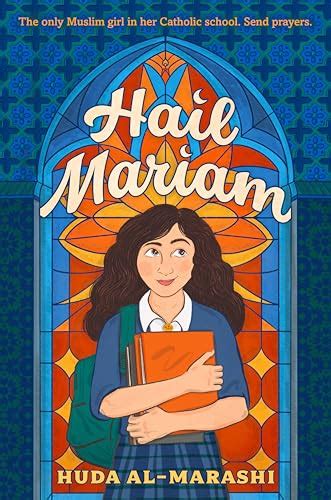
Iraqi American Mariam Hassan transfers to a local Catholic school and before her first day her parents remind her that she might be the first Muslim her classmates have ever met. No big deal, right? Just represent an entire religion while making new friends, keeping up with schoolwork, and figuring out who she is.
When Mariam’s younger sister, Salma, is diagnosed with a serious lung condition, her family faces endless doctor visits and sleepless nights. Mariam tries to lighten their burden and keep her own problems to herself—including the fact that she’s just been cast as Mary in the school’s Christmas nativity play.
Mariam wants to honor her faith and her new community, but she’s terrified of crossing a religious line. Can a Muslim girl be the lead in a Christian story? What will her family think? And why does she feel like every decision she makes represents all Muslims?
Mariam discovers that faith, much like friendships, isn’t about perfection—it’s about connection. As she leans on her family, friends, and school community, she begins to see the power of interfaith cooperation and learns she doesn’t have to carry the weight of the world on her shoulders.
For fans of Judy Blume’s Are You There God, It’s Me, Margaret, meet Mariam who is the only Muslim girl in her Catholic middle school and she’s just as neurotic and curious as Margaret. Perhaps a bit too narrow-minded as she’s convinced that any straying from the Qu’ran would lead to God forsaking her family, and it’ll all be her fault.
I really enjoyed that it was a slow arc for Mariam to realize what her parents were trying to teach her. Yes, they want her to be a good role model for her classmates who’d never met a Muslim before, but they also wanted Mariam to learn too. Interfaith alliance was a big theme here as Mariam learns there is no one way to be Muslim (as demonstrated by her Shiia-Sunni mother and father) nor is there one way to be Catholic and it all depends on you to figure out your relationship with God and how you want to connect with him.
Armaveni by Nadine Takvorian
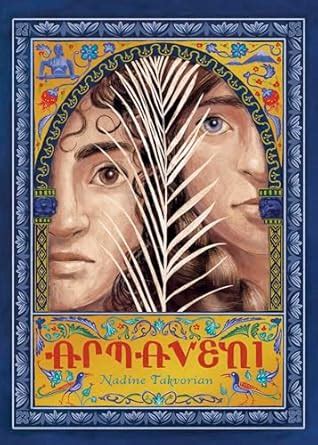
A bold, autobiographical graphic novel chronicling one girl’s quest to uncover her family’s history during the Armenian genocide. Nadine loves stories and her mother loves to tell them-all but one. Nadine would give anything to learn about her family’s history in Armenia and Turkey-where they came from and how they came to America-but it is just too painful for her parents. All Nadine knows is that they were caught up in the Armenian genocide. Until one day the dam bursts. And through that flood of stories and memories, and a trip back to their people’s homelands, Nadine discovers a key to unlocking her own heritage and the courage to speak up when injustice rears its head again. Told in interwoven historical, contemporary, and fantastical sequences, Armaveni is a gripping graphic novel debut and a much-needed historical document.
Apparently I’m learning about my genocides through graphic novels. This one is the Armanian Genocide. The first ethnic clensing that coined the term genocide, by the way.
Takvorian’s art was simple, yet detailed, showing imagine spots combined with the blurry vividness of someone recounting past traumas. As expected, genocide can be hard for survivors to talk about. Yet Nadine’s point is also true, they must share and they must learn these stories or else others will try to revise history as we learn through Turkey’s historical revisionism. ‘s connection with her identity is also strained by the views of other Armanians who see their family’s choice to remain in Turkey as being Turkified, and not true Armanian.
Of course, it’s not so simple, but readers will definitely learn a lot and be able to relate to her struggle to connect with her identity.
Truth Is by Hannah V. Sawyerr
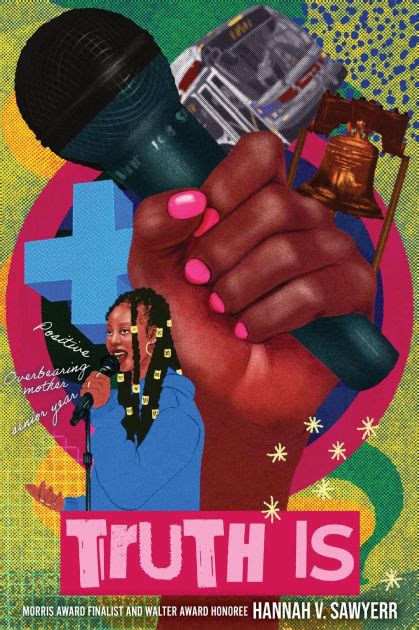
Seventeen-year-old Truth uses slam poetry to address her personal struggles with college, relationships, and an unexpected pregnancy, but she never intended for a video of her poem to go viral.
Fans of Elizabeth Acevedo will Sawyerr’s sophmore outing. Told entirely in-verse, Truth’s story is a proud, unabashed call for the silent right of reproductive choice. Truth’s abortion is not the main issue, she’s never conflicted about it. But the aftermath is the heart of the story and how her parents, and friends come to view her choice.
I found Sawyerr’s novel to be very honest. She doesn’t minimize the emotional or verbal abuse Truth gets from her mother, yet they are both allowed to be complex and there’s hope that there relationship can improve. Just as Truth calls out her friend’s blatant cutting-her-off when it came to her choice, and the privilege her friend had in general doesn’t contradict Truth’s own confusion and shame when she got pregnant. Plus she’s self-aware when it came to her feelings for ex, acknowledging they were wrong for each other, but feeling unable to cut off completely because feelings suck that way.
Truth doesn’t have all the opportunities her other classmates have because of her poor grades and low socio-economic status, yet readers never feel like it’s poverty porn as Truth navigates whether college is the right choice for her or the poetry scholarship. It’s just a really good book.
No Tea, No Shade: Life as a Drag Queen by Kennedy Ann Scott, Lagoona Bloo, Alexis Michelle, Olivia Lux, Julie J, and Nina West
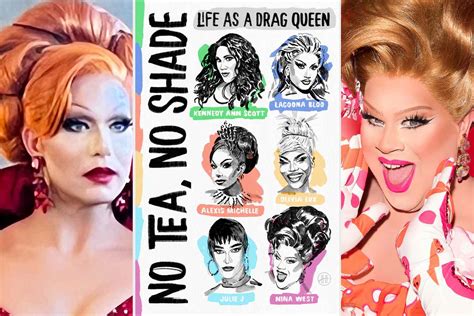
This volume of 30 intimate, hilarious, and inspiring essays is a collective anthem written by six drag queens who believe in equality, peace and a world that loves and respects all people.
This series of essays from eight renowned drag queens tackle trans identity politics in the drag scene, coming out, how to pad their costumes, embracing their personas and dating drag, I think I learned a lot and had fun too.
Personally, I enjoyed Kennedy Ann Scott, Lagoona Bloo, Olivia Lux, Nina West’s essays a lot. Especially as Scott discuss his passion for teaching children and navigating the difficulties of when some colleagues/parents thought his drag outside of the classroom was in conflict with that, Bloo’s journey to renewing his relationship with his conservative Mexican-Catholic mother (I may have teared up a bit), the support of Lux’s family as he tried to get enough money for college, as well as West’s resilience to continue drag queen story-time under the threat of violence (which is just insane to me, but wow).
Goodbye, Perfect by Sara Bernard
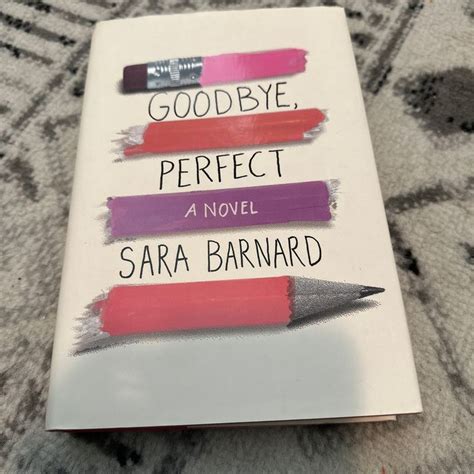
Eden McKinley knows she can’t count on much in this world, but she can depend on Bonnie, her solid, steady, straight-A best friend. So it’s a complete shock when, five days before the start of their GCSEs, Bonnie runs away with a guy Eden knows nothing about. And it’s the last person she would ever have expected.
As the days pass, and her world begins to unravel, Eden is forced to question everything she thought she knew about her best friend and herself.
Based on the summary alone, you know this is going to be heavy, and it was. Yet Barnard executed it all with nuance. Other inappropriate teacher-student romance books focus on the POV of the student, which often romanticizes it because the student doesn’t understand they’re being groomed.
Since this is all from Eden’s POV, we are thankfully excused from that grossness, and focus on the fall-out which hurts her as much as it does Bonnie. Eden comes from a totally different circumstance as a foster turned adoptee, and being half-Brazilian descent. She even notes if this had happened to her, there would not be as large of an outcry. She’s the typical, rebellious teenager from a bad home. This promiscuous running away is expected of her. But because is a straight A, white girl from a prep school, there is much more confusion.
She had thought were best friends, but she had no clue that this was happening. In fact, she had thought Bonnie’s boyfriend was imaginary and hadn’t wanted to hurt her feelings. While this is about, the book follows why Bonnie did what she did and the internal and parental pressure of being considered a perfect student, Eden’s confronting her flaws like her choice to keep a small circle and not branch outside of Bonnie, her inability to see other perspectives besides her own, building empathy and understanding that there are those who do not see her as the bad foster girl, they want to know her.
I thought both girls were complex and well-done even though some of Eden’s actions were foolish (like keeping Bonnie’s whereabouts a secret till the very end) I thought it was also realistic as teens take their promises of friendship very seriously and for someone like Eden, that loyalty and sense of family she had with Bonnie is paramount. Plus it was educational for readers to understand what grooming is, and how it is done, and how predators justify themselves in a system that allows them to slip through.
The Surprising Power of a Good Dumpling by Wai Chim
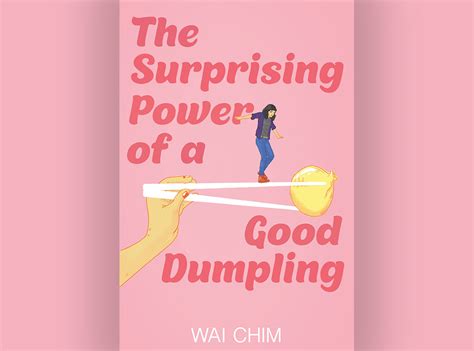
Anna Chiu has her hands pretty full looking after her brother and sister and helping out at her dad’s restaurant, all while her mum stays in bed. Dad’s new delivery boy, Rory, is a welcome distraction and even though she knows that things aren’t right at home, she’s starting to feel like she could just be a normal teen.
But when Mum finally gets out of bed, things go from bad to worse. And as Mum’s condition worsens, Anna and her family question everything they understand about themselves and each other.
A complex story that gets into different aspects of mental wellness, Anna’s mother’s illness has defined her life although she tries to make sure everything’s normal to the outside world. I felt so bad for Anna in her eldest child syndrome carrying the emotional weight of the family while her father hid in his restraunt. Same restraunt that he won’t let her help with even though she’d be good at it.
Yet Anna’s only a teenager and her attempts to pretend everything is normal is just deep-seated denial. Chim comments on the cultural stigma around mental health especially in the Chinese community and how the isolation of the immigrant experience may have amplified her mother’s illness.
The romance Anna has with Rory ties in with these themes of mental health as he discloses his own struggles and shares how there is no one solution. Maybe there will never be a normal as society sees it, but they can get better. I also how admire Chim’s novel doesn’t stop when Mrs. Chiu gets help, but shows her return and her relapse, emphasizing that it’s not a linear recovery.
Estela Undrowning by Rene Pena-Govea
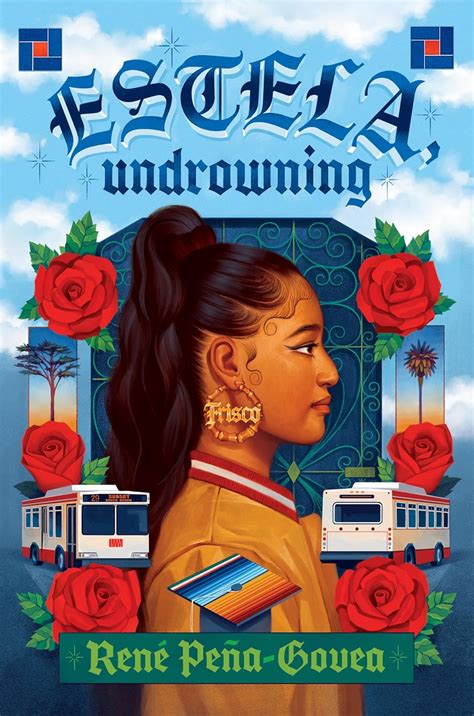
Estela Morales is one of the only Latinas who tested into San Francisco’s most exclusive public high school. In her senior year, Estela just wants to keep her head down, eke out a passing grade from her racist Spanish teacher, and get into her dream college.
But after placing second in the Latiné Heritage Poetry Contest behind a non-Latino student, Estela is thrust into citywide debates about merit, identity, and diversity.
Things only get messier when her family is threatened with eviction. As Estela’s friends organize against bigotry and her landlady increases the pressure, Estela is suffocating and finds release only in poetry and in a breathless new romance. When tensions finally reach their breaking point, Estela must find a way to undrown the community she loves—and herself.
Covering themes such as gentrification, racism, and diversity politics, Govea’s novel is different as she specifically tackles the feeling of exceptionalism Estela feels. She doesn’t want to be grouped in with the lotto kids. She doesn’t speak Spanish well, so she feels like she isn’t as Hispanic as the rest of them, but knows others will pin her with low expectations because of her ethnicity, so she tries to assimilate more.
Readers might be annoyed by Estela’s hypocrisy, but I found that just made her more interesting, and frankly realistic. It made her journey compelling as she comes to learn and unlearn the history of inequalities that brought her to here, and the importance of interracial allyship, learning to stand up for her friends and her own voice.
Unfortunately, the storyline about housing eviction, while taking up a big part of the beginning and middle, it feels like it was shunted to the side by the end and did not get a satisfying resolution.
This is Not a Personal Statement by Tracey Badua
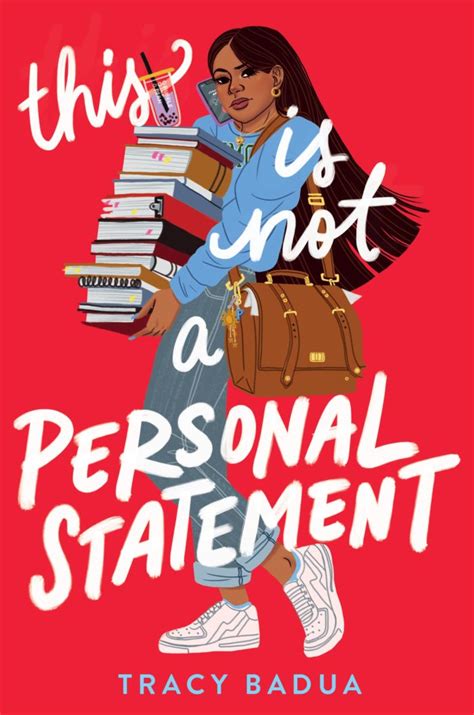
As the youngest graduating senior at her hypercompetitive high school, Perla Perez is certain all the late nights, social isolation, and crushing stress will be worth it when she gets into the college of her (and her parents’) dreams: Delmont University.
Then Perla doesn’t get in, and her meticulously planned future shatters. In a panic, she forges her own acceptance letter, and next thing she knows, she’s heading to Delmont for real, acceptance or not. Perla’s plan? Gather on-the-ground intel to beef up her application and reapply spring semester before she’s caught.
But as her guilty conscience grows and campus security looms large, Perla starts to wonder if her plan will really succeed, and if this dream she’s worked for her entire life is something she even wants.
Part coming of age, part college hijinks of a prodigy, this was a fun story as Perlie successfully manages to blend into the Dalmont campus, and even hijack a spare dorm room. Then again, she is a teen prodigy. But the character growth she undergoes is more powerful as college does exactly what it’s supposed to. It opens up Perlie’s horizons beyond her small social sphere in high school, and helps her realize what her parents want, is not exactly what she wants.
She is a bit of a snob at first, and while some of it can be attributed to how her parents have raised her (you know, get good grades, get into college, get high-paying job, anything else like community college means you’re wasting everything your parents have sacrificed for you), she learns to take accountability for her views and take responsibility when her actions inevitably come to light.
I think her relationship with her parents was most interesting as the immigrant child experience is something many can relate to, and the guilt that you have to live up to their expectations and sacrificing. But Pearlie also comes to Pearlie her needs are important, and their constant grandstanding speaks to deeper insecurities on their part and its not her job to have to fulfill it all.
My Heart Underwater by Laurel Flores Fantauzzo
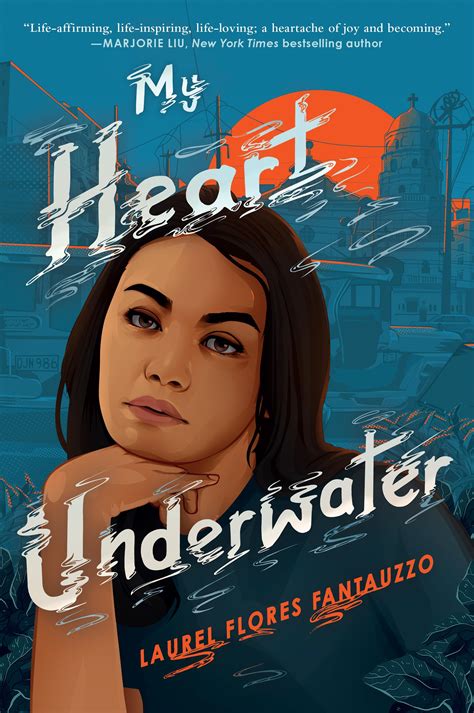
Corazon Tagubio is an outcast at the Catholic school she attends on scholarship. Her crush on her teacher, Ms. Holden, doesn’t help. At home, Cory worries that less-than-perfect grades aren’t good enough for her parents, who already work overtime to support her distant half-brother in the Philippines.
After an accident leaves her dad comatose, Cory feels like Ms. Holden is the only person who really understands her. But when a crush turns into something more and the secret gets out, Cory is sent to her relatives in Manila. She’s not prepared to face strangers in an unfamiliar place, but she discovers how the country that shaped her past might also redefine her future.
This novel takes readers on a journey across the world as Cory comes to understand her family, her relationships, and ultimately, herself.
A thoughtful, reflective novel on grief, guilt and coming of age. Laurel’s story is intense. She’s always been an outsider in her school, and with her father’s uncertain prognosis of ever coming out of his coma, you can understand why she’d fall for her teacher, and some of her mother’s concern.
Fantauzzo does a good job in acknowledging that while her mother’s homophobia was wrong, and Corey shouldn’t be ashamed of her sexuality, what her teacher did was equally wrong and inappropriate even though Corey still sort of misses her. There’s a hopeful note that she will be able to heal and move on from that part of her life.
What is much more difficult is her relationship with her parents, and her own fear that her father might never be the same. Corey’s fear and uncertain are palpable, but like her other arc, she does come to a more hopeful point in realizing her father is still himself, even though he’s in for a long recovery, and their family will survive. Part of this is due to her getting to know more about her parents, and their families while she’s in the Phillippines.
Fantauzzo’s descriptions of life and culture in the Phillippines are vivid. Readers will feel transported there, and will appreciate the beauty and spirituality imbued in the place. However, be forewarned, it does feel a bit “poverty porn” too in the descriptions.
If You’re Not the One by Farah Naz Rishi
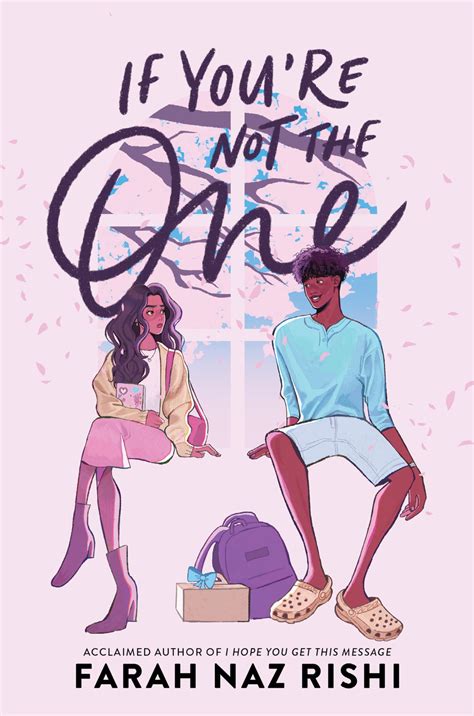
Anisa Shirani is…well, perfect. A fact, not an opinion. Of course, it’s all a front to feed her own praise-obsessed ego. Behind closed doors, she is—some might say—a little slobbish and snobbish, and she works obsessively to maintain her God-given talents. Fate has favored her, but Ani knows better than anyone that fate is made by effort.
But she must, especially when all signs point to her being a top-notch lawyer with a top-notch education and being destined to marry Isaac, total heartthrob and eldest son of the richest family in the community. A perfect girl deserves a perfect life, and Ani’s perfect life is going exactly the way it should…
Until Ani’s parents announce they’re getting divorced.
Until Isaac shows all the signs of…cheating. Sort of.
Until she starts catching feelings for Marlow, an overly friendly weirdo she’s hated since the moment she laid eyes on him in class.
How can fate be so wrong?
Anisa is very Type A which readers might find annoying, but it reminded me a bit of Sally from When Harry Met Sally. Which is an apt comparison as it’s one of the movies Marlow makes her watch as part of her romantic education. She has her life all planned, but one can see it’s clearly her coping mechanism for the expectations she put upon herself. It’s endearing to see Anisa let down her guard and start to realize how she is hurting herself. As well as her determination to try to be a good romantic partner through her romance education even though it inevitably leads to feels for Marlow.
How can it not? Marlow is an absolute sweetheart, communicative, open about his feelings, romantic, and had some extra depth in regards to navigating his identity as a black guy in a white-dominated school including his emotionally neglectful ex. Seeing them slowly fall in love was a treat, and helped Anisa see beyond her mapped out future.
The supporting cast was well-written too, flawed yet sympathetic from Anisa’s mom who was a big part of Anisa’s perfectionism problem to Isaac who is a jerk that Anisa forgives a little too easily in my opinion.
My one nitpick of the book is the numerous footnotes. While they are a fun way of imparting comic relief and detail more of Anisa’s interiority, there was so much of them that it was distracting.
Counting Down with You by Tashie Bhuiyan
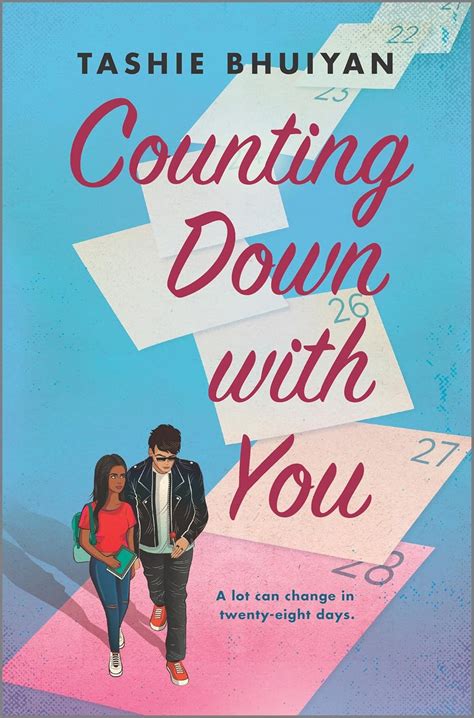
Karina Ahmed has a plan. Keep her head down, get through high school without a fuss, and follow her parents’ rules—even if it means sacrificing her dreams. When her parents go abroad to Bangladesh for four weeks, Karina expects some peace and quiet. Instead, one simple lie unravels everything.
Karina is my girlfriend.
Tutoring the school’s resident bad boy was already crossing a line. Pretending to date him? Out of the question. But Ace Clyde does everything right—he brings her coffee in the mornings, impresses her friends without trying, and even promises to buy her a dozen books (a week) if she goes along with his fake-dating facade. Though Karina agrees, she can’t help but start counting down the days until her parents come back.
T-minus twenty-eight days until everything returns to normal—but what if Karina no longer wants it to?
This was a sweet albeit predictable rom-com in regards to its bad boy/good girl fake-dating premise. Where Bhuiyan shines is the depth of emotion as Karina manages her anxiety and garners the strength and self-confidence to confront the unhealthy family dynamics between her and her parents. It’s awful when parents use religion to justify their control, especially when Karina can see how they pick and choose when it applies. It’s hypocritical, add in the favoritism they show her older brother, then it feels unbearable. However, her anxiety and desire to please them are equally strong, making it feel impossible for her to talk to them.
Since this is partially autobiographical, Bhiuyan’s prose feels intense, thrusting readers into Karina’s headspace and will root for her as she draws strength from her anxiety-calming techniques and her relationship with her Dadu. Dadu (or Grandmother) and Karina’s relationship is wonderful. Rarely do grandparent-grandchild relationships get the spotlight outside of lower-grade or picture books, so to see the warm relationship between the two and Dadu relating to, and standing up for Karina was the foundation of the novel.
Ace feels a little one-dimensional in comparison. There is an interesting bit as we learn that the majority of Ace’s bad boy reputation comes from his older brother, revealing a toxic dynamic between the two. But it feels wasted potential as Bhuiyan doesn’t draw parallels between his situation and hers. At least it inspires her to talk to her older brother, and mend their relationship before her resentment could fracture it. Still, Ace served his purpose as a safe space and catalyst for Karina to face her fears.
All My Rage by Sabar Tahir
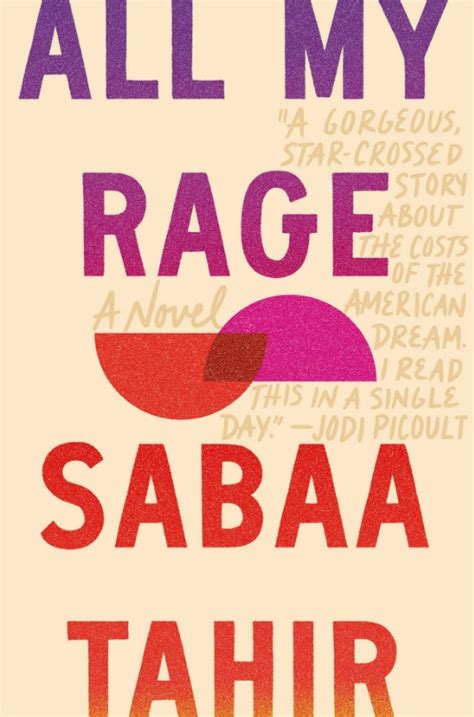
Lahore, Pakistan. Then.
Misbah is a dreamer and storyteller, newly married to Toufiq in an arranged match. After their young life is shaken by tragedy, they come to the United States and open the Clouds’ Rest Inn Motel, hoping for a new start.
Juniper, California. Now.
Salahudin and Noor are more than best friends; they are family. Growing up as outcasts in the small desert town of Juniper, California, they understand each other the way no one else does. Until The Fight, which destroys their bond with the swift fury of a star exploding.
Now, Sal scrambles to run the family motel as his mother Misbah’s health fails and his grieving father loses himself to alcoholism. Noor, meanwhile, walks a harrowing tightrope: working at her wrathful uncle’s liquor store while hiding the fact that she’s applying to college so she can escape him—and Juniper—forever.
When Sal’s attempts to save the motel spiral out of control, he and Noor must ask themselves what friendship is worth—and what it takes to defeat the monsters in their pasts and the ones in their midst.
A moving novel reflecting the cycle of trauma, abuse and how it is passed down to the children, Tahir’s title is apt. Sal and Noor have a lot to be angry about, but the duty to be a “good child” outweighs that. Same with not wanting to be seen as “terrorists.” However, all that anger has a boiling point.
It’s also a story about friendship and betrayal, and the feeling of being trapped. In some ways physically as it was with Noor’s past, but emotionally too. While many YA novels deal with teens rebelling and making change, Tahir highlights how much is out of their control and how there attempts to gain control of their future can be self-destructive without support systems.
It’s a hard novel, heartbreaking at points to see these two isolated and struggling, and unable to share that pain with their friend until it’s too late. But not all novels are happy as Tahir strives for draining realism with some forgiveness in the end. Good if you’re not in that kind of mood, but not for everyone.
Free Radicals by Lila Riesen
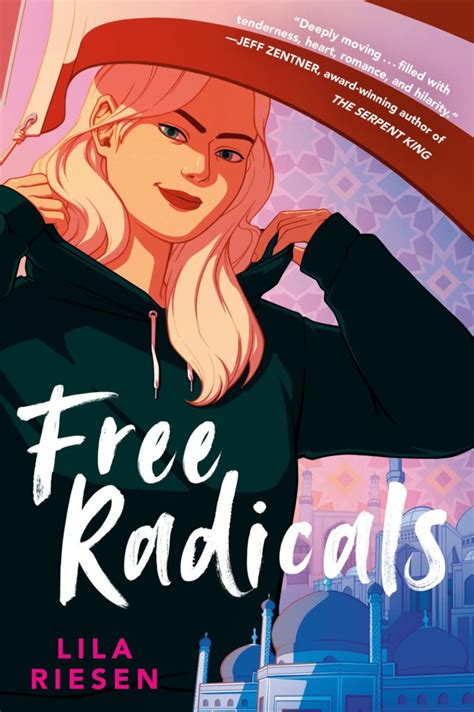
Sixteen-year-old Mafi Shahin knows life is not always fair. If it were she’d have just as much freedom as her older brother Rafi and her crush—basketball star Jalen Thomas—would see her as more than Rafi’s kid sister. And if life were fair, Mafi’s family in Afghanistan wouldn’t have to flee their homes to be safe.
Life may not be fair, but as the Ghost, her high school’s secret avenger, Mafi vows to make it a bit more even, meting out karmic justice on behalf of classmates who’ve been wronged. They simply leave a revenge note detailing the transgression in the knot of the SOL tree, and Mafi takes care of the rest.
But there are rules to being the Ghost: Don’t get caught. Never reveal your identity. Never involve the police, and definitely don’t get emotionally involved. But starting sophomore year, everything changes when instead of a revenge note, a wish turns up in the tree and Mafi breaks all her rules, putting her heart and even her family in Afghanistan at risk. Now Mafi will have to decide who she wants to be—the Ghost, making the world a just place from the shadows or something real, standing up for what’s right in the daylight.
First off, the summary about the Ghost and all the things Mafi does to mete out karmic justice is not what the book is about. Sorry, but it gets overshadowed by the far more interesting family dynamics. But I will say, I was also disappointed by that because I never got an understanding of how Mafi delivered justice and the risks she was taking.
Whatever, I suspect this was just a premise to get to the good stuff which is Mafi’s relationship with her Afghan roots, her father’s rejection of it, and the secret trauma her Baba won’t fully disclose. This was the best part of the book as Mafi learns she doesn’t know everything she thought she did about her family, and while her father’s rejection of their Afghan heritage may seem extreme, it is also bourn out of desire to protect them from the Taliban back there and racists in the U.S.
Riesen also tackles the 24 hour news cycle and how it quickly forgets the Afghans left behind, and the importance of speaking out to help them as well as the hypocrisies of colleges wanting diversity as tokens without working it into the institution.
The romance between Mafi and Jalen felt a bit off. While I enjoyed the conversations they had about PTSD, racism and colorism, I’m not a big fan of revenge love (ie Jalen was trying to hook up with her because he was mad at her brother. Just gross) nor did I like her brother’s romance with Bian and how he never realized how mean Bian was to slut-shame his sister. Hell, that he continued to do it too almost to the end.
Frankly in Love by David Yoon
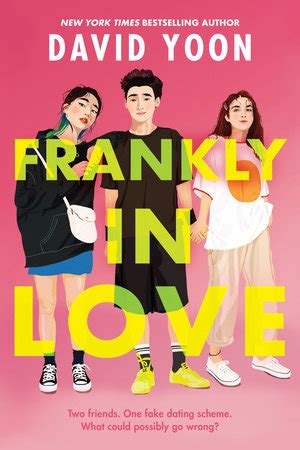
Frank Li has two names. There’s Frank Li, his American name. Then there’s Sung-Min Li, his Korean name. No one uses his Korean name, not even his parents. Frank barely speaks any Korean. He was born and raised in Southern California.
Even so, his parents still expect him to end up with a nice Korean girl–which is a problem, since Frank is finally dating the girl of his dreams: Brit Means. Brit, who is funny and nerdy just like him. Brit, who makes him laugh like no one else. Brit . . . who is white.
As Frank falls in love for the very first time, he’s forced to confront the fact that while his parents sacrificed everything to raise him in the land of opportunity, their traditional expectations don’t leave a lot of room for him to be a regular American teen. Desperate to be with Brit without his parents finding out, Frank turns to family friend Joy Song, who is in a similar bind. Together, they come up with a plan to help each other and keep their parents off their backs. Frank thinks he’s found the solution to all his problems, but when life throws him a curveball, he’s left wondering whether he ever really knew anything about love—or himself—at all.
While the premise is interesting, I didn’t find this book as enjoyable as I hoped. I found Frank’s identity crisis to be interesting, but he spent so much time complaining about racist his parents were. Which, yes I know it’s bad, but so much complaining without doing anything to try to push back. Brit didn’t feel fully formed as a romantic interest, and while I loved Joy and Frankie’s friendship, the fake-dating struggle was predictable.
Magic Misfits by Neil Patrick Harris
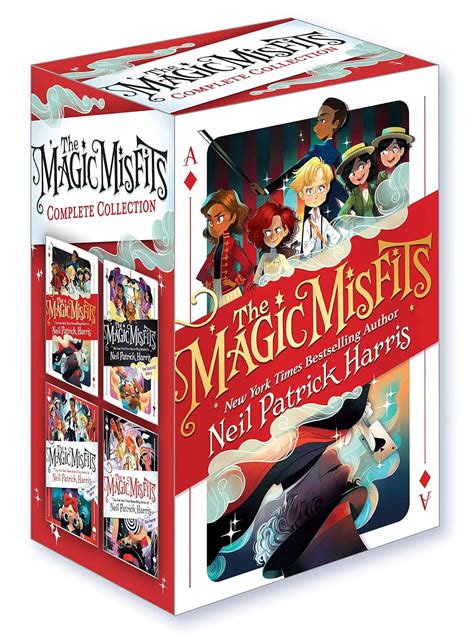
Join the Magic Misfits as they discover adventure, friendship, and more than a few hidden secrets in this beautifully designed boxed set, which includes all four books in the unique and always surprising series.
Perfect for fans of Lemony Snicket and Now You See Me. Lemony Snicket in that we have a very talkative, interactive narrator for kids to latch on to and teaches them tricks. Now You See Me because magicians, obviously, and found family dynamics.
Admittedly the first book was distracting because I know NPH, and was able to identify parts inspired by his work or his personal life. Also the chatty story-telling vibe reminded me of Barney Stinson which is a whole other thing.
However, once I got past that, I found an enjoyable quartet that tackles themes of identity, family, self-esteem, and figuring out who you are. A reoccurring theme is the kids realizing that they can be multi-faceted and sine they’re working with illusions a lot of time, that makes sense. You can’t fit people into boxes because everything is more than it seems. Also the parental figures get to be well-developed too.
The plot is full of twists that I didn’t see coming as well as lots of character development for the main quartet. However, the ending is a bit rushed, and I felt like this could have been spread out to a fifth book which speaks to how much I enjoyed them and want just one more adventure with the crew.
 Rachel Reads & Reviews
Leave a comment