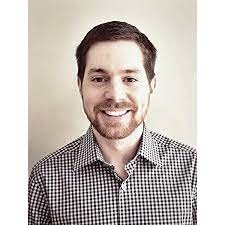
Tim Hanley is an author and comic historian with a special focus on superheroines. Here, he kindly answered my questions to talk about his books, essays and sexism in the comics industry.
1. Let’s start off easy, when did you first get into comics? What was the first issue you read?
I don’t ever remember not being into comics! As far back as my memory goes, I’ve always had them around and loved them. My grandmother used to buy me stacks of old comics at yard sales, so I had a lot of great stuff to choose from. The first comic I read was probably an Archie comic, since that’s what I had the most of. The first comic I bought with my own money was a Captain Planet comic, though, when I was six.
2. Why do you think comics have been so enduring over the decades? Why do people continue to connect with the medium and the characters?
Larger than life characters have always resonated with people. Calling superheroes our “modern mythology” has become a bit of a cliche, but I think there’s a lot to that. We’ve always told stories about people who have abilities beyond our own that serve as morality tales for society. Superhero comic books fulfill that need in exciting and fun ways. Plus they appeal to readers young and old, so we grow up with superheroes as kids and they continue to resonate with us as we age.
3. So you wrote your honor thesis on DC Comics in relation to the 50s juvenile delinquency scare, and Masters on the Psychology of Wonder Women. Obviously, one should read for themselves, but can you sum up the main arguments of what they were about? Especially for those who may not know of Wertham’s Seduction of the Innocent and the subsequent effect it had in enforcing the newly created Comics Code?
My honours thesis covers the period following the publication of Seduction of the Innocent, a book by psychiatrist Dr. Fredric Wertham that claimed comics were a contributing factor in juvenile delinquency. He was especially harsh on crime and horror comics, though he hated superhero comics too (and saw homoerotic undertones in Batman and Robin stories, as well!), and ended up testifying before Senate hearings on juvenile delinquency. The comics industry, led by DC Comics, banded together to create the Comics Code Authority to regulate comics content and end these critiques, effectively banning crime and horror comics in the process and leading to a superhero renaissance. My thesis focuses on how DC Comics took advantage of the outrage surrounding Seduction of the Innocent to reshape the industry in their favour, and bring about the return of superheroes.
My master’s thesis was about the feminism and fetishism at the core of early Wonder Woman comics, and the ways that has been lost and altered in the decades since. Wonder Woman’s creator, William Moulton Marston, was a psychologist who believed that women were superior to men and would soon take over the world, and he created Wonder Woman to pave the way for this coming matriarchy. He also illustrated his theories with bondage imagery that was intentionally sexualized, complicating his feminist message. After he died in 1947, Wonder Woman comics lost this complexity, shifting to inane and even anti-feminist stories. My thesis does a deep dive on the Marston era before exploring how Gloria Steinem and Ms. magazine reimagined Wonder Woman as a new sort of feminist icon in the early 1970s.
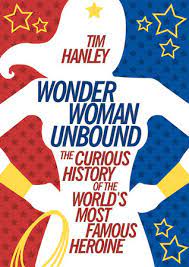
4. You have a special focus on Wonder Woman, not only in writing Wonder Woman Unbound but in Robert Kirkman’s Secret History of Comics series as a featured interview subject. Do tell about the layered psychology that is attached to the creation of one of the first and most well known superheroines within the books and behind the scenes.
I touched on this some above, but to expand further, Marston believed that women were better suited to lead society than men, as evidenced by millennia of war and greed and inequality under patriarchy. He lived in a polyamorous relationship with his wife, Elizabeth, and their partner, Olive, both of them independent and well educated women who contributed to his psychological work and the creation of Wonder Woman. Every aspect of his life lived on in the comics, from the feminism to queerness to kink, in a bizarrely compelling, over the top world of Amazons, World War Two, and fantastical foes. She was decades ahead of her time. However, Marston hyper-sexualized the character by using bondage imagery to illustrate his theories. The metaphor largely held: Bondage among the Amazons on Paradise Island was a fun game, while being tied up by a man in the outside world was deeply unpleasant. But the sexual component, included to appeal to male readers (and reflect Marston’s own kinks, presumably), undercut the feminism to some extent, objectifying the character in ways that have continued as the feminism of the character waxed and waned.
5. One should note that your books don’t only cover the titular female’s portrayal in comics but also in pop culture and television. It can be noted that there is a slight more freedom when portrayed in media than in comics, whether it be (voice) actress’ choice or possibilities for more interpretation. Why do you think that is?
In TV and movies, the stories are finite and allow for growth and resolution in ways the comics don’t. Superhero comics have been described as a perpetual second act because they are ongoing tales where any changes are eventually reset back to the status quo. Adaptations allow for a beginning, middle, and end that can offer a more singular take on the character where choices have lasting ramifications and take them in new directions that stick, where in the comics they’d eventually be undone. That combined with the additional perspective of what the actor brings to the role and the outside viewpoint provided by the writer and director, who usually aren’t from the world of superheroes, can give us some very different takes on the characters we love.
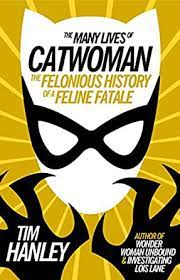
6. You make a point of putting the female portrayal within the context of the era, and it’s socio political/cultural contexts especially with the case of Catwoman-40s noir femme fatale, post war assertion as a damsel/Batman admirer, campy 60s hijinks, disappearance and more independent yet sexy reappearences in the 90s-now.
Would you say the portrayal of women in comics is influenced by what society thinks women should be like? Or the comics influences society’s perception of women? Or a bit of both?
I see superhero comics as a representation of dominant gender roles in society for each era, both intentionally and not. They’ve been written, drawn, and edited by middle aged, straight, white men for most of the past eight decades, created to be unobjectionable stories for kids primarily. As such, what we get is a representation of society from this limited viewpoint, a sort of time capsule of how men viewed women. So in the 1950s, for example, Lois Lane was an ace reporter, sure, but what she really wanted was to marry Superman. Interestingly, though, her constant frustration with her life served as an unintentional critique of gender roles in this era; she was frustrated and crying all the time because of Superman’s treatment of her, which perhaps accidentally suggested that this treatment, and the gender roles of the era more broadly, were harsh and unpleasant.
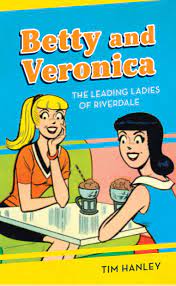
7. As you noted in Leading Ladies of Riverdale, the Archie Comics Co. is fiercely protective of its works such as when they threatened a young Roberto Aguirre-Sacasa (now creator of Riverdale tv series and several Archie horror titles) with litigation for using the characters in his play. How did you do your research to get the whole story of the company’s works rather than just the sanitized version?
Every comic book publisher has a sanitized story of their history that disguises the fact that publishing has been a cutthroat business from its earliest days, especially in regards to creators’ rights, and that the corporations that later bought them are very protective of their property now. Luckily, the fandom is broad and curious, and have spent decades compiling the true stories of what’s gone on behind the scenes. Very little is a mystery, despite publishers’ attempts to present alternate viewpoints. If you know where to look, what histories to read, what fan magazines to consult, you can find out what really happened. Or, at least, clues to what really happened that send you off to research them further!
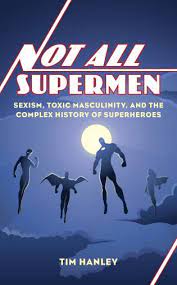
8. Talk about your upcoming book Not All Supermen?
Not All Supermen is a history of the superhero industry and its fandom that traces the sexism and toxic masculinity inherent in the genre. It starts with Superman in 1938 and goes from there, explaining how canon and nostalgia have cemented antiquated approaches to gender and limited both the roles of female characters and expressions of gender. The sexism wired into the industry grew into toxic masculinity over time, especially in terms of gatekeeping, misconduct by creators, and fan movements based on harassing marginalized creators and fans. Beyond these obvious bad actors, sexism is so intrinsic to superhero comics that it permeates the genre in subtler, more insidious ways, so commonplace that it seems normal. Not All Superman aims to uncover this history, revealing how the industry got to this state and what can be done to make it more inclusive and welcoming moving forward.
9. It’s easy to believe that comic book sexism is rooted in the past. After all we don’t have Superman spanking Lois Lane anymore, and we have more female creators, but why do you believe such tropes like Stuffed in the Fridge and oversexualization still persist?
It’s because it’s so common and because it sells. Oversexualization will never go away entirely, probably, since there will always be a segment of the fandom that wants that. But hopefully we’ll move beyond superheroes being JUST that and instead have an array of artistic and stylistic approaches. In terms of Women in Refrigerators, that sort of shocking storytelling where women are sacrificed to further the narratives of male characters is an easy framework to return to. Male heroes dominate the genre and female characters are still seen as disposable sometimes, and thus we return to these tropes for big events that need a shocking twist. The industry has been starting to move away from this particular trope lately, but it’s been such a mainstay that it still crops up.
10. What makes it so interesting for you to explore the superheroines as compared to the dirthe of essays on heroes?
We know all about the heroes! So much has been written and said about Superman, Batman, and the like. We understand the stories AND the stories behind them in immense detail. The heroines don’t get that same treatment, and I think it’s fascinating to dig into the more unknown corners of superhero history. Plus they offer new angles for approaching this history, with issues of gender that colour each of them in unique ways. I also hope that by highlighting these heroines, more people will come to love them, and we’ll begin to see more equitable representation in superhero comics moving forward.
11. On a lighter note, who is your favorite superhero/heroine?
That’s a hard choice! When you write a whole book about a character, it’s difficult not to get attached. Wonder Woman, Lois Lane, and Catwoman are all special to me, so I guess they’re my co-favourites? I’ve been doing work on Wonder Woman the longest, and she’s the character I tend to return to the most in future research, so she might be my favourite of all. But don’t tell the others!
12. You’ve covered DC, you’ve covered Archie, will you be covering other big names like Marvel or Dark Horse any time soon?
Not All Supermen branches out into some other companies, which was fun for me to research and write. Marvel plays a huge role, and I think gets as much page time as DC does. I get to spend some time with Sue Storm, Jean Grey, She-Hulk, and Captain Marvel, which I really enjoyed, and there’s some discussions of the Avengers, the Punisher, Wolverine, and more. I also get into Image Comics a bit, positioning them as indicative of the direction comics were heading in the early 1990s. I’m not sure what the future holds beyond Not All Supermen yet, but it was great to branch out a bit for this book.
You can find out more about Tim Hanley’s books, his bio and his blog on his website: https://thanley.wordpress.com/


Leave a Reply