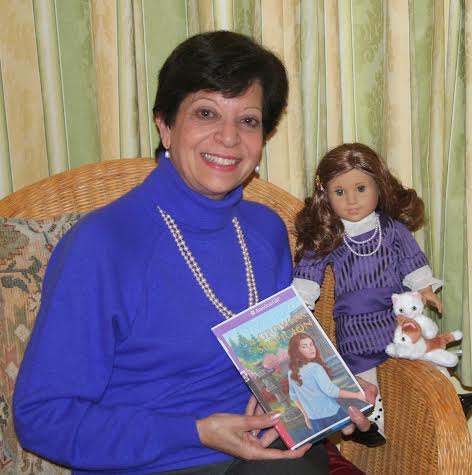
Jacqueline Dembar Greene is a writer of lower/middle grade historical fiction and creator of Rebecca Rubin for American Girl. In this here interview she talks about her inspiration, heritage and historical fiction books. She also kindly provided cover images. Please enjoy!
- What first drew you to reading? More specifically, the historic fiction genre?
Growing up in a rural town in Connecticut, there were few organized summer activities. As soon as I was old enough, I walked to the one-room library in town and brought home armloads of books. I outgrew the children’s book section rather quickly and starting taking random books from the adult section, mostly choosing titles that sounded appealing. I seemed to gravitate to novels that were set in earlier time periods, although I’d never heard the term “historical novel” until a seventh-grade teacher handed me a copy of A Lantern in Her Hand. The book had a profound effect on me, as did Johnny Tremain, Anne of Green Gables, and a host of others. It’s not surprising that I grew to love delving into past times and writing my own historical novels.
- You’ve covered many different eras from the Portuguese Inquisition to Revolutionary Paris to modern day. Do you have a favorite era, or does it depend on your mood?
I often turn to non-fiction reading, choosing books about historical events or locations that have sparked my interest. As a college French Literature major, anything about France catches my eye. Reading about Spain and the Sephardic Jews, who were part of my family heritage, has always held a special fascination. Rather than choosing a favorite time period, it’s usually a little-known historical event that spurs me on to further research until a story begins to take shape. As soon as I jump into one particular moment in time, it becomes my favorite place to center my interests.
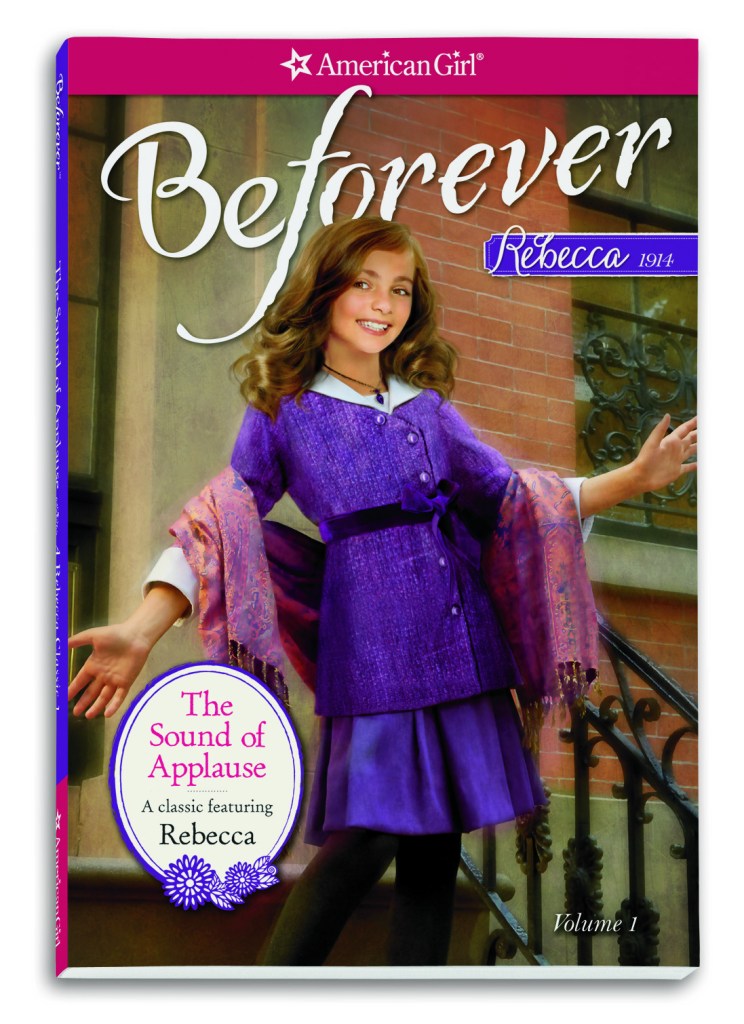
- You also created and wrote the Rebecca Rubin books for American Girl, the first Jewish historical character in the line. How did it feel to contribute your heritage to such a well-known brand?
Having two sons and no daughters, I knew almost nothing about the American Girl books. One evening, out of the blue, I was contacted by an editor there who had read my previous historical novels, Out of Many Waters and One Foot Ashore. Both have strong female characters. The editor asked if I would be interested in submitting a proposal for a new series focusing on a Jewish immigrant family. There were no other parameters except to choose a year sometime between 1880 and 1914 when immigration to America was at its peak. At first, I thought I would set the stories in Boston, Massachusetts, close to home. But as I immersed myself in the research, I realized that New York City’s Lower East Side was the most significant setting. I also learned that Russian-Jewish immigrants were the largest single group entering the country, and decided that was the appropriate background to give my character’s family. I created the characters and the plots of the six original books in the series that I wrote, as well as three mystery books, and a time travel book. Everything from choosing the year of 1914, to characters’ names, clothing, and plot twists, was based on in-depth research into the time period.
- You’ve also said that Rebecca’s story was meaningful as you interviewed your relatives to gain insight as to life as a Russian immigrant in the turn of the century. Please expand.
I had never heard many stories from my father’s Russian-immigrant side of the family. Once I began creating the Rebecca series, however, his background became a trove of personal recollections that he shared whenever I needed some extra details. My father recollected the time as a ten-year-old when he and a young cousin went to Coney Island on their own, and his fascination with the grand Ferris Wheel. He remembered incredible details about his repeated rides, as well as some of the misadventures he and his cousin experienced. His tales gave me the idea of sending Rebecca and her cousin Ana to the amusement park, with a wild adventure concerning the very same ride. Since my father and other relatives were in their 90s, I was able to hear many first-hand accounts. These stories brought me closer to my family, and gave me incredible details that figured prominently in the stories.
- Lots of your novels are inspired by the underrated aspects of Jewish history and immigration. What fuels you to highlight their rich stories?
When I was a child in the 1950s, family history was never at the forefront. Questions that I posed were rarely answered, but rather just dismissed as irrelevant. As a young adult, I wanted to learn about my heritage, particularly the nebulous Sephardic background that seemed confusing to my young mind. I had never read a book that reflected my own experiences, or that had a Jewish girl for a main character. Having the incredible opportunity to delve into these parts of Jewish history and share little-known events with young readers was always an inspiration, as well as a prime motivator.
- How do you choose which historic event to center a story on with over a thousand years to choose from?
My interests are far-reaching, and it is most often a book or feature story that initially intrigues me. Once I begin doing more in-depth research into a topic, it seems that the story soon chooses me! My first historical novel, The Leveller, stemmed from a historical piece that I wrote for a newspaper in Westborough, Massachusetts. I was enthralled with one folk character, Tom Cook, who lived in the town in the late 1700s. After writing the article, Tom Cook literally haunted my brain as if urging me to tell his story. Another time, while doing some reading about children who were taken from their families by the Inquisition, I was lost in that past world. Suddenly, it seemed as if two sisters, Isobel and Maria, walked into the library, sat down at the table where I was working, and expectantly waited for me to write a book about them. Even imaginary characters can be persistent and demanding!
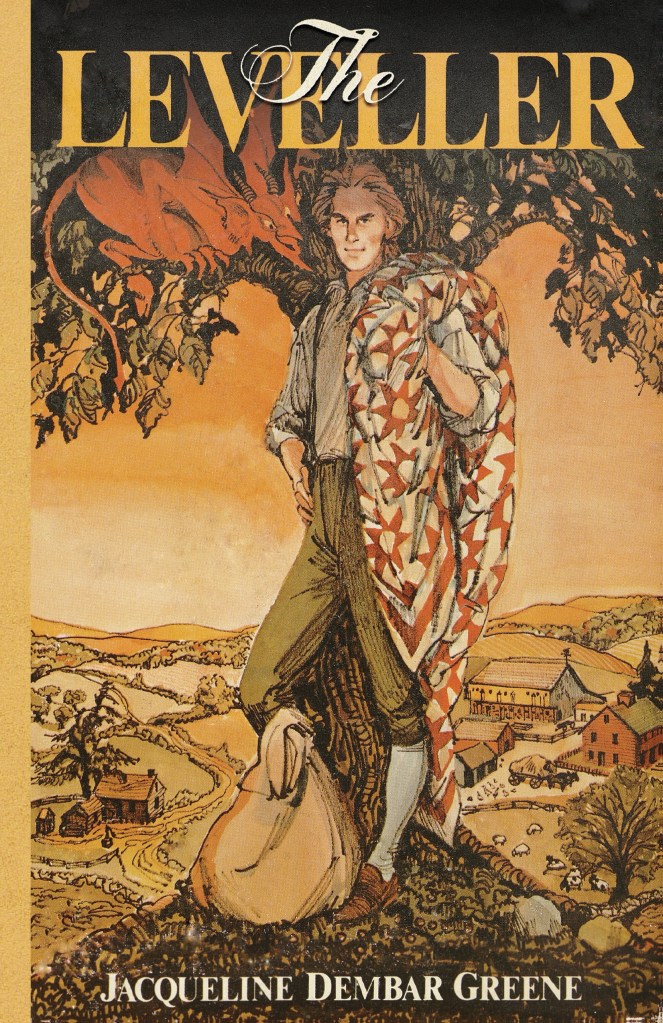
- The Leveller novel has a Robin Hood-esque protagonist who grapples with the Devil for his heavenly soul. What fun to combine historical fiction with a fantasy flair. But you also tackle complex questions of what makes a man good or evil, divine or sinful. How did you manage a nuanced ambiguous character for middle schoolers?
Tom Cook was a legendary figure during his lifetime– and beyond. Many of the townspeople in 1700s Westborough, Massachusetts believed Tom’s mother had sold his soul to the Devil in return for his recovery from a childhood illness. From then on, Tom was ostracized, living on the fringes of society. He claimed that he stole from those who had too much, giving what he took to those who had too little, thus leveling off people’s fortunes. Those in authority, however, felt he was a common thief. When apprehended, Tom always found a mysterious way to escape, fostering fear among those who tried to bring him to justice. I knew that there was no supernatural assistance, but that instead Tom must have possessed great wit to outsmart any who tried to hold him. In writing the novel, I had to walk a fine line between what people believed, and what Tom had actually orchestrated. The question of when a theft is a crime, and when the rules might be bent, is a thorny one. Rather than try to take sides on the issue, I wanted young readers who are beginning to see nuances between what is right and what is wrong, to ponder Tom’s situation and think about questions that have no simple answers.
- Your book, The Triangle Shirtwaist Factory Fire and The 2001 World Trade Center Attack are squarely non-fiction. Does your writing process/narrative tone change from when you do historical fiction?
I worked as a news and feature reporter for nine years before I turned to writing children’s books. I discovered that my favorite news stories were features where I could introduce readers to everyday people who had accomplished or experienced something extraordinary. In writing non-fiction books for young readers, I use the same approach. I choose a real person who can carry the event from the first page to the ending. In between, I try to add the experiences of others affected by a historic event. As with fiction, I am trying to draw a reader into one moment in history and give them the opportunity to experience the event vicariously. While the facts can be straightforward, people’s lives never are, and that is what should make the book engaging. In the end, I also hope to introduce a positive aspect to the outcome, even from a major tragedy. To paraphrase Mr. Rogers, it’s always life-affirming to look for the “helpers.”
- Who is your favorite character out of all of them is cliché. So I’ll ask a different one. Many of your protagonists do courageous acts as they seek lives of freedom, usually religious freedom. Are there any particular traits you admire from each or any of your protagonists?
In one of the Rebecca Rubin stories, Rebecca is reading a book about a character who is quite brave. She tells her grandfather that she could never match such actions. Her grandfather says, “Courage comes when you need it,” and I believe he is right. As a girl, and even as a young woman, I didn’t realize the abilities I had, if only I reached deeply for them. But as life hands you challenges, you discover inner resources you never knew you had. I love it when my characters rise to meet just such challenges, and grow into the more confident people they are becoming. I hope it gives my readers confidence in their own strength, as well.
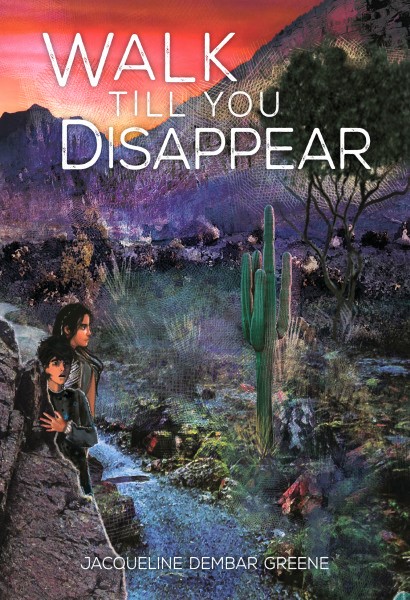
- Your latest book, Walk Till You Disappear focuses on two lesser known groups. That of your main character, Miguel, who is a Spanish Jew, and the Tohono O’Odham runaway, Rushing Cloud, all set in 1872 when Arizona was just a territory. What is the main message you want readers to take away from this book?
As with the complex questions raised in The Leveller, I like to bring up situations that spark thought and reflection, while trying never “teach a lesson” to my readers. I trust them to bring their own experiences and ideas to a story, and draw on those to see the world more clearly, or from a different point of view. In Walk Till You Disappear, I drew on my interests in Native American tribes, and their experiences with the Spanish conquistadors, to suddenly see connections between how their lives and beliefs were impacted in similar ways to those of the Spanish Jews. The Inquisition and its ideas and practices were insidious and came with them to new lands. Miguel Abrano’s world seems to dissolve when he learns of his Jewish heritage. His view of “Indians” is that they need to be civilized, and converted to Christianity. But that comes into doubt when he is captured by a band of Apaches, escapes, and encounters a young man from a different Arizona tribe. Their companionship as they traverse the desert trying to return to their families leads Miguel onto a different kind of journey. Readers can question what heritage means, how we understand our ancestors and their lives, and whether outsiders have the right to impose their beliefs on each of us. It is a universal conundrum, and a timely one, as well.
You can find information, books and more on her website: https://www.jdgbooks.com/ and check out her latest book, Walk Till You Disappear in stores and online.


Leave a comment