-
12 to 22 Review
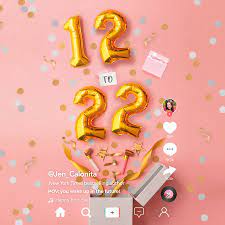
You might be able to guess from the title but this middle grade book brings its own tiktok take on the feel-good movie, 13 Going on 30. I’m surprised it hasn’t been done before since it’s so beloved. At least it’s something new from the constant variations of Freaky Friday.
Harper Lancaster is thrilled that on her twelfth half-birthday (because half birthdays are a thing in the Lancaster household since Harper’s actual birthday sometimes gets swept up with Thanksgiving), her parents finally allow her to join the 21st-century and post on her tiktok account instead of lurking on others. Now she can spread her lip-sync videos and share affordable make-up tips while rocking out to Taylor Swift. She might even get a like from her idol, Blake Riley.
But not everything is so sweet on her half-birthday. Even though she gets almost three thousand followers in one post, she’s still being treated like a little kid by her parents. She can’t go into a dog-walking business with her best friend even though she’s responsible enough with her baby sister and her dog.
Her best friend and her are fighting over Celia Darrow. The most popular girl in school who invited them to her birthday party. Harper secretly wants to be her and join the coveted Cambridge Street Girls group but Ava just thinks she’s a phony.
Worst of all, Ava is right when it is apparent that Celia was forced to invite Harper and Ava on request from Harper’s mom who got the party reservations at the exclusive Sugar Crazy.
Harper doesn’t want to ever show her face at school again. She wishes she can be older, that she could be 22 as Taylor Swift sings about. Harper wants to fast-forward to a time where she is living on her own, confident, having a magical and wonderful time on her own terms. Instead she’s stuck at 12 limited by parents and rules and her own insecurities.
So she makes a wish on the birthday wish filter on tiktok. The crazy thing is, it works.
(more…) -
Author Highligt: Maurene Goo
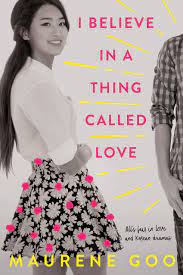
Desi Lee is a straight A, type A, school president, Standford dreaming nerd. Basically she’s winning at everything in life with waaay too many extracurriculars and an almost encyclopedic/photographic knowledge of obscue things from Middle English to trees to cars, the latter thanks to her mechanic father. When she was little, she convinced herself that if she used her mind hard enough, tried hard enough she telepathically moved a pencil.
That opening scene really highlights the kind of mindset Desi has. That’s why it sucks that the one thing she fails at is in love. I mean she really fails. Her friends have dubbed it flailing because she’s flails and fails that bad every time from phgleming on a cute boy’s shirt to her pants dropping in front of another one.
So yeah, she’s pretty unlucky when she’s in a crush’s vicinity thus she has had no boyfriend ever. But as senior year comes to an end she decides she’s going to put an end to that flailure. Inspired by her father’s addiction to K-dramas and her own need for rules and steps, she will use their formulaic set-up to get close to Luca Drakos and fall in love.
As you can imagine with this sort of concept hijinks ensue with intresting results. With steps like get into life threatening danger, there are consequences that Desi really should have forseen for a future Standford scholar. But she’s infautuated so I’ll hold my disbelief. Though it does help that Desi feels guilt and is a bit self-aware of her craziness even though she decides to go through with her plans. It is a sign of a Goo’s skill that she managed to keep me on Desi’s side even though when said outloud Desi sounds like an obsessive stalker.
It helps that Goo writes with humor that not only made me smile but I actually laughed far too loundly in public. Not just from Desi’s humiliations but her relatable dry wit.
She also skillfully creates a warm relationship between Desi and her father, the two leaning on each other, trying to take care of everything themselves not to burden the other with their grief over Desi’s departed mother. Desi’s grief is actually an important plot point here tying her obssessive planning and her type A tendencies as a shield from the grief that she still can’t quite admit.
Goo also creates a lovely friend trio for Desi with two skilled flirts, Fiona and Wes who chide and help Desi with her plan yet remain their own people as Desi makes an effort to not get entirely consumed with Luca. I only wish there had been a bit more with them.
Now you might think I haven’t been mentioning the couple because I don’t like them together. Untrue. Luca and Desi were really enjoyable together and despite the manipulative way Desi orchestrated their first few meetings, they do have stuff in common that make it enjoyable to see them so happy. Luca helps Desi relax her perfectionism and Desi is a good sounding board for Luca’s parental troubles and artistic pressures. Plus, Luca initially seems like the perfect dream boy for Desi but as she and the reader comes to learn, he has his own flaws too turning this from fantasy to real life romance.
Additionally, the end has some K-Drama recommendations from Goo and her friends, highlighting the variety of the genre from contemporary romance to historical romance to historical romance with time travelling action to contemporary with military setting and so on.
The one nitpick I have is the denounment action in the classic girl loses boy and must win him back. It’s a bit out there and felt too manipulative and crazy just as when Desi resolves not to use the K-drama steps because they caused all the problems in the first place. If you can ignore it, it makes a nice book but I felt a little let-down with that scene.
(more…) -
Dark Ascension: The Wicked Ones Review
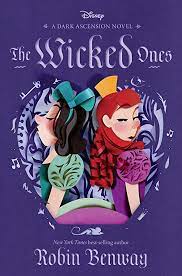
This new series brings readers the origin stories of some of Disney’s most notorious villains. Okay, they already have several books focusing on this topic but Benway’s book is more focused on a canonical reasoning for how the Tremine sisters became the ugly steps they are. There’s no really lame cause (hello Dalmations pushing Cruella’s mom off a cliff. What were they thinking?) but an actual realistic one centered around the themes of abuse, bringing readers to sympathesize and understand them as their hearts turn wicked.
(more…) -
Hunger Games Review
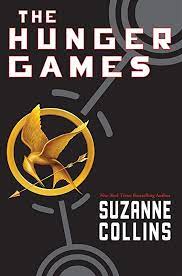
Now this is a long-time coming as I had enjoyed the movies in middle school but committed the carnal sin of never having read the books. Time to rectify that. Of course, since I saw the movies I have a basic idea of what happens but its been years so it will be sort of new-sort of familiar.
Also, since it was a world-wide phenomena the reviews will be shorter, focusing more on my the reviewing and my thoughts rather than full on summaries and recaps of the events.
(more…) -
Archie’s Valentine’s Spectacular Review
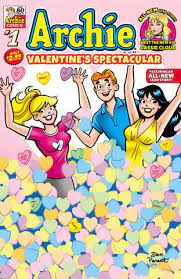
Featuring a brand new story with a brand new character, everyone meet Cassie Cloud! Taller than most of the teens in Riverdale with brightly-hued hair, Cassie is someone who can see past appearances and reputations as in the case of Rotante’s More Than Meets the Eye: Rise of the Short Kings!
It’s a cute story that manages to organically introduce this new character while bringing back some old ones like Simon (aka Reggie’s nightmare Prankenstein) and Toño. It’s been forveer since I’ve seen Toño! It also plays very straight to the title as the girls find out that even though Cassie is fun and cute and has the attention of all the guys, she prefers “the nerds” whose compact frames hide talents and skills all of their own. And make the girls appreciate them as well much to the Archie, Reggie and the other’s ire.
Holly G. also returns as it feels like it’s been forever since we’ve seen her cool art on Archie pages. So overall, very satisfying debut just for Valentine’s Day.
The other classic stories were well-chosen for the sweetheart’s day theme with a few I’ve never read before like Sweets to the Sweet which Jughead builds his own racket of chocolate gifts by reminding the girls of the fattening content and Out of Tune where Veronica’s romantic serenade turns out to be not so original after all.
Happy Feburary and I can’t wait for more romantic hijinks to come from Riverdale’s lovestruck teens.
-
January Books 2023
TJ Powar Has Something to Prove by Jesmeen Kaur Deo
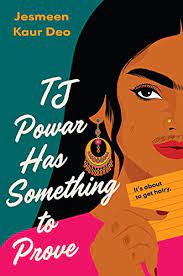
This debut novel tackles several issues that are rarely discussed in YA due to the stigma and shame surrounding it, and that’s why it is needed. TJ Powar is the school’s reigning debate champ alongside her cousin, Simran. She’s also considered one of the prettiest girls in school, scout-impressing soccer player and one half of the school’s power couple. So yeah, her life’s pretty great even though she’s starting to feel more of a pull to her debater side than her soccer dreams.
But that’s not the inciting incident.That would be when after her big win, the school newspaper takes a pic of her and Simran side by side which then produces a cruel meme pointing out Simran’s body hair, calling her a male, a gorilla and worse. Though Simran tries to let it slide, TJ can’t. Suddenly, she cannot unsee the unfairness and cruelty that people think Simran is ugly just because of body hair. That even her boyfriend looks at her in disgust when she mentions that she hasn’t had a Brazilian yet.
So inspired by her debating experience, she resolves not to shave because The House Believes Believes That TJ Powar can be her hairy self and still be beautiful.
There starts an eye-opening experience from friends shunning her to her boyfriend dumping her as well as TJ’s own conflicting feelings regarding her beauty and her dedication to her belief.
Deo doesn’t shy away from exploring the double standards regarding body hair. How it directly relates to views of gender- an shaved boy is considered more feminine and a hairy girl looks manly. That part of it is influenced by the corporate beauty industry where shaving products don’t even show the hairy skin because it’s just too ugly. That it’s considerd unhygenic and unprofessional among a whole host of reasons in order to perpetuate the myth. That POC are disproportionately affected with their body hair being more coarse, more visible etc.
But don’t worry, it’s not advocating for everyone to go free with their armpit hair but highlights its all related to what feels good for a person themselves though we shouldn’t cruelly calling others gorillas in the meantime.
Deo also takes full advantage of the debating extracurricular TJ is involved in, not only setting up a sweet romance but discussing the various types of debates and an impressive speech regarding how outer beauty/first impressions is more important to inner beauty (though it shouldn’t be) and the corrolating effects on the industry and self esteem of the population as a result.
Deo does a good job in creating a believable character arc for TJ, one involving her own selfishness and world revolving around her mindset, as well as her competitive nature that nearly torpedos her relationships. She opens her mind which is something I can always get behind in a protagonist. However, the focus is mainly on her friends and romance. There is an intriguing familial subplot involving her mother’s estrangement with her aunt that is minorly resolved (and reflects the topic of the book) but I wanted a bit more to be done there.
Another minor nitpick is that the book is mainly in third person. Maybe it’s because I’ve been reading so many first person or third person omiscent book but just the third person narrative felt simplistic. Although I was able to ignore that as the plot sucked me in.
(more…)#frankw.baker, #graphicmemoir, #graphicnovel, #graphicnovels, #harpercollins, #historicalfiction, #jesmeenkaurdeo, #megmedina, #memoir, #playingwithmyself, #rachelreads&reviews, #randomhouse, #randyrainbow, #st.martinspress, #timogline, #tjpowarhassomethingtoprove, #vikingbooksforyoungreaders, #wesurvivedtheholocaust, #wonderandimagine, #YA -
Archie vs the World
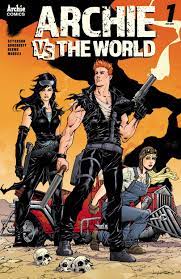
It’s the 400th post already! I know I’m surprised too, and it’s not even this blog’s anniversary. Anyway, I thought I’d do another Archie post for the occasion and what better choice than the latest, epic one-shot Archie vs the World!
Since the editors so enjoyed the team of Aubrey Sitterson’s writing and Jed Dougherty’s beefy art, the duo return with this Mad Max/North of the First Star-inspired tale of a flaming Archie, and grizzled Jughead venturing the desert wasteland to rescue Veronica after the apocolypse.
But that’s not all, they contact the mystical sorceress Sabrina for advice on what Archie’s path shall be after being bestowed with powerful and destructive gifts, whether he shall always be alone and he fights against his rival Reggie whose egomaniac yet suicidal tendencies make for some knock-out brawls that splatter the pages with blood. Seriously, the art just jumps out at you.
There’s plenty of fun cameos from the rest of the Riverdale gang in Mad Max-esque style like a destroyed Weatherbee, dueling Cabot twins, hulking Moose, Jughead vs Toni and so on.
And then there are Archie’s girls who come together at the end of the battle with three choices for Archie. Much like Paris choosing which goddess to give the golden apple, Cheryl offers power, Veronica says she’ll give him wealth and Betty has neither but happiness. Power, Wealth, Happiness. . . Which one will Archie choose, Jughead intones. And in this barbaric world, the stakes are higher than ever as this choice more than any death match will decide Archie’s destiny.
Well I’ll leave readers to find out the final decision for themselves but they’ll surely enjoy the wild ride as they do so.
But just like I have said in my other reviews of Archie one-shots, I just wish they were longer. I know it goes against the whole one-shot thing but I feel like it could get more in-depth and more exciting if they explored the lore of this post-apolocyptic world instead of montages giving just enough hint and new character designs for readers to want more.
The editor’s note had mentioned they originally planned it to be a new universe before cutting it to a one-shot so maybe mass fan-feedback could bring it back or at least give more character designs. Write down your thoughts on social media under the #Archievstheworld to let the company know!
-
Nancy Drew ReRead Part 1
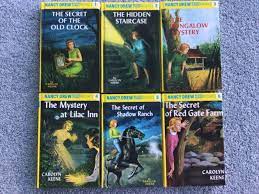
Ah Nancy Drew. The girl detective who basically set the mold for girl detective. I’ve always wanted to finish this series but never got around to it because I wanted too read it in order and th elibrary always had the next one checked out or something. That’s still the case but I’m going to take what I can. This part one focuses on the Nancy Drew books I was able to find in the university library so it skips around in the series which is no problem since they are pretty stand-alone.
Here I was able to read the first six books-The Secret of the Old Clock, The Hidden Staircase, The Bungalow Mystery, The Mystery at Lilac Inn, The Secret of Shadow Ranch, and The Secret of Red Gate Farm.
Followed by several that hop around in the order of the series like The Haunted Bridge, The Clue of Tapping Heels and The Mystery of the Brass Bound Trunk. Next came some in the 20s, 40s and 50s like The Mystery of the Tolling Bell, The Secret of the Wooden Lady, The Mystery of the 99 Steps, The Invisible Intruder, The Crooked Banister, Mystery of the Glowing Eye, The Secret of the Forgotten City and The Sky Phantom.Since each story is pretty formulaic and stand-alone I’m just going to detail general thoughts I had as I read.
(more…)#carolynkeene, #middlegraded, #mysteryofthe99steps, #nancydrewmysteries, #rachelreads&reviews, #thebungalowmystery, #theclueofthetappingheels, #thecrookedbanister, #thehauntedbridge, #thehiddenstaircase, #theinvisibleintruder, #themysteryatlilacinn, #themysteryofthebrassboundtrunk, #themysteryoftheglowingeye, #themysteryofthetollingbell, #thesecretofredgatefarm, #thesecretofshadowranch, #thesecretoftheforgottencity, #thesecretoftheoldclock, #thesecretofthewoodenlady, #theskyphantom -
When Dimple Met Rishi Review
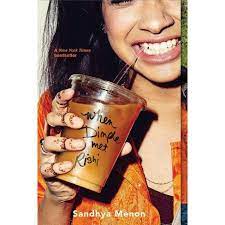
This was a sweet romance coming from one of the most unexpected (and worst) first meetings. Rishi Patal comes up to introduce himself Dimple Shah, joking about starting their lives together as future husband and wife. Understandably, she not knowing who this wacko is, throws coffee in his face.
Let’s back up a bit.
(more…) -
Beautiful Creatures Review
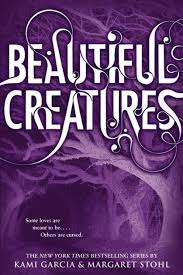
I’ll admit I’m not coming to this blind as I read the sequel series first (I know, I know but Link and Ridley’s prologue for Dangerous Creatures was so much more intriguing to me than this one) and I saw the film adaptation when it first came out which is why I read said sequel series and um. . kinda skimmed these.
Well now, I’m starting a true read and I must Garcia and Stohl really know how to craft a world.
(more…)
-
Subscribe
Subscribed
Already have a WordPress.com account? Log in now.
 Rachel Reads & Reviews
Leave a comment