-
Happily Ever After Review
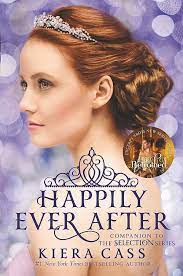
This is a delightful collection of Cass’ Selection novellas with bonus scenes and alternate POVs of events from the original trilogy, and really pretty illustrations giving a better glimpse of the characters.
(more…) -
The Crown Review
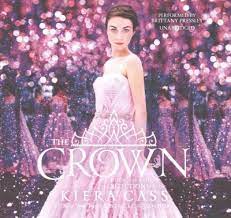
Since her mother’s heart attack, her father looking like he’s about to have a heart attack, and her recent decision to embrace the idea of love, Eadlyn has decided to step up. She will start representing Illea for the first time on her own, and she’s not going to end the Selection with an engagement. She’s going to get married. Finally, she’ll be able to win over the public.
But the one she loves isn’t one that will be accepted by Illea’s public, and with a dark horse threatening overthrow unless he’s chosen, Eadlyn is
(more…) -
The Heir Review
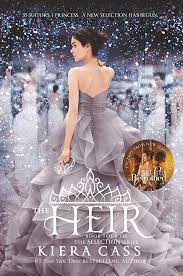
About 20 years since King Maxon and Queen America’s love story, Illea has made close allies, been involved in no wars and peace reigns. Somewhat. Even though the caste system has been eradicated, post-caste discrimination is still a major issue, with minor riots spilling out and discontent aimed at the monarchy is making the palace wary.
So to combat the low morale, Maxon and America ask their heir to do the Selection. A historic first since it will be the first female-led Selection. They hope it entertain the masses, and provide enough of a distraction for them to figure out how to resolve this complex issue.
As the heir, Eadlyn has long resented that her life is not her own. Everyone else may be able to choose their careers, their futures in life, but she is bound by duty. Now, her love life is going to be thrust upon her too?
Moreover, Eadlyn doesn’t really want to marry anyone. She’s going to be queen, and having a husband will only diminish her authority and weigh her down with emotional chains.
She has a plan to fake it while driving all the men away, but love has that sneaky way of getting past the toughest walls.
(more…) -
Book of a Thousand Days Review
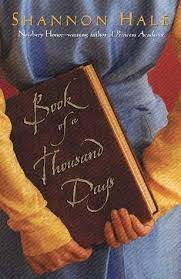
Well then, I think I finished the Shannon Hale fairytale catalogue and like Gail Carson Levine, she should be applauded for her creative twists on classic tales while paying homage to the darker elements of the originals and bringing her vivid descriptions of nature blending in with magic.
(more…) -
What was the first horror book you read?
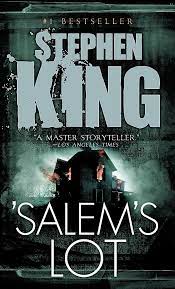
Mine was Salem’s Lot which was a gift from a friend for my 13th birthday. Apparently, she thought my interest in celebrity ghost stories and reincarnated ghost children extended to horror in general which is not really true. Psuedo-documentaries of real life hauntings I can handle, horror movies and books not so much.
But I did read this because hello, Stephen King and the book wasn’t as bad as I was expecting (and by bad I mean causing me nightmares, not the literary merit). It takes a typical horror plot with a standard horror lead (According to Hendrix’s awesome deep dive into horror pulp Paperbacks from Hell which I recommended last year): Ben Mears has returned to his childhood town of Jerusalem Lot, ME to write about the haunted Marsten House that traumatized him as a child. But there’s more than just the creepy Marsten House that has Mears spooked this time. Locals are disappearing and seemingly returning in the dead of the night to bring more into their nest of vampires.
Yep, it’s vampire attack season y’all, and Mears turns into the ripped spontaneous action hero he was born to be, giving up his old job to take on the more exciting, never ending battle with the undead for this tiny town.
Another thing I must confesss was that I was completely surprised by the vampires. Maybe I was in denial, maybe I just thought King didn’t do vampires, but I completely missed all the clues up to the big reveal. It’s funny now but I remember I was disappointed at the reveal because vampires had been a big trend in the early 2000s-10s so this felt like a cliche. Of course, Kinbg wrote this in the 70s so I’m sure it was more intriguing then but I guess trends are cylical like that.
So yeah, that’s the story of the first and to this date, only horror book I’ve read. Comment below about yours!
-
Sept Books
Fatima Tate Takes the Cake by Khadijah VanBrakle
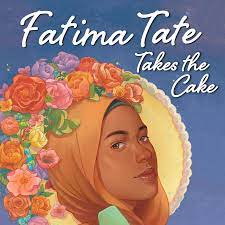
Fatima Tate is a good Muslim daughter although her desire to become a professional pastry chef and opening a bakery is not on her parent’s agenda for their daughter’s good future.
But that’s just the start of Fatima chafing against the rules. She’s going to be going to college next year, she wants to make her own decisions.
So that’s part of the reason why she accepts Raheem’s invitation to drive her home after their work in the soup kitchen. She’s been daydreaming that he’s a Muslim Prince Charming and he truly seems to fit the bill. He’s kind, he’s considerate of her feelings and boundaries, encourgaing of her dreams of baking, he charms the pants off every adult he talks to.
It was only one clandestine meeting but the spark is undeniable and before Fatima knows it, she and Raheem are engaged! It’s a dream come true but as Fatima gains the courage to secretly compete in a cooking competition, Raheem’s sweetness turns into jealousy and possessiveness and Fatima’s desire to appease leads to a little situation that allows him to blackmail her or fear familial disgrace.
(more…)#adialsaid, #akemidawnbowman, #allyouhavetodo, #anathologies, #anikafarjardo, #anthem, #areyoutheregod?itsmemargaret, #autumnallen, #blackrosewriting, #bloomsbury, #boundless, #candlewickpress, #chriscolfer, #claireforrest, #comingofage, #davidbowles, #dcink, #deborahwiles, #dragonkiss, #e.d.baker, #emikojean, #ericsmith, #erinentradakelly, #fantasy, #fatimatatetakesthecake, #feiwel&friends, #gabrielpicolo, #goldymoldavsky, #graphicnovel, #guadalupegarciamccall, #harpercollins, #historicalfiction, #holidaybooks, #i’dratherburnthanbloom, #I.W.gregorio, #inkyardpress, #ismeewilliams, #jasminewarga, #judyblume, #kamigarcia, #karenyin, #khadijahvanbrakle, #kindofabigdeal, #kokila, #lorielryon, #lowergrade, #macmillian, #magicalrealism, #magichasnoborders, #melinamangal, #middlegrade, #nafizaazad, #nasgraqraineyhopson, #nazkutub, #nikitagill, #oliviachadha, #parallellines, #preetichhibber, #rachelreads&reviews, #randyribay, #rebeccabalcarcel, #robin, #ruthmarkseglash, #sabaatahir, #samiraahmed, #sangumandanna, #sayantanidasgupta, #scholastic, #secretofthemoonconch, #shannonc.f.rogers, #shannongibney, #shannonhale, #shreyailaanasuya, #sixtiestrilogy, #sonacharaipotra, #squarefish, #struckbylightning, #swatiteerdhala, #tahirabrar, #talesofthefrogprincess, #tanzaniabhathena, #tarasim, #teentitans, #thedragonprincess, #torreymaldonado, #traceybaptiste, #veerahiranandani, #whereyouseeyourself, #YA, #yearling -
The One Review
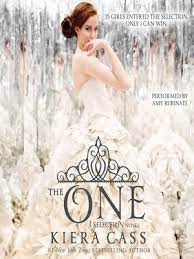
35 girls enter, four are left, and only one can wear the crown.
Of course, we already know who that one is but the journey America takes as she inadvertedly starts a revolution prompts . . . conflicting feelings.
Since King Clarkson threatened America in the previous book, she’s been on her best behavior and fully committed to Prince Maxon after her annoying indecisiveness.
But King Clarkson is trying his best to slip her up, throwing challenges that will test her moral compass and surpress the growing rebel movements that grow stronger every day.
It is with these two intense plot-threads that lead to two conclusion: America and Maxon make a cute couple, but America would make an awful queen.
Cass can write an intriguing, pull-you-in romance, but she is not so good at world building or revolutions.
Spoilers below
(more…) -
Ranking W.i.t.c.h. arcs (again)
I know I said I’d redo this once I read all the arcs but since arc 10 and arc 11 aren’t going to be published until next year, I decided just to add my thoughts on Arc 9 now before I forget it too much. Unfortunately, it ranks the very last as I’ll explain below.
(more…) -
Ranking The Sisters Grimm
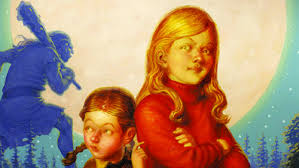
I think most people know this series as it’s one of the more popular fractured fairytale series, and deservedly so, with Buckley’s sincere pathos, humor and adventurous escapades.
But for those not in the know. Sabrina, and Daphne’s lives have turned for the worst in the past year, bouncing from awful foster situation to Dickinsinian orphanage after the mysterious disappearence of their parents. Finally, they are claimed by a grandmother that they thought to be dead. Clearly, she’s a psycho as she not only says she’s their grandmother but that almost everyone in the small town of Ferryport Landing is a fairytale character. Oh, and the girls are descendants of Jacob Grimm, and will join the family’s long history of fairytale detective work.
She’s nuts but Sabrina is forced to admit that Grandma Relda may have a point when she gets snatched by a giant. From there, it’s all fairies, jabberwockies, big bad wolves, and followers of the Red Hand as the family works on their cases and find out about the conspiracy that shakes Ferryport to its foundations.
(more…) -
Ranking Sisters of the Quantock Hills
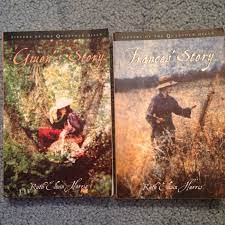
In the midst of of WW1, the four Purcell sisters come of age in the backyard of the local pastor’s family, the Mackenzies finding love, fufillment, and venturing out to the big world after their parents’ deaths.
- Frances’s Story: As the eldest, Frances is the most driven to provide for her sisters as well as pursue her own art. In fact, she’s been accepted into one of the most prestigious academies for art despite her age, gender and lack of finances. She knows there are a lot of barriers in her way, so she works doubly hard to prove herself. But therein lies the conflict for most of the book as she longs for the boy next door, but her mother’s prophetic words that she’ll lose her art if she marries, has Frances closing herself off. That single-mindedness makes her quite unlikable in other books as she dismisses everyone else, and it hurts to see her be so stubborn and hurtful to Gabriel and herself, unable to reconcile that she can have love and art. But you can understand her struggle as she tries hard to keep it together all the time, and make it in a difficult field. This messy internal struggle makes for a fascinating read along with the devasting backdrop of WW1 as the locals realize that this war is not long the ones before, it is far more devasting than they could imagine and will truly change the world as they know it.
- Julia’s Story: While Frances’ story is on the homefront, Julia decides to go and help those on the front lines. Heading up as a nurse allows her to be close to Geoffry but as the war continues Julia experiences loss and horror that she’ll never be able to share with her sisters when she comes home. Harris goes in-depth in describing the suvivor’s guilt, shellshock and PTSD, the soldiers and nurses deal with during the war as well as the isolation afterwards that estranges Julia from the rest of the Purcells who can’t understand the things she’s seen. The story is also unique in that it deals with the grief after Geoffry’s death and how it haunts Julia’s life and marriage afterwards, encouraging communication and healing with her current husband as she tries to let go of her first love. While the previous book highlights Harris’ character skills, this novel shows off her imagery and descriptive skills as you feel you’re there in the shambled tents and battle-scarred lands.
- Gwen’s Story: Gwen has always been the most introverted and sheltered of the sisters, preferring to putter in the garden. Her boyfriend, Anthony, goes as far as accusing her of cowardice and hiding from the world. The final words he says to her before dying in a dogfight during the war. So when the disturbing murmurs of WW2 approaches, Gwen is determined to do something. It’s almost a full circle redemption as the the new war begins, allowing Gwen a chance to risk her life and ideals for strangers she never met. By forcing her out of her comfort zone, Gwen is able to truly live for the first time. However, this book is more slow than the others and the action only appears in the end, making Gwen’s development feel rushed.
- Sarah’s Story: Sarah’s a preteen during her story, slowly realizing how unfair the world is as the country pitches into WW1. Unfortunately, Sarah’s age makes her oblivious and uninformed about the big events around her, relying on readers to pick up the historical context and subtext that Sarah is missing. It’s a coming of age story as Sarah struggles through her education without the class or means of her fellow students, but it’s so trite compared to what’s happening around her.
-
Subscribe
Subscribed
Already have a WordPress.com account? Log in now.
 Rachel Reads & Reviews
Leave a comment