-
Ranking The Hero’s Guide trilogy
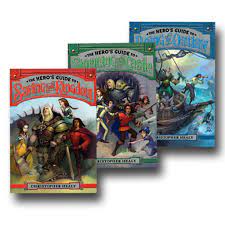
Everyone knows the story of Cinderella, Sleeping Beauty, Rapunzel and Snow White, but the truth is the bards got a lot wrong. For instance, all those Princes Charmings have a name, and their stories have cast them aside in various embarassing ways.
But it’s not the annoying songs that bring the princes together. That all starts when Prince Frederic drives off his Cinderella with his dainty, safe (aka boring) lifestyle. Determined to prove his mettle, even though he doesn’t know how to ride a horse, he goes after her and meets up with Gustav, Duncan, and Liam and they all end up in a convoluted plot headed by the evil witch Zabura to destroy the kingdom.
Through a variety of mishaps, failures, so many failures, the League of Princes is born and so much fun on the way. And maybe, just myabe these brash, arrogant, cowardly, silly princes can become heroes.
(more…) -
Spare me your Revenge
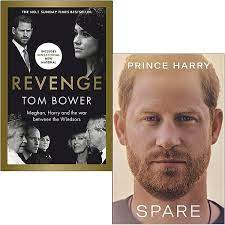
You know how sometimes you see a passing feud on a tabloid and you get into it? Like it’ so vapid, so irrelevant to your own life but somehow you managed to not only read that article but then go into the rabbit hole of everything in that feud to the point that you can give a 12 point arguement and essay about said feud just to satisfy your own feelings that you’re right about “your side”?
Okay, maybe I’m the only one whose done that but I don’t think so. I may not have gotten into the Miley-Selena-Taylor-Demi feud or Nicki vs Cardi or whatever else, but this one got my attention. Which is weird because I only got into it way after Megxit and the Netflix interview and whatnot. But it got my attention and damn, it’s one ridiculous scandal after another.
Now I have already formed opinions, but in the name of fairness I tried to as objective as possible as I read these books. So let’s start with the good parts of Prince Harry’s memoir, Spare.
(more…) -
Emerald Green Review
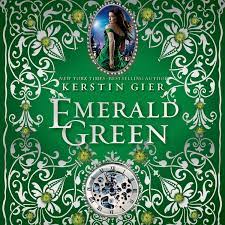
After finding out that Saint Germain and Gideon have been manipulating her this whole time, though she still doesn’t know why or what’s the endgame, Gwenyth just wants to wallow in her heartbreak.
But her friends, Lesley and Xemerius will not allow it. Now, they’re just a few clues from finding out where the treasure chest Lord Lucas (Gwenyth’s grandfather) hid and the final revelations may be so Gwenyth can finally know who is the real bad guy.
The meaning of the prophecy turns out to be much more fatal than Gwenyth ever thought.
(more…) -
Sapphire Blue Review
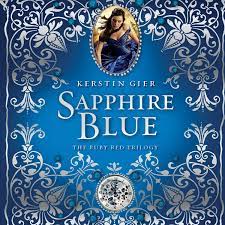
Set just moments when Gideon kisses Gwen, her blissful make-out is interrupted by a demon gargoyle. Once again, Gwen’s ability to see ghosts and demons ruin her semi-normal life. But the nuisance, Xemerius is nothing compared to the flip-flopping nature of Gideon de Villers and the fact that no one in the Inner Circle is willing to tell her what’s going on. Instead, the presence of Lucy and Paul’s ambush in 1912 has only made them more suspicious that she’ll turn traitor on them in the future. When she hasn’t done anything yet nor does she know what she will do!
All the timey-whimey whirl-around of characters seeking answers from their present selves on what their future selves will do can get confusing. Especially as it’s apparent that their time-travel within the time travel started the chaos. But Gwen’s mother said it best that you can trust no one which Gwen’s heartbreakingly learns in her attempts to find an ally in the present. Yet there is hope as Gwen, and the readers gain more clues that point to why the Count is a devious mastermind and what the prophecy truly means.
(more…) -
Ranking Grimmtastic Girls
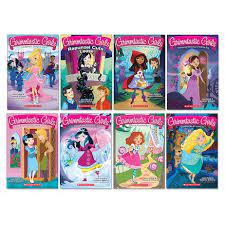
So I’m the third series before I finish my fractured fairytale TBR pile. I was a big fan of Holub and Williams’ Goddess Girls series so they take the school AU to the fairytale universe. That trope is very popular, so let’s see how they rank up.
(more…) -
80s Kids Fantasy
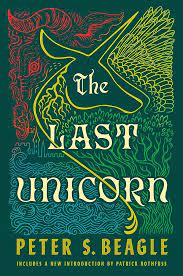
For my 600th post (already!) I decided to take a trip down fantasy memory lane by reading those classic 80s favorites for the first time. They’re pretty famous so I’m not going to go into the summaries of each but discuss my thoughts on why they managed to stand the test of time.
While I’ve seen commercials for the animated film, I didn’t really know the plot of The Last Unicorn beyond there’s only one unicorn left in the entire world and she has to be protected from extinction.
The book turned out much more adult than I ever expected. Not necessarily in the plot which followed my assumption that the gang is protecting the last unicorn from extinction and finding the rest of her people. But rather, Beagle’s prose is that of high-fantasy that reminded me of Lewis Carroll. The characters went on such oddly worded speeches that I questioned whether this was English. It was, but piecing the words together was a challenge. Thus the circumstances and action (involving three-breasted harpies, imaginary red bulls and illusion magic) was also confusing as I didn’t have a good sense of the enviroment and what was real and what wasn’t.
Still, it was not a total confusion as I read and reread certain paragraphs I got a good idea of who the characters were and what they were meant to represent. The last unicorn or Lady Almathea as she’s known as human is the epitome of a beautiful, unknowable exotic creature. She seems harsh and aloof but that’s because she doesn’t understand humanity nor possesses their range of emotion even when turned human. Yet the importance of her presence on Earth is paramount in encouraging hope, beauty and wonder in the world.
Schmendrick the magician is a flop as he’s cursed with immortalilty until he gains his skills instead of being an incompetent using illusions instead of magic. Thusly, this mission is one big chance for Schmendrick to prove himself and deal with huge insecurities as his true potential comes and goes. He is the sidekick trying to be a hero until he accepts his position in life.
Molly Grue is a middle-aged wife of a wannabe Robin Hood. But the unicorn inspires her hope again. Even though she’s not pure in the technical sense, and she berates the unicorn for not coming to her before (before her marriage but metaphorically before her spiritual innocence was ruined by real life), she is the unicorn’s steadfast companion to saving the rest of her race. She provides the reluctant heart of the group, keeping them on the mission’s goals.
Prince Lir is the classic Prince Charming and dashing hero who doesn’t know the true meaning. ALthough he has all the elements of being the chosen one, he hasn’t had the chance to prove himself and is thus mired in selfishness before he realizes that to be a hero he needs to commit a true sacrifice. Giving up his love for Lady Almathea so the unicorns won’t die out. His sacrifice is what will make him immortal.
King Haggard is a twisted man-child whose goal to possess and destroy everything make him a villain yet you can understand why he sought to capture the unicorns. They being the only source of him reminding his youth and wonder.
As you can see, there’s plenty of metaphors dancing around the place allowing readers to interpret scenes and characters. That’s one of the reasons that I believe it managed to stand the test of time. Another is the prose that even I didn’t understand it, it was groundbreaking in how much Beagle trusted readers to talk to them like adults, and it’s difficulty making it more elusive and mysterious. Anciently unknowable like the unicorn itself.
Plus it delivers on big emotion, Lir and Molly Grue getting the bulk of the character arcs that do tug on the heartstrings. It also has humor such as Molly’s husband co-opting Robin Hood’s story for himself.
Beagle’s return to the world with Two Hearts features two stories. Sooz is a coninuation set several decades later when a young girl (the titular Sooz) goes off to search for elderly King Lir to fight the griffens besetting her town. There she befriends Molly Grue and Schmendick with the heroic return of the unicorn. It’s a sweet story and it’s always fun to see the characters again but I’m not a big fan of following kid characters in sequel attempts. I’m just not invested in them as they all seem to follow the plucky, magic-loving vein who becomes the child substitute to Molly Grue and Schmendick.
The second story is brand-new. The Way Home, focuses solely on Sooz and her disocvery that she had an older sister who wandered off with fairies when she was a toddler. Filled with newfound sisterly determination she goes off on another adventure to rescue her only to be shocked that said sister doesn’t want to leave. As you can guess from the title, the two make like Anna and Elsa and soon find their way together to home although Beagle’s interpretation is much more bittersweet than any Disney film.
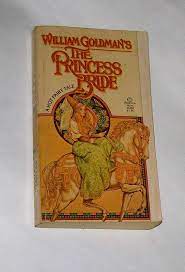
Technically The Princess Bride was written way before the 80s but the movie and book adaptation that we all know and love is from the 80s. Though it took a few decades before it got to the big screen as Goldman informs readers in his lengthy introduction. Much like the frame story of the grandfather and grandson, Goldman first heard the book being read to him when he was sick in the hospital. From there on, he was hooked!
When he grew up, he had his son read the book on his 10th birthday but his son didn’t like it. That’s when he took a look at the book again and found out his father had omitted quite a lot in his retelling. Morgenstern’s rendition goes into the history of Florin among other things leaving the action, romance and adventure lost in the pages. So he decided to adapt it to a “Good” parts edition. Book-wise and movie-wise.Which took a lot of work and legal wrangling as Goldman details his fictional fights with his alter-ego and the Florin country whose historians protectively shielded Morgenstern’s work from Goldman’s butchering as they think he didn’t understand Morgenstern’s real intent with his work and left out important parts like Buttercup learning about Florin royal protacle and etiquette. Also apparently Stephen King’s family has roots there so the Morgenstern estate tried to tap him to adapt the sequel because he understood the importance of Florin royal etiquette.
Yeah, that’s a lot and I haven’t even gotten to the actual story. While I will say Goldman is a talented editor as his edition kept all the memorable bits of the film like “Inconcievable!” ROUS, As you wish, etc. (Although I guess it’s the film taking the good parts from the book), this man loves to talk.
Or write in this case as his introduction was the length of his own novella as he described his family troubles, his wandering eye that led to his divorce, name-dropping celebrity friends, talking about himself. It get’s a bit much so unless you’re a dedicated fan, you can skip the introduction or else you’ll be tempted to write Goldman’s Introduction to the Abriged “Good Parts” The Princess Bride, the Abridged Version!
The story itself was just like the movie showing how the material was ripe for cinema magic as readers are whisked off to Florin and learn of the sweet love between Buttercup (the most beautiful women in the world), and the stable-boy Wesley later turned the Dread Pirate Roberts. You learn the tragic backstories of Ingio Montoya and Fenwick the Turk (whose lighting himself on fire with the holocaust cloak was awesome! My favorite scene!). You shiver at the sadism of Count Rugen and the predatory Prince Humperdick.
Plus Goldman is less annoying with his editor’s notes compared to the introduction as he details funny bits of what parts he was forced or wanted to cut out like Morgenstern’s paragraph on trees which was because the author was bitter over the government cutting down trees or the adventure of Ingio and Fenwick finding the ingredients Magic Max needed to resurrect Wesley for an hour.
The 25th anniversary edition I got from the library also included the first edited and translated chapter of The Princess Bride sequel (still stalled apparently), Buttercup’s Baby! Such excitement. But a quick look at google said it was supposed to come out this year for the 50th anniversary, Goldman died so I don’t know if the world will ever see it.
I don’t know if I can even say much about what makes The Princess Bride so memorable. The plot is like a typical fairytale plot with evil villains, humorous sidekicks and a romance that doesn’t hold up to today’s standards as Buttercup’s personality is mean yet bland. But isn’t that also what makes fairytales so timeless? You know what’s going to happen but you enjoy that wonder and exhileration anyway. Much as seeing a unicorn for the first time.
So yep, that was the 600th post! Woooo! See you tomorrow.
-
Ranking A:TLA stand-alone comics
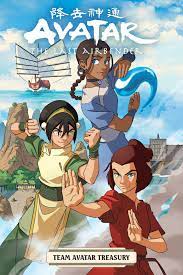
- Team Avatar Tales/Lost Adventures: Maybe it’s cheating to put these together as number one but they’re both anathologies of one-shot comics showing the mischief and fun the Gaang get into in their spare time or between events within the show. The Lost Adventures is a collection of comics collected out of the show’s supplemental/promotional/extra material during the show’s airing. Team Avatar Tales was collected and published a decade later with a variety of authors and cartoonists invited to play with their favorite characters so there are several art and tonal shifts as each put their own spin on the characters. These stories have some of my favorites like the return of Wang Fire, Fire Nation soldier and hero; Katara trying to get Toph to bathe any means necessary; showing the Mai/Zuko shiptease post-Crossroads of Destiny, and much more. It’s all light-hearted fun that fans will sure to enjoy.
- Azula in the Spirit Temple: The latest stand-alone comic delivers a nice character study of Azula post-show as a creepy temple spirit forces her to confront her worst insecurities. Although the summary mentions redemption, it’s a lie. Like I said, it’s a character study where readers get insight to what Azula wants most (forgiveness from others) and her own roadblocks (she’s not willing to do the same as Ozai instilled her sociopathic superiority complex). Besides the Ursa-Azula insight, it doesn’t add anything we don’t know about the former Fire princess. It doesn’t add or subtract rather it brings her to square one so readers can wait for whatever may happen next for her. I know people are rooting for redemption but I think she’s still a long way from that. Especially if the publisher insists on this arbitrary 70 pages limit.
- Toph Beifong’s Metal-Bending Academy: The war has ended and though everyone is happy about no more fighting and genocide, Toph is a bit bored with her standstill life. So in an attempt to ditch the concert of the cave hippies (Remember them? Apparently they have a cult following. Sokka is not amused that Suki is one of their biggest fans), Toph goes back to her underground bending fights roots with a metal-bending twist. Soon, she discovers others want to follow her lead and she is ready to make her own school, only the inclusion of a lava-bender threatens to blow everything up. Can Toph reach the wayword soul? This is a stand-alone that ably sets up Toph’s future career in LOK with the boastful, tough love teacher in ATLA and nicely delivers a beginning, middle and end that the books in the lower rankings don’t have.
- Suki, Alone: Okay, I’ll admit I was excited because I thought there was going to be Sokka in it. There wasn’t but that’s okay because Suki is an awesome warrior in her own right. It’s just the book doesn’t tell us anything we don’t already know about Suki. It doesn’t even give her parents, unless she’s an orphan. It’s just not clear as the backstory is thin beyond Suki’s devotion to Avatar Kyoshi and a weak subplot of Suki trying to create a makeshift sisterhood in Boiling Rock prison only to be betrayed cuz criminals. There’s nothing meaningful in this book and Hicks is hampered in trying to keep things in-canon.
- Katara and the Pirate’s Silver: This is at bottom because the plot of Katara being annoyed she isn’t considered badass and taking up with pirates was already done in the show where she has plenty of badass moments. Same with her trying to help people with vigilante means. So really nothing new. I was more interested in the subplot where Aang, Sokka and Toph tried to convince a brainwashed Fire Nation boy that the Avatar isn’t so bad, but again 70 page comic. Not much can really be fufilled narratively or character-wise.
-
Perfect Fifths Review
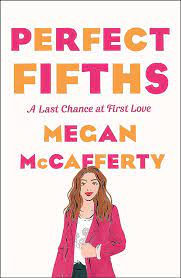
In the final book, McCafferty answers the ultimate question. Can Jessica and Marcus’ unpredictable, predictable mind game of a relationship work in the longterm for them in a close proximity enviroment.
Set two years after the events of Fourth Comings, the two have had absolutely no contact allowing both to flourish in their own fields and get their heads straight in what they want out of themselves especially for Marcus whose performative rebellion characterized his actions and personality rather than any true inward self-reflection.
Marcus is no longer a student of Vissipana meditation, seeking to shroud himself in mystery and scandalize adults with his nonconformity. He has actually taken the more mainstream, practical path of a Princeton political science and politics major, seeking to make real sustantive change through action with such groups like Habitats for Humanity. Making real, visible changes instead of just philosphizing like the nuevo-rich he despises as a teen.
Jessica has been elevated as co-founder, director and task master of Cinthia’s new Do Better group, working with the Girls Storytelling branch, using psuedo-academic powerpoints to puff up the mission statements where they go all over the country and teach about the use psychological narrative therapy to encourage girls to find their voice and explore themselves, and their hang-ups. Yes, she feels a little bad about getting a leg up from her friend, but the work has been really inspiring and she enjoys what she does so much that she’s actually considering teaching as a career since the connection of motivating students was more fufilling than this pessimistic cynic ever expected.Individually, they’re fufilled but the emotional romantic aspect is less so as they each made their own romantic foibles the past two years that has only made them think of the other more. Not that they’d seek each other out.
Until Jessica runs over Marcus at the Newark airport so she can catch the plane to Bridget and Percy’s wedding.
Over the single day at the airport, the two tests their belief in fate and unbelievable coincidence in a perfect rom-com set up that fans will swoon.
I, on the other hand, have conflicting thoughts.
(more…) -
Fourth Comings Review
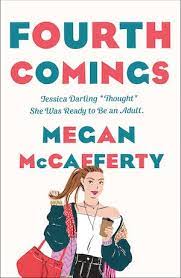
This may be the longest of Jessica’s journals even though it only covers a heavy eight days, starting with Jessica contemplating a break up and Marcus proposing.
(more…) -
Charmed Thirds Reviews
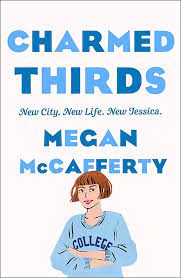
Since leaving Pineville behind her, Jessica thought she was ready for Columbia’s intense academic scene, and was content in being herself.
Yet self is ever changing, and she finds that she is exceeding Professor Mac’s wise words. She’s learning how ignorant she is of the world, and the world pushes back hard.
It’s realistic though. Jessica reprimends herself for thinking that college would be some magical paradise that would automatically give her new best friends, a career she’s passionate for and stability of mind. Nothing can give you that because nothing in life is permenant. So Jessica has to relearn the lesson she most often forgets. Live in the moment.
But what a ride it is! From moving to her childhood home to meaningless internship to cheating on Marcus with a guy who turns out to be a Republican, Mccafferty continues to deliver the candor and ironic humor one can expect from Jessica Notso Darling.
(more…)
-
Subscribe
Subscribed
Already have a WordPress.com account? Log in now.
 Rachel Reads & Reviews
Leave a comment