-
With Love, Miss Americanah Review
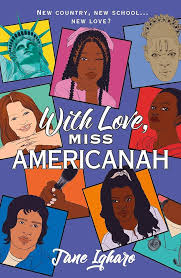
Enore Adesuwa doesn’t dive into things, she walks in carefully. So when she, her mother, and her sister move from Nigeria shortly after her father’s death, she wants to be extremely prepared before attending high school in America. Her cousin doesn’t have time to explain the ins and outs to her but, luckily, he recommends the perfect research tool: teen movies.
Still dealing with grief but armed with a set of rules of survival gathered from these movies (including the crucial rule of keeping a low profile), Enore is ready for her senior year. But when she meets Davi Santiago, it may be much harder than she thought to keep to her rules. Because not only is he super thoughtful (and okay, very good looking), he constantly encourages her to share her incredible singing talent. Enore prefers the background but it just might be time for her to take center stage, even in spite of her mother’s strict expectations.
It would be easier to follow all the rules, the ones Enore set for herself and the ones her mom imposes, but as every teen movie has taught her, a coming-of-age is nothing without a little rebellion. And with help from her crush, her sister, and some new friends who don’t quite play the roles she expects, Enore’s senior year might indeed be cinematic!
(more…) -
Dark Ascension: The Wishless Ones Review
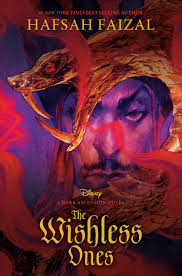
Before Jafar became Agrabah’s grand vizier, there were two brothers wishing for a different life.
(more…)
Living in the shadow of their mother’s death and their father’s cruel whims, Jafar only longs to protect one person–his soft-hearted younger brother, Rohan. But Jafar knows he is destined for more, and if he has his way, he’ll soon be an apprentice at Maghriz’s elite House of Wisdom, studying alchemy.
Then a fire destroys the remains of their shattered life, and Jafar has no choice but to resort to ruses and trickery, including convincing Rohan that the House of Wisdom is their only chance at rebuilding their lives. But Maghriz holds more danger and intrigue than either brother can imagine. Its powerful Sultana is plotting a grand deception that could shape the nation’s future, and she believes the brothers are the missing piece of her scheme.
For the first time, Jafar can envision a future where he puts his own desires before Rohan’s–and Rohan feels ready to escape his brother’s shadow. As the brothers contend with their darkest impulses, they must decide: is their ambition worth their brotherhood? -
Book Highlight: What Jews Look Like
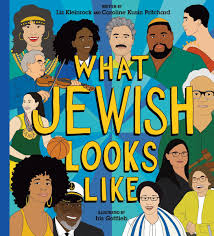
Too many Jews have been told: “You don’t look Jewish!” It begs the question, “What does Jewish look like?” Well, there are over fifteen million Jews in the world, which means there are more than fifteen million ways to look and be Jewish. It can look like setting out menorahs on tribal land, adding kimchi to the seder plate, organizing for change, and living out loud.
Shining a light on Paralympians and chefs, anthropologists and activists, dancers and dreamers, the individuals in these pages represent a range of identities. But they are threaded together by one unmistakable truth: Their lives, work, and commitment to Jewish values have changed our world for the better. These bold profiles and inspiring everyday stories come together to create a tapestry that beautifully reflects the multifaceted essence of the Jewish people.
This delightful kids book highlights the diversity of the Jewish experiencr by grouping the people into six chapters based on different Jewish values like tikkun olam, courage, unique value of every person, to save a life, hope and creativity/self expression.
There were a few famous people, but this was an educational book in that it introduced me to many I didn’t know. Some were famous people who I didn’t know were Jewish like Harvey Milk, Sammy Davis Jr., Naomi Wadler and Daveed Diggs. Others were people I simply didn’t know, but should be celebrated like:
(more…) -
Romance Novels: The Spice Factor
Here’s another question that will hopefully spark some discussion.
I’ve noticed as I read historical romances that the steam factor increases book by book.
I’ll use Joanna Shupe’s Fifth Avenue Rebels as an example as it’s the series that I really began to notice the trend. The first book almost always features a virginal heroine who has little idea of the hot, restless feeling she has when looking at the hero and absolutely shocked when he suggests giving her oral.
By the third book, the heroine is allowed to have knowledge of carnel relations or gasp, actually had previous lovers. This protagonist is usually the cool older sister/friend of previous books who provide much-needed guidence to the virginal character. They also prove the virginal character is a good person because they stick by their friend while rest of historical society shuns them for their shameless, uncaring attitude toward sex and rules.
This female protagonist also fears that she’ll never find love and has a facade of pretending not to care about rules because they don’t want to show how hurt they are by being shunned.
This rarely applies to male main characters because let’s face it, they’ve always been allowed to have sex and thus fewer hang-ups about it.
Grossman was a rare subversion as she has an experienced heroine in her second book in the Once Upon a East End instead of waiting for the third. Rodale’s heroines are usually virgins, but they’re more self-aware in that they masturbate and read books or some other information so they’re not totally surprised by the act of sex.
“But Rachel,” you say it’s a historical romance novel. Women just didn’t know about sex like they do today. To that I say, I believe high society women were pretty sheltered from it, but working women were not (but there’s very few working-class heroines in historical romance which is different discussion).
Also this is fiction. There’s plenty of anachronistic stuff we suspend our disbelief about so we can enjoy the story. So many of these heroines are charcterized as curious, and willing to push societal boundaries by trying to learn and ask questions, why wouldn’t they ask about this?
I also realized another trend where the author is willing to get a little more kinky as the series goes on in accompainment to the increased experience of the female protagonist. And by kinky, the hero mentions bondage.
Buuuuuuut. . . most series I read stop at showing it. They don’t follow through beyond coy mentions of it later on. This kinda drives me crazy because it feels like a nod to the fact that hey, sex can be more interesting than just p in the v, and people get turned on by different things, it’s human nature. Or like they want to seem cool because based on Fifty Shades of Grey, we know bondage is popular. But they’re too scared to actually show it.
The only mainstream romance that I remember reading that follows through on the kinky sex would be Eva Leigh where it occurs in the third book of her Union of Rakes trilogy and the third book of Last Chance Scoundrels trilogy. Same with the fourth book of Shupe’s Fifth Avenue Rebels like they have to ease the audience into it. Of course, there’s also Scarlett Peckham but her’s are not the traditional romance so I don’t count it, she never follows the formula.
So what do you think readers? Did you notice the trend from virginal heroine to society’s “slut”? Do you wish that the author would throw out the easing readers in and just go for a heroine who knows her spice levels and goes for it?
What do you think about kinky sex? Don’t want it in your romance because it turns a romance novel into an erotic novel? Is there a line? Wish they’d show it if they’re gonna mention it?
Comment below!!!!!
-
Contemporary vs Historical Romance: Which do you prefer?
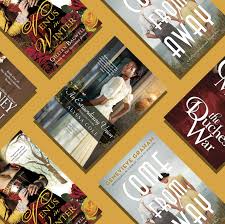
No review or rankings this time, I just thought I’d put a question out there. I know, it’s unlikely since I don’t get many comments but if you want to comment, please comment!!
Anyway, on to my question, in a recent poll on instagram I asked if people prefer historical romance or contemporary romance? Contemporary romance won because people preferred something they could relate to compared to the different societal rules, technology and mindsets of historical novels.
As one can tell from my blog, I prefer historical romances because I like history. But also I have more patience for communication issues in historicals. Dating and the interaction between men and women were different back then. Like literally being alone with a man could ruin someone’s reputation so with such separation of the sexes I can understand why they have some nonsense in their romance.
Less so in modern day where there is miscommunication over situations that “look bad” but if they freaking talked to each other like adults, it would be solved. It often feels contemporary romance writers fall on external obstacles blocking their couples’ relationship and that external obstacle is usually stupid like jumping to conclusions or third person red herring when obviously they’re going to end up together.
At least in historical romances, when there’s a third person red herring, it is a betrothed and breaking up an arranged marriage was super difficult. Nowadays, it’s less reputation-shattering.
So what do you think blog readers? Contemporary romance or historical romance? Which do you prefer and why?
-
The Queen’s Council: A Sword in Slumber Review
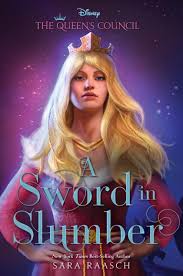
Briar Rose loves her life in the small Austrian town of Hausach, where she sings, dances, and runs wild through the woods with her best friend Frieda. But with her curse broken and Maleficent slain, Briar must leave her happy enclave to take her rightful place as Aurora, princess of Austria and betrothed of Prince Phillip of Lorraine.
She’s doing her best to come to terms with her new identity when the emperor of the Holy Roman Empire dies, and her father announces he will put his name forward for the position. While her days are a whirlwind of seismic change, her nights offer little respite. Mysterious dreams keep her tossing and turning, visions of queens throughout the ages, facing down conflict in their own nations.
Then Bavaria launches an attack on Austria, killing King Stefan and setting up Matilda of Bavaria to become empress. To save the empire from a warmonger’s rule, Aurora pledges to take the throne herself. She’ll have to compete against the top rulers from across the empire and learn to play their political games.
But there’s one more surprise in store. Hausach was home to more than one hidden princess, and Aurora must go head to head against her best friend to win the title of emperor, not just for herself but for all of Austria.
This thrilling reimagining of Princess Aurora wakes her from her fairy tale slumber and places her against a real historical backdrop—with a Disney twist.
Briar Rose is famous for having the least amount of lines and screentime out of all the Disney Princesses. That simply allows Raasch more opportunity to give Briar Rose more character and explore in-depth what her life might be like after waking up from her curse.
In this instance, there is a lot of emotional baggage for her to work through.
(more…) -
Emmett Review
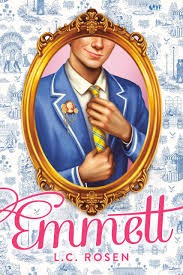
Emmett Woodhouse, handsome, clever and rich, with a comfortable home and happy disposition seemed to unite some of the best blessings of existence and had lived nearly eighteen years in the world with very little to distress or vex him.
Emmett knows he’s blessed. And because of that, he tries to give back: from charity work to letting the often irritating Georgia sit at his table at lunch, he knows it’s important to be nice. And recently, he’s found a new way of giving back: matchmaking. He set up his best friend Taylor with her new boyfriend and it’s gone perfectly. So when his occasional friend-with-benefits Harrison starts saying he wants a boyfriend (something Emmett definitely does NOT want to be), he decides to try and find Harrison the perfect man at Highbury Academy.
Emmett’s childhood friend, Miles, thinks finding a boyfriend for a guy you sleep with is a bad idea. But Miles is straight, and Emmett says this is gay life – your friends, your lovers, your boyfriends – they all come from the same very small pool. That’s why Emmett doesn’t date – to keep things clean. He knows the human brain isn’t done developing until twenty-five, so any relationship he enters into before then would inevitably end in a breakup, in loss. And he’s seen what loss can do. His mother died four years ago and his Dad hasn’t been the same since.
But the lines Emmett tries to draw are more porous than he thinks, and as he tries to find Harrison the perfect match, he learns that gifted as he may be, maybe he has no idea what he’s doing when it comes to love.What a perfect way to begin the month of love than with a wonderful retelling of Austen’s Emma. I mean it, this is a great retelling. It perfectly captures the lovable meddling of Emmett Woodhouse. A boy with good intentions and clumsy execution.
From the beginning, Emmett is aware he is blessed and chooses to not to just luxuriate in his many blessings (a wealthy family, quality fashions, happy parent), but share them. Basically, he wants his friends to be happy, and he wants to be nice.
However, nice is different than good so even though Emmett does good deeds, sometimes it is more for the sake of his own reputation as nice like allowing the annoying Georgia to sit at his lunch table even though privately he can’t stand her. Little bits of hypocrisies that he won’t admit because he can’t stand the idea of not being perfectly nice person others think he is.
The only one who seems to see through him is Miles who Emmett feels is a condescending prick that judges him for an event that he can’t quite remember.
(more…) -
Book of the Month: Lace
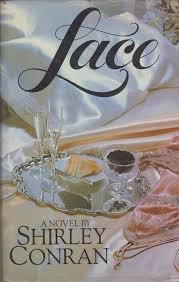
“Which one of you bitches is my mother?”
Four elegant, successful, and sophisticated women in their forties are called to New York’s Pierre Hotel to meet Lili — a beautiful, young, and notoriously temperamental Hollywood movie star. None of the women knows exactly why she is there; each has a reason to hate Lili and each of them is astonished to see the others.They are old friends who share a guilty secret and who have for years been doing their best to keep that secret quiet. Their lives are changed forever, however, when Lili suddenly confronts them. When the women refuse to answer her, Lili proceeds to travel around the world through the playgrounds of the rich and famous, seeking to answer the question that has obsessed and almost destroyed her.
From Paris to London, from the boardroom to the bedroom, Lace takes the reader into the rarified world of five unforgettable women who are as beautiful, as complex and as strong as. . .lace.This is like a soap opera! That’s the sentence that had run through my mind throughout the novel. Well technically, I thought it was like a Lifetime movie, but a soap opera is far more accurate. Exotic locales, luxurious 80s excess, and so much drama as it describes in minute detail every piece of clothing, meal, furniture, and distinctive characters that surround the women.
(more…) -
Roz Demir is Not the One Review
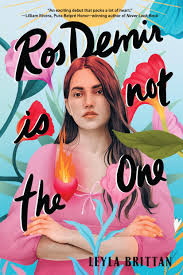
Ros will do whatever it takes to get the guy. At least… she thinks she will.
Sixteen-year-old Ros is a go-getter. When she wants something, she makes sure she gets it.
But a lingering rumor (and maybe some ambivalence about her half-Turkish heritage) has kept Ros from achieving the kind of reputation she deserves. So, after years of plotting her big comeback, she just needs one thing: a hot, adoring guy on her arm at junior year homecoming. And when she meets charming new classmate Aydın at the Pine Bay resort over the summer, she thinks she’s found The One.
It doesn’t work, though. And things get messy when Ros’s plan ends up hurting the only friend she has left… poor, sweet, forgiving Eleanor. This has happened before—things tend to get messy with Ros around—and it’s getting harder for her to ignore the pattern of hurt feelings. Plus, it seems like Ros and Aydın aren’t really meant to be. What kind of a plan results in everyone ending up unhappy? Not a very good one.
A not-quite rom com starring a bold, outspoken antiheroine, this Turkish-American Romeo and Juliet remix is refreshingly snarky. Witty, whip-smart dialogue plays with the complexities of multicultural identity and female friendships, from Ros’s very first screw-up to her unconventional happy ending.
Ros is quite unlikable, I have to get that out of the way. But I applaud Brittan for going the antiheroine route and sticking with it. Oftentimes, “difficult” female characters don’t seem to earn the moniker because their difficulties are just snarkiness or rightfully pushing against an ignorant world. Here, Ros is actually unlikable and tough to root for.
Ros feels a lot, and when she feels angered or wronged, she lashes out at the person. Sometimes her revenge is disproportionate to the slight, and then she holds a grudge about it, projecting it on the other person as being the overly hostile one that won’t let go.
(more…) -
J.C. Peterson Interview
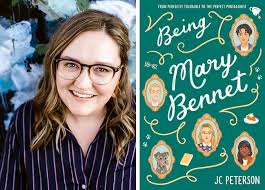
J.C. Peterson is the YA and adult rom-com author for bookish readers. Her novels include Being Mary Bennet, and Lola, At Last. She graciously took the time to answer my questions about Pitch Wars, P7P and what she has coming next. Enjoy!
1. You got your start with PitchWars, what did the mentor program entail?
PitchWars was such a wonderful, gratifying experience. I had taken a break from all writing after I had my younger son and applied to PitchWars on a whim, so when I was accepted into the mentorship program, I went from zero writing to living and breathing fiction in a heartbeat.
PitchWars involved deep developmental edits with my mentors, Carrie S. Allen and Sabrina Lotfi (who are literal angels). They were so thoughtful and insightful about my work and really helped me bring the novel up a level. It was hard, but so much fun at the same time!
It helped that Carrie and Sabrina were endlessly encouraging and were always there to hype me up. PitchWars ended in the big pitch event with agents, which was stressful. But from that, I signed with my agent Amy Bishop-Wycisk and we sold my debut novel Being Mary Bennet just a couple months later.
2. Best advice you got from your mentors?
Carrie and Sabrina were so talented at helping me see the bigger picture in my writing. I don’t want to say that I’m all vibes, but I tend to be very voice-y in my writing; they helped me keep that voice while also making sure every scene moved the plot forward. I think I really developed my skills in tension and pacing because of them.
(more…)
-
Subscribe
Subscribed
Already have a WordPress.com account? Log in now.
 Rachel Reads & Reviews
Leave a comment