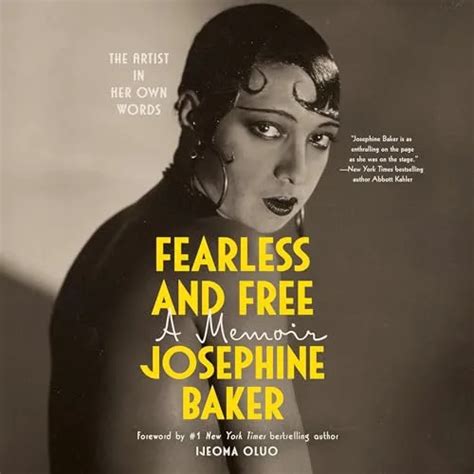
After stealing the spotlight as a teenaged Broadway performer during the height of the Harlem Renaissance, Josephine then took Paris by storm, dazzling audiences across the Roaring Twenties. In her famous banana skirt, she enraptured royalty and countless fans—Ernest Hemingway and Pablo Picasso among them. She strolled the streets of Paris with her pet cheetah wearing a diamond collar. With her signature flapper bob and enthralling dance moves, she was one of the most recognizable women in the world.
When World War II broke out, Josephine became a decorated spy for the French Résistance. Her celebrity worked as her cover, as she hid spies in her entourage and secret messages in her costumes as she traveled. She later joined the Civil Rights movement in the US, boycotting segregated concert venues, and speaking at the March on Washington alongside Martin Luther King Jr.
First published in France in 1949, her memoir will now finally be published in English. At last we can hear Josephine in her own voice: charming, passionate, and brave. Her words are thrilling and intimate, like she’s talking with her friends over after-show drinks in her dressing room. Through her own telling, we come to know a woman who danced to the top of the world and left her unforgettable mark on it.
A memoir from a one of a kind woman. I think Josephine Baker is pretty well-known by now. She’s mentioned at least once in all the women’s history books I’ve had, including her career as a black female performer, and her time as a spy in WW2. So I felt like I had a pretty good idea of her life, still it was interesting to read her own words. Newly translated for the US public. It goes in a linear timeline with the casual reminisces of a woman telling about her life to her admirers. Very “c’est la vie” even as described her upbringing in poverty, and the racism in America, the kind that continued even after she returned as a popular nightclub act in her own right. You can feel the depth of emotion, but then she pulls back on it.
It felt very French. There were not many detailed descriptions or providing context around the situation, rather it was a haze of memories and how Baker felt about it at the time. The longest chapters are devoted to her tours in Europe, and South America, and her thoughts on each city. Plus some of her thoughts on her many lovers, and her own exploits as a diva, exercising her right to pleasure and luxury.
The chapters referring to her time as a spy were sadly less detailed. Maybe because she didn’t have security clearance to reveal the extent of her activities so soon after the war. I did learn she almost died from peritonitis. That was never mentioned in the history books. She also didn’t mention about the adoption of her kids, or her work with MLK, but based on the date the book was originally published, she hadn’t done that.
Unfortunate, as I really wanted to learn more about how she dealt with motherhood considering her own neglectful family, and more about her activism during the Civil Rights movement. But like I said before, any strong emotion is pulled back as if Baker was afraid to expose too much of the vulnerable parts of her, and remain the glittering dancer her fans loved her as.
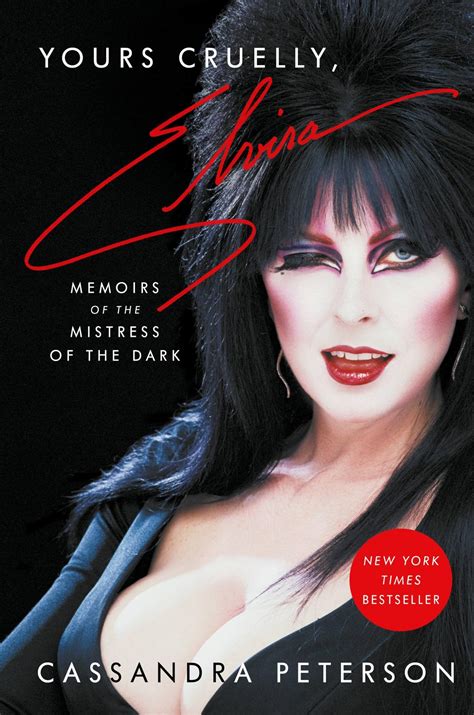
On Good Friday in 1953, at only 18 months old, 25 miles from the nearest hospital in Manhattan, Kansas, Cassandra Peterson reached for a pot on the stove and doused herself in boiling water. Third-degree burns covered 35% of her body, and the prognosis wasn’t good. But she survived. Burned and scarred, the impact stayed with her and became an obstacle she was determined to overcome. Feeling like a misfit led to her love of horror. While her sisters played with Barbie dolls, Cassandra built model kits of Frankenstein and Dracula, and idolized Vincent Price.
Due to a complicated relationship with her mother, Cassandra left home at 14, and by age 17 she was performing at the famed Dunes Hotel in Las Vegas. Run-ins with the likes of Frank Sinatra, Sammy Davis Jr., and Tom Jones helped her grow up fast. Then a chance encounter with her idol Elvis Presley, changed the course of her life forever, and led her to Europe where she worked in film and traveled Italy as lead singer of an Italian pop band. She eventually made her way to Los Angeles, where she joined the famed comedy improv group, The Groundlings, and worked alongside Phil Hartman and Paul “Pee-wee” Reubens, honing her comedic skills.
Nearing age 30, a struggling actress considered past her prime, she auditioned at local LA channel KHJ as hostess for the late night vintage horror movies. Cassandra improvised, made the role her own, and got the job on the spot. Yours Cruelly, Elvira is an unforgettably wild memoir. Cassandra doesn’t shy away from revealing exactly who she is and how she overcame seemingly insurmountable odds. Always original and sometimes outrageous, her story is loaded with twists, travails, revelry, and downright shocking experiences. It is the candid, often funny, and sometimes heart-breaking tale of a Midwest farm girl’s long strange trip to become the world’s sexiest, sassiest Halloween icon.
Much like Dolly Parton, Peterson or the Mistress of the Dark as most know her, presents a witty, down to earth, honest memoir about her life growing up in a small Midwestern town of a slightly dysfunctional family and her early interest in the macrabe. She provides some funny in retrospect stories of her adventures as a groupie as well as serious talks about the dangers of being a teen girl in the performance industry (ie acting, and stripping to pay the bills), the threat of assault and casual objectification, and how she learned to embrace the camp without distorting her views of herself.
The fun parts included learning how she transformed the bit role as Elvira the presenter to creating a movie and brand based around her, the few haunted houses she bought, and the time she met Brad Pitt.
Peterson hides no pretensions about how her upbringing influenced bad behavior cycles when it came to her relationship and divorce with her husband, and her efforts to be there for her sisters/their children when addiction haunted them. She also shares about her current relationship, officially coming out as bisexual and her fears of how it would ruin her image before harnessing her inner Elvira and say “Fuck em.”
Elvira is kooky, a weirdo, and is happy just being herself, encouraging others to do so too, and this reflective memoir shows how Peterson found that way to contentment herself.
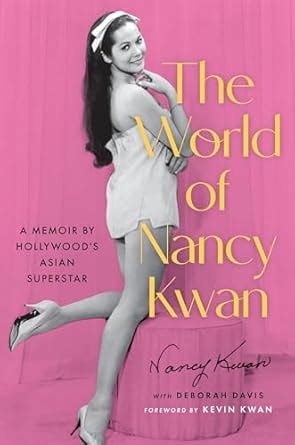
When Nancy Kwan burst onto the scene in the early 1960s, Asian characters in film were portrayed by white actors in makeup playing “yellowface,” and those minor roles were the stuff of cliché: shopkeepers, maids, prostitutes, servants. When—against all odds—Nancy landed the lead role in the much-anticipated 1960 film The World of Suzie Wong, she became an international superstar and was celebrated for her beauty, grace, authenticity, and spunk: a “Chinese Garbo,” the “Asian Bardot.” From Hong Kong to London, Hollywood and beyond, The World of Nancy Kwan charts Nancy’s journey. The obstacles she faced, the prejudices she overcame, and how her success created paths for others.
Never allowing show business to change her, Kwan persevered in an industry where everything was stacked against her, breaking through barriers and becoming a beacon of hope to generations of Asians who aspired to be seen. The World of Nancy Kwan is a multi-faceted personal history of an iconic actress whose triumphant rise and resilience illuminates the broader history of Hollywood and how the only way forward is to stay true to oneself.
I really enjoy golden age celebrity memoirs. There is just a different type of resilience for actresses in that age as they struggled against the studio system. Doubly so for Mrs. Kwan, but before she even faces off against Warner Bros, she fled China and detailed her struggles as an immigrant in London before going to Hollywood.
Eloquent, Kwan provides a clear-headed voice of what it was like growing up in the 1930s to the present day, and the type of discrimination she endured in society and on the screen, limiting her roles and how Asians/Asian Americans were viewed and the compromises she made between getting work and not being a stereotypical dragon/submissive (insert Asian stereotype) woman. She shares stories about the fellow celebrities she met, and other actors who helped change the landscape for Asians on screen (yes, superstores Bruce Lee, and Yul Brynner) and how she tried to choose roles that she could be proud of.
She also delves into her personal losses like her divorce, and her son who died of AIDs, the emotion is heartfelt, but she doesn’t divulge all the details. Her memoir is a bit like Peterson’s as neither are into self-pity or dwelling on the injustices they faced. It’s not too introspective but provides a great time capsule of one woman’s journey through an industry slowly evolving to the better (she was thrilled by Crazy Rich Asians and hopes for more representation like that) and the cultural commentary and boundaries she broke herself.
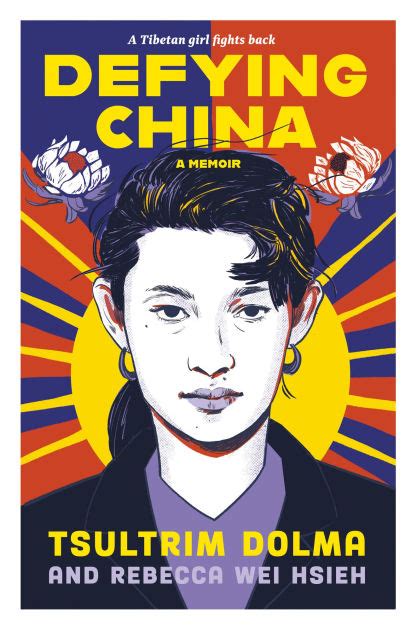
Tsultrim Dolma, born in a tiny village in the stunning mountains of eastern Tibet, always knew there had to be more than the life expected of her: More than no education, because her family was poor. More than being married off at a young age, because she was a girl. More than barely getting by under oppressive Chinese occupation, because she was Tibetan. When she was sixteen, Tsultrim found more, joining protests for the Tibetan independence movement, the call for her beloved country’s liberation from the People’s Republic of China. Shortly after, she was arrested and sent to Gutsa Detention Center, notorious for its brutal torture of political prisoners like Tsultrim.
This young adult memoir follows Tsultrim’s courageous coming of age through her time at Gutsa, being heavily surveilled by the government after her release, and, ultimately, her escape to the U.S. It also underscores the bravery it takes to speak up, and the power to be found in sharing one’s story.
A very engaging memoir, Dolma demonstrates you don’t have to be an adult to wage war against seemingly insurmountable means. Free Tibet was thrown around a lot when I was little, but has been forgotten as the world slowly burns. But the fight for Tibetans to live in their country is still on-going. Dolma’s story is passionate, you can feel it in her words as she shares what she adores about her country and her tiny village as she grew up in the 80s. She explains some context of what it was like, since Tibet is a country US readers are unfamiliar with, without it being an exposition dump, drawing readers in so it’s like you’re actually there.
Young readers will be able to relate to Dolma’s feelings of helplessness, confusion, and fear in facing a government that is resistant to her heritage and her people existing. The unsteady certainty that the world is much more complicated and tougher than you imagined. But they’ll also feel empowered by Dolma’s urge to do something about her, how she learned to resist, and found resources to bring her message to the world, and the devotion she shows to the cause. It’s a coming of age story on a bigger scale.
 Rachel Reads & Reviews
Leave a comment