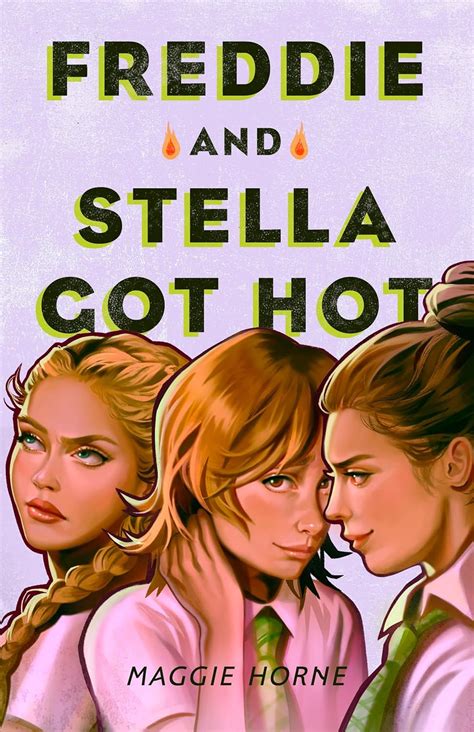
Freddie and Stella are on a mission: take down their former best friend turned queen bee Levi Preston by depriving her of the one thing she wants more than anything: The Beaumont-Gardiner Award. Only the coolest, smartest, and―let’s face it―hottest girls win. . . so Freddie and Stella are going to have to get a whole lot cooler, smarter, and hotter.
At first, it seems to work―Freddie and Stella slowly manage to worm their way in with the cool girls. With every shopping date, agonizing salon appointment, and hot yoga class, the girls get closer to the in-crowd and Levi fades more and more into the background. The higher they rise, though, the more uneasy Freddie starts to feel. Stella’s gone from her lovable, goofy best friend to someone she barely recognizes, using her newfound power for evil at every opportunity. Soon, Freddie realizes she’s created a monster―and she needs Levi’s help to put a stop to it.
This was an interesting read albeit a bit predictable. From the moment Freddie mentioned in her internal monologue that she had feelings for Levi, and that she suspected Stella also had feelings for Levi although they never talked about it out-loud. So yeah, there’s clearly more hurt feelings than solely friend ditching them to be popular. It’s crush ditching them to be popular.
There’s a thin line of homoeroticism and obsession when it comes to female friendships. They’re intense, and while I can understand the hurt both girls felt for when Levi ditched them, I felt that the resolution of Stella’s mini-villain arc was forgiven too easily. She orchestrated the reason for Levi ditching them, albeit unintentionally, nearly put someone in jail, and broke up several friendships, all because she got rejected. She needed to do more than an apology, maybe therapy for her sociopathic traits.
At least Freddie and Levi’s slow-burn return to friendship and teaming up to take down Stella after finding out about her machinations. Plus I enjoyed how it dovetailed to Freddie’s own growth of being a complicit bystander to Stella’s more heinous actions.
Another point against the book is the number of times “fuck” was in it. I’m okay with the word, but every other sentence. In thought and in dialogue. Horne toned it down in the later half of the book, but it felt a bit much in the beginning. It felt like Horne was trying too hard to be edgy like this was a R-rated “Mean Girls.”
3 stars.
 Rachel Reads & Reviews
Leave a comment