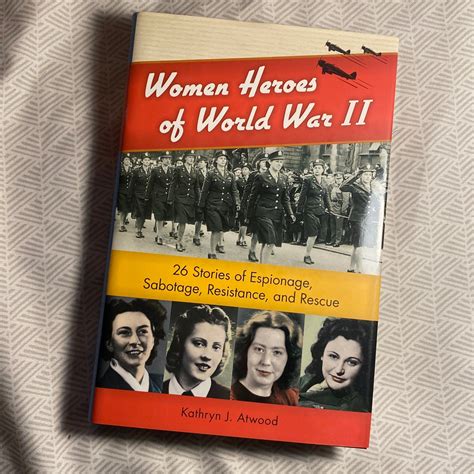
Just as the title implies Kathryn Atwood’s books center on sung and unsung heroines during WW2. She has several popular ones like Sophie scholl, Carrie ten boom, Josephine Baker, Irene Sandler and Martha Gelhorn, Nancy Wake, Noor Inayat Khan, and Virginia Hall, but she also shares plenty new ones. Split into seven sections of each country from the Western front, she introduces new heroes like:
German: Maria von Maltzan, a Countess who hid Jews right under the Nazis. Poland’s Stefania Podgorska whose prayers to God allowed her to save a family and meet her future husband. France’: ‘s Agent Rose aka Andrée Virot, Netherland’s Diet Eman; Belgium’s Fernande Keufgens who literally talked the Nazis into letting her escort a smuggled boy to freedom; Denmark’s Ebba Lund aka the Girl with Red cap that utilized the ports to smuggle families out, and Marlene Dietrich, the German movie star who converted to U.S. citizenship and was at the Battle of the Bulge.
Easy, thorough reads, Atwood continues her spotlight on these underrated bravery of ordinary women in her second book that focuses on the Pacific Campaign. Since the Western Front gets so much recognition, this women were all brand-new to me. Separated in four chapters covering China, the Philippines, Malay/Singapore, and Iowa Jim, Atwood gives age-appropriate information for young readers about such horrors as the Nanking Massacre, the Bataan Death March, “comfort girls” and human experimentation during the war. She explains why those atrocities weren’t given a reckoning in Japan and how there is still historical revisionism.
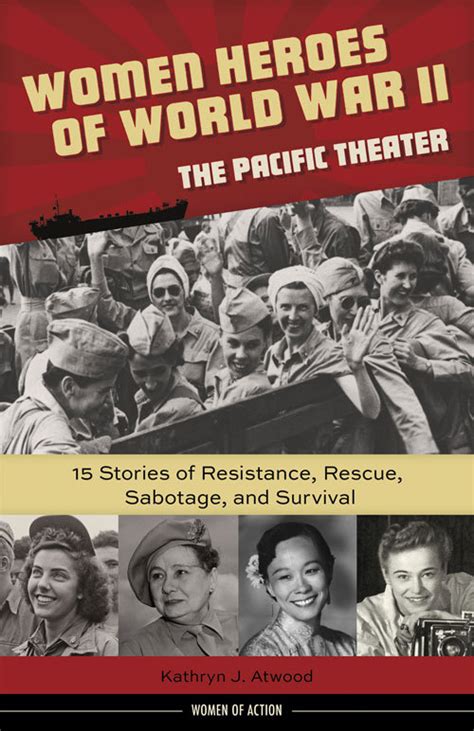
But in slightly more hopeful note here are some highlights of the survivors and heroes: Minnie Vautrin, a girl’s school teacher who helped women and girls stay protected in the Nanking Safety Zone while Gladys Aylward worked in the Shanaxi province to rescue war orphans.
Denny Williams was an American nurse in the Philippines who continued to work, operate and bandage under fire all while the upper brass decided to withdraw from the islands to go to the Western front, leaving Americans and their Filipino allies under Japanese fire.
Yay Panlilo: Atwood primarily focuses on Americans who found themselves stuck in the Pacific or had been living there during the war, but Panlilo is one of the few natives she spotlights and wow, does she deserve it. Panlilo worked as a reporter to boost morale for soldiers, but was actually an undercover agent for the US, and a guerilla fighter. Same with Claire Phillips whose espionage activities in Manila helped to help rescue prisoners of war, facing torture and near-death.
The most tragic would have to be the story of Maria Rose Henson who was repeatedly kidnapped and raped by Japanese soldiers when the war started (she was only 12), dealing with more abuse after she used her inside information to save her village from being burned down, and carried her traumas in silence after the war ended. Until 1992, when she bravely became the first survivor to tell her story. She made sure these crimes were put into the historical record, did press conferences and wrote a memoir, prompting calls for restitution and for Japan to acknowledged their war crimes.
Sybil Kathigasu was a nurse, and her husband was a doctor when the Japanese invaded Malay, and she continued to do her work under duress (even when the soldiers threatened to kill and her daughter) to ensure the guerillas were able to survive their wounds, and fight back against the invaders.
Finally, Dickey Chappelle was a war correspondent and photographer who followed the Pacific Campaign documenting Japanese and American atrocities only to have her accreditation stripped and never published because they were too “dirty” and depressing to see their soldiers like that. But she continued her work, dying in Vietnam on the frontlines.
The Girls Who Stepped Out of Line by Mari K. Eder
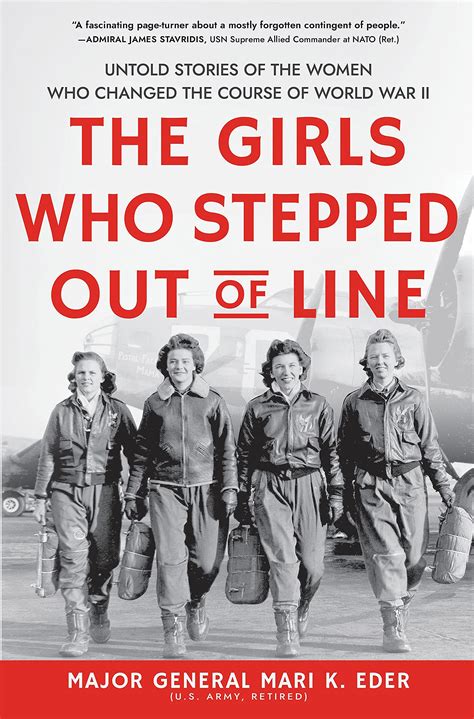
With the flair of the seasoned journalist she is, Eder combines the emotional heart of each journey with the hindsight of recognizing each woman’s contribution to the larger thread of women’s rights that were dismissed after the war. Some of my favorites include, Alice Marble who not only was a spy during the war, but contributed to Wonder Women comics, was a pro tennis player and mentored Althea Gibson, the first black female tennis player.
Stephanie Czeck Radar, part of the infamous X-1 and the early precursor to the OOS, taking on dangerous missions in the Soviet Union to help win the war.
Elizabeth Mcintosh, part of the psychological propaganda and misinformation campaign, she basically helped found this new branch in modern warfare and had a fun time doing it.
Mary Taylor Previte, a Japanese concentration camp survivor, she used her experiences to help serve urban youth in schools and detention centers, and had a very heartwarming search/reunion for her rescuers.
Ruth Gruber helped Jewish refugees acclimate to the U.S., fighting for their right to gain citizenship and ensuring they felt safe after all their traumas in the war, deserving the moniker “Mother Ruth.”
The British Cook sisters who smuggled Jews and jewels under the Nazis by leaning into the fuddy, duddy spinster personas.
Ola Mildred Rexroat, the first Native-America (possibly only) WASP in the army, paving the way for future recognition of WASPs in the war effort.
Charity Adams, a leader and role model in the Six Twenty Eight, fighting for recognition of their efforts and contributions in the war and desegregating the military. You may recognize her in the Netflix movie of same name.
The Daughters of Kobani by Gayle Tzemach Lemmon
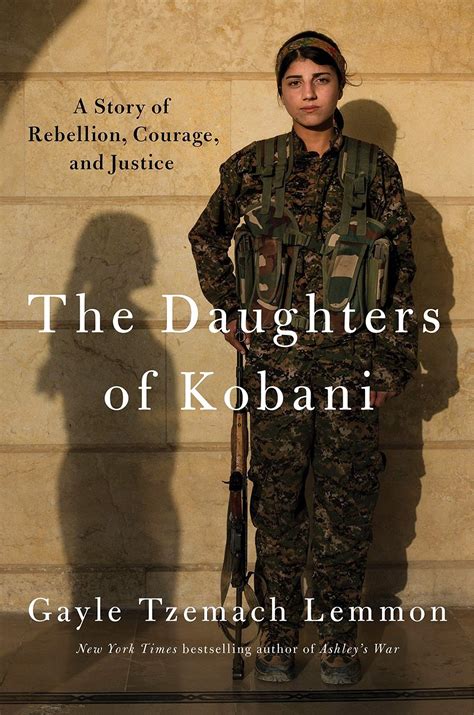
You may have heard the Kurds on the news, our allies during the Syrian War, but this story dives into the society of this religious minority who’s views of equality between the sexes are under constant threat by the Taliban and repressive Assad regime. Focusing on three specific women who served on the Kurdish forces, shows how these women’s beliefs and desire for a better future for their people gave them strength to fight overwhelming forces.
Lemmon keeps a tight timeline, providing plenty of context throughout of the greater political implications and manuvers occurring outside of the fire fights. However, it is the personal stories of how each woman chose to defy society expectations that keep you hooked when there’s military jargon overload. You root for them to win, feel for them when their vow is renewed when villages celebrate (especially the girls/former slaves) being free of the Taliban, and you hope they will as they return to fight today against Turkish assaults on their autonomy while the U.S. deserts them.
Beyond the Call by Eileen Rivers
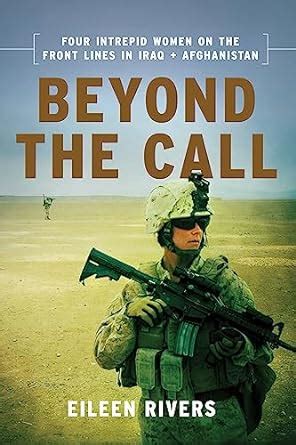
Much like the Daughters of Kobani, Rivers narrows her focus from the all-female team to four specific women who varying reasons and strengths in joining the army are put to the test on the frontlines. Not only do they have to face the physical danger of being killed by a tank, but minor annoyances like male supervisors who don’t realize the importance of what they’re doing and bring scheduling delays of important materials and resources.
I, for one didn’t think Afghanistan allowed for female police officers, but they do, even though they are undermined and under constant threat of rape. However, the work they do, and the army does in assisting and training is important as the female to female connection allows them to get close to female Taliban collaborators, help rescue sex slaves, and encourage the female population to vote and slowly erode the power of the Taliban within the village.
It’s a draining book, much like life within the Middle East, which makes the victories all the more momentous. Important read if you want to learn more about some positive contributions of the military besides the costant bombings.
When Women Ran Fifth Avenue by Julie Satow
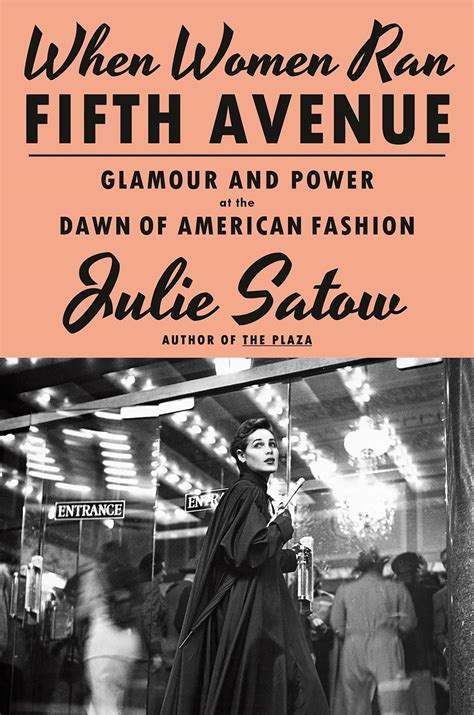
But if you want something much lighter than war, try Satow’s book. Go back in time to the glamourous turn of the century when the department store was in its infancy, creating luxurious female-led/centered spaces to dazzle the eye and tempt your pocketbook.
Satow follows the lives of three prominent department stores and the women who founded or led them to its peak, Geraldine Stutz reinvented Henri Bendel to the chic, modern women’s store, bringing window displays (including one by Oz author, Frank Baum), murals (which led to Dali getting arrested. Crazy story) and led to the discount store copycats like Walmart that would end up driving her out of business.
Dorothy Shaver who helped make Lord and Taylor the exclusive place to be, centering women’s interests at its core and also diverted people from simply copying Parisian fashions to discovering and uplifting American designers to make their own trends.
Finally, Hortense Odlum of Bonwit Teller, who transformed her husband’s store into a household name and running the company, only to feel a constant sense of misery because she wasn’t a housewife (her husband running off to be with an aviator that didn’t run his company probably didn’t help).
It’s fascinating to learn the history of stores that we take for granted like having ready-made clothes available in the store rather than having to order exclusively with a designer, ads, discount competitions, seasonal displays, all that was created just last century.
Satow also takes time to highlight important dress-makers, designers, salespeople, and window dressers whose talents have been forgotten since the era of the department store is over, and was taken over by men who push sexualized ads and lingerie aimed at the men more than the women, and here we are today.
 Rachel Reads & Reviews
Leave a comment