Out There by Seaerra Miller
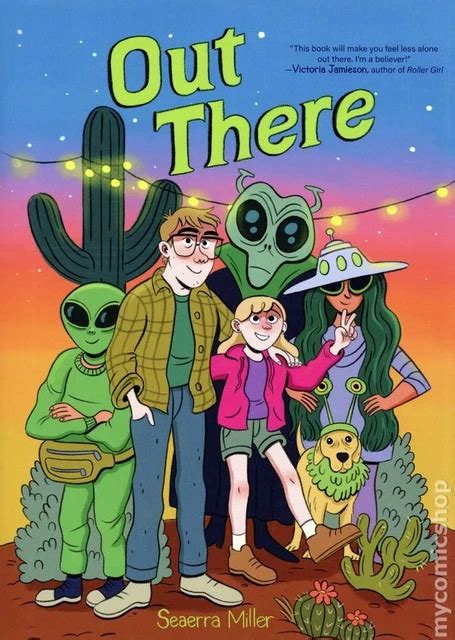
Julia didn’t always believe in aliens.
It was her father who convinced her otherwise. You see—Julia’s dad believes he was abducted by aliens. And ever since then, he’s been obsessed with the extraterrestrial beings living out there.
So when a festival commemorating the 75th anniversary of the infamous UFO crash in New Mexico rolls around, Julia turns down a dream vacation to Hawaii with her best friend, Sara, to join her dad for a weekend trip to Roswell, where he expects the aliens to make contact.
But amid the alien-themed goofiness of the festival, Julia finds she isn’t sure whether her father really did get abducted. His memories of alien interference are starting to sound increasingly shaky, and with them, her faith in him. Will this weekend bring the two closer together or only drive them apart?
You either believe aliens or you don’t. It’s one of those things that drive people to be either total believers or cynics, neither side understanding the other. Julia heartily believes her dad, and readers can tell that this belief is partially fueled by Julia’s need to see the good in her dad. That his flakiness is for the greater, universal good and not a sign that he doesn’t care like her mother seems to imply.
At its heart, it’s a story about a dad and daughter. I most enjoy the thoughtful, introspective narrative and how Miller left the ending ambiguous. Will her Dad will change his flaky ways or will Julia will learn the timely art of settling for the ones you love?
Still, it offers great insight to why people believe as intensely as they do. Some of it comes from a place of delusion, psychologically filling a hole in the person. For others, it offers hope and curiosity about the wider world. Overall, an interesting look into the weird, cosmic world of Roswell that will have people itching to take a trip to look at the stars and come back down to enjoy the beauty of Earth.
Kayla Miller’s Olive/Click series
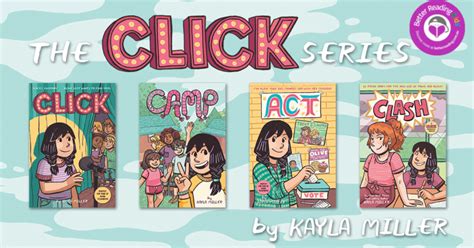
Olive “clicks” with everyone in the fifth grade—until one day she doesn’t. When a school variety show leaves Olive stranded without an act to join, she begins to panic, wondering why all her friends have already formed their own groups . . . without her. With the performance drawing closer by the minute, will Olive be able to find her own place in the show before the curtain comes up?
Much like Chmako’s Berrybrook Middle School series or Libenson’s Emmie and Friends, Miller’s Olive series follows a set cast and the daily friendship fun and conflicts that arrive with the tumultuous middle school years. Olive is a likable girl. Unique in that she doesn’t have a best friend, but rather juggles multiple friends unlike the more loner, only one BFF protagonists that populate these graphic novels. It’s this exact problem that she struggles to figure out in the first book.
Olive’s family is equally fun and distinct especially her aunt Molly who provides a supportive, alternative ear to her mother’s more try to get along with everyone, I’ll talk to the girl’s parents method. Same with her lovable, annoying brother Goober.
Each novel tackles a distinct coming of age, friendship story-balancing a busy schedule, how to live peacefully with a person that doesn’t like you but likes your friends, working to change the school system, and Miller also offers tips and crafts in the back of the novels for readers to try at home. Olive’s world feels real, relatable, and ever-evolving and kids will surely enjoy her daily adventures.
the Cartoonist Club by Raina Telgemeier and Scott McCloud
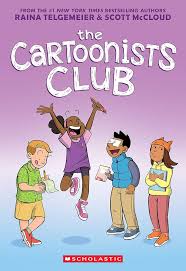
Makayla is bursting with ideas but doesn’t know how to make them into a story. Howard loves to draw, but he struggles to come up with ideas and his dad thinks comics are a waste of time. Lynda constantly draws in her sketchbook but keeps focusing on what she feels are mistakes, and Art simply loves being creative and is excited to try something new. They come together to form The Cartoonists Club, where kids can learn about making comics and use their creativity and imagination for their own storytelling adventures!
A cute novel for fans of Telgemeier’s expressive, colorful work combined with McCloud’s years of comics experience and education to create a novel that relates to the artistic difficulties of kids just starting to find their cartooning inspiration, and lots of tips and tricks. This is more an educational guide than a story, so sometimes the characters feel more like vessels for the authors to share all about cartooning-tools of the trade, copyright, how panels work, the creative process etc. But I learned a lot like the fact like the little sweat marks are called “plewds.” Who knew.
Red Stones: A Graphic Account of the Salvadoran Civil War
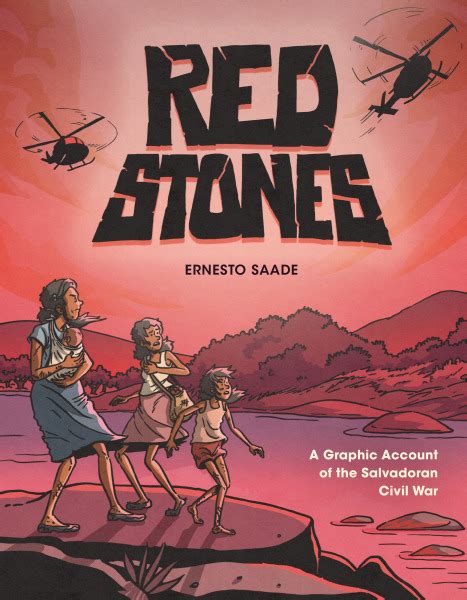
In 1981, the Salvadoran Civil War reached Miriam’s village of Santa Marta.
After spending her days bringing tortillas to the guerilla fighters nearby, she watched government soldiers encroach on her town. Military intimidation turned to violence, and violence turned to the threat of a massacre. Miriam and the women of her town began a forced and desperate exodus.
In 2021, Ernesto Saade visited Santa Marta to hear Miriam’s story.
The result of that in-depth conversation is this graphic account of conflict, displacement, and the Red Stones massacre. This event, not known by all even within El Salvador, is one part of the scar its civil war left behind—a moment of tragedy and resilience seen through the eyes of someone who lived it.
Much like Silenced Voices, a graphic novel detailing the Guatemalan genocide, this novel provides an intense, slightly less graphic account of the Red Stones massacre in El Salvador. Bouncing between the 80s and today, readers get insight to how young, spunky Miriam got caught up in the war, and the helplessness and small acts of heroism saved some of their village.
It goes without saying that there is a lot of death, and Saade doesn’t flinch from descriptors of what happened during the period. He doesn’t depict them. which is for the best because it was just enough for me to hear how they killed a mom and baby and put the baby back in the mom by slicing open her stomach. It’s jsut ugh. War is awful.
The title is a bit misleading as the novel primarily focuses on a specific massacre rather than the whole war. It does provide context to it in the beginning though but I was still confused as to the why and who of the two opposing forces. But I think that’s the point, sometimes war just devolves into bloody fighting with no reason and innocents pay the price. Just as Saade reflects that he was naive when he started this journey, thinking he’d find answers or some spiritual epiphany. War is hell, and the best one can do is simply survive.
 Rachel Reads & Reviews
Leave a comment