The Assignment by Liza Wiemer
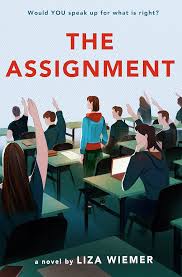
SENIOR YEAR. When an assignment given by a favorite teacher instructs a group of students to argue for the Final Solution, a euphemism used to describe the Nazi plan for the genocide of the Jewish people, Logan March and Cade Crawford are horrified. Their teacher cannot seriously expect anyone to complete an assignment that fuels intolerance and discrimination. Logan and Cade decide they must take a stand.
As the school administration addressed the teens’ refusal to participate in the appalling debate, the student body, their parents, and the larger community are forced to face the issue as well. The situation explodes, and acrimony and anger result. What does it take for tolerance, justice, and love to prevail?
At first I didn’t quite understand the problem Logan and Caleb had with the titular assignment. Yes, Nazi ideology is ugly, but it’s common enough to learn about the reasons and justifications of atrocities. That way, people will be aware when such propaganda rises up again and will be able to think critically. You know, make sure history doesn’t repeat itself.
So I was on the side of the teacher, and Wiemer does an excellent job in illustrating why the teacher, who is well-meaning, and I were wrong. We see why Nazism is wrong, we assume that other students will come to the conclusion.
In reality, the assignment gives some students free reign to unleash their ugly antisemitic (and general asshole) side, and the quiet, unassuming town is turning its head to lots of things. That maybe it’s not a nice town as they thought, and that potentially history can happen again.
An excellent story with short chapters that compel readers to keep reading more. The story primarily focuses on Logan and Caleb’s POV, and also offers other POVs of supporting players, so readers can get a feel for the town and its inhabitants. It also nicely weaves into Caleb and Logan’s personal stories about whether they want to keep their head down to survive their final year or continue to stand up for those who are not able to speak.
Their romance while brief subplot, adds some wholesome levity to how heavy the book gets that those who are fans of friends to lovers will enjoy.
The Silence that Binds Us by Joanna Ho
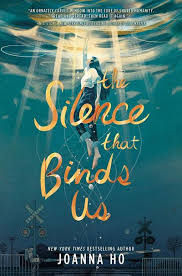
Maybelline Chen isn’t the Chinese Taiwanese American daughter her mother expects her to be. May prefers hoodies over dresses and wants to become a writer. When asked, her mom can’t come up with one specific reason for why she’s proud of her only daughter. May’s beloved brother, Danny, on the other hand, has just been admitted to Princeton. But Danny secretly struggles with depression, and when he dies by suicide, May’s world is shattered.
In the aftermath, racist accusations are hurled against May’s parents for putting too much “pressure” on him. May’s father tells her to keep her head down. Instead, May challenges these ugly stereotypes through her writing. Yet the consequences of speaking out run much deeper than anyone could foresee. Who gets to tell our stories, and who gets silenced? It’s up to May to take back the narrative.
Ho combines the complex themes of the mental health, the model minority myth, the power of narratives, and Asian-Black allyship to create a poetic, moving work for the times.
As Ho writes in her Author’s Note, she did tremendous research and utilizes sensitivity readers to uncover some implicit biases when depicting her Asian-American family which I think she did well. This might be the first time I read Asian-American story where the conflict between mother and daughter isn’t the typical generational divide/mothers are always harder on daughter. Maybe it’s because these are second gen Asian parents and not immigrant ones?
I don’t know, but the conflict between May and her mother is realistic in its communication issues as well as heart-tugging when May realizes how her mother shares her love. Same with the conflict between May and her father who tries to protect her, but in sheltering the reality of his upbringing in Chinatown, he also shelters her from a harsh, but underrated part of Asian-American history that shapes her narrative. Plus provides nice parallel between her father’s guilt over Uncle Joe, and her own guilt of not seeing the signs of Danny’s depression.
The family felt complicated, and messy, yet there was also room for jokes and joy, so unlike the strict, pressure-filled racist stereotypes that the antagonists are trying to push.
Other characters are equally well-drawn like May’s tight friendship with Tiya and her budding interest in Marc. Their close friends and you can see that as they give her grace post-Danny’s death, but they are also willing to call her out about her white-adjacent privilege, allowing May to wrestle with privilege, assumptions and the system that fuels these injustices, distorting the narrative.
Also shout-out to Mrs. Daniels, she’s such a cool teacher.
Additionally, I enjoyed how it was clear there was a passage of time with events taking place over a year, highlighting how trauma and grief can be slow processes.
I do wish there had been a little more emphasis on mental health as May is resistant to seeing a therapist most of the time, and aside from her friends encouraging her to go and saying it really helped, we don’t get much of it. Tying it in with Danny’s depression and suicide, it made me wonder why he didn’t seek help either and if there were other reasons to it like the stigma around such things> But perhaps, that would have been too much to tackle with everything else Ho was detailing.
The Other Side of Perfect by Mariko Turk
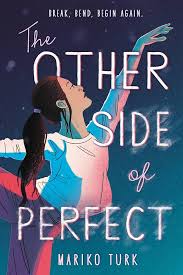
Alina Keeler was destined to dance, but then a terrifying fall shatters her leg — and her dreams of a professional ballet career along with it.
After a summer healing (translation: eating vast amounts of Cool Ranch Doritos and bingeing ballet videos on YouTube), she is forced to trade her pre-professional dance classes for normal high school, where she reluctantly joins the school musical. However, rehearsals offer more than she expected — namely Jude, her annoyingly attractive cast-mate she just might be falling for.
But to move forward, Alina must make peace with her past and face the racism she experienced in the dance industry. She wonders what it means to yearn for ballet — something so beautiful, yet so broken. And as broken as she feels, can she ever open her heart to someone else?
I’ll start by stating that Alina is prickly protagonist. While I understand her dream/future, as she knows it is over, she does direct her bitterness towards the wrong people. It makes it hard to root for, but luckily that’s a major part to her arc, grappling with what to do when she can no longer achieve her dream. She worked so hard for it, and nothing she can do can change that because her body won’t hold on pointe.
Because her new distance from the ballet she loved, she gains a new perspective that maybe there was ugliness to the ballet tradition that she hadn’t clocked in before. The racism baked into some of its traditional dances, and she was blindly complicit because that’s what is prized in a ballerina-obedience and professionalism. Also whiteness, which allowed Alina and her best friend, Colleen, to get looked over because they don’t fit the mold.
The prominent theme of the story is art-Recognizing the beauty of art, and why it drives people to dedicate their lives to it while also seeing that there are parts of it that are bad and should be changed, and hopefully, Alina will put her efforts to becoming a choreographer to do just that.
Moreover, it has a musical subplot-Singing in the Rain– that I enjoyed especially for how Turk gets the chaos of rehearsals, the petty dramas and fun of the theater kid group. The romance between Jude and Alina was also well-done and I just loved Jude in general for being a self-aware boy who is willing to work on himself when he gets things wrong. This ties into another subplot where Alina befriends the “Robobitch” of theater, Diya, who she connects with in their hyper-driven, intense ambition way and calls her new friends out for their sexist treatment of her born out of spite gone unchecked.
And, amid its beauty and romance, Turk has a dry humor that pops like the “Negative Correlation of Dicks” speech.
If you want to understand what that means, read on.
Warrior Girl Unearthed by Angelina Boulley
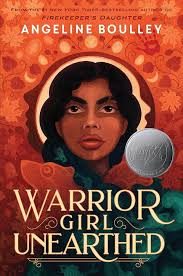
Perry Firekeeper-Birch was ready for her Summer of Slack but instead, after a fender bender that was entirely not her fault, she’s stuck working to pay back her Auntie Daunis for repairs to the Jeep.
Thankfully she has the other outcasts of the summer program, Team Misfit Toys, and even her twin sister Pauline. Together they ace obstacle courses, plan vigils for missing women in the community, and make sure summer doesn’t feel so lost after all.
But when she attends a meeting at a local university, Perry learns about the “Warrior Girl”, an ancestor whose bones and knife are stored in the museum archives, and everything changes. Perry has to return Warrior Girl to her tribe. Determined to help, she learns all she can about NAGPRA, the federal law that allows tribes to request the return of ancestral remains and sacred items. The university has been using legal loopholes to hold onto Warrior Girl and twelve other Anishinaabe ancestors’ remains, and Perry and the Misfits won’t let it go on any longer.
Using all of their skills and resources, the Misfits realize a heist is the only way to bring back the stolen artifacts and remains for good. But there is more to this repatriation than meets the eye as more women disappear and Pauline’s perfectionism takes a turn for the worse. As secrets and mysteries unfurl, Perry and the Misfits must fight to find a way to make things right – for the ancestors and for their community.
This was not only a dark, twisting mystery, but an enlightening novel highlighting the crimes being committed today toward indigenous women and deceased indigenous bodies by prominent institutions/schools/museums.
Technically the second novel in The Firekeeper’s Daughter, readers will be able to read this as a stand-alone to learn about the delayed repatriation of indigenous ancestors and other funeral items in the name of anthropology.
Perry is initially reluctant about her assignment in the Tribal Museum under the eccentric Cooper Turtle, but she, and the readers soon come to understand the importance of repatriation work and will feel the fire of injustice. As Boulley points out, it is often the indigenous people who already historically suffered massacre and genocide are not even respected in death as their bones are marked, sold off and stolen by looters and grave-robbers to be examined or kept as prizes. We don’t do this to the bones of prairie settlers, after all.
It brings up questions on why we consider their bones and the community behind them so easy to dehumanize, worthy of study because they are not like us?
Additionally, it completely neglects the spiritual and cultural importance of these items, and should be handled in respect to their traditions.
Boulley’s work as lengthy, but compelling. Even though the heist doesn’t play in until later on in the novel, readers will be consumed by learning about the careless treatment of indigenous objects as well as the tied thread of missing and murdered indigenous women, an unknown killer stalking the community. Boulley balances the thin line between sensitivity and rawness-these are real problems today, not titillating true crime murders, and we should be aware of the fetishization/dehumanization/racism behind these crimes that allow them to go unsolved.
Plus it gives her plenty of time to fully immerse the readers into Perry’s world, her friends, family and wider community, investing readers when it is go-time for the heist.
The romance between Perry and Erik was simple, but sweet. Makes sense since there are so many other things taking up attention. It’s not the focus, the ancestors are, and Perry is given a good arc of learning how to act strategically and with intention, a lesson she didn’t understand from Cooper until the end.
Furthermore, the mystery was so good. I wasn’t able to guess who had done it, and how it tied together (no surprise), but sharper readers than I will probably be able to piece together the clues.
 Rachel Reads & Reviews
Leave a comment