Spy x Family vol 13-14 by Tatsuya Endo
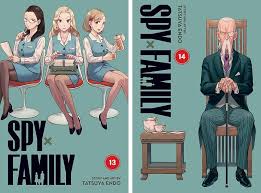
The latest chapters in the Spy x Family saga are as thrilling, and funny as usual. I didn’t expect for there to be a spotlight on Mr. Henderson and Martha, much less have a tragic romance during the war, but I loved it! It reminded me a bit of Fullmetal Alchemist. While there is a lot of attention paid to the child protagonists, Anya, Becky, Damian, etc. We get flashbacks to the war that deepen and add insight to the adult characters and the world at large.
The Desmonds continue to be the freakiest family. I mean, from how Mrs. Desmond acted at the fair to her own son, there is something majorly off about her. But her friendship with Yor is surprisingly sweet?
Can’t wait for more, especially since I already saw spoilers about what’s coming next and I want to see the context for it.
Huda F. Wants to Know? by Huda Fahmy
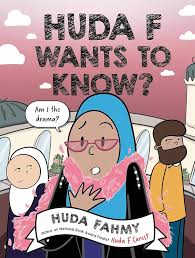
Huda Fahmy is ready for junior year. She’s got a plan to join all the clubs, volunteer everywhere, ace the ACTs, write the most awe-inspiring essay for her scholarship applications. Easy.
But then Mama and Baba announce the most unthinkable news: they’re getting a divorce.
Huda is devastated. She worries about what this will mean for her family, their place in the Muslim community, and her future. Her grades start tanking, she has a big fight with her best friend, and everything feels out of control. Will her life ever feel normal again? Huda F wants to know.
The final book in the Huda F. memoir is just as irreverent and relatable as the others. Tackling a controversial topic in the Muslim world, Huda not only has to deal with the splinter in her family, but ensuing panic attacks and isolation.
Huda is understandably angry and upset about the change in her life. It affects all aspects of her relationships and her schoolwork. This fuels her angst that her junior year is not happening the way she planned, and she pushes people even further.
Honestly, Huda was a bit difficult to root for this time around. Which is the point as several of her sisters call her out on her selfish behavior, and hysterics. This dovetails with how mental health, and panic attacks aren’t addressed much in their community, and Huda’s journey to learning to acknowledge and process her feelings.
However, the mental health aspects feel glossed over, focusing more on Huda’s interiority rather than see her practice those lessons in scene. Telling rather than showing, and the short page time makes the end feel rushed.
A nice work that could have benefitted more pages.
Silenced Voices: Reclaiming Memories of the Guatemalan Genocide by Pablo Leon
Langley Park, Maryland, 2013
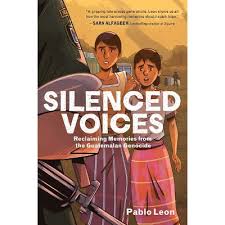
Brothers Jose and Charlie know very little about their mother’s life in Guatemala, until Jose grows curious about the ongoing genocide trial of Efrain Rios Montt. At first his mother, Clara, shuts his questions down. But as the trial progresses, she begins to open up to her sons about a time in her life that she’s left buried for years.
Peten, Guatemala, 1982
Sisters Clara and Elena hear about the armed conflict every day, but the violence somehow seems far away from their small village. But the day the fight comes to their doorstep, the sisters are separated and are forced to flee through the mountains, leaving them to wonder…Have their paths diverged forever?
This was a gripping piece of graphic historical fiction. The title says genocide, and Leon doesn’t shy away from depicting the depraved scenes of entire villages burnt to the ground, a well filled with innocents drowned and shot. It’s worse as Leon introduces readers to the village’s daily life, allowing you to see that these people were simply living in peace. They had kindly grandfathers, meddling little sisters, the “slow” boy everyone looked out for. Readers will understand they were just like anyone else.
But because they were caught in the crossfire between guerillas and the government, and they were shown no mercy.
While the Guatemalan genocide probably has lots of causes and mitigating factors, Leon does a good job in showing that no side was innocent. The guerillas could have been seen as “the good guys” but their actions brought harm to the villagers and they did little to help them in their fight for the bigger cause, so readers can understand why someone would want to join the guerillas and why they were also distrusted. Likewise, the government that started the whole extermination campaign is made of corrupt and cruel officials.
The parts set in the modern day were equally powerful in demonstrating the effects of the genocide on the modern-day survivors (fear, shame, desire to see justice, etc.) and the ripple effects in Guatemalan diaspora and onto the next generation.
Additionally, Leon’s art is vivid, action-oriented and the bright color palette keeps your attention to its movie-like pace.
An important book showcasing an underexplored part of history (At least in the US) that deserves more attention.
Two Tribes by Emily Bowen Cohen
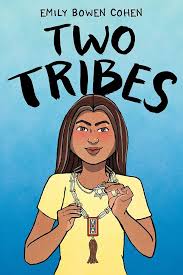
Mia is still getting used to living with her mom and stepfather, and to the new role their Jewish identity plays in their home. Feeling out of place at home and at her Jewish day school, Mia finds herself thinking more and more about her Muscogee father, who lives with his new family in Oklahoma. Her mother doesn’t want to talk about him, but Mia can’t help but feel like she’s missing a part of herself without him in her life.
Soon, Mia makes a plan to use the gifts from her bat mitzvah to take a bus to Oklahoma—without telling her mom—to visit her dad and find the connection to her Muscogee side she knows is just as important as her Jewish side.
This was a cute story for middle-schoolers exploring such themes of identity, and learning to speak up for oneself. Mia can be rash, and impulsive but that’s partly because any questions she has about her native heritage brings up a diatribe against her father by her clearly still-bitter mom. This coupled with insensitive/stereotypical comments by others that make her feel less than. With no one to turn to answers, she has to find them for herself.
Cohen does a nice job illustrating the Muscogee side of the family, allowing Mia to learn along with the readers the traditions, and stories of her community. The inclusion of Mia’s cousin re-emphasizes the point that Muscogee youth are not a monolith, and new generations are finding alternative ways to express their pride in their heritage and their own unique flair.
The only drawback would have to be that the Muscogee side of Mia’s heritage feels more explored and real than the Jewish. Perhaps, Cohen felt that the Jewish side was more or less well-known to the audience and didn’t need to be expanded upon.
I also felt that the two times Mia stands up for herself, once to her mom, and once to her rabbi explaining how she feels about their dismissive attitude toward her native identity, the adults felt too read to admit they were wrong. I know that sounds odd, but these adults were consistent in their ignorance and belittlement. I felt it was too easy that one speech from a kid would make them reconsider and break their pattern so quickly.
On the other hand, this is a middle-grade book, so perhaps Cohen just wanted to show the ideal response from the adults that they’d change their behavior.
LoK: Patterns in Time by various
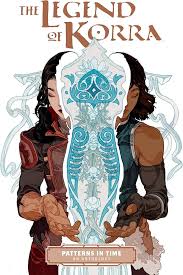
Your favorite characters from Team Avatar and beyond are here in this collection of stories, from the heartwarming to the hilarious. Join Korra, Asami, Mako, Bolin, Tenzin, and more familiar faces from The Legend of Korra, featured in stories specially crafted by a bevy of talented comics creators!
It’s been awhile since I’ve read the LoK comics, and this anathology collection was a nice reminder of how fun the characters are. Primarily focusing on the aftermath of Legend of Korra with the re-opening of the spirit portals, we get some insight to how everyone has grown and a few flashback stories like one with Asami and her mom.
Some of my favorite stories included Friends for Life by Michael Dante DiMartino detailing how Korra met Naga, becoming her animal companion.
A Change in the Wind by Jen Xu, and K. Rhodes where Asami and Korra are the cool big sisters to Jinora who is struggling with her connection to the spiritual plane, bogged down by her role as a leader.
Clearing the Air by Kiki Hughes was full of family feels as Tenzin relates a story from his path, highlighting Air Nomad culture in settling conflict.
Mystery of Penquan Island by Kiki Hughes
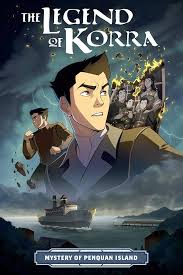
When a strange missing persons case falls into his lap, Mako is forced to choose between his job and doing what he feels is right! An upturned room and an unhelpful witness aren’t promising starts to the investigation, but when his brother Bolin comes across a surprising clue that ties their own mother to the case, the pair embark on a journey to the small, rustic island of Penquan. The island’s inhabitants seem to have things to hide, and the brothers are determined to get to the bottom of it—even if it means uncovering uncomfortable parts of their family’s past.
No one knew how to use Mako in the show, alternating between brooding detective to the boyfriend. Here, Mako isn’t confined to his role as annoying boyfriend or the less helpful support to the Avatar. No, his is a noir-esque mystery that shows his good points like his desire to help, his dogged determination to find answers, and being a protective brother. Sometimes too protective, but that’s another nice thread to the story where he has to learn to let go more when it comes to Bolin.
Obviously Hughes is constrained by the show’s limits, not allowed to make too creative of a leap in case it doesn’t mesh with future projects, but the stand-alone story was well-done. It continues the larger political threads the show explores regarding how the nations interact with one another, the position of benders and non-benders, progress vs tradition. We also get to learn more about Mako and Bolin’s mom!
I’m just confused as to why there was a point where the antagonist says that women should not learn to fire-bend when there are literal female firebenders in the army? It felt like a continuity error.
Ashes of the Academy by Faith Hope Hicks
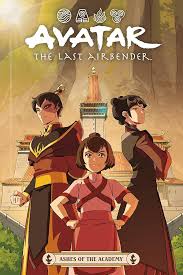
Kiyi, half-sister to Fire Lord Zuko, enrolls at the Royal Fire Academy for Girls! Known for its strict curriculum and even stricter instructors, Zuko worries for Kiyi.
When things take a turn for the worse and a seed of doubt about the new headmistress is planted, Zuko takes action by installing one of the people he trusts most, Mai, as an academy teacher. Can Mai keep a watchful eye over Kiyi and keep her on the right path, or will the academy’s cruel culture shape her footsteps into those of her other half-sibling, Azula?
The summary is misleading as this is less a story about Kiyi and more about Mai confronting the school of her childhood, and how its aggressive teachings helped to enable the Fire Nations’ worst crimes, and beliefs about itself, encouraging students to never trust one another, to use one another to get ahead, that the Fire Nation is the best and anyone who thinks otherwise must be put in their place.
It is far too timely that the Fire Nation’s elite families do not wish for the curriculum to change, protesting when Zuko changes the books from ones that proclaim Fire Nation superiority to ones that show the truth, that the Fire Nation was the bad guy in the Hundred Years War, crying that it will hurt the children to know what their ancestors had done. This totally has no relation to current events.
It has a nice amount of character growth for Mai, processing her memories in this place and how it shaped her, and finding a new goal to teach and help children express themselves and explore the world like she never was able to.
 Rachel Reads & Reviews
Leave a comment