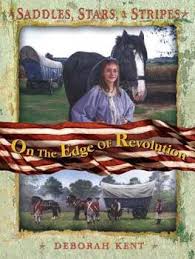
This short-lived series by Deborah Kent caught my eye from the cover alone. In real life, the title is with gilt, and the hardback cover makes it feel sturdy and luxurious. The semi-realistic illustration just adds to it.
The stories are good too, getting the balance between horse girls and historical fiction. Each one have their unbreakable bond with their horse (a different breed in each), yet the girls are distinct. Eliza On Edge of Revolution is uncertain of where she stands with the impending revolution. She is more concerned with loyalty and not making waves until she sees for herself how the British have no respect for the colonials and that having a voice is sometimes more important than freedom.
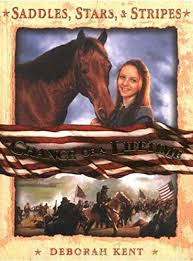
Jacqueline, on the other hand, is impulsive yet sheltered, and it is only in her journey back to her plantation that she realizes the unspoken reason for going to war may not be so justified after all.
Both of these protagonists start on what readers think of as the wrong side of the war (the British or the Confederacy) and in befriending the other side, they become turned to the cause. By degrees, while Eliza and her family is all in on joining the rebels, Jacqueline’s stance is more unclear. She is willing to cover her new friends (and former slaves) flight to freedom, but she will have to navigate the uncomfortable awareness that her family deals in slaves and will not be happy to see her treating them as equals or granting them rights.
Meanwhile, the protagonists in the next two books are more of the underdogs.
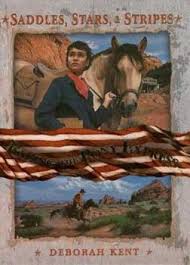
Erika in Blackwater Creek faces prejudice as a Hungarian during the days of the Gold Rush. Her father and older brother are off digging for gold and she has to work for the bigoted rancher, Hart Waltham who is always threatening to evict them. Meanwhile, Lexi in Riding the Pony Express is half-Arapaho. She’s white-passing, but has to hear comments deriding her more obvious indigenous brother, and those wanting to civilize her by sending her to the East so her “bad blood” won’t wild her up. In dealing with missing parental figures, they’re more self-reliant and clever when bigger men have them cornered and allows for some clever escapes and solutions.
I enjoyed the relative historical accuracy Kent has in these novels. She ably portrays both sides of the historic conflicts and the reasons/perceptions each side had of the other nor does she shy away from the prejudices and the fact that some people will always remain bigoted.
A Chance of a Lifetime, and Riding on the Pony Express are probably the most heart-pounding books as Kent keeps the readers on the edge with what might happen next. Blackwater Creek felt a bit aimless in the middle and is liable to make younger readers lose attention.
Too bad the series only has four books. But I have a feeling it would come across the same problem the Horse Diaries series has in that the historic events for horses kinda stop by the 1920s when automobiles hit the scene. Thus the reason while #2-4 crowd around the 1850-60s era. Nonetheless, they were enjoyable and kids who like horses may get a dip into the historical fiction genre. Or just stare at the covers, they are so good.
 Rachel Reads & Reviews
Leave a comment