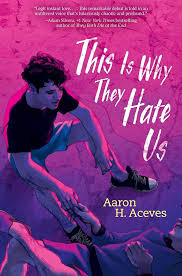
Enrique “Quique” Luna has one goal this summer—get over his crush on Saleem Kanazi by pursuing his other romantic prospects. Never mind that he’s only out to his best friend, Fabiola. Never mind that he has absolutely zero game. And definitely forget the fact that good and kind and, not to mention, beautiful Saleem is leaving L.A. for the summer to meet a girl his parents are trying to set him up with.
Luckily, Quique’s prospects are each intriguing in their own ways. There’s stoner-jock Tyler Montana, who might be just as interested in Fabiola as he is in Quique; straight-laced senior class president, Ziggy Jackson; and Manny Zuniga, who keeps looking at Quique like he’s carne asada fresh off the grill. With all these choices, Quique is sure to forget about Saleem in no time.
But as the summer heats up and his deep-seated fears and anxieties boil over, Quique soon realizes that getting over one guy by getting under a bunch of others may not have been the best laid plan and living his truth can come at a high cost.
Bisexuality is usually thrown through the female lens in fiction. I think, I may be wrong since I’m not versed in queer literature. But from what I’ve seen from my library, it’s primarily female. I suspect it has something to do with readers’ demographics. Just as it’s okay to show female bis in tv because of male gaze. Point is male bisexuality is not shown that often because many think it’s just a stop to gay town.
Aceves’ novel shows a distinct individual look into it through the nervous, overthinking Quique Luna. He’s determined to explore what his sexuality means to him, and he learns a lot more about himself along the way.
Foremost, I think his overthinking defines him more than his sexuality as it presents interesting asides to what it means to navigate the dating scene as a male bi, facing prejudice from closeted men who want to pretend they aren’t gay at all, feeling used for hook-ups and figuring out what he wants in a relationship, and what it means for his future. The reason he’s hooking up with so many guys this summer is because it feels it’s easier and less emotional, but he’d consider marrying a woman in the future, is that heteronormative thinking? Or a desire to be passing, and does that make him a bad person?
It’s complicated and it’s cool to see Quique’s rather eloquent digressions on the topic. But the overthinking can be a lot, and has led him to bad paths before. So the therapy sessions he has with Luciana tackle a different side of Quique in understanding how he can process and rein in these thoughts, and the topic of mental health in general.
Actually, the adults in this novel are pretty cool. Like Luciana, there’s also Mr. Betterman, his gay English teacher that provides a sounding board for his questions and firmly shuts him down when Quique suggests a relationship, pointing out that it’s illegal/all sorts of wrong, and not as romantic as media paints it. Plus his parents’ reaction to Quique’s coming out, and his mental health problems were sweet. You can tell they love him foremost even though they don’t always understand him.
Quique’s hook-ups show different sides to the dating scene from careless hook-ups to guys who are supportive of Quique, but it’s his unrelenting feelings for Saleem that hold the most tension. You really wonder if there really is more to their interactions than just Quique’s hopes.
I think it goes without saying, readers will figure out which guy he ends up with. I just wished they expounded more on the aftermath as we get little information on how it affects their relationship since his boyfriend hasn’t come out to his parents due to religious reasons. We get so much exploration of Quique reconciling his queerness with his Christianity, I would have liked to see a little from his boyfriend.
I also warn that because of Quique’s overthinking that it can feel unnecessarily length and will make one want to put the book down for a break. Also since one can figure out who Quique ends up with by the halfway mark, that it feels like a slog to get through the other men that you know won’t matter in the end.
So while I enjoy that it adds a new voice into the discussion of the YA genre, I have to give it 3 stars.
 Rachel Reads & Reviews
Leave a comment