I know, I know, technically Hispanic heritage month isn’t until October but I read all of these at such a close period together, I wanted to put it out now. Besides it’s my blog, I can do what I want, and just in time for Daria’s final Primas of Power novel coming out at the end of May so yay!
Big Chicas Don’t Cry by Annette Chavez Macias

Cousins Mari, Erica, Selena, and Gracie are inseparable. They aren’t just family but best friends—sharing secrets, traditions, and a fierce love for their abuelita. But their idyllic childhood ends when Mari’s parents divorce, forcing her to move away. With Mari gone, the girls’ tight-knit bond unravels.
Fifteen years later, Mari’s got the big house and handsome husband, but her life is in shambles. Erica’s boyfriend just dumped her, and her new boss hates her. Selena can’t seem to find her place in the world—not Mexican enough for her family, not white enough for her colleagues. And Gracie is a Catholic school teacher with an all-consuming crush, but she can’t trust herself when it comes to romance.
As rocky as the cousins’ lives have become, nothing can prepare them for the heartbreaking loss of a loved one. When tragedy reunites them, will they remember their abuelita’s lessons about family and forgiveness—or are fifteen years of separation too much to overcome?
This was an interesting chick book or I guess contemporary family or contemporary romance? Honestly, I’m not sure how to categorize this as it’s main theme is the importance of family yet the romance took up too much importance than what I had expected in its summary. This is the main nitpick I have with Erika’s storyline with her Mr. Big of a boss, Adrian. Yes, she makes up with Mari as they both realize they misread the situation and both failed as cousins, but it felt a little too glossed over.
Especially in concern to Mari finding out the truth of her father “abandoning” her. The confrontation between her and her father was cathartic, but there was absolutely no exploration of the aftermath of how it affects the image she has of her mother. It just goes back to her divorce plotline.
Selena’s story about finding the right job for her, determined by herself rather than by the guy and learning to balance both was predictable. I was more interested in her storyline about colorism and being the whitina of the family, not white enough for Americans and not Mexican enough for her family. Aside from breaking off a relationship with her douchy ex, that is not explored.
Gracie’s story of being nervous about being a 30 year old virgin was the most boring to me but it grew progressively more interesting as Chavez took her story in an unexpected direction, yet that also felt underexplored since she was sharing page time with her sister and cousins.
So the main theme about family is strong, but the individual plotlines felt rushed or underdeveloped. While Chavez had some interesting twists (Mari’s emotional affair with her husband’s friend/co-worker, Gracie’s baby daddy did not play out as expected but it was realistic), there felt some loss of potential. I especially wished we had more time with the cousins’ abuela and bis-abuela who were the heart of the family and catalyst for them getting together. I could empathize with their grief over the loss of their bis-abuela but that came more from my own experience rather than connection to those specific fictional characters.
A Dish Best Served Hot, and Sleeping with the Frenemy by Natalie Caña

Years ago, Saint walked away from the girl he loved to fulfill his duty. Now he’s struggling to build bridges between his drifting family, take on more responsibilities at his uncle’s construction company, figure out why his daughter refuses to talk at school and curtail his mischievous abuelo’s escalating pranks. Then she walks back into his life.
Social justice advocate Lola León has returned to Humboldt Park for two reasons: to help care for her dear abuelo and to serve the community center she loved, particularly the shelter for unhoused LGBTQIA+ youths. When she finds out that the Vegas are responsible for endangering both, she is more than ready to go to war—even if the boy she never forgot is standing at the front of the battlefield.
Neither of them expects to become allies in saving the shelter, helping Saint’s daughter or ending the decades-long feud between their grandfathers. They definitely don’t expect all of their old feelings to come rushing back. As Saint and Lola enter combat, they can’t help but wonder where the other’s true allegiance lies, and whether they’ll win these battles only to lose each other.
This was a spicy friends to lovers as one can guess by the title. Unlike other enemies to lovers, they have a real beef that can’t be smoothed over by better communication. Lola’s father used to be a gang member, in fact he’s still in jail, and Santos is a strict law and order guy and he is kinda super judgy to Lola when they were younger/today which Lola has enough of dealing with from randos. Plus their grandfathers are also feuding.
They had big feelings when they were teens, but couldn’t act on them. Today, he’s a single dad. She’s an activist, mother figure to those who work under her and the people she advocates. They have slightly better communication, but it’s touch and go since they have a lot of flaws they have to work through first.
Santos has his naturally controlling nature on top of untreated PTSD related to his wife’s death. He likes to keep those he loves safe, but Lola doesn’t back down from fights and that naturally leads to clashing when she feels he’s being too overprotective and he thinks she’s unnecessarily putting herself in danger. I liked his journey in not putting his own baggage on the people around him. Plus I enjoyed how Lola saw and appreciated how hard he was working as a single dad in trying to support and defend his daughter’s right to education even if it’s a little different from other neurotypical students. Oh, and he learns to be less judgy about Lola’s family roots.
Lola’s story felt a bit unconventional then predictable. The best way to explain it is that I think it’s very cool how passionate she is about youth advocacy, prison rehabilitation and the like. And I do agree that she needed to realize she was stubbornly taking on too many things and approaching advocacy burnout, that she was being a superwoman as an overcompensation for her criminal dad ties. But I did agree with Santos that even after she knew about his concern for her, she still willfully went into a dangerous situation. Like yes, he overreacted, but she also knew he had a similarly troubling experience with his wife’s death and that this could be triggering- did not care. It sort of felt like it was glossing over her flaws and making Santos grovel more because of how judgy he is.
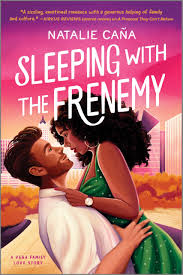
Leo Vega’s love life has been on life support since long before the gunshot wound that put him on leave from the fire department. Now, a year after his injury, he’s finally able to return to work, but he’s no closer to fixing things with Sofi, his sister’s best friend and the woman he’s had a secret on-again, off-again relationship with for years.
Sofi is still reeling from the revelation that her best friend lied to her years ago, setting her life on a course she’s resented ever since. She’s done with the Vega family, and that includes Leo, who has always prioritized his tight-knit clan over their relationship. She’s moving on with her life, but then circumstances beyond their control push Sofi and Leo into a tense roommate situation. It’s almost impossible to move on with someone new when Leo is there, reminding her what they had, every day.
When his great-granddaughter Rosie tips Papo Vega off about what’s been going on between Leo and Sofi, he’s on the case, with reinforcements. Working behind the scenes alongside Sofi’s mom, he’s determined to help these two stubborn lovebirds end up where they belong—together.
After the second book, I was unsure how much this would fall into the sophomore slump or junior slump since it’s the third, but I was pleasantly surprised. I felt the connection between Leo and Sofi was not only deeper, but their communication and journeys to bettering themselves was more fulfilling. First off, the title is misleading as it never feels that Sofi and Leo are frenemies. They’ve always had an on-off relationship, but since Sofi wants to become friends with Leo’s sister/her ex bestie again, she wants no relationship.
Universe laughs in her face. So does her abuela and his abuelo who conspire with Leo to get her back for real, not this friends with benefits arrangement. Leo has always wanted her and settled for just sex, but since getting shot he doesn’t want to fall into that habit again. He wants her in a real relationship, bf-gf titles included, and he does a good job in coaxing Sofi’s walls down and getting her to see that they could have something more.
While there is a third act break-up related to the abuelos/Leo scheming, it doesn’t feel contrived because Cana seeded some real doubt to their relationship before Sofi even finds out her abuela’s part. She is wondering whether she should be in a relationship if she’s continually comparing Leo to her charming yet unreliable, deadbeat dad. Meanwhile, Leo still has his childhood issues of feeling like the dumb one in his family, that his ADHD diagnosis led to them having lower expectations, and that Sofi also sees him as not BF material.
They have the opposite problems, Sofi distrusts everyone and when they make a mistake that justifies her opinion, she retreats, scared of getting hurt. Leo hides behind a facade of fearlessness, deluding himself that he has gotten over his insecurities when he hasn’t and lashing out. They have opposite communication styles and I enjoyed how both come to accept this challenge in their relationship and affirm their choice to reach the other halfway.
Plus the sex scenes were creatively hot, the family was supportive and humorous, and it felt like an excellent full circle to celebrate with Kamillah and Liam’s wedding, the couple that started this trilogy.
Full Moon Over Freedom by Angelina M. Lopez

Gillian Armstead-Bancroft—Pride of the East Side and once-perfect bruja, wife, and mother—is going to spend her summer getting good at being bad.
The first time she left Freedom, Kansas, behind, she did it by doing everything right. This time, she’ll hide from the large Mexican American family welcoming her home and work in secret to break the curse that’s erased her magical life. Only by doing it all wrong can Gillian get herself and her two children away from the ghosts of her hometown by summer’s end.
Nicky Mendoza is an answer to her prayers. He was the practical solution to the problem of her virginity when they were younger, and now, as a gorgeous artist in town for only a weekend, he’s the ideal man to launch her down the path of ruination.
But Gillian isn’t the only one who’s cursed.
Nicky has been plagued by his furtive, enduring love for her as long as he’s been haunted by his cadejo, the phantom black dog that stalks his psyche. He’ll stick around to be whatever Gillian needs him to be this summer—but he won’t touch her. Touching her, then watching her leave again, would ruin him for good.
Lopez’ second novel in the Milagro series delves deeper into the magical realism genre. Why shouldn’t it as Gillian was an aspiring bruja until her ex husband undermined her confidence, her intelligence, and everything. Stuck in the contentious divorce, Gillian is sure she’s cursed and the only way to break her curse is for the always good girl to be bad.
Gillian’s arc was far more interesting as she deals with topics like emotional abuse, learning to lean on her family, and breaking the cycle of women feeling like they are responsible for and have to fix the feelings/egos of the men around them. Plus Lopez cleverly ties this into the real life case of the Hull House Baby (look it up), diving into how the stereotypes surrounding latinas negatively affect their rights and financial futures.
Nick’s arc was more confusing to me because of the magical realism element. It felt too steeped in metaphor that I wasn’t sure what was real and what was not.
However, their journey together was a nice slow-burn of them coming to terms with their flawed pasts and their flawed views of each other like her slightly looking down on him, and him idolizing her. Also the chapter where Nick watches over Gillian’s kids while she’s at work was so heartwarming when he realizes that he loves her, but she’s their whole world and he is more in awe of Gillian and vows to be a good guy for her kids to turn to.
Kiss Me, Catalina by Priscilla Oliveras
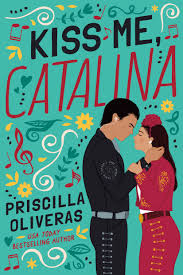
Ambitious San Antonio singer Catalina “Cat” Capuleta gets the chance of a lifetime when she joins superstar heartthrob and fellow mariachi Patricio Galán on his seven-week concert tour. Demanding and arrogant, Patricio challenges Cat on every level, as an artist and as a woman. But headstrong Cat is determined to be his match. No matter how seductive Patricio’s baritone voice, Cat’s eyes are only on the success and making her familia proud.
No woman gets under Patricio’s skin like Cat. Her talent mesmerizes. Her passion is thrilling. And her drive, stemming from an old unhealed family wound, exposes a vulnerability he secretly recognizes in himself.
When the duo hits the road, the sparks don’t just fly—they detonate. Stage by stage, as each reckons with the past—and with each other’s quick-fire personalities—they bring crowds to their feet, and Cat’s long-held dreams come true. Will their road romance go up in flames? Or could making music together kindle the most rapturous love song of their lives?
Catalina and Patricio’s romance was on fire, and I don’t just mean onstage. Since this is a retelling of Taming of the Shrew, you know they are going to clash but they have so much more in common that you just wish they’d put their egos aside and kiss already. That was the vibe for most of it, but it wasn’t all outburst of independence. Oliveras made their relationship work best in the quiet moments where they really connected in songwriting.
Music is a means of expression and identity for both of them. Patricio is bogged down as the son of “El Rey” and his father is a toxic narcissist that puts him down for not exactly following his path and simultaneously when he does do what his dad want, told he will always stay second place. There’s no winning, but with Catalina opens his eyes up to finding approval within himself and breaks through his writer’s block.
Catalina also has her own toxic family, ie her deadbeat dad. Although she’s happily adopted by the Capulets, the scars of their father leads to her self-imposed no marachi rule which is less protection of her sister and more protection of her heart and fear of putting her dreams second.
Catalina is more of a take action girl so introspection is hard for her. But so cathartic as a reader to get that emotional break through as the healthier mode of communication allows them to get back together in such a romantic way after the third act break up.
As with the first book, I enjoyed learning more about the cultural history of mariachi and the debates within the genre in regards to female inclusion and pop-music crossovers and how it reflects the audiences and evolving viewpoints.
My one critique would be that the groveling on Patricio’s part felt a bit too on the nose as I thought they were rqually in fault during their argument.
Anyway, next one whenever that comes out is supposedly going to be based on Twelfth Night. Readers will probably have noticed the increased mention of junior members Sabrina and Viola so that will be interesting to see. For my part, I’m waiting for Much Ado about Nothing to come up. We need some more Beatrice and Benedict retellings.
Up in Flames by Hailey Alcaraz
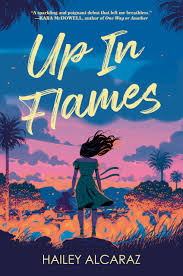
Gorgeous, wealthy, and entitled, Ruby has just one single worry in her life—scheming to get the boy next door to finally realize they’re meant to be together. But when the California wildfires cause her privileged world to go up in flames, Ruby must struggle to find the grit and compassion to help her family and those less fortunate to rise from the ashes.
At eighteen, Ruby Ortega is an unapologetic flirt who balances her natural aptitude for economics with her skill in partying hard. But she couldn’t care less about those messy college boys—it’s her intense, brooding neighbor Ashton who she wants, and even followed to school. Even the fact that he has a girlfriend doesn’t deter her . . . whatever Ruby wants, she eventually gets.
Her ruthless determination is tested when wildfires devastate her California hometown, destroying her parents’ business and causing an unspeakable tragedy that shatters her to her core. Suddenly, Ruby is the head of the family and responsible for its survival, with no income or experience to rely on. Rebuilding seems hopeless, but with the help of unexpected allies—including a beguiling, dark-eyed boy who seems to understand her better than anyone—Ruby has to try. When she discovers that the fires also displaced many undocumented people in her town, it becomes even more imperative to help. And if she has to make hard choices along the way, can anyone blame her?
In her powerful debut novel, Mexican American author Hailey Alcaraz chronicles a riveting portrait of transformation, resilience, and love with an unlikely heroine who, when faced with unforeseen disaster, surprises everyone, especially herself.
This was wonderful. Wonderful, wonderful, wonderful retelling of Gone with the Wind.
First off, Alcaraz manages to weave a perfect update to the indomitable Scarlet O’Hara with Ruby Ortega. The impulsiveness, the selfishness, the ruthlessness, the wish to be more like her serene, ladylike mother, the stubbornness combined with the fierce love of her family, her land, her business and coming to recognize her flaws to try to do better.
Not to mention her amazingly complicated relationship with Remy. He plays mind games with her, and is equally stubborn, prideful and outright predatory when it comes to building a business, but together they work. Even though they hurt each other, you know no one else would be to handle them at their worst and still love each other.
But I think the best part is how they grow throughout. Neither ends the story as the young adults they used to be, concerned with petty power plays and hiding their facade through confidence and showmanship.
So those two, amazing, fire crackling good. No pun intended.
Alcaraz use of the California wildfires in lieu of the Civil War was a brilliant move as it reflects on the importance of land and what it represents, dreams of business, family heritage, mourning loss of a happier, more innocent past etc, and bypasses the glory of the Old South.
Naturally, there are no slaves in this novel but the choice to make the O’Haras into the Ortegas makes an interesting parallel. Where Scarlett is miffed that most of their slaves ran off after the War (and after they had treated them so well she sniffs), Ruby feels a similar sense of abandonment when their former workers leave the family to rebuild by themselves after the wildfires. Hers leads to a spark of conscious raising when someone points out that their former workers may be afraid of being deported or harassed by the increased police presence.
Alcaraz is able to explore various topics related to the Latinx experience like a hint of the colorism that allows Ruby to live unaffected by the police presence because she doesn’t look like a Latina. It also leads her to dating a bigot who assumes she’s white, and well, in classic ruthless pragmatic Scarlett fashion she continues to date him to seize his construction services at a discount.
She does get better as she realizes the economy and their community needs these immigrants, and that they deserve more than harassment and deportation threats, so starts her new mission to not only rebuild the Ortega’s hospitality business but make it hospitable for all.
While I rave about Ruby, Remy also goes through his shifts although his is more shrouded in mystery and emotionally closed off just as the elusive Rhett. But it fits because Remy’s story is unfinished and he is still growing by the end of the book with his past catching up to him. Ruby’s growth is more complete by the end of the novel, leaving them in two different places, but there’s a certainty that they’ll find each other again when they’re both ready for it.
Ashley or in this case, Ashton is far more likable than the original novel character in my opinion. He embodies someone who wants to fight, but he doesn’t have the inner steel as Ruby does, someone who mourns what is lost and is unable to move on. It’s almost depressive in a sense as he has no sense of direction, but he has far more nobility than Ashley. Instead of stringing Ruby along, it feels like his attraction to Ruby is more out of a longing for familiarity. At least he comes clean quickly to Melanie and apologizes to both. Still, Ruby’s realization that her feelings were also coming from a place of wanting to who she used to be and envisioning a Ashley that doesn’t exist, was powerful.
Melanie was also great. Not only as a supportive friend, but someone who embodies true emotional strength and ability to stand up to Ruby that even she has to respect.
As you can tell, I could rave about its good points all day. If there were any bad points, I must have missed it. I was just that blown away by how Alcaraz deepens the characters from the original novel, and updates it to the important topics occurring today.
The Girl Who Could Silence the Wind by Meg Medina
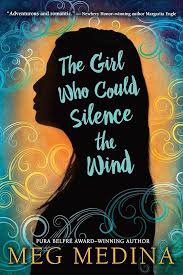
Sixteen-year-old Sonia Ocampo was born on the night of the worst storm Tres Montes had ever seen. And when the winds mercifully stopped, an unshakable belief in the girl’s protective powers began. Sonia knows she has no special powers, but how can she disappoint those who look to her for solace?
With deeply realized characters, a keen sense of place, a hint of magical realism, and a flush of young romance, Meg Medina tells the tale of a strong-willed, warmhearted girl who dares to face life’s harsh truths as she finds her real power.
I must start with the disclaimer that magical realism isn’t usually my thing. While the fantasy (primary magical nature elements) is cool, magical realism is paced much slower than regular fantasy or regular realism. I suppose it’s for the readers to pause and be present in the ambiguous magical wonder. I just find it slow.
Which is a shame because Sonia’s arc is interesting. She’s treated like a saint, but it’s a burden to be the one who the village puts all their hopes, dreams and sorrows. This is doubled when she realizes that she truly has no powers to change anything or help when it matters most. But no one will believe her. It’s quite a identity crisis, but her subsequent journey to the city where she experiences the shadows of life among the rich and cold-hearted, feels predictable.
In fact, it’s uninteresting compared to the mystery she left at home: Luis, the orphaned poet and her love interest, delves into the secrets and corruption within their tiny town to find where Sonia’s missing brother went. Medina paints a living picture of the mining village that lives in its cycle of poverty, hopelessness and superstitions like so many small towns that is ripe with shadows no one talks about.
The sad fact is that while Sonia gets the most depth, the hints of other characters are more interesting like Luis, her aunt, her world weary colleague Dahlia, dreamer brother Rafael and so on. It feels like missing potential to make it more of an ensemble piece.
Libertad by Bessie Flores Zaldivar
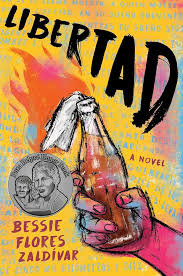
A queer YA coming-of-age set during the rigged Honduran presidential election, about a young poet discovering the courage it takes to speak her truth about the people and country she loves.
As the contentious 2017 presidential election looms and protests rage across every corner of the city, life in Tegucigalpa, Honduras churns louder and faster. For her part, high school senior Libertad (Libi) Morazán takes heart in writing political poetry for her anonymous Instagram account and a budding romance someone new.
But things come to a head when Mami sees texts on her phone mentioning a kiss with a girl and Libi discovers her beloved older brother, Maynor, playing a major role in the protests. As Libertad faces the political and social corruption around her, stifling homophobia at home and school, and ramped up threats to her poetry online, she begins dreaming of a future in which she doesn’t have to hide who she is or worry about someone she loves losing their life just for speaking up.
Then the ultimate tragedy strikes, and leaving her family and friends—plus the only home she’s ever known—might be her only option.
This was a powerful piece, highlighting the complexities of a corrupt government and one family’s attempts to live and survive in a very uncertain world, and the courage it takes to fight for democracy.
It’s a very timely book as we live in our own uncertain government and corrupt officials. Libertad and her brother’s struggle to decide whether or not they want to join the protests speak to the questions about what it takes what seems to be an immovable force, where violence and oppression quickly turns deadly. How do you love a country that seeks to crush you? Should you stay and fight? Should you leave and find yourself.
There’s no easy answers. Just as there is no easy solution to solving the effects of 2009 coup and the subsequent right wing government.
I enjoyed how Flores wove the conflicting familial points of view over whether the right wing government is the lesser of two evils, whether the protests will bring change or bring danger to themselves? Who exactly is the bad guy is a difficult question because Honduras has survived the extremes of a left wing government and a right wing government. No one seems like a good option.
Yet the chance to have a democratic election is still a signal of hope and something worth the struggle.
So not only is it a good primer to Central American politics, and the US’ role in its destabilization there and in others, Bessie’s personal story is also moving as she navigates her feelings for her friend when homophobia is very much a danger to herself. Just as with the politics, her family has conflicting views but ultimately there comes a point of love and communication. But it takes awhile, the family is trying to break its own cycle of shame, and abuse, physical and emotional. But the flawed people only make the story better in my opinion.
The only nitpick I have is that some parts are repetitive like she mentions how the government used social security to pay for their campaign, leaving no medicine for the people so citizens received flour packed into pills, and then Flores brings it up again 100 pages later. Maybe they were worried people would forget the minor details since it’s a long novel.
 Rachel Reads & Reviews
Leave a comment