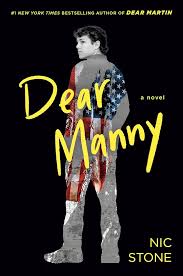
From the New York Times bestselling author of Dear Martin comes the thrilling final installment of the series, set in college. Jared (white, Justyce’s roommate, woke) is running for Junior class president. With his antiracism platform, he’s a shoo-in. But he’s up against the new girl, Dylan. Will Jared have to choose between his head and his heart?
Jared Peter Christensen is running for president (of the Junior Class Council at his university, but still). His platform is solid—built on increased equity and inclusion in all sectors of campus life—and he’s got a good chance of beating the deeply conservative business major he’s running against.
But then a transfer student enters the race and calls Jared out for his big-talk/little-action way of moving. But what’s the right way to bring about change? As the campaign heats up, feelings are caught, and juicy secrets come to light, and Jared writes letters to his deceased friend Manny, hoping to make sense of his confusion. What’s a white boy to do when love and politics collide?
This was certainly a surprise! The previous entries in Stone’s Dear Martin trilogy focuses on the black man’s experience in our unjust country especially in regards to policing and wrongful incarcertation. Now she brings the lens to the detestable Jared, the racist prick of the previous books.
However, it’s been two years and Jared has gotten more ‘woke’ so to speak but he has several big blind spots. I admit I had been suspicious about Jared’s about-face in Dear Justyce but Stone makes the development believable as Jared is able to identify injustices and malicious discrimination when it comes from others, but still struggles when it comes to not using his own privilege to his advantage and what it would mean to give it up.
The big example would be the student gov election where he’s running against Preston III who is basically his former self but worst as he didn’t have the capcity to change nor want to. Jared is uneasy with the idea of becoming president, and knows it will be somewhat white-saviorish if he tries to, but isn’t he the better option compared to the Confederacy-lover?
Then there’s Dylan, amazingly eloquent and fiery in her own right, but Jared still doesn’t want to drop out to make room for her. He’s committed yet smitten and they’re both hiding secrets that could disqualify them from the running.
I really enjoyed Stone’s exploration of Jared, factoring his upbringing and how difficult it is to go against his over-bearing father to do what is right while not giving him a pass just because he has daddy issues. Jared makes huge mistakes and god, he can be so stupid when he gets angry that he justifies his own actions and/or is in denial rather than take a hard look at himself. But at the end of the day, he’s also human and as Stone writes in his author’s note that it is important as an author and for readers to challenge themselves to look at the stories of those different from them.
Moreover, this book is a reflection of the real world politics and the difficulties of privilege. Not the difficulties of having privilege but of letting go of priviliges and recognizing one’s complicity in the system. Throughout the book Jared knows he’s privilieged but it takes the whole novel before he realizes the extent it has protected him from wrong-doing and that he needs to not wait for someone to find out his crimes, but out himself and deal with the consequences of his actions.
Dylan was also a very cool character dealing with some heavy shit, I don’t kno how else to describe it but wrapped up in mystery that makes you want to know more. The romance between them is admirably handled in not being a straight-forward hook-up. There’s potential yet it’s clear they both have some growing to do.
It was also nice to see old characters again like Justyce and SJ thriving while pushing against Jared’s BS. But they are used sparingly as Justyce tells Jared that he doesn’t have the emotional bandwidth to be his voice of reason to his white privilege when he has his own life. Great point in not making him Jared’s black best friend figure and forces Jared to confront things on his own.
The one nitpick I have with this is when Stone continues to use her epilostory, script-font, and standard prose shifts in the narrative. While it worked in Dear Martin, and Dear Justyce, Jared totally feels like he would be someone to talk about himself in third person so the shift from first person epilostory to third person omiscent prose felt jarring the entire time.
Otherwise, it was an excellent book exploring politics and priviliege with nuance and character development relatable to the contemporary teen.
5 stars
 Rachel Reads & Reviews
Leave a comment