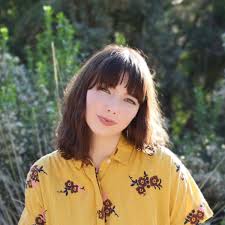
Keala Kendall is the upcoming author of How Far I’ll Go and No One Gets Left Behind in the Twisted Tale series. A hapa Native Hawaiian writer of descent, she is also the co-founder of Pacific Islanders in Publishing and works to increase the PI-diasphora representation in literature. She graciously took the time to answer my questions about her upcoming work, thoughts on horror and what else is in store. Enjoy!
1. When did you begin to write? Do you remember your first story?
I feel like I’ve always been writing, so it’s hard to pinpoint when I started. But when I was eight, I posted an Inuyasha fanfic online which is the first story I shared publicly. One of my brothers is a famous fanfic writer, so he inspired me and was very encouraging as he helped me post it.
2. While there’s a call for diversity in literature these days and an audience for these stories, what was it like in the beginning for you to break into this industry to share your stories focusing on your heritage?
I was in school when We Need Diverse Books began, so I was lucky enough to benefit as a reader. However, the percentage of stories that are authored by Pacific Islanders, or that even feature Pacific Islander protagonists, has always been historically low. I didn’t get to see myself reflected in stories and that was mirrored in my early work. One of the first stories I wrote was about a white girl in Massachusetts which is a place that I’ve never been to. But unlike Hawaii, Massachusetts seemed like the woodsy sort of place where fairytales did happen. Growing up, most of the stories that were set in Hawaii that I saw were about its location as a beachfront paradise which didn’t resonate with me.
Unfortunately, even when I started to write stories that featured my Hawaiian heritage, I found it difficult to convince publishing professionals that the Hawaiian characters I wrote were accurately Hawaiian enough. At the time, I was writing sci-fi, so these characters existed in worlds that did not include the set dressing of Hawaii even though the themes they were embroiled in reflected modern Hawaiian issues that interested me.
It wasn’t until I wrote my Hawaiian characters in Hawaii that those characters were deemed Hawaiian enough by non-Hawaiians. I am excited about the desire for diversity in publishing, but diversity should also reflect a diverse set of experiences. Hawaiians exist outside of Hawaii and there are Pacific Islander writers who want to imagine worlds that show Pasifika futures—not just our past.
3. How did you begin your volunteer organization, Pacific Islanders in Publishing?
It was a group effort. Alongside two other Pacific Islander authors, Manuia Heinrich and Kealani Netane, we created Pacific Islanders in Publishing to promote Pacific Islanders in the industry. Every Asian American and Pacific Islander Heritage Month, we’d see “AAPI” book lists that didn’t include a single Pacific Islander (or they had one PI-authored book that was published decades ago).
Every year, we found ourselves creating the same Twitter threads and posts, trying to spotlight existing Pacific Islander creators in an effort to combat erasure. While our posts would get a lot of traction and support, our efforts felt repetitive, sometimes even Sisyphean, because we were just three people.
Our first goal was to create an online community for Pacific Islanders to meet and share resources, then we started working on a database of Pacific Islanders that we could spotlight. I had already been approached for IP work twice, and I could imagine a future where a publisher approached me, wanting a book that I wouldn’t be the best person to write, so I loved the idea of having a database that I could point them toward instead.
From there, the website quickly took shape as did our goals, and Pacific Islanders in Publishing was created.
4. What impact do you hope your organization will provide?
I’d love to see more accessible and diverse Pacific Islander-authored books. Last year, I was helping out family in Utah which has a large Pacific Islander population. In fact, Utah celebrates a separate Pacific Islander Heritage Month in August. But when two anticipated titles by Pacific Islander authors were released, I couldn’t find them at the three book stores I checked.
One of our next goals as an organization is to meet with the sales team of publishers to raise awareness about these communities they are ignoring. Pacific Islander readers aren’t able to find these books because there isn’t an effort to reach our communities. I went to three different bookstores to find those books. Most people won’t put in that much effort. The majority of them don’t know these books exist because they aren’t available on shelves.
On top of increased access, I’d love to see a stronger push for Micronesian and Melanesian authors and Pacific Islander stories in all genres. I desperately want to read Pacific Islander stories about modern romance, mystery, crime, and comedy. We live modern lives and we have stories to tell about our experiences outside our historical context. I can’t wait for readers of all ages to read Pasifika sci-fi, stories about the ongoing fight for Kanaky independence, and a romance in Guam.
When we read widely, our understanding of the world and the people around us grow deeper and our lives become colorful and richer.
5. Your upcoming novels are part of Disney’s Twisted Tales series, how did you join the project?
I had worked with Disney on a different IP project, which wasn’t related to any of their movie properties. It was an original pitch that an editor wanted to develop, so we collaborated on it together. That project didn’t make it through acquisitions, but the project’s editor recommended me to the Twisted Tale team to write a Moana Twisted Tale.
When they asked me, I’ll admit I was a little hesitant to audition for the project. Don’t get me wrong. Moana is a huge property. I knew it could be a great career opportunity. But the first movie mixed together multiple Pacific Islander cultures (Samoan, Hawaiian, Tahitian, Solomon Islander, etc.)—and I am one Hawaiian girl. I was also wary about the possibility that I’d be dictating a pre-written script for the book and that I’d be a “Hawaiian” name on the cover. But when I met with my now-editor, the amazing Britt Rubiano, she alleviated my concerns and I agreed to do the audition.
Even when a publisher approaches you for an IP project, you’ll often be asked to audition, which means you’ll be asked to write a sample. Multiple authors can be asked to write samples for the same project as you. During this “audition”, the publisher will choose the author whose sample they liked the best.
In Moana’s case, I was asked to write the beginning chapters and a perspective outline for the book. I submitted the material at the end of August and I heard later that day that Britt loved the pages. She submitted my sample to the studio for consideration. Two months later, I heard the studio liked the sample. However, they had some notes. I addressed their notes and resubmitted my outline. A week later, I received their official offer.
6. Were you given a lot of leeway in adding to such a globally known IP as Moana?
Yes and no, because Moana 2 was still in development.
Although I had received an official offer to write Moana’s Twisted Tale, the studio still had notes on my book’s outline. Through months of back-and-forth, I found out that my proposed storyline was similar to Moana 2 which was in development at the time. Even though Moana’s Twisted Tale is a what if novel that reimagines the film, they were concerned about how the book would affect continuity in regards to Moana 2.
For context, the movie begins three years after the events of Moana. In that time, Moana has not found another island inhabited by other people—and this is a central plot point for the sequel. Because of this, one of the guidelines I had was that Moana couldn’t encounter any other island villages, which was a tough note.
Luckily, the studio and I were able to meet and we collaborated on a solution together that I think readers will enjoy.
7. How much does Hawaii shape your characters and influence the story elements?
To be honest, I am always discovering new ways that Hawaii—and my heritage—shape my writing. I am not always conscious of the influences that inspire my characters or story elements. I can’t say much about How Far I’ll Go but I was surprised at how I was influenced by Hawaiian myths. There are influences woven throughout the story that I didn’t plan for. It’s been exciting for me as an author because I love talking about Hawaii and sharing my homeland’s history and culture with others. Our culture has been papered over and exploited by tourism while the true history of our island kingdom isn’t normally taught outside of Hawaii.
8. You also have an upcoming horror work, Soon Ripe, Soon Rotten. Are you able to divulge more of what it is about?
Oooh, technically it’s a secret as we haven’t announced it yet, so all I can say is it is a Hawaiian gothic that follows a diaspora native Hawaiian who goes to her ancestral homeland for the first time to find her twin who has gone missing at an island wellness resort built into the bones of an old sugarcane plantation.
9. What is it about the horror genre that allows authors and readers to explore injustice and trauma?
I studied film in school. In film history, you learn that the moving image mirrors the times it is created in and, where this regards horror, you can learn a lot about a society’s fears from its popular horror stories. As a genre, horror has always been about metaphors, allegory, and symbolism. Watching horror movies from other time periods and countries, you can see the myriad ways each culture and society expressed its different “horrors”, because the genre explores the cultural anxieties and fears of the times they were created.
Think about the 1954 Japanese movie Godzilla (Gojira) and what Godzilla, the monster, reveals about Japanese fears and anxieties. In the film, Godzilla is theorized to have been disturbed by underwater hydrogen bomb testing and uses an atomic breath attack to destroy parts of Tokyo.
A few months before the Japanese film started production, a fishing vessel was showered with radioactive fallout from a U.S. hydrogen bomb test on Bikini Atoll. The event caused panic in Japan and reinvigorated the anti-nuclear movement. The film’s opening scene, which includes a Japanese fishing boat being destroyed by Godzilla, is a direct reference to this impactful event. Godzilla is a clear metaphor for nuclear weapons and their destruction.
Horror lets us explore our fears through the safety of entertainment. We’re able to use allegory and symbolism to discuss real-life harm, like injustice and trauma. Good horror should make your audience feel uncomfortable, allowing authors to cut a little deeper than they would with other genres. If my writing makes you uncomfortable, well, that’s just a part of the genre. You should feel unsettled.
10. Any upcoming news you’d like to share?
Moana’s Twisted Tale, How Far I’ll Go, releases September 2nd and is available on Goodreads and for preorder purchase. We should have a cover reveal soon. I got a sneak peek and I think longtime fans of the series will love what the Disney design team has cooked up.
You can learn more about Keala from her website and following all relevant social media: https://www.kealakendall.com/
 Rachel Reads & Reviews
Leave a comment