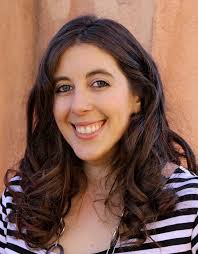
Dahlia Adler is the author, editor, anathologist among other hats for The Radleigh University trilogy, Cool for the Summer, His Hideous Heart anathology, Going Bicoastal and other YA books specializing in queer, Jewish representation. She graciously took the time before Hannakuh to answer my questions about representation, behind the scenes process to anathologies and what’s coming next. Enjoy!
1. To start off with a light note, what are your favorite tropes to write?
I don’t end up writing my favorite, to be honest. Like, I’d love to write a really good enemies-to-lovers, but I feel like it just comes off as flirty banter no matter what.
Meanwhile, I don’t think of myself as loving second-chance romance, but I’ve written it twice. For me, my favorite is really about pairing, and that’s straitlaced guy/chaos girl. Love love love.
2. Besides being an author, you’re also the editor of several anthology collections. What is the process of coming with a anthology and choosing the writers?
Anthologies are complicated, but they’ve been a lot of fun!
The concept for my first one, His Hideous Heart, was actually the idea of a teacher on Twitter, and from there it was relatively easy to figure out what would follow it.
Then “girls in sports” was something Jennifer Iacopelli and I had been lamenting was way too rare in YA, and the holiday anthology idea was born of wishing there were more holiday stories in YA outside of Christmas.
As for finding the contributors, it’s a combination of “Who has lived experience with this and could bring something authentic to the table,” “Who’s already writing this really well and could do a cool spin,” “Who’s a voice I’d really like to hear more from, or I’d particularly like to take on this idea,” and “Who do I just think is really, really good at this.”
3. You specialize in queer rep. Bisexuality in the queer community can be difficult with the myth of straight-passing and bi-erasure. How do you navigate the nuance of that?
For me, having authors have relatable and realistic conversations about things is my favorite way to tackle the typical stereotypes, but I also try to “show” at the same time through the characters’ relationships with people of different genders.
You’ll never please everyone with your depiction of a bi character – that’s a given – but you can show many different ways to be bi, to live it and think about it and experience it and understand it, and that’s what I aim for.
4. Your books are also rare in that they feature explicitly Jewish protagonists outside of Holocaust narratives. Why is it important to share these stories?
I grew up on Holocaust narratives and as the grandchild of survivors, so I definitely feel their importance, but when you have all the narratives about Jews being historical, people tend to forget that we’re still a living, breathing people among them, and particularly that we’re constantly trying to figure out how to thrive in a Christian-majority country where everyone’s off for Christmas but Yom Kippur requires vacation days.
I think it’s important for Jewish teens to have stories that put them in a dominant narrative too, and allow them to see themselves as heroes or romantics or adventurers or whatever else we’ve largely been shut out of. And I think it’s helpful for others to understand where we’re coming from, what our traditions mean to us, and that we’re different but also not.
5. Another aspect your novels touch on, specifically Cool for the Summer, is the diversity of Jewish experiences through Jasmine who is Mizrahi instead of the typical Ashkenazi narrative. How do you think the industry could improve on the diverse Jewish rep?
Well that’s definitely one way! I’m an Ashkenazi writer, and I do try to always include at least one Sephardi or Mizrahi character in my books, but I’d love to see more work from actual Sephardi or Mizrahi Jews.
Not to mention Jews of color – there are so few represented in children’s literature, and they already see themselves underrepresented in so many places.
6. On a superficial level, Under the Lights reminded me of The Half of It. Of course, you published it first, how did the premise of a platonic boy/girl friendship in Hollywood come to you?
Weirdly, that was an entirely different book in its first draft – both Vanessa and Josh had romances that weren’t working at all, but they (along with Liam) were always my leads. Then I finally figured out Vanessa was a lesbian, stripped out both of their romances (and Liam’s POV, which was terrible), and followed their interactions where they led!
It was very organic once all the rest of that was gone. I’ve always loved mixed-gender friendships, and have had a few really formative ones in my life, so they’re something I always love to write.
7. In researching football and cheerleading for Home Field Advantage, were there any interesting bits you couldn’t fit? Alternatively, something new you learned that added to the story?
I needed so much help with both of those sports, seeing as we didn’t have either one at my Orthodox high school. Honestly, it’s all such a blur, most of what I learned is that I don’t know squat about high school football and I’m extremely lucky that my friends Maggie Hall and Sarah Henning do!
8. Going Bicoastal has a dual narrative and the two locations NY and LA become supporting characters. Was the city influencing Natalya’s vacations originally part of your vision or did it occur naturally?
Those were definitely always the two cities at the heart of it, because I live in the suburbs of one and have spent a bunch of time in the other since my brother-in-law’s family moved there for 11 years.
I find the duality of them fascinating, the way they’re arguably the two most major cities in the country but everything about them is worlds apart – attitude and architecture and culture… I really love playing with them, and using both in the story this way was definitely intentional.
9. You’ve said Come As You Are has been a decade in the making, what makes it so close to your heart?
The characters. I love those characters so, so much. They’re such goodhearted chaotic disasters, and they have so many elements taken from people I’ve grown up with, and though the storyline that originally drove the book is mostly gone, it was a really good way for me to cope with a lousy situation once upon a time.
10. What would you like readers to take away from Come As You Are?
That the best people for you love you for exactly who you are, even if that’s despite a trait or two. There’s always a running theme in my books about assessing the relationships in your life and whether they’re meant to continue on with you past adolescence, and this book definitely examines that, not just with friends but with family.
11. Any other news you’d like to share?
My holiday anthology, For the Rest of Us, finally has a pub date – September 2, 2025! Which brings me up to four releases for 2025 – Come As You Are and the paperback of Going Bicoastal on May 27th, For the Rest of Us, and the paperback of At Midnight on September 30th. It’ll be a busy year, and hopefully be bringing a big announcement with it, too, that I can’t share just yet, but stay tuned!
To learn more about Dahlia Adler and her works, visit her website https://www.dahliaadler.com/ and follow at all relevant social media.
 Rachel Reads & Reviews
Leave a comment