Humans of Judaism edited by Nikki Schreiber
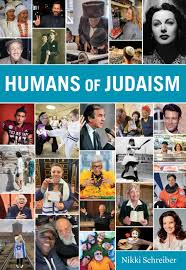
Taken from the social media hashtag, this is a collection of stories from Instagram highlighting the breadth of the Jewish diaspora, their traditions and stories and tales of survival. From sweet stories of Bashert (think kismet) where two Holocaust survivors meet again in New York after the war, and then decades later when their grandchildren marry, to Shayna Maydele the dog that teaches her followers about Passover to a woman sharing variations of rainbow challah and how they differ by region.
Yes, there are a few famous faces like Einstein, Jerry Seinfeld and Jerry Stiller, and Marilyn Monroe who was a convert. But it’s not primarily about them, but the ordinary and the extraordinary like those who survived unspeakable horrors and a desire to remember those who lost. As well as a celebration for how far they’ve come in classic immigrant narratives and those who embrace their connection to one of the oldest religions by restoring old Torahs and recoering Nazi-looted treasures.
Also I had no idea how they’ve created so many things like Levis (aka denim everyone owns), Peeps, hot tamales (the candy, not the actual Mexican dish), Curious George, Gimbels, Baskin-Robbins ice cream, American Greetings cards, Ralph Lauren, Marc Jacobs, Calvin Klein, Zac Posen, Barbie, Mattel, bloomingdales, Barneys, Macys and so much more.
Heroes of World War 2 by Jarret Keene
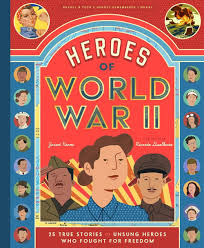
This picture book for kids deliver real forgotten history. There’s no Winston Churchill or famous world leaders here but foot soldiers, nurses and photographers whose contributions have been unfortunately forgotten, and thankfully uncovered.
Some highlights include the Tuskegee Airmen, the Indian Battallion and several individuals like:
Dorothy Still, a POW nurse in the Phillippines and one of the Angels of Batan.
Charles Joseph Coward, the master of escape and espionage who smuggled 400 prisoners out of the death camps and never got caught.
Lachhiman Gurung was a Gurkha (indigenous soldier of Nepal) who was anutter badass firing a rifle point blank at Nazis with one hand and lobbing grenades with the other.
Abdol Hossein Sardari, the Iranian Schindler.
Jose Calugas, the first Fillipino who won a Medal of Honor.
Pedro Augusto Del Valle led the Guadalcanal Campaign, deciminating Japanese soldiers with such furor that the general committed ritual suicide.
Audie Murphy, a soldier who fought off an entire company of Nazis for an hur and went on to play himself in the movies and start a illustrious acting career.
Indigenous Codebreakers. Keene highlights how it was not just Navajo like in the movie, but Comanche, Cherokee, and the Alaska Territorial Guard. They were 6,300 unpaid volunteers across 107 ethnic communities (Aleut, Athabaskan, White, Inupiaq, Haida, Tlingit, Yupik, Tismshian, etc) that guarded platinum for Japanese attack and secured the air route between the US and Russia.
Plus Keene has a timeline of how they war started, and various side-notes to provide further context to important sections of the war like the Sicily Campaign, the Japanese Internment, Attack on Pearl Harbor, etc.
The Stories Behind the Stories: The Remarkable True Tales by Danielle Higley
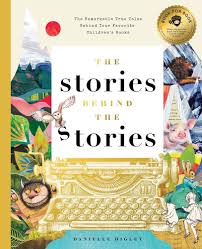
This delightful book is just as it says in the title. Higley gives insight to the inspiration for some of America’s classic kid-lit like Diary of a Wimpy Kid, Peter Pan, Narnia, Lord of the Rings, Magic School Bus, Goodnight Moon and more.
Going in chronological order until the early 2000s, Higley delivers delicious tidbits of information like Tolkien and Lewis’ famous friendship and how they each inspired and dissented the pair’s work.
How the authorship of The Night Before Christmas is still being contested.
It takes six months to write one Magic School Bus book, six months just for research.
And apparently the original title for Where the Wild Things Are was Where the Wild Horses Are but Seldick didn’t know how to draw horses.
If you want more behind the scenes from the your childhood favorites, I’d recommend Funny Business: Conversations with Writers of Comedy edited by Leonard Marcus.
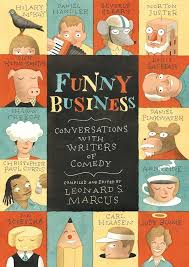
In interviews, you can hear from Lemony Snicket, Beverly Clearly, Carl Hiassan and Curtis Brown themselves as they discuss their inspiration, writing routines and the amphoral humor that mark their books. Whether it’s body humor, observational or irony, the one thing they can all agree on is that the best way to write funny books for kids is not to try too hard.
Funny is subjective and kida are brutal critics, but as long as you’re not talking down to them, there’s a chance you’ll be able to reach your goal.
Crazy Brave by Joy Harjo
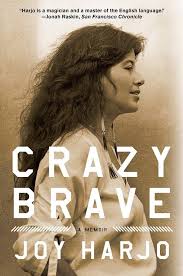
Poet/singer-songwriter Joy Harjo’s memoir is as dreamy as her voice. Growing up as part of the Muskogee Nation (Creek) with the knowledge of her ancestors and a sense of duty to honor them, Joy did not have an easy road. Her father was made of water, her mother of fire and when her father left, Joy is left to doge the cruel hands and leering stare of her stepfather. She doesn’t fit into the tiny house and broken dreams of a mother that deserved much better but Joy is unsure where her path lies. . .
Seperated into four sections, North, West, South and East, Harjo’s voice is as evocative as her music. It’s almost etheral as she speaks like an ominscent narrative who know the beginning of the world. At least the beginning of her parents’ stories and their troubles starting with the man of water and woman of fire whose temperment were ultimately unsuited.
It’s not a chronological, linear narrative. It’s a journey that is effused with a distant yet matter of fact quality as she reaccounts the hardships in her life like abuse, poverty, teen pregnancy, panic attacks, and depression brought by the ancestral trauma of colonizers and the Trail of Tears. But it is never weighed down by these hardships.
There is a spiritiality infused into the tone. Not just because Harjo talks with spirits and listens intently to ‘the knowing” aka her intuition. Part of the unique tone is because of how Harjo views stories and the importance of continuing this oral culture. Some of it is made of poetry, some of this is a story, but moreover this is Harjo’s journey to how she found a way to release her voice and how poetry saved her.
Some of the memoir feels like glossing over these intensely personal experience, going off to an aside but you can feel the honesty and wisdom throughout if that makes sense. This is not a sanitized memoir as she paints an immersive picture of tribal life in Tulsa, OK and tribal art in Santa Fe, New Mexico where she finds her passion but it’s more a journey to finding herself than a straightforward memoir of her life.
Dear Girls: Intimate Tales, Untold Secrets and Advice for Living Your Best Life by Ali Wong
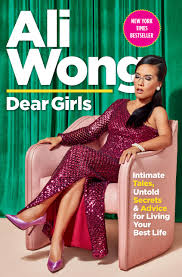
We all know Ali Wong’s daughters. Well, not personally. In fact, I’m not sure what they look like. But we’ve all seen them gestating in her stomach while laughing hysterically at her raunchy Netflix specials.
Not one to let a monotizing opportunity to go to waste (that’s that famous child-of-immigrant hustle), Wong uses this book to not only impart heartfelt advice to her girls but to advise the rest of us of how to spot authentic japanese/korean/vietnamese/filipino/chinese resturaunts, why she doesn’t want them to become stand-up comedians like she unless they really want to, and other flawed yet funny stories about the importance of travel abroad, the dating scene and being the wildest, youngest child of her tired parents brood.
So if you enjoy her Netflix specials, you’ll love to read her unfiltered, raunchy voice here too. It’s not wall to wall jokes as this is partly an earnest letter to her daughter so they could get to know her like she wished she could have known her parents and grandparents but it will make you smile.
History vs Woman: The Defiant Lives That They Don’t Want You To Know by Anita Sarkeesian and Ebony Adams
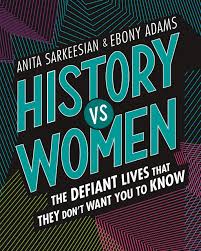
A brief primer of 25 women you may or may not know, this book categorizes them as Reckless Rebels, Revelatory Scholars, Ruthless Villains, Restless Artists, and Relentless Amazons. And despite the title I know most of the figures featured here like Mai Bhago, Hypatia, Ida B. Wells and so on thanks to the numerous other women’s history books I’ve highlighted on this blog. So it doesn’t add much to my library.
Still there were a few new names like Lucy Hicks Anderson, the first documented transgender women who went to trial for the right to be herself; Elizabeth Catlett, an African-centric artist and printmaker; and Griselda Blanco, cocaine overlord.
I commend that they did a section on villains in order to balance the scales that to be feminist, it doesn’t mean to idolize women but see them as equals. Including the fact that they are equally capable of heinous acts. Plus they bring more depth to a few women I had already knew like Doria Shafik and Margaret Thatcher.
Although it did feel like they had something personal against Margaret Thatcher. Like she put their families in poverty herself. I understand now why her policies were bad to minorities but they reccounted Griselda Blanco’s crimes with the same fascination of true crime podcasters with her drive-by automatic gun shootings. It just felt less objective compared to the other bios.
Also their profile on Novella d’Andrea was vague. I know it’s too highlight the allegorical aspects of medieval womens’ stories that erase them into mythical figures but I felt they could have replaced her with someone that does have a recorded accomplishments like Christina di Pizan whom they mention.
Smash the Patriarchy by Marta Breen, Illustrated by Jenny Jordhal and Translated by Siân Mackie
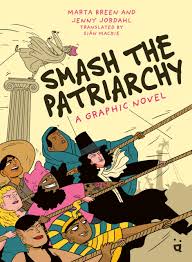
The Norwegian team of Breen and Jordhal use this graphic guide to introduce young readers to the origins of sexism in the western world from philosophy, art, medicine and religion and 100 feminists living and dead that fought against the norm.
This work features several prominat feminists I never heard of like Germaine de Staël and Alexandra Kollontai. But it primarily deals with the reaction of men to women trying to break the status quo and the tactics they use to silence them like slut-shaming, execution and so on.
It’s a good guide for understanding topics like the male gaze and uses a lot of quotations from the historical figures themselves to highlight how backwards and insulting their thinking is. Like super insulting.
But with Jordhal’s cartoonish illustrations, it is delivered in a light-hearted manner and sort of a wish fulfillment in 90 pages of dunking on men without the interruptions that would happen in real life.
It’s cute, but not revelatory. Perhaps something’s lost in translation, however I prefer Adichi’s explanation of these concepts and talks much better.
If I Go Missing by Brianna Joanie with help from Nahanni Shingoose. Illustrated by Neal Shannacappo.
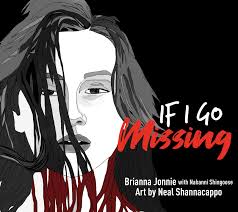
Text taken by the author’s viral letter, these simple words pack a powerful punch as respectfully asks her police chief why the policies and response towards missing white kids are much faster than indigenous girls.
The book points out the discrepancies in reporting and simply asks the police chief and the readers to think of themkissing as not a statistic but a human. A human that has family, hopes and dreams they want to see and by their lax response to missing indigenous girls it shows that they are less important.
Shannacappo’s art aids the text with its minimalist lines and black and white illustrations to set the tone between soberness, ominousness and grief.
Proud: My Fight for an Unlikely American Dream by Ibtihaj Muhammad
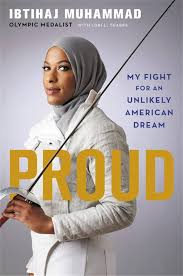
This memoir of Olympic trials and tribulation does not hold back on hard work. I felt exhausted just reading about the crowded schedules, different cardio workouts and hustling for jobs to finance her fencing career.
Then again, Muhammad is a self-proclaimed workhorse. Her parents always supported her hobbies and her careers as long as she gave it her 100%. That only pushed her to give 150% I think. Having clear goals and accomplishments and achieving them gives her a sense of pride. But this memoir also about faith.
Muhummad’s faith is quite visible and that is a comfort to her even as it makes others uncomfortable. Muhammad always holds that she does not want her faith to be the centerpiece of her accomplishments. After all, her religion did not aid her in becoming a fencer. Just like a competitor’s Christianity doesn’t affect their fencing abilities.
But she also knows the importance of representation and does feel a sense of pride in showcasing a different Muslim American story. That Muslim girls can be active and athletic. That an African American girl can succeed in one of the richest and wealthiest sports.
It’s also about non-religious faith. It’s about faith in herself when there’s no one that looks like her in competitions. Faith even though she started fencing later than others, she quit for an entire year, she started for the Olympics when she was “too old.” There’s doubt from all sides including her teammates and herself so for all the physical exertion, the mental weight is just as tough to drive through and Muhammad succeeds.
It’s an underdog story that anyone can root for and gives a lot of personal insight to Muhammad’s life. Such as the importance of converting to Islam for her parents, and how she came to form her own relationship and opinion to the religion as she grew up.
She doesn’t hold back on the microaggressions and overt passive aggressiveness she dealt with when she joined the US team and her own twisting journey to losing passion for the sport and finding it again.
She also has her own clothing line, Louella, after her grandmother! I did mention that Muhammad is a workhorse and is always moving to do something and that’s something to admire.
Dear Diary by Lesley Arfin
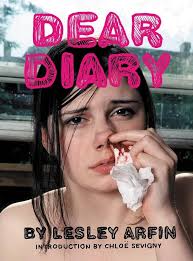
Dear Diary by Lesley Arfin
This diary/pseudo memoir is just as it sounds where Arfin lets readers pick into the juicy bits of her diary with modern day commentary and context and interviews with her former frenemies and hook ups.
It’s fine. It definitely a time capsule to the 90s/early 2000s but the drug culture was a whole other world. K, copping, ravers vs punkheads etc. It was like reading a different language sometimes so it didn’t feel that accessible or relatable as she shares how obsessive and empty a druggie’s life can be.
But I can understand the heart at the core of it in showing how messy and big life seems when you’re in the midst of adolescents. Everyone’s incredibly insecure yet narcissistic and it’s a wonder that we continue to survive as a human race. Not my cup of tea but it’s brutally honest and raw about the human experience.
Behind the Seams: My Life in Rhinestones by Dolly Parton
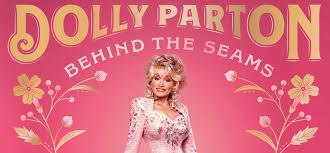
This big coffee table book is as a joyful and colorful as Dolly herself. Featuring full page spreads of Dolly’s outfits from six decades of performing, Parton shares the memories and creation associated with each.
She also highlights important people that help bring her looks to life such as designers Tony Chase and Steve Summers, her hairstylists, her makeup designers and more. She also writes about her major fashion inspirations and how her style has evolved over the years from a poor Apalachian girl to mega superstar.
It takes a lot of sparkles and the up close pictures highlight the expertise put into the design. It’s staggering. But the larger than life skill put into these outfits are part of the fantasy.
In her humble, no filter way Parton gets at the truth of fashion. Clothes make you feel good. Even though she was told the low cut blouses and makeup made her look tacky, she kept wearing what she wanted because it made her feel beautiful. The more fabulous the outfit, it made her feel like she had to live up to it in her performances.
The book also just gives you more to love about Dolly. Like her love for fun and camp. She’s so unapologetically herself. She remains true to her roots and lives by the simple code of being an optimist and trying to be better than before. Be it a better outfit, a better song or a better person.
Taylor Swift and the Clothes She Wears by Terry Newman
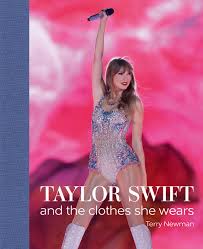
After reading Dolly’s book, this pales in comparison. While I’m sure Newman is an expert at her subject since she’s a fashion historian, I did not feel like I got new insight to how Taylor’s clothes reflect her artistry.
To be fair, most of the outfits discussed are outfits she wore on the red carpet and in casual life than her music videos. Newman writes about some of the fashion history (like hoods originated from medieval knights for protection; an Oxford shoe has a specific set of laces and can be easily confused with the Derby shoe etc.) but most of the outfit description feels like it belongs to a fashion runaway and its impact in broader culture.
She tells us the brand, and the stitching but she doesn’t tell us what it means to Taylor’s artistry.
Furthermore, the book could have been formatted better. Most of the picture show the outfits from waist-up which takes away from the full experience of the outfit (You can never forget the shoes!). Additionally, the book does not have a specific timeline. It started like it was going backwards from outfits in 2023, then 2022, so on.
This did not last and Newman would jump from era to era, focusing on color scheme to hairstyles to shoes. I wished this was more like the eras tour and she had a chronological timeline.
Maybe a die-hard Swiftie can’t live without the book, but I hope someone will make another more comprehensive look at Swift’s clothes catalogue.
The Woman I Wanted to Be by Diane von Furstenberg
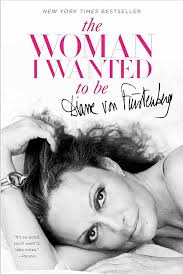
The second memoir of international designer, Diane von Furstenberg has her reflecting back on her life’s triumphs and pitfalls and looking forward to building her legacy as her famous wrap dress reaches its fortieth birthday.
Split into two sections, her personal life and her business ventures, von Furstenberg starts by reaccounting the story of her mother’s harrowing trial in the Holocaust. She survived the camps, but it made a mark on her for the rest of her life. She was self-sufficient, an optimist, unafraid. But also prone to moods and depression that led little Diane to be extra careful around burdening her mother more.
Nonetheless, her mother had a lot to teach her and it is her resilience that inspires Diane to today. Her mother shaped who she was and gave her the gift of seeing the beauty of the world outside of the physical. There’s beauty in love, not just romantic but all sorts of love. It’s the relationships you form that make life worth living.
Although it takes her awhile to get that sort of clarity as her insecure and constant need for change and excitment lead to several tumultuous relationships where she changes herself for the man. It isn’t till her middle years that she finds the clarity of defining herself so she wouldn’t lose herself. To be the woman she wanted to be (hey, title drop!).
This also applies to her business. von Furstenberg admits she’s more of a visionary than a manager as her business expands from dresses to fragrence to home decor but lack of financial or department mangament leads to the brand filing bankruptcy several times. I’ll admit just her listing the various components of making a busienss sounded confusing so I don’t blame her for not understanding the finer points. Especially as she never went to business or fashion school.
That is one downside to the memoir as the namedropping of people who work for her, or people she partied and the places she travels is amazing but also exhausting and confusing after awhile.
Still, I think readers will appreciate this reflective look into Diane’s past and her mistakes as she finds who and what she truly wants personally and professionally as well as fighting the imposter syndrome of being a one-hit wonder to defining her company’s future for her family.
War Paint: Their Lives, Their Times, Their Rivalry by Lindy Woodhead
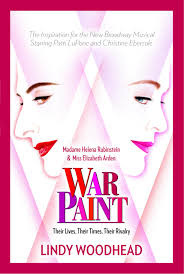
Elizabeth Arden and Helen Rubenstein are the two dynamic women who possibly created and defined the make-up industry and each other’s biggest rivals even after death.
Both women changed their names to Anglo ones in order to escape poverty. While Helen landed in Australia, Elizabeth ventured to New York and introduced cosmetics to high society. Make-up was considered the use of only whores and prostitutes but they started with the more palatable lotion and creams to de-agify skin.
For make-up was as revolutionary as suffrage as both exemplify the idea that women should have time for themselves, to treat themselves outside of work, to be in a purely feminine space of pleasure. Yes, it was partly for men but primarily for themselves because who likes looking at eye-bags in the mirror.
Anyway, Helen or Madame as Woodhead refers to is brutalistic as a CEO withh exacting demands and extravagant tastes in order to attract her customers. She was always adding more from Australia to Europe, creating the first exclusive, luxery spa with the Parisian treatments (aka massage with vibrators in order to cure “female hysteria.” I mean we know now the science on that is junk but I think we can understand why women kept returning to that spa lol) and then the bright red lipstick that is everywhere.
Meanwhile, in New York, Elizabeth is promoting female health with her spas that have pools, massages (no vibrators here this time), and calisthetics to keep a trim female shape alongside her creams in a purely pink atmosphere. Her ladies are refined and gentle and she wanted to create the whole world that way. No earthy pleasures but demure tea parties.
Then Helen moved to New York and the make-up wars really started to begin over the decades from the Great Depression to the 80s as new rivals like Revlon, and Estee Lauder hit the scene while they continue to dunk on each other.
Which is ironic as they both were very similar in delving into their work, complicated marriages, and their love for social-climbing/expensive collections of art and horses etc. But it was also a case of too similar as they were completely devoted to their work and their way, no matter what. They were outright abusive to anyone who didn’t follow their whims but also it’s awe-inspiring because they wouldn’t stop. Much as how their employees felt about working under them, fear and respect.
This is a comprehensive biography so one really feels like they’d get to know the women over the years but sometimes it feels like it gets sidetracked by its own scope in trying to keep track of people in their circles that often overlap or switch sides. Not to mention, asides devoted to specifics in their personal life like Arden’s love for horses potentially in place of actual children, and Rubenstein’s extensive art collection. While they are part of the womens’ lives, it felt less interesting asides compared to their rivalry and took me out of the story.
Same with the prologue that focuses on the Arden/Rubenstein’s rivalry continuing after death with the sale of the estates which sounds interesting until Woodhead starts listing the stuff in their collections like an auctioneer. . . which I’m sure it’s impressive in the art world but I’m just learning about these women.
I don’t know who they are, where they came from, why should I care about the value of African fertility statues? It felt like the author was overawed by the stuff they collected that she forgot about the women. I continued reading obviously, but I’d have started the prologue with something else than an estate sale. Like maybe focusing on the make-up.
Nonetheless, if you have a free vacation, it is a gripping story of two kindred spirits in loggerheads and fascinating to see how they changed how society thinks of beauty and women’s health.
 Rachel Reads & Reviews
Leave a comment