Hera by Jennifer Saint
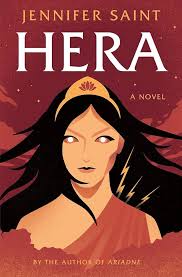
Hera usually gets a bad rap by modern perspectives. A shrew, a horrible mother, a jealous bitch are the most common modifiers. Her husband cheats but she punishes the mistresses instead of Zeus himself. Then again, it’s not like she can go on a one on one attack with the King of Gods. Last time she tried, he tied her above a flaming circle for decades.
Yeah, it’s a very dysfunctional relationship.
Saint explores this delicate balance from the beginning during the War against the Titans where the men and women were on equal grounds of power but her brothers quickly swoop in to proclaim themselves kings of sky, sea and underworld. Her sisters are content in wielding power behind the scenes, with finesse but Hera chafes against these limitations. She wants to wield the power as obviously and proudly as anyone else.
Hera doesn’t want to be confined by a husband, or marriage but Zeus’ actions make it impossible for her to refuse. She wants to be queen but Zeus doesn’t respect the sanctity of it, making her title a joke. Worse, Zeus allows the kids of other marriages be elevated to thrones on Olympus, making an alliance against her. She suffers the trauma of rape, the humiliation of cheating and disrespect because of her gender and is haunted by the cries of women in abusive marriages and painful childbirths and how she represents them.
I’ll admit, as much as I favor Hera, I was starting to think this was a #girlbossification that tries to fit her too much into our modern lens. But Saint manages to show how Hera’s flaws overcome her strengths like her jealous, scheming nature where her maternalness sours when she realizes her sons won’t be useful pawns to band against Zeus like Apollo, Artemis, Athena and Hermes do for their father. She judges her sisters and other women for working with the power they have and not aiming for more.
But power is nothing compared to freedom and freedom can only come with changing times. This is a rare book where Saint explores what happens to the gods and their myths after the golden age aka what they think of this world. It is satisfying to see Hera reach a measure of peace. The freedom that she had thought wielding power would give her but ultimately come through a different path.
Marry Me by Midnight and Wake Me Most Wickedly by Felicia Grossman
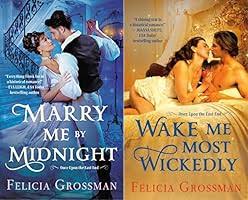
Fairytale retellings are a hot genre, but I tend to be picky about mine. I usually prefer modern retellings because the ones that follow a historical/regency vein play too close to the original.
Felicia Grossman doesn’t do that.
Set in the mid-19th century, her fairytale heroes and heroines belong to the robost Jewish community of London. It’s own world with a community that seeks to protect themselves by being “good Jews” so the Parliment may grant them rights under law and punish vagrants that may ruin that reputation. That ire is usually reserved for Ashakanazi Jews (those descended from Germany/Russian/Eastern area who are immigrating to escape pograms) while the elites are Sephardic (those who are usually Portuguese/Spanish/English descent who have several generations in London already).
Yeah, so prejudice and antisemitism combined with the regency values of reputation so there’s lots of high-stakes.
That’s why Isabelle Lira’s marriage has to be someone from a good family, not Solomon who’s a penniless orphan who lives on other’s charity as a janitor. She has to marry soon in order to maintain control of her father’s lending firm when the former partners threaten to seize her assests, not trusting that a woman can be a partner in her own right.
Aaron Ellenberg is hired to sniff out the potential matches who have secrets or flaws that can ruin her because they’d be good blackmail material for Isabelle is okay with a marriage without love as long as she can maintain control. Yet love is not something one can control.
That’s how Hannah Moses feels when the naieve yet handsome, Solomon Weiss, keeps seeking her out despite her reputation as a thief and pawnshop owner. needs to stay away so he doesn’t threaten his brother’s prospects of a gentile marriage but. . . well you can guess, they end up in each other’s arms more often than not.
Not only does Grossman focus specifically hone in Jewish traditions, cultures and religious mores that affect romance and business but she also gender flips the character tropes.
Aaron is the tenderhearted soul that feeds mice and believes in the importance of helping others just because while Isabelle is the scion of a mini-empire whose marriage is supposed to be the benefit for the community and wishes to maintain control and power in order to stafe off the grief of her father. Same with Hannah who takes on the role of a princely protector and hunter while Solomon is the sheltered one, emotionally abused by his cold older half-brother.
The Jewish element and the community nuances add twists to the fairytale story so it feels historically accurate yet magical. Plus the best of the layered story are the characters that feel three dimensional lovable yet flawed although Isabelle and Aaron were my favorite of the two so far.
There’s two more stories coming up for the Once Upon the East Side, a Sleeping Beauty retelling and Beauty and the Beast one. The latter I suspect will be about Isabelle’s midwife friend, Rebecca and the youngest Brehem brother but we’ll see. Fans of Joanna Shupe and Adrianna Herrera will enjoy.
Fairy Godmother: An Enchanter’s Tale by Jen Calonita
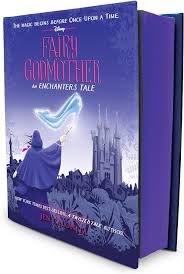
If you follow Calonita, or have read any of her other works, you might know Cinderella is her favorite movie so she must have been delighted to get to contribute to the Disney canon with this story of the Fairy Godmother that started it all.
Renée has been the governess to her young cousins ever since her aunt and uncle took her in after a fire orphaned her. She delights in teaching about the magic of the everyday world by gathering gifts for fairies and dancing around fairy rings. But her time is running short. Her strict, unimaginative aunt thinks she’s a burden to be married off. Not that it comes to a runaway bride. She dies before that happens.
I know, shocking. I mean, she almost dies but is accidentally resurrected by the fairy princess, Lune, and brought to a world she had only hoped to be true.
With these unexpected circumstances, Renée doesn’t fit into that world and her questioning nature doesn’t endear her to many. But she can’t return to her home or her beloved children due to the rapid aging process. Her only chance is to become a fairy godmother and in that adventure, Renée not only has a chance to see her family again but changes the future of Aurelius as a whole.
Following her other fairytale school, Calonita creates a distinct new world with its own magic system, history and vocabulary. Renée is a sweet protagonist to root for, carrying on the themes of Cinderella about the importance of believing in oneself, kindness, generosity, never giving up on wonder and magic.
Also as this is the Fairy Godmother’s backstory, Calonita isn’t constrained by Cinderella story although she pulls off a new twist that it kept it interesting when Cinderella did make her appearance.
But this is foremost, Renée’s story as she makes new friends like impulsive, prophetic Lune, motherly mentor, Nelly and brooding love interest with tragic backstory, Tristan. She also learns more about her past and how family and grief are closely intertwined yet wonderfully valuable to living which was a surprising deep third act topic but I appreciated the complex thread.
Perfect for fans of magic
Books I read this month
(Marry Me by Midnight and Wake Me Most Wickedly by Felicia Grossman, Beyond the Spiderwick trilogy by Holly Black and Tony DiNozzie, The History of the World in 50 Dogs by Mackenzi Lee, Nevertheless, She Wore It by Ann Shen, Bookish Broads by, In Praise of Difficult Women by Karen Karbo, Unsung Heroines of the Holocaust by Sarah Silberstein Swartz, 1st to Die by James Patterson, Spy x Family vol. 12 by Endo Tatsuya, Secret School by Avi, Cupcake Diaries: A New Batch #1-2 by Coco Simon, Love is a Revolution by Renee Watson, K-Pop Confidential and K-Pop Revolution by Stephen Lee, Enchanters: Fairy Godmother by Jen Calonita, Little Clearing in the Woods by Celia Wilkes, Little City by the Lake and Little House of their Own by Celia Wilkins, The Fabulous History of Fashion by Kristen Dryers, The Reckoning of Roku by Randy Ribney, The Fifth Avenue Rebels quartet by Johanna Shupe, Paperback Crush by Gabrielle Moss, Trauma Queen, Solving Zoe, This is Me (From Now On), Another Day in My Insanely Real Life, and The (Almost) Perfect Amphibian Guide to Boys by Barbara Dee, Front Page Face-Off by Jo Whitmore, Plastic Polly by Jenny Lundquist, and Best Friends (Till I Find Someone Better) by Erin Dowing, The Inheritance of Orquidea Divina by Zoraida Cordova, Si Se Pueda by Julio Anta, Tokyo Ever After and Tokyo Dreaming by Emiko Jean, Breathe and Count Back to Ten by Natalia Sylvester)
Life with Archie: The Married Life #1-10
 Rachel Reads & Reviews
Leave a comment