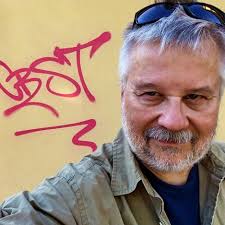
Peter Vronsky is the foremost expert on serial killer history, and author of such books, Sons of Cain, American Serial Killers: The Epidemic Years and more. He generously took the time to talk with me about Cottingham, the state of true crime publishing and how do you define a psychopath. Enjoy.
1. What put you on the path to criminal justice history?
Technically, I’m a historian of espionage and international relations. Espionage is an offense in the criminal code, a felony. I was generally interested in the legal aspect of espionage and prosecutions. As a background, when you do a PhD, you have to do a number of fields and one of my fields was criminal justice history, particularly how the courts work in the Anglo-American system.
As a Canadian, we’re similar to the British system, and the US was a former British colony so the core principles of justice are very similar as well, although there are unique American elements to it.
But in talking about spies, I’m not talking about James Bond kind of spies that work for the government.
I’m talking about people who are betraying their own country. Those kinds of spies are very similar to serial offenders/perpetrators and their psycology is very similar to serial killers and are motivated by the same motives, so that made it helpful to writing my history books on serial killers.
The first two I wrote while I was still a student in grad school. That helped the next two books I wrote after eight years of grad school where I had a different discipline in research.
I was a college drop-out and I didn’t return to school until my forties. I earned my PHD, I defended my thesis in 2010, 14 years ago, and I’m a very young professor in that sense.
2. Terms like sociopath and psychopath and serial killer get thrown around interchangeably, but how do you define them in your work?
I don’t know, I’m confused as you are. But the best kind of differentiation I’ve seen is that a sociopath is diagnosed by what they do. A psychopath is diagnosed by what they are. So they’re the same thing but different flavors.
Sociopaths are judged by their deeds, by their actions. The psychopath is diagnosed by certain factors in their personality and in history.
There’s a 20 question, 40 point test that a person diagnosing someone for psychopathy can ask. It’s called the HARE. The R is for Revised.
A Canadian psychologist developed these questions that the person doing the diagnosis fills out. It’s not a questionnaire you give to the suspected psychopath. There’s 3 stages and you score them out of 40 points and if they have certain personality traits and certain histories. If the answer is “Always,” you get two points. If the answer is “Sometimes,” you get 1 point. If it’s “Never,” 0.
If on the HARE test, you score between 25 and 30, you’re a borderline psychopath. If it’s over 30, you’re a raging psychopath. As far as I understand, no one has scored 40 out of 40 other than the Devil, you know.
The person administering the test usually has the file on the person and if they’re lucky, they’re interviewing the person as well and fill in the form. District attorneys use it, prison systems use it to classify their criminals.
There’s a standard test online you can do yourself. People who are “normal” usually score around 5-7. If you’re a sports personality, or a movie star, an artist, businessmen you start scoring 14 since they usually break conventions. Psychopaths break convention as well, it just differs how many you break.
There’s other terms like borderline personality narcissistic disorder, personality disorder as well. It’s a whole alphabet soup of disorders and diagnoses and depends on who is doing the diagnosing.
A serial killer used to be defined as someone who committed 3 or more murders. Now, the FBI considers someone a serial killer if someone has killed 2 victims in separate incidents after a cooling off period for absolutely any reason.
This can include sexually-related murders; Missionary murderers like one who kills abortion doctors or interracial couples because they have a certain mission, certain targets. There’s for-profit serial killers like the mafia and mercenaries. Then there’s the visionary serial killer, they are the only ones considered the truly insane serial killers as they believe God is telling them to do things, they have visions etc. Other serial killers are aware of what they’re doing, they have intent and go to lengths to cover up their deeds so they can be held responsible.
3. With so many sources, how do you start and narrow your research?
I guess, it’s like writing a college essay or like 30 college essays. It’s the same process with every chapter. You select evidence for your hypothesis. Sometimes your reading will change your hypothesis, and you go down that wormhole. I know I’ve started in that direction and then one particular source might take me to another and I look into the sources of their sources. So the material leads you to a conclusion.
The way I write, I essentially tried to explain things to myself. I’m exploring different possibilities and the book comes out that way, and I share them.I tried to write the kind of book I wanted to read except nobody wrote it. So I write it for myself.
4. Serial killers can get pretty dark, so do you find you have to put yourself in a certain mindset to do research? Or find yourself too desensitized?
The deadline puts me in the mindset. You gotta do it, like going to work. I’m not very good at that. I’d be getting late points if I was a student.
This book has been 4 years late, they’ve been waiting for this book back in 2020. But this book is very different from my previous 4 books. My previous books were histories and could be written at the table. I didn’t have to go anywhere, meet anyone, see anyone, nothing. But in this case, it’s nothing like I’ve ever written. It’s very personal and it involves the current serial killer I am talking to.
I never interviewed any serial killer in my previous books and I didn’t want to because they’re all on Youtube. I looked at the interviews with serial killers on Youtube and on television and the questions that are asked of them are exactly the same questions I would have asked and the answers are totally unsatisfactory and I didn’t have any new questions for them so I didn’t bother doing my own interviews.
But this one is very different, the whole premise is very different as it deals with ongoing investigations. When I started writing the book, Richard Cottingham was convicted of six murders in Feb 2018 which was when Jennifer brought me over to Richie, as those close to him know him. Today it’s 18, and nine of them, Jennifer and I, had assisted in closing nine of those 18 cases. Three in Bergen County, one in Rocking County, NY and five in Nassau County, NY in Long Island.
It’s not the book I started out writing and now, I keep telling my publisher, you got to give me another six months because I don’t have an ending. There’s three active cases right now and I’m deep in two of them, working with the police departments so what’s the ending of this book?
Jennifer has passed away, that would be an awful ending and I don’t want to write a Dostoevsky Crime and Punishment that depresses people. I need to get an ending to the book.
5. You wrote your first book in 2004, arguably one of the most extensive in he 21st century. Now in the new ’10s, how has the publishing landscape changed since your debut?
It’s changed significantly, like night and day. When my first book came out, it wasn’t even in my contract that the book would be published as an ebook. That contract did not exist.
They had to send me a new contract asking me to “Please, sign this, giving us rights to publish your book in ebook format.”
Now, there’s boiler-plate language in publishing and television contracts that you give things to them in all mediums that currently exist or may exist in the future. But nobody likes a boilerplate and they attach another specifying the medium.
Of course, there’s the disappearance of bookstores. Lots of my books, I haven’t checked the stats, but lots of my books are being published electronically as ebooks, Kindle, Kobo, Google Books, Apple Books and so forth. That has changed.
Publishers are more politically-sensitive. I have less liberty in my language in just writing the book the way I want to these days. There’s almost a committee, a sensitivity committee, that reviews if I’m offending anybody.
For crying out loud, guys! I’m writing about serial killers, people are chopping off heads and setting torsos on fire. Of course, I’m going to offend someone.
It’s very difficult with these committees, politically correctness, woke culture. I’ve seen fellow authors banned for some act of misbehavior or impropriety where in the past, people would say “I don’t care, I just read the guy’s books Or her books.”
The case of Woody Allen is the case that most comes to mind where his books and movies have been banned for the things that he’s been accused of, but the jury’s still out on. It’s a different world.
But I’m particularly sensitive to the victims. It’s been like there’s a new genre that makes jokes about the victim and glorifies the serial killer as an anti-hero. That has been especially prevalent since Silence of the Lamb where nobody gives a shit about Jodi Foster, the FBI agent. It’s the serial killer, Hannibal Lecter, who’s the star. Everybody wants to have dinner with Hannibal Lecter as long as they’re not on the menu.
They made a series about him, and it’s like goodbye Clarice Starling, we’re just following Hannibal Lecter as a tv series, Hannibal 2, Hannibal 3.
I find there’s a kind of aggrandizement of serial killers as symbols of rebellion. A lot of people often ask “What’s your favorite serial killer?”
My favorite one is the one who kills the podcaster who asks me that question.
Or the other one I get often is “If you’re a serial killer, which one would you be?” I hate that so I try to be very respectful of the victims I write about.
One thing you see in true crime literature in the last 10-12 years is these long narratives about who the victim is, their life. Try to give the readers a sense of identity with the victim, some kind of sympathy for the victim and see them as more than a body lying on the ground and as a person who lived.
I understand that. Unfortunately, often victims have ordinary lives, entirely boring until the moment they’re murdered. So if I find a victim’s story that’s compelling and interesting, I certainly try to highlight that. But most often victims are people who want to go to work and they’re going about their day.
6. For your upcoming book, American Werewolf, you partnered with Jennifer Weiss, the daughter of the “Torso Killer,” in digging into his other murders. What was that process like?
First off, I had a brief encounter with the Torso Killer, Cottingham, as I discussed in my first book where he was escaping the police with two heads. Very brief encounter.
But then, as I was sending my final draft of my last book, Sons of Cain, Jennifer Weiss called me.
I had heard of her before because she was identified as the infant daughter of one of Cottingham’s victims. So I was aware of her and I always wondered what happened to that 18-month girl.
“Did she survive the adoption system? Does she even know about her mother? Was she put in a crazy, abusive foster home?“
Then BAM she calls me, 39 or 38 years old and there she is. The adopted infant I was thinking about calls me on the phone at midnight as I was finishing my last book.
She asks me to assist her in interviewing her father, Cottingham and I couldn’t say no to Jennifer and here I am six years later. Jennifer passed away a year and two months at the end of May in 2023 tragically from brain cancer. But Jennifer’s work is living on by working with her father in solving these cold cases.
Richie claims he killed 80 to 100 women. I believe him, it’s very plausible considering when he was doing it. I estimated roughly 1 victim every 6 weeks which back in the 1970s and 80s would have been completely doable without the DNA, ubiquitous surveillance and technology we have today.
Jennifer, Cottingham and I. . . he described us as the Three Musketeers. He’d help us close the cases, all for one and all for us. We worked together when we discussed which police department to approach, what television company to produce with. Jennifer was key to that since it’s difficult work.
You see, solving cold cases is very easy. Closing them is hard.
I use a newspaper archive that has thousands of newspapers that one can search by state. I searched NY, NJ and key terms like “found with shoes missing. . without shoes” so forth.
Some cases come up and I can identify as Cottingham cases. Solving them is easy, closing them is hard where you have a cop show up to interview the perpetrator. The district attorney has to draw up the paperwork and close the case. So I have 30 cases solved, but 9 have been closed.
The thing Cottingham has allowed me to do is to speculate on cases he might have done without suing me for libel and that allows me to identify some of the victims in my book and let me suspect why they were killed if the cases are consistent with Cottingham’s. Hopefully, when the police read it, they can investigate and go down to formally clear him or convict him.
7. What’s coming next for you and your work?
I’m a historian of espionage and international relations so whatever it is, hopefully it won’t involve sexual serial killers.
Maybe state serial killers-genocide. Particularly the Holocaust. We often forget the SS were a national security operation and has aspects of what the Nazis thought was a security prerogative and counter-espionage agencies
I’m heading in that direction, but I don’t know yet. I’ve got to finish this one first. In other books, I introduce myself with my encounter with Cottingham and my other encounter in Russia with another serial killer, the Red Ripper, and I explore my movement in the world and how I could have encountered two serial killers.
But this one, I’m in it from first to last page so it’s very personal.
Or who knows, I may write a self-help book for true crime authors, it can be exhausting.
You can learn more about Peter and his books on his website: https://www.petervronsky.com/ and all relevant social medias. Plus numerous podcasts and interviews.
 Rachel Reads & Reviews
Leave a comment