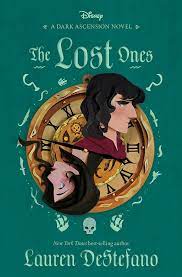
In a small fishing village in England, a modest couple expected a child. What they did not except were twins! James, the eldest is cautious, sensible, pragmatic, a way with numbers that is completely at odds with the expectation that he’ll continue their father’s fishing business. A fact he hates when he fears the sea. Marlene has an aptitude for the sea but doesn’t enjoy the ladylike pursuits her mother wishes she’d care about. Yet she strives to make up for feeling the burden by excelling in everything else, always sociable and making her presence known.
As one can imagine, with their meager lives, they long to leave for London. James wants to be an accountent or something but Marlene’s dreams are less tangible. It’s one thing not to fit at home, but that’s all that’s expected a lady to be. Moving to London wouldn’t fix her problems. Growing older seems like a horrifying abstract where Marlene will have to constantly feel like she doesn’t belong.
Then on their fifteenth birthday, they get swept away to Neverland.
Implied spoilers ahead. I think one can figure it out but I’ll still put it below.
DeStefano does an excellent job in writing these two distinct twins whose love for each other is palpable but gets lost in the hypnotic paradise of Neverland. She does a great job in physical descriptions in particular such as James’ fear of drowning, Marlene’s elation at flying, etc. Though Neverland initially presents itself as a perfect haven but it is immediately clear there is danger in how slippery time is. Happiness and fear are closely intertwined here, the biggest issue is how Neverland makes one forget their past and the memory of why they left or why they want to stay.
Honestly, that’s one of my fears where you forget something important but you don’t realize until it’s too late, it’s like slowly forgetting who you are.
Danger also abounds with Peter Pan who has his own charismatic allure that immediately draws Marlene and James despises the boy for reasons he can’t understad. Jealousy, distrust, a combination of all three for its quickly summed up that James fears many things but he also fears that someday Marlene will leave him behind in her impulsive ways and he won’t be able to protect her.
The twin’s relationship is the foundation of the novel, they may have differing personalities but their bond is so important, they feel they would have always been drawn to one another, twins or not. Nonetheless, Neverland Peter play a hand in turning their opposing fears into a rift.
James never understood Marlene’s impulsiveness but it turns to hatred for how she always forges ahead, forcing him to go along despite his fears, for being more brave than he. Marlene wants to protect her brother but also has a sense that she’s being held back by him, her decisions always have to factor him in, and he never does the same for her.
It’s deliciously tragic how their bond is twisted and their memory loss doesn’t help matters as they start forgetting the good of the lives they left behind and can only focus on the bad, focus on their wants like the children they’re surrounded by.
In addition to the exploration of family and identity is how much it can hurt. Peter controls the island, and makes everyone forget because being grown-up is cruel, the world pushes you down, and they left to escape the miseries of the real world. Forgetting is better in his opinion. He thinks himself as a benevolent leader but a reader can sense the underlying power-hungry, selfish brat that lies beneath. With this knowledge, it adds another strand of suspense for the twins who can sense the danger but don’t recognize it beneath his cheerful obliviousness.
James gets the bulk of the narrative until they reach Neverland which makes sense as he’s the character readers know being the future Captain Hook, and DeStefano delicately lays the core of his personality which people know like his desire to have structure, rules, elegance, the importance of time and logic that make him eager to grow-up so he can be the man he believes he’s meant to be. There are also nods to his hook, his talent for invention, but never so much that it feels like obvious forshadowing.
The second most important relationship in the novel that contributes to James’ growth would be Sam or Smee as he was known back in the real world. He is the only boy who can’t fly, soft and sweet, but burdened with his own clever secrets. He’s timid but his fascination with James’ stories of home and aptitude gives James’ an ego boost that someone looks up to him instead of Marlene.
James is occupied by his concern and frustration with Marlene, but the moments of encouragement, sharing and protection binds the two that makes it believable that Sam would become so loyal to James in the future and why James would keep him around despite his bumbling, they’re forged family.
Marlene, as a reader can guess does not have a happy fate. Considering only Hook is known, it is a given that something must have happened to her but DeStefano manages to keep readers on the edge of their seat with several harrowing near-misses and the potential for a happy ending.
Still Marlene is a strong character in herself with her moments of introspection, and strategic planning as she knows her power lies in her ability to lie in keeping her emotions in check. She also distinguishes herself from the maternal figure of Wendy Darling who’d come in the future as she holds herself as not the boys’ mother but as someone who wants to be their friend and can be just as prideful and stubborn as Peter which fascinates and threatens the leader.
Just as the previous book in the series, DeStefano presents a chance for happiness and makes you root for James and Marlene to find their way back to each other and back to England but you know it cannot be because you know he will grow up to be Captain Hook. Still it makes you forget for a little while.
It was an entertaining book although I had some of my own questions about the choice of Marlene’s fate. Like I said, it’s expected that she can’t be part of James’ life because if she was still present he wouldn’t be so bitter and consumed with Peter Pan, but at 2024, killing a girl just to give her male relative more pain feels redundent.
Captain Hook and Peter Pan are diatrimatically opposed representing the ignorance, cruelty and freedom of childhood vs the structure, cyncism and bitterness of adulthood. DeStefano depicted the seeds of those opposing views from two boys who have a healthy (more than healthy in Peter’s case) egoism about their skills and desire for leadership/power. But it gets overshadowed by the boys’ connection to Marlene. Maybe DeStefano didn’t want to retread ground already explored in movie adaptations but it felt like a loss here.
Similarly, this is set in the 1800s England. I assume since the Peter Pan and Darlings met in early 1900s so this had to be several decades before. I did not get this sense of the historical setting when the twins were home. There was some mentions of cobblestones, the usage of “Bloody” and mentions of gender roles, but I did not have a sense that they were from the distant past.
They were in Neverland for most of the book so I suppose the historical accuracy of England doesn’t matter but I feel the book would have been stronger if I could feel like I was in England as much as I felt transported to Neverland.
A strong book that keeps one engaged while deepening the lore of Captain Hook and Peter Pan’s rivalry.
4 stars.
 Rachel Reads & Reviews
Leave a comment