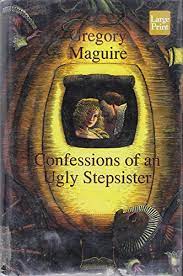
Maguire takes the tale of Cinderella to Holland during the height of the Tulip madness. Beauty is the theme of the day, the traditional aesthetic beauty of femininity, the beauty immortal captured on canvas, the beauty in nature, and of course, the inner beauty in charity.
The story is narrated from Iris’ POV, the younger of the supposed ugly stepsister which she swiftly deconstructs. That story is a simplified version of true events though some are facts. She and her older, more simple sister, Ruth are plain to the point of ugliness while Clara is the unmatched beauty of the town. Their mother is bitterly shrewd in surviving life after running from England to the point of greedy madness. There’s a prince and a ball and Clara wins his hand but they did not abuse or force her into servitude out of jealousy.
Rather Clara’s beauty is also her curse as her biological mother shrouds her in the confines of her mansion so none may look at her or hurt her. She’s secluded and spoiled yet befriends Iris who is intrigued by her shy, fanciful nature. Iris may be plain but she has far more freedom than Clara with her potential talent in painting and courage to venture out and take what she wants, encouraging Clara to do so too.
Yet jealousy lurks, primarily from Margarethe (Iris’ mother) when she seizes the hand of Clara’s father after her mother’s death, and that jealousy brings ugliness to the household that brings their family to ruin and shines more light on Clara’s head whether she deserves it or not.
In between such extremes, Maguire plays with magical realism as Iris chooses to believe it is the existance of shadowy imps that bring ugliness and misfortune to their lives rather than dwell on her mother’s hateful and increasingly mad actions. Clara herself believes that she is a changling, explaining her extreme beauty which comes at a personal cost when others harm or try to possess her for her beauty. They’re both fairytales but the girls use them in order to make sense of an ugly world.
Yet that ugliness has a place as Iris’ painting mentor, The Master informs her with his Bosch-esque Gallery of God’s Monsters as the ugliness either prompts people to be kinder and more charitable or reveal their true, selfish natures as they push others down so they can stay ontop be damned their immortal souls.
No one is a good person in this novel but that is life, and it is an interesting new perspective on such classic characters like Clara being “Ashgirl” or Cinderella as she chooses to seclude herself in the house and play housewife because she feels closer to her dead mother by mimicking her responsibilities. Yet Clara can be insensitive to others in her privileged way, bemouning the sad events in her life even before they happen, comparing herself to Iris and Ruth who arguably have had harsher lives and have learned to pick themselves up and make themselves useful to survive. Still, the arc from spoiled girl to princess is still a triumphant one as she makes her first selfless act in defense of Iris and Ruth.
Iris’ arc is more subtle. Less about morals and growth and more about growing up and seeing the truth about life and her own complicated feelings. Much like painting, she learns to see what is in front of her instead of what she thinks is in front of her.
Also there’s a great twist ending too which leads me to 4 stars.
 Rachel Reads & Reviews
Leave a comment