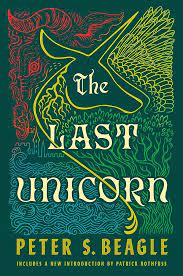
For my 600th post (already!) I decided to take a trip down fantasy memory lane by reading those classic 80s favorites for the first time. They’re pretty famous so I’m not going to go into the summaries of each but discuss my thoughts on why they managed to stand the test of time.
While I’ve seen commercials for the animated film, I didn’t really know the plot of The Last Unicorn beyond there’s only one unicorn left in the entire world and she has to be protected from extinction.
The book turned out much more adult than I ever expected. Not necessarily in the plot which followed my assumption that the gang is protecting the last unicorn from extinction and finding the rest of her people. But rather, Beagle’s prose is that of high-fantasy that reminded me of Lewis Carroll. The characters went on such oddly worded speeches that I questioned whether this was English. It was, but piecing the words together was a challenge. Thus the circumstances and action (involving three-breasted harpies, imaginary red bulls and illusion magic) was also confusing as I didn’t have a good sense of the enviroment and what was real and what wasn’t.
Still, it was not a total confusion as I read and reread certain paragraphs I got a good idea of who the characters were and what they were meant to represent. The last unicorn or Lady Almathea as she’s known as human is the epitome of a beautiful, unknowable exotic creature. She seems harsh and aloof but that’s because she doesn’t understand humanity nor possesses their range of emotion even when turned human. Yet the importance of her presence on Earth is paramount in encouraging hope, beauty and wonder in the world.
Schmendrick the magician is a flop as he’s cursed with immortalilty until he gains his skills instead of being an incompetent using illusions instead of magic. Thusly, this mission is one big chance for Schmendrick to prove himself and deal with huge insecurities as his true potential comes and goes. He is the sidekick trying to be a hero until he accepts his position in life.
Molly Grue is a middle-aged wife of a wannabe Robin Hood. But the unicorn inspires her hope again. Even though she’s not pure in the technical sense, and she berates the unicorn for not coming to her before (before her marriage but metaphorically before her spiritual innocence was ruined by real life), she is the unicorn’s steadfast companion to saving the rest of her race. She provides the reluctant heart of the group, keeping them on the mission’s goals.
Prince Lir is the classic Prince Charming and dashing hero who doesn’t know the true meaning. ALthough he has all the elements of being the chosen one, he hasn’t had the chance to prove himself and is thus mired in selfishness before he realizes that to be a hero he needs to commit a true sacrifice. Giving up his love for Lady Almathea so the unicorns won’t die out. His sacrifice is what will make him immortal.
King Haggard is a twisted man-child whose goal to possess and destroy everything make him a villain yet you can understand why he sought to capture the unicorns. They being the only source of him reminding his youth and wonder.
As you can see, there’s plenty of metaphors dancing around the place allowing readers to interpret scenes and characters. That’s one of the reasons that I believe it managed to stand the test of time. Another is the prose that even I didn’t understand it, it was groundbreaking in how much Beagle trusted readers to talk to them like adults, and it’s difficulty making it more elusive and mysterious. Anciently unknowable like the unicorn itself.
Plus it delivers on big emotion, Lir and Molly Grue getting the bulk of the character arcs that do tug on the heartstrings. It also has humor such as Molly’s husband co-opting Robin Hood’s story for himself.
Beagle’s return to the world with Two Hearts features two stories. Sooz is a coninuation set several decades later when a young girl (the titular Sooz) goes off to search for elderly King Lir to fight the griffens besetting her town. There she befriends Molly Grue and Schmendick with the heroic return of the unicorn. It’s a sweet story and it’s always fun to see the characters again but I’m not a big fan of following kid characters in sequel attempts. I’m just not invested in them as they all seem to follow the plucky, magic-loving vein who becomes the child substitute to Molly Grue and Schmendick.
The second story is brand-new. The Way Home, focuses solely on Sooz and her disocvery that she had an older sister who wandered off with fairies when she was a toddler. Filled with newfound sisterly determination she goes off on another adventure to rescue her only to be shocked that said sister doesn’t want to leave. As you can guess from the title, the two make like Anna and Elsa and soon find their way together to home although Beagle’s interpretation is much more bittersweet than any Disney film.
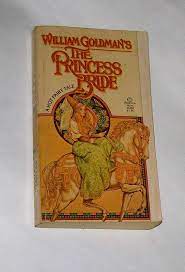
Technically The Princess Bride was written way before the 80s but the movie and book adaptation that we all know and love is from the 80s. Though it took a few decades before it got to the big screen as Goldman informs readers in his lengthy introduction. Much like the frame story of the grandfather and grandson, Goldman first heard the book being read to him when he was sick in the hospital. From there on, he was hooked!
When he grew up, he had his son read the book on his 10th birthday but his son didn’t like it. That’s when he took a look at the book again and found out his father had omitted quite a lot in his retelling. Morgenstern’s rendition goes into the history of Florin among other things leaving the action, romance and adventure lost in the pages. So he decided to adapt it to a “Good” parts edition. Book-wise and movie-wise.
Which took a lot of work and legal wrangling as Goldman details his fictional fights with his alter-ego and the Florin country whose historians protectively shielded Morgenstern’s work from Goldman’s butchering as they think he didn’t understand Morgenstern’s real intent with his work and left out important parts like Buttercup learning about Florin royal protacle and etiquette. Also apparently Stephen King’s family has roots there so the Morgenstern estate tried to tap him to adapt the sequel because he understood the importance of Florin royal etiquette.
Yeah, that’s a lot and I haven’t even gotten to the actual story. While I will say Goldman is a talented editor as his edition kept all the memorable bits of the film like “Inconcievable!” ROUS, As you wish, etc. (Although I guess it’s the film taking the good parts from the book), this man loves to talk.
Or write in this case as his introduction was the length of his own novella as he described his family troubles, his wandering eye that led to his divorce, name-dropping celebrity friends, talking about himself. It get’s a bit much so unless you’re a dedicated fan, you can skip the introduction or else you’ll be tempted to write Goldman’s Introduction to the Abriged “Good Parts” The Princess Bride, the Abridged Version!
The story itself was just like the movie showing how the material was ripe for cinema magic as readers are whisked off to Florin and learn of the sweet love between Buttercup (the most beautiful women in the world), and the stable-boy Wesley later turned the Dread Pirate Roberts. You learn the tragic backstories of Ingio Montoya and Fenwick the Turk (whose lighting himself on fire with the holocaust cloak was awesome! My favorite scene!). You shiver at the sadism of Count Rugen and the predatory Prince Humperdick.
Plus Goldman is less annoying with his editor’s notes compared to the introduction as he details funny bits of what parts he was forced or wanted to cut out like Morgenstern’s paragraph on trees which was because the author was bitter over the government cutting down trees or the adventure of Ingio and Fenwick finding the ingredients Magic Max needed to resurrect Wesley for an hour.
The 25th anniversary edition I got from the library also included the first edited and translated chapter of The Princess Bride sequel (still stalled apparently), Buttercup’s Baby! Such excitement. But a quick look at google said it was supposed to come out this year for the 50th anniversary, Goldman died so I don’t know if the world will ever see it.
I don’t know if I can even say much about what makes The Princess Bride so memorable. The plot is like a typical fairytale plot with evil villains, humorous sidekicks and a romance that doesn’t hold up to today’s standards as Buttercup’s personality is mean yet bland. But isn’t that also what makes fairytales so timeless? You know what’s going to happen but you enjoy that wonder and exhileration anyway. Much as seeing a unicorn for the first time.
So yep, that was the 600th post! Woooo! See you tomorrow.
 Rachel Reads & Reviews
Leave a comment