Fatima Tate Takes the Cake by Khadijah VanBrakle
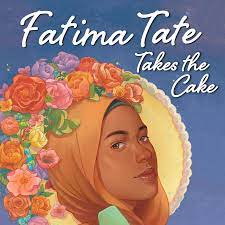
Fatima Tate is a good Muslim daughter although her desire to become a professional pastry chef and opening a bakery is not on her parent’s agenda for their daughter’s good future.
But that’s just the start of Fatima chafing against the rules. She’s going to be going to college next year, she wants to make her own decisions.
So that’s part of the reason why she accepts Raheem’s invitation to drive her home after their work in the soup kitchen. She’s been daydreaming that he’s a Muslim Prince Charming and he truly seems to fit the bill. He’s kind, he’s considerate of her feelings and boundaries, encourgaing of her dreams of baking, he charms the pants off every adult he talks to.
It was only one clandestine meeting but the spark is undeniable and before Fatima knows it, she and Raheem are engaged! It’s a dream come true but as Fatima gains the courage to secretly compete in a cooking competition, Raheem’s sweetness turns into jealousy and possessiveness and Fatima’s desire to appease leads to a little situation that allows him to blackmail her or fear familial disgrace.
I applaud ‘s desire to take on a difficult topic and showing how easy it is to fall for who seems to be Mr. Right. Manipulative scumbags don’t all act like one dimensional villains, if they did, they did be easier to dump. Nonetheless, readers can see Raheem’s strategy and how Fatima falls for his manipulations. Raheem takes advantage of Fatima’s desire to be grown-up and make decisions by telling her how mature, and full of substance she is compared to others in the community that want to date him for his fortune.
This signals her out as special and who doesn’t want to feel like the only one in the world who understands her significant other? He assures her that they’ll make decisions as a couple which makes her feel independent and gives her the illusion that they’ll be equal partners. But his financial wealth and age (four years older) is always an unspoken advantage, and he feels comfortable giving her gifts, throwing out how financially secure he’ll make her, how he’ll pay for everything asserts him as the one in power and she feels compelled to bow to his whims since he knows more and he’s used to it.
The also applies to her parents who are blinded by all the advantages the Harris family can give their daughter compared to their precarious livelihoods and while both assure Fatima they want her to be happy, you can understand why Fatima feels reluctant to reveal the truth. The shame that she’d bring them while they’re so happy for her makes her feel worse.
Yet you can see Raheem’s bad side easily and all his attempts to cover it up are as insincere as he is. But what would you expect from a privileged man. He’s the worst sort of hypocrite and is masterfully in subtly forshadowing his possessiveness and quick temper when things don’t go his way even from their first meeting.
But it’s not all about love and betrayal. Fatima’s dream helps develope her courage and her confidence that she feels she has a real future in baking. It helps cement her decision that she’d rather break up with Raheem than be a miserable lawyer/politician’s behind the scenes wife. The two plots go hand in hand in allowing Fatima to see the importance of asserting herself and her values even if it means difficult confrontations with Raheem and her parents.
I’ll admit, it’s a bit rushed near the end yet. I especially wanted a bigger epilogue seeing what happened in the community gossip about Raheem and Fatima’s broken engagement and the aftermath. But I give it a pass because it’s her debut and the heartwarming scene of her honestly talking with her parents and her friend make all the anxiety and uncertainty worth it.
Anthem by Deborah Wiles

Now I must explain the context that I read the first two books in the Sixties trilogy back in 2014, and I thought the third book would never come. It’s been nearly a decade. And I checked the library every few months but I had accepted it would never come. Until last week! What a surprise! And even more surprising that this was published 3 years ago. The library’s just getting it now?
Well, whenever it came now we arrive in the year 1969 and we’re going on a road trip.
Molly’s older brother, Barry has been gone for months, off in San Francisco after their fierce veteran father disowned him for his anti-Vietnam sentiments. Now, his draft is due in a month and Molly’s mother and aunt want her and her cousin, Norman to retrieve Barry before he gets drafted.
This leads them to experiencing the vast tapestry of the American experience in the final year of the decade. It was a time of conflict and hope as protests against Vietnam reached their fervor alongside protests for women’s rights, black rights, Native rights and more. Hippies were starting communes and the older generation just didn’t get it.
But hope was also in the sidelines with NASA launching man to the moon and a young senator by the name of Kennedy was telling the people that the country was going to do more for them. It all seemed to be in extremes and you can feel the tumult with the two very different cousins.
Molly is much more sheltered and obdient, believing in her father’s views of hippies as dangerous, treasonous and degenerate. Norman is more hippie than his family is willing to tolerate so he understands Barry’s reasons of fleeing, hoenstly he’s just on the road trip to see the music scene in San Francisco. Music is very imporant as Wiles emphasizes with each chapter beginning with a poignant 60s single that speak to the topic or atmosphere of the chapter.
But as with all good road trips, it changes you man.
As usual, Wiles does a grand job in tying all different aspects of the era including some famous figures like the Allman Band and Elvis Presley! But she tackles the difficult topics too like how hippie communes were settled on Native land which is problematic in various ways, the African American experience in Vietnam and how he ties to the Civil Rights movement when soldiers are sent to the front as cannon fodder and lynched back home. And the choice to serve or to dodge is looked as equal options depending on your perspective.
This is a great piece of historical fiction and a great way of getting a feel of the era.
Magic Has No Borders edited by Sona Charaipotra and Samira Ahmed
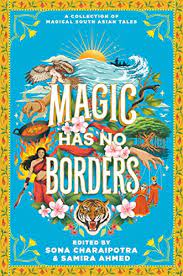
Authors: Tracey Baptiste, Nikita Gill, Tanzania Bhathena, Olivia Chadha, Sangu Mandanna, Tahir Abrar, Preeti Chhibber, Shreya Ila Anasuya, Naz Kutub, Swati Teerdhala, Nafiza Azad, Sayantani Dasgupta, Sabaa Tahir
Intro provides context about the variety of south Asian stories that comes from a past filled with genocide, wars and a country divided by colonialism. In this case Indian/Pakistani independence was not peaceful as the Partition haphazardly divided the nation and ripped families apart. Literally. Muslims were forced to migrate to Pakistan while others chose to stay in the place they were born led to them never seeing those family members again. Not to mention the autonomy of independent states like Hyderabad, Jammu and Kashmir were annexed into India and still deal with conflict today over these policies.
This is to show that the South Indian experience is not a monolith. It’s complicated and diverse and these stories are their way of showing a more inclusive definition of what it means to be “desi.” Not based on religion, ethnicity, caste etc. but share a common geography/tradition and language. These folktales are retellings or add a unique twist to stories handed down from each region and religion and as a way of giving readers a chance to see themselves reflected in this book.
Kiss Me Goodbye by Tracey Baptiste brings reincarnated love triangle to the modern day while subverting the usual tropes of the suffering wife and eternal villain.
Infinite Drift by Olivia Chadha is a historical sci fi reimagining of the Battle of Saragarhi (Sept 12, 1897) which was a modest outpost with only twenty young soldiers in the 36th Sikh Regiment between the British Indian Gov and their march toward conquering the Afghani empire before the Russians.
Shamsuddin-Jalal by Tahir Abrar features an almost Arabian Nights-esque tale where a mischievous jinn, Jalal, tells stories to his would-be hunter, Shamsuddin that slowly opens his eyes to see who the truly wicked monster is.
Unraveled by Preeti Chhibber is a retelling of Sita’s journey through danger, humiliation and female purity double standards in the The Mahabharat
Daughter of the Sun by Sayantani DasGupta brings the major issue of female infanticide and the millions of missing women/girls in Asia into the forefront and gives them justice by having them reborn into an army of warrior women under Karna as she and her brother, Arjun try to break the cycle of death and betrayal.
Other stories I enjoyed were Chudail by Nikita Gill, Dismantle the Sun by Sangu Mandanna, She Who Answers by Shreya Ila Anasuya, Poetry of Earth by Swati Teerdhala, and Mirch, Masala and Magic by Nafiza Azad.
Boundless: Twenty Voices Celebrating Multicultural and Multiracial Identities edited by Ismée Williams and Rebecca Balcárcel.
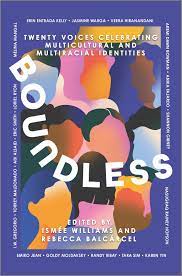
Authors: Erin Entrada Kelly, Jasmine Warga, Veera Hiranandani, Akemi Dawn Bowman, Anika Fajardo, Shannon Gibney, Nasgraq Rainey Hopson, Mélina Mangal, Loriel Ryon, Eric Smith, Adi Alsaid, Torrey Maldonado, I.W. Gregorio, Tara Sim, Emiko Jean, Goldy Moldavsky, Randy Ribay, Karen Yin
This anthology edited Ismée Williams and Rebecca Balcárcel has family karaoke night isolation (Bowman’s The Chair Far Away From the Table), two Latin Jewish teens finding understanding in their mostly white community, and a chance to break the rules (Moldavsky’s Hispanic Jewish Bingo), a Black Inuit debater proving her eloquence (Hopson’s The Perils of Beige), a girl standing up against the ignorant #KungFlu meme of a classmate (Gregario’s Enough To Be A Real Thing), the perils of “bring your heritage food” day for an adoptee (Smith’s Irish Soda Bread), colorism in the Latin/African American community (Maldonado’s Different), punching mysiogny racists (Kelly’s Confession) and more.
But no matter the color or birthplace or religion, these stories share the same message. The struggle to figure out who were are can feel ten times more difficult when we don’t fit in within our community or even our own family. We don’t fit in a box and others are all too quick to point that out. But even as this experience may feel isolating at the moment, it gives rise to resilience and the ability to see the world is limitless. There is more than one perspective to the world, and labels are only a construct. Being multi makes you unique, it makes you a bridge, you are boundless.
I’d Rather Burn Than Bloom by Shannon C. F. Rogers

Marisol Martin has never gotten along with her mom. At least it geeels like it as they fought over everything-church, clothes, boys, curse words. Everything.
But when her mother dies in a car accident, Marisol starts to fight with the world in a self destructive spiral that includes sleeping with her best friend’s boyfriend and punching said best friend in the face.
Further isolated from her distraught father and brother turning inward to his own problems, Marisol struggles with her grief and hapharzedly makes new friends who understand her-Elizabeth, whose mom thinks Marisol is a bad influence, and her longtime crush, Joel who joins her in learning more about her Filipina heritage especially Día de Los Muertos.
Told in alternating Now and Then chapters, readers get a good sense of the messy core beneath Marisol’s grief, guilt and rage. The narrative isn’t afraid to call Marisol out on her behavior (hell, maybe it goes a little too far as it doesn’t give Marisol a break which makes her feel more alone and helpless). Marisol begins to understand the root of her frustration, mainly at a society that her immigrant mother tried so hard to abide and follow yet treated her as invisible, and overworked her to exhaustion. The system is against immigrants but Marisol unfairly directed her anger at the system to her mom for trying to assimilate and make her into her idea of good Filipina-American citizen.
But there is some relief and heartwarming moments as Marisol finds peace in art, communicates with her family again, finds romance with Joel and makes up with her friend. She finally gets the understanding she always wanted. The understanding she wished she got from her mom and wished that she gave to her in life.
Even with death, you just know love remains and Rogers excelled in delivering those complex, nuanced feelings in this emotional book that stares death in the face.
Kind of a Big Deal by Shannon Hale
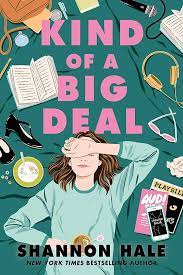
“Alexa, cue Just Breathe from In the Heights.”
This is a fitting request because Josie Pie’s Broadway dreams have left her wondering “What will she be?”
Back home in Arizona, she was kind of a big deal and was encouraged by pretty much everyone that she should go pursue her real talent where she belongs, on Broadway.
Turns out that she is just a tiny fish in a small pond, and after a demoralizing few months on dinky off-off Broadway surrealist shows, she accepts her employer’s idea to move to Montana to nanny her charge, Melanie. And pretty much hide from her boyfriend, best friend and everyone else so they won’t know how much she’s flunked.
It’s in this miserable state of solitude that she falls into the story of the books she’s reading. And I mean literally falls into it. From tawdry romances to postapocolyptic dystopia, Josie is initially concerned that she’s going insane but soon embraces each story as a chance to escape.
I think we can all understand the desire to escape and you can feel the tension when Josie realizes the longer she spends time inside the books, she is losing herself. But is that so bad considering how stuck she feels in real life?
In a blend of fantasy and real life, Hale masterfully balances the joys of both and gives Josie a real rude awakening about the extent of her skills and what makes her special. It’s clear that she has some abandonment issues considering her home life and being the star of school musicals gave her worth. Unfortunately, she also associated that as the only reason people loved her and when she failed, she couldn’t face them or else they’d might leave her too.
Yet even as the fantasies draw her in, they have strong parallels that help her work through her problems and able to give her new perspective on her relationships and how her behavior is affecting them.
Still, it’s very fun as Josie pokes fun at genre tropes and how they can be totally cliche and sexist yet super fun to get into it combined with the energy of theater kid belting their heart out. It’s a lovely coming of age filled with heart and surprise twists that I’d recommend for a cozy autumn read.
All You Have to Do by Autumn Allen
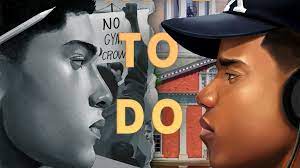
When you’re a young black man in an elite private school, you’re supposed to be grateful. Even when your history is dismissed, even when white students mock your culture, even when you’re profiled, you must be grateful.
But when faced between standing up for their community, and assimilating so they can make their families proud, Kevin and Gibran must ask what are they willing to do.
In 1965, Kevin is reeling from the tragic events of MLK’s assassination but he’s finding some hope for change in the teaching of Malcom X and Islam. MLK’s non violence was too passive, too conceding to the system that wants to control them. And when Cambridge threatens to evict and push out the black residents of the community for out of price housing, he decides it’s time to out his thought to action.
In 1995, Gibran wants to join the 10,000 Man March in D.C. in recognition and support of black manhood but his school is balking as an unnecessary expense. The various microaggressions and injustices have been building up to this moment and he leads a sit-in. But will this school disturbance risk all that his mom has done to get him there?
For that ties the two narratives, Gibran’s mom aka Kevin’s younger sister who gets caught in the crossfire of Kevin/Gibran’s growing activism. While the story is focused exploring what it means to be a black man in America, it also dedicates time to black women and the need for political-family balance when Kevin/Gibran’s beliefs cause them to distance themselves from their family for not being radical enough. It even boldly utilizes the 2nd person perspective as Kevin thinks about the trials and sacrifices his mom has gone through so he’d have an easier time. It’s not that she wants him to forget his roots or turn his back on his community, but it would seem easier to be part of the system rather than outside it. It’s complicated, but debut is a nuanced, moving exploration of all these interconnected threads, full of heart and hope even in trying circumstances.
Parallel Lines by Ruth Marks Eglash
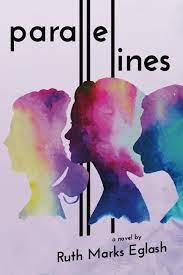
Three teens are stuck in the very adult problem of the Israel-Palestinian conflict. The prejudice that affects each of their lives and surprisingly brings them together to show humanity’s capability to see past those differences when it really matters.
Tamar is a secular Jewish girl who is uncertain of her feelings about the conflict. While she thinks one shouldn’t judge based on skin color, the violence perpetuated by Arabs has her feeling that maybe there is something inherently more inhumane. She has a great arc of seeing meeting violence with more violence makes her just as bad, and her friends’ prejudices shouldn’t color her own or her love life as she starts to fall for her childhood friend, Ami. Something that some see as a traitor to her Jewish identity.
Noor is an Arab who believes that the two people are capable of living a peaceful co-existence, even going so far as to organize a trip to the Wailing Wall. But her brother’s more radical attacks makes her family targets and she starts to wonder if her willingness to live in peace means she’s turning her back on her community and not standing up for her rights.
Riviki was the weakest arc in the book as she’s an ultra-Orthodox girl or Heredi with a chronic condition. She’s been taught her whole life that her biggest goal is to get married and have children, something becoming more emphasized with her sister’s upcoming wedding. But her frequent trips to the hospital puts her in contact with others that encourage her to look toward a college education and a career helping others. I get it is to show the variety of faiths and people liviing in Israel but her POV felt disconnected from the others whose focus linked with the Israel-Palestinian conflict. Also, it isn’t one I haven’t seen before of other Orthodox girls learning and wanting to break away from what they’ve known.
Still, I love the importance of the subway as an intersection for these three to unexpectedly meet, highlighting it as a microcosm of space where the lives of totally different people intersect and unexpectedly change them as readers can observe through the increasing cameos of the girls seeing the others during their commute.
Secret of the Moon Conch by David Bowles and Guadalupe Garcia McCall Bloomsbury
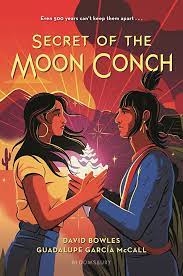
Calitzo is a Mexica warrior, the sole survivor of his family, pledged to protect the escaped slave, Ofirin, and a warrior bound to stand against the Spanish dogs in the final stand of the Mexica empire in 1541.
Sitali is a teenage girl in 2019 with no family left, and no home as drug dealers and a desperate, angry boy with an obsession force her to flee Veracruz to the U.S.
Separated by eons, a mysterious moon conch allows them to connect with each other. Depending on the waxing and waning of the moon, they can hear each other, see each other’s ghostly images, even touch. Despite, cultural differences like “phones” and moon priestesses, those are superficial things at the core. Both teens are running from those that seek to crush their spirit. They’re both fighting to be free and to be safe with their loved ones. Some things are universal like empathy and understanding and that leads to love, and maybe, just maybe, they were the chosen ones to find the conch.
I found this to be a lovely book full of heart and magical realism. Even though, Calitzo and Sitali are calling each other soul mates and beloved within a month, the reader can understand that. They’re almost trauma-bonded as they see each other through the toughest weeks of their lives where they’re literally fighting for survival and are the only ones to provide a comforting ear since both are orphans. You can understand why they’re desperate to keep their connection after losing everyone else.
Calitzo’s POV was action-packed yet awe-inspiring as Bowles/McCall vividly describe the ruins and the glory of the old Aztec empire or the Mexica as they call it. You can see the tradition and duties that bound Calitzo to this life even when it would be easier to run because he doesn’t want his culture to be conquered. In fact, he even gets a huge badass moment in the middle where he confronts Hernan and it is just amazing.
Calitzo’s POV organically woven in the spiritual beliefs of the Mexica, providing history and meaning to the moon conch so the two could figure out its poweres and what the prophecy means for them. Making it all the more compelling as the two try to figure out a way to make this whole situation work in their favor with Sitali looking up historical information in 2019 that may help the Mexica turn the tide in 1541. Unfortunately, it tinges Calitzo’s POV with tragic undertones as you know what will most likely happen to his people and to him, and history proves to be immutable.
Sitali’s POV was much more personal and tied to current events as she tries to cross the border to reunite with her madrina and estranged father. In fact, crossing the border was only half the battle as her father’s hostile new wife seeks to push Sitali out and right into the hands of ICE. Bowles/McCall don’t sanitize the inhumane treatment asylum seekers and refugees face in the detention centers and Sitali’s attempts to fight the system show that they don’t ease up just because she’s a teen girl, they hit harder.
Bowles/McCall draw clear parallels between Calitzo and Sitali’s circumstances, showing that treatment of indigenous Latinos haven’t changed much since the conquistadores hit the shores, and that is the point. Things should have changed, the indigenous population shouldn’t have to fight to be treated fairly and to keep their culture preserved. But there is hope too. With the spiritual influence of gods and ancestors, and the protagonists’ own strength of convictions, the bonds of community can be used to break the bonds of oppression.
Eventually.
One downside to the book is how the love story starts to take over the last three chapters. While it’s uplifting to see Sitali and Calitzo finally be together on the full moon, it leaves little space to resolve their bigger issues. Well, Sitali’s issue in ICE, they’ve accepted that Calitzo’s people are going to be massacred and conquered. In fact, they don’t but leaves an open-ending implying that they will somehow.
I get that they want to keep the ending realistic as it will take a lot to fix the issues of US immigration and border patrol, but as it was magical realism, I was hoping for more of a satisfying happy ending for all.
Nonetheless, it was a great story to kick off Latinx heritage month highlighting the indigenous history and concerns that need to be highlighted today with meticulous research as well as imagination. The authors even provided a little Nahuatl language dictionary and historical figures index in the beginning too which helps ease some of the cultural barriers in Calitzo’s POV since he isn’t going to take the time to stop and explain his culture to the readers.
Where You See Yourself by Claire Forrest
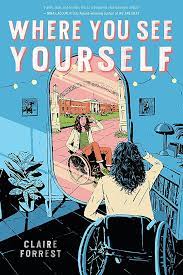
Effie Galanos is ready for her senior year. Not necessarily because she’s eager for that final homecoming dance or yearbooks. Her school’s indifference to her accessibility needs as a wheelchair user is one thing she can’t wait to leave behind.
No, she’s ready to start applying to her dream colleges. But the one at the top of her list is one she is nervous about even bringing up. Prospect U has one of the best mass media programs but it is in NY, and NY is one of the least accessibility friendly cities in the U.S. and the campus is similarly lackluster.
Effie worries that it is too big, too much to even try when she has difficulties advocating for herself for such things like being able to get off campus for senior privileges.
Forrest’s novel is all about how being disabled impacts how Effie sees herself and the world rather than just how the world judges Effie. Yes, there’s that but it’s more Effie fighting to get the administration to put in the effort to change things to help her and others like her in the future. Because that’s something Effie has to deal with. She has to think about the logistics of things all the time while her friends can easily walk down the stairs or go to any college they want, she has to think about the accessibility, the obstacles, the extra things that may impede her. She doesn’t have the luxury of thinking just of her education but the environment her education is housed in.
But Effie also learns that her thinking is flawed. She is so used to having to navigate the world that wasn’t made for her, that she forgets sometimes the world shouldn’t be so hard. That she shouldn’t have to put all the effort to fit in, they have to make a change.
Also, sometimes being disabled isn’t the point. She’s viewed herself that way first, it’s a big part of her identity so that she assumes its the first thing people see from her and disqualify her from such things has romance and promposals.
But it doesn’t. The sweetest thing about the book is the joy present in the novel and Effie coming to see that not only she deserves to have those movie-perfect moments of prom dances and first kisses, but there’s nothing stopping her. Sometimes she has to reach out for it herself.
It also delivers a great lesson about how what you think you want may not be what you actually need and learning to let go of dreams to find a community that will really support you. It’s a valuable lesson in a time where going to the ‘right college’ seems to be the most important thing that you overlook that even if the college does have the top program in the country, it might not be right for you.
The Dragon Princess and Dragon Kiss by E.D. Baker
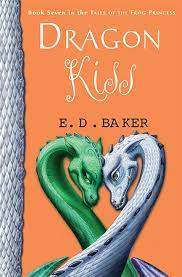
We return to Greater Greenswald for Princess Millie’s sixteenth birthday which Millie is experiencing a frustrating time. Every time she gets angry, she turns into a dragon! Yeah, try getting a suitor with that hanging over you or try to stay calm with your anti-magic grandparents infuriating you. Millie wants a cure and has to travel to an ice witch to find it. There she encounters ice dragons, abominable snowmen, and half-human-half troll sons with questionable hygine issues.
The second novel is a rare male POV. That of Auden, the ice dragon that has fallen in love with Millie. A dragon’s love is instantaneous and everlasting but he has no hope of ever winning over Millie’s family if he can change into a human as she does. The only one who can do that is the Ice Dragon council that sends him on a kingdom-ranging quest over desert and sea where he foils old enemies, kingdom usurpers and Milie’s rejected suitors, all for the sake of his one true love.
And yeah, they’re entertaining enough but they felt ultimately unnecessary. The original five novels had a fun fractured fairytale feel to them, and offered a humorous yet heartfelt look into the magic-wielding witches of Emma’s line. While Millie’s adventures featured cameos of old favorites, it didn’t add anything to the world beyond the existence that there are ice dragons that have a grudge against flame dragons.
It also felt very reliant on the previous generation by having the villains be reoccuring nemesis of Emma’s or the son of a previous rival. I guess it’s nice to know that Emma and Eadric are still wildly in love and Li’l and Garrid have their own vampire princess daughter who is lovey-crushy on Grassina and Haywood’s son, Francis, but like I said, unnecessary. I didn’t feel invested in their adventures or in Millie and Auden’s personalities in particular. It’s fine if you want to read the complete series but it’s safe if you skip them.
Are You There God? It’s Me, Margaret by Judy Blume
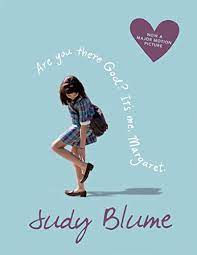
After seeing the new movie version released this summer, I decided to read the original version for the very first time, and was struck by how true the movie was to the material. And that portrays the very relatable and raw feelings Margaret has growing up in the 70s.
She’s a normal twelve year old as she moves to a suburb in NJ and has her first taste of crushes, periods and bossy friends. She just wants to be normal but she feels she’s falling behind and is in between as she has no religion. She doesn’t feel any closer to God in the church or synagogue compared to when she talks to him alone in her room.
There’s a reason Blume is the best in how accurately she portrays the messy friendships that bring out the worst in Margaret, the way adults sometimes ruin your life with their own adult problems, how feelings are so big yet Margaret tries her best with everything she’s given.
It should be required reading for middle schoolers or even fifth graders approaching their late tweens years. Yes, it’s set in the 70s but it is universally timeless.
Robin by Kami Garcia and illustrated by Gabriel Picolo
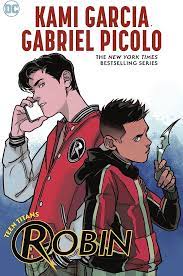
The fourth book of the Teen Titans series is forgettable filler. Sorry, but it’s true. It takes 174 pages of training montages, Slade searching for the teen montage, and superficial Dick vs Damien brotherly rivalry that’s resolved in five chapters. Yes, other minor stuff happen like Garfield talking with his parents and the kids using their skills to slow down Slade but that could have all been done in 30 pages. Oh, and now Damien and Max have hooked up which. . . the romance is not the forte here. everything’s too rushed.
I didn’t get any new insight into the teens, especially Damien who is supposed to be the focus of this book. I’d much rather have more backstory of his time training with the Ah Guls’ assassin league than this forced daddy issues drival. The art’s wonderful though, it’s a great spotlight of Picolo’s dynamic work with fluid action and vivid colors.
You really don’t have to read this one as it adds nothing to the plot, but the cameo of Starfire and Blackfire was exciting and I hope her book puts more oomph into the series again.
Struck by Lightning: The Carson Phillips Journal by Chris Colfer
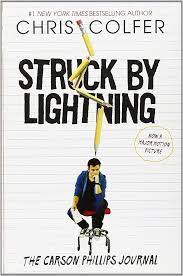
Carson Phillips is a brilliant mind, overachiever and surrounded by idiots in his small-town of Clover, California. Everyone is settled in this small-town life and content not to leave (not that they have the GPAs to leave anyway), but Carson knows his destined for more.
Unfortunately, to get into Northwestern so he can eventually be a freelance writer for The NYT, Boston Globe and New Yorker, he must submit something else besides his President of Writer’s Club and Lead editor of the Clover Chronicle. He has to show his skill by creating the skill’s only literary magazine and find people to write for it.
But this is Clover, people here do not read much less want to write so Phillips and his trusty sidekick blackmail the cream of the high school clique crop to contribute.
Now this may sound like a fun coming of age comedy, but it’s not. While it has its laugh out loud moments this actually the journey of a psuedo-Napoleon and his sliding scale of cyncism and idealism. Actually, Phillips thinks he is a cynic and who could blame him, being urrounded by idiots all day who do not appreciate his witty comments and laugh at his dreams. He’s pretty hated by almost everyone but he takes a “I don’t give a shit” route to everyone. He doesn’t care, he’ll get out of here one day.
But as the journal goes on, you start to realize maybe Phillips is more idealistic than he believes as he inadvertedly comes to care for his classmates (a smidge, not by much but enough to see maybe they also have their own shit. Still a funny asshole about it) and tells them that they could do more than what they’ve settled for. That while everyone has laughed at his dreams, he still has hope.
It’s not a happy ending, not even close, and the journal can read as juvenile at times because Carson is biased and blinded by his own bitterness but it has its own raw kind of realism in depicting how frustrating small-town life ca be and everone that tries to keep you down just to prove that “life isn’t fair.”
Books I read this month
Perfect Scoundrels by Ally Carter, History of the World in 50 Dogs by Mackenzi Lee, The Book Hugger’s Guide to the Land of Stories, The Wishing Spell and Struck by Lighting: Carson Phillips Journal by Chris Colfer, Fairy Tale Reform School series by Jen Calonita, The Books of Bayern quartet and Kind of a Big Deal by Shannon Hale, The Duff and Lying Out Loud by Kody Keplinger, Smile, Drama, Sisters, Ghosts and Guts by Raina Telegimer, A Tale of Two Castles and Ogre Enchanted by Gail Carson Levine, Dragon Princess and Dragon Kiss by E.D. Baker, The Selection, The Elite and The One by Kiera Cass, Secret of the Moon Conch by Dawn Wells and Gabriel Garcia Marcell, Are you there God? It’s Me, Margaret by Judy Blume, Where You See Yourself by Claire Forrest, The Poet X by Elizabeth Acevedo, Young Justice Vol. 1-5 by Greg Weisman, Sisters Grimm series by Michael Buckley, Robin by Kami Garcia, Yaqui Delgado Wants to Kick My Ass and Burn Baby Burn by Meg Medina, Running by Natalie Sylvester, The Inheritance of Orquidea Divina, K-Pop Confidential and K-Pop Revolution by Stephen Lee, The Olympians series by George O’Connor, A Very Large Expanse of Sea by Tahereh Mafi
 Rachel Reads & Reviews
Leave a comment