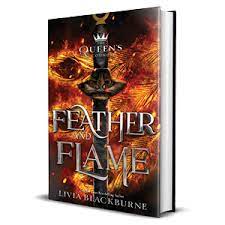
The second book in the Queen’s Council series brings readers back to Imperial China as Mulan takes upon a role she never thought she’d serve, or even deserves.
Set a few years after Mulan saved China, she has created an all-female militia, teaching women how to fight and defend their village from bandits and other criminals. She even leads elite teams to capture warlords when needed as the book reveals in the first action-packed, heart-pounding chapters. She has fully embraced her role of bringing honor to her family while being true to herself. She loves the sisterhood she has created and feels proud of the positive changes she has brought to these women, and their village’s life.
Then Shang comes, which is a treat unto itself although Mulan isn’t quite ready to admit to her feelings. Besides it isn’t important as he hasn’t come to ask for her hand but because the Emperor requests her presence immediately. Mulan initially thinks that he’s trying to press her to joining his cabinant again but his real request is that he’s dying, the people don’t trust his ministers and he has no qualified relatives. But Mulan, the savior of China, he wants her to be his heir to the throne.
Mulan is understandably wary of such prospect and while he gives her some learning time, allowing her to sit in on meetings with him and the ministers so she may learn what it is like to rule, it only makes her more convinced that she is not right for the job. She is more comfortable with a sword than calculating the prices for grain tax and the like.
There’s also the additional concern that having her life being devoted to the kingdom will interfere with any chance she may have with Shang as an empress’ marriage must be a political asset, not just about her feelings.
But things move quickly as the Emperor dies before Mulan has any chance to back out, and readers who know Mulan well is that she’s entirely devoted to China. She may not like her duty, but leaving now would leave the country in chaos with ministers fighting to rule.
While Belle’s book was more about political ideology and magical visions, Mulan’s story is just as fast-paced and full of danger as her life as a soldier. Blackburne juggles many moving pieces with a possible rebellion among people who don’t accept a female ruler, conniving ministers, and the looming threat of the Huns who’ve come under the guise of diplomacy with the possibility of invasion lurking underneath. Mulan has few allies in the palace and that may bring her reign shorter than she anticipated.
Blackburne does an excellent job in tackling Mulan’s uncertainty in the role whilst displaying why she is just right for the job. In fact, the Emperor does a great job in forshadowing the lessons and burdens Mulan is contending with. She was the right candidate because she doesn’t want the job, it means she understands the responsibilty.
And while she cares about China and the people, putting this into action is harder than before. Mulan has always been part of a group, in the army, in her female militia, but as a leader, she works alone. Or so she thinks which leads to several mistakes as her hesitancy to send the ones she loves in danger or to fully trust their capabilities add to her troubles.
There’s also the greater lesson that the people come before her own pride which dovetails into a “What doesn’t kill you makes you stronger” example when Mulan reaches her lowest point.
Seriously, Mulan faces several low points when dealing with the Huns where I truly didn’t know how she’d get out of the situation or how she’d recover but seeing those humilations makes her triumphs more poignant in the end.
As for Mulan’s manuevers with her ministers, Blackburne delivers several other important lessons on learning not to trust someone just because they are confidant, and to trust in the love of her people that support her.
For while, Mulan may be alone as empress, she does have a lot of supporters. This novel is very girl-empowerment heavy as Blackburne highlights the forgotten female warriors that make up China’s past and emphasizes how their strength flows through to Mulan’s current warriors. The sisterhood is strong and will always be there for Mulan. It also emphasizes that gender is not a limit, and not something one should feel ashamed because society doesn’t respect females. As Mulan amply demonstrates they can get the job done just as any male can. It’s not gender the determines your strength and ability, but your character.
Of course, Mulan got the greatest focus but the other characters serve their roles well. For instance, Shang and Mulan literally made me say “Aww” out loud when they revealed their feelings for each other, and his support for her rule as a confiding shoulder provided some lightness. Yet their new positions in status kept things tense to keep their dynamic fresh in a “will-they-won’t they”/love vs duty trope.
Mulan’s ministers, Wei, Fang and so on are excellent villains demonstrating the backstabbing and self-centered nature of the traditionalists that just wanted to maintain and expand their positions without regard for country.
There were many in Mulan’s militia but the primary players vital to the plot were Liwen and Zhonglin who supported and tested Mulan respectively, forcing her to confront her weakpoints and think in new ways in terms of her position and her own capabilities.
But that’s not all. Nai Nai, or Grandmother in English, returns as a spirit whose wisdom is a balm to Mulan. She also serves as an entrypoint to Chinese folk-lore and magical traditions as Mulan tries reading bones and soon access the spirit world as her situation becomes more dire.
Also there was a small mention to the sequel. Or at least I think it was a reference as the Emperor says his three daughters cannot take the throne because they married commoners. In Mulan 2, it was Ling, Yao and Chien Po, but they were not mentioned here at all, so maybe it was a coincidence.
There was also a slightly funny line, in my opinion as Mulan becomes exasperated when trying to get answers from a cowering servant asking her to spare his family, “Why was everyone convinced that she was going to wipe out their bloodlines?” (Blackburn 174)
An excellent book filled with war battles, Chinese folklore and court double-dealing that continues Mulan’s story from uncertain girl to soldier, and now an unready empress to the heroine China needs again.
5 swords!
 Rachel Reads & Reviews
Leave a comment