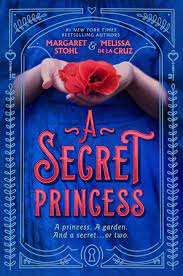
Margaret Stohl and Melissa de La Cruz team up once again for a reimagining of beloved literary characters from Frances Hodgson Burnett’s canon. The choice of pairing Mary Lennox and Sara Crewe is perfect as they are just those two literary characters that you just picture like when one thinks of Wendy Darling, one also thinks of Alice in Wonderland because of their similar experiences in fictatious worlds. Or at least I do.
Anyway, they bring a delightful new dynamic by bringing Sara and Mary to each other’s spheres. But that’s not all, there’s also Cedric Errol in the mix, better known as Little Lord Fauntleroy, and all it begins with a genie.
Stohl/de La Cruz keep in tone with Burnett’s tales of whimsy imagination with hazy bursts of magical realism that highlight the vivid imagination Mary has when she is visited by a genie. A genie who fortells her future that will be filled with great things and greater friendships. Before she knows it, the sickly little girl isn’t sent to her uncle in the moors by Mistress Minchin’s Seminary. Omniously it is nicknamed the place for children who want to be forgotten by their parents.
Mary’s father may be neglectful but Sara’s is doting and thoughtful, unaware of the sour conditions he is living her in with the bitter, hypocritical Minchin and snobby, prejudicial classmates.
In this tale, Sara is Filipina which de La Cruz explains in her author’s note was not to defile the beloved work but give a chance for people of character to imagine themselves in this world as she had done as a child. It was also to break the stereotype of people of color in pre-modern times as relegated to roles of poverty and noble suffering. Rich people of color existed even though they were rarely seen or acknowledged.
Having Sara be a rich girl from Manila plantations is a good subversion as she fufills the original character’s role as a “little princess” whom the other girls mock and are subsequently filled with jealous rage
The race-change delightfully adds more depth to Sara’s character as not just someone who is so well-bred, sensible and dignified because of her rich breeding but that she must work ten times as hard to be better than the stereotypes people believe of her. The jealousy targeted against her by class-mate Lavinia, and Mistress Minchin is fittingly more hostile as neither can wrap their heads around the idea of this Filipina being more rich and a better person than their WASPy selves.
It also makes it more hurtful when Sara loses her family, and her fortune, relegated to the role of a maid to pay her debt to the Seminary. As she explains to her friends, it “puts her in her place” in other’s minds and it is unbearable.
Luckily, Sara has Mary on her side. Mary still retains her impulsive and hotheaded nature which she is aware can make her a harsh bully. A trait that she tries to rein but makes her a very good friend as she stands up on Sara’s behalf against Lavinia and Mistress Minchin. Sara cannot lose her temper because it will reflect even worse on her but Mary has more than enough fire and boldness to make up for that. Mary is also filled with boundless imagination, making her a great writer, that offers hope to Sara and Cedric even as they shake their heads when it swerves off into fantasy.
Cedric does not have a POV but Stohl/de La Cruz give him enough space to grow and expertly weave enough mystery and pain around him that it’s quite a surprise to find out he’s true lineage. A little lord whose leg tremors make him a shameful burden to his father. But he finds his power, as his friendship with the girls allow someone to see him beyond his disability and lordly title. They encourage him with his dignified confidence to stand up for his own self-worth and it’s inspiring.
Together, these parentless children form their own family and break out of the abusive Seminary. Their original plan was to escape to Paris but with no money and not as much life-skills they end up on the streets and then to Cedric’s family home, Maythem Hall.
The adventure allows the authors to explore social issues pertinant to the time besides racism, but unsanitary conditions in factories, child abuse, prejudice based on economic class and disability as these rich kids open their eyes to the wider world around them and how they could use their wealth to do better.
Furthermore, they begin to see the harm done to them by their parents, ie. parental neglect, and how that they don’t need to take it silently but stand up for themselves and demand to be seen despite being just kids because riches aren’t enough without love.
Unlike the original novels, there’s a touch more romance in the book. Primarily between Mary and Cedric which I found nicely built up and very sweet as Cedric isn’t afraid to push against Mary and she tries rein in some of her harshness, admiring his quiet compassion and confidence.
There’s another cute albeit speedied up romance for Sara and Dickon, the Maythem Hall gardener through a rich girl-working class boy trope. However, its resolution is rather realistic and doesn’t play out in a typical way which I respect.
There is a nice combination of the two stories (possibly three but I haven’t read Little Lord Fauntleroy so I don’t know if they wove that story in) with its doses of magical realism that fuel the character growth and ambitions of Sara and Mary as activists and performers when they are older. Plus the additional literary references to Scherzade and Jules Verne add to the magical, out-there tone of the story subliminating the readers’ mind with the ideas that anything can happen in this tale. Also that books are amazing.
Plus they do an addition cameo from Jo March or I should see Jo Laurence as they put in their other novel Jo & Laurie.
Overall, a lovely story that will sure to touch your childhood memories while adding more characterization and growth befitting our modern standards.
4 stars!
 Rachel Reads & Reviews
Leave a comment